
A row of illuminated white colonial houses along a road photographed at dusk.

Mini Split Installation in Murrysville, PA

Tell us about the job

Takes about a minute. No obligation.

Step 1 of 3: Equipment

Westmoreland County saw 441 damaging wind events and 59 hail events between 2015 and 2024, along with 14 tornadoes. That's the outdoor unit's environment. It sits outside, exposed to whatever comes through, and a mini-split's outdoor condenser takes that weather directly where a furnace or water heater tucked inside a house doesn't. Winter storms hit the county 29 times in that same stretch, heavy snow and ice included. And when the power goes out, a mini-split stops, same as any heat pump or AC. In 2024, 15% of Pennsylvania households lost power for 24 hours or more. A system installed here needs to account for what it's facing, not just the temperature swings.

8 months
October through May, your system heats
3 months
June through August, it cools
23°F
the average winter night it heats against
81°F
the average summer afternoon it cools against
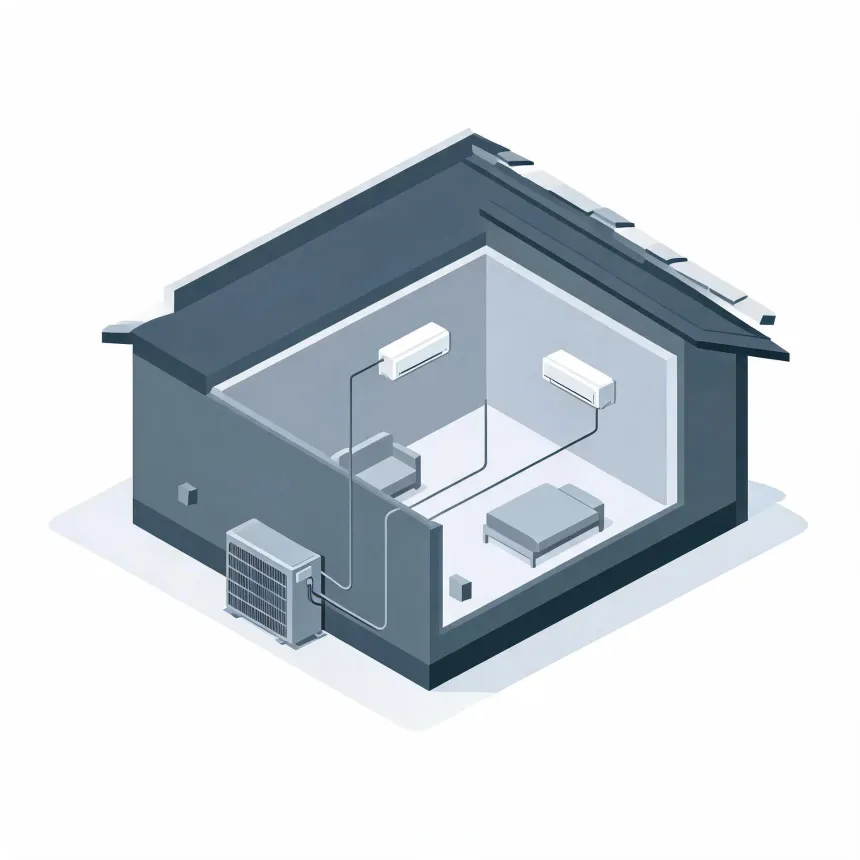
Isometric illustration of a cutaway house interior showing two wall-mounted indoor air conditioning units connected by line sets to an outdoor condenser unit beside the exterior wall.
Your system heats October through May and cools June through August.

NOAA nClimDiv, 1991–2020 normals

Gas heats 65.3% of homes in Westmoreland County, more than any other fuel.

A mini-split goes in alongside that furnace, not in place of it, so the gas system stays the backup when the power is out.

Half the homes here were built in 1964 or earlier

Half the homes here were built by 1964
Cooling runs June through August
Summer afternoons average 81°F

June is when cooling starts here, which makes May the month to get a mini-split in. A contractor can plan the install properly instead of fitting it between heat waves. Summers run about three months, June through August, so there's a real stretch of use once it's in, but that short season is also why it's tempting to put the job off until the first hot week forces the issue. Waiting means a crew working on whatever schedule is open that week, not yours. Going into winter, the outdoor unit will see overnight lows that average 23°F across December, January and February, so whoever installs it needs to set it up for that cold from the start, not just for August.

Plan the outdoor unit's spot and its backup before it goes in

Placement is the part to get right before install day. Where the outdoor unit sits, what protects it from wind-driven debris and falling ice, and how it's mounted all matter more here than in a county that doesn't see this much weather. Worth asking the contractor now how the system handles a power outage, too, since the gas furnace can carry heat but the mini-split can't do anything without power.

Find a contractor
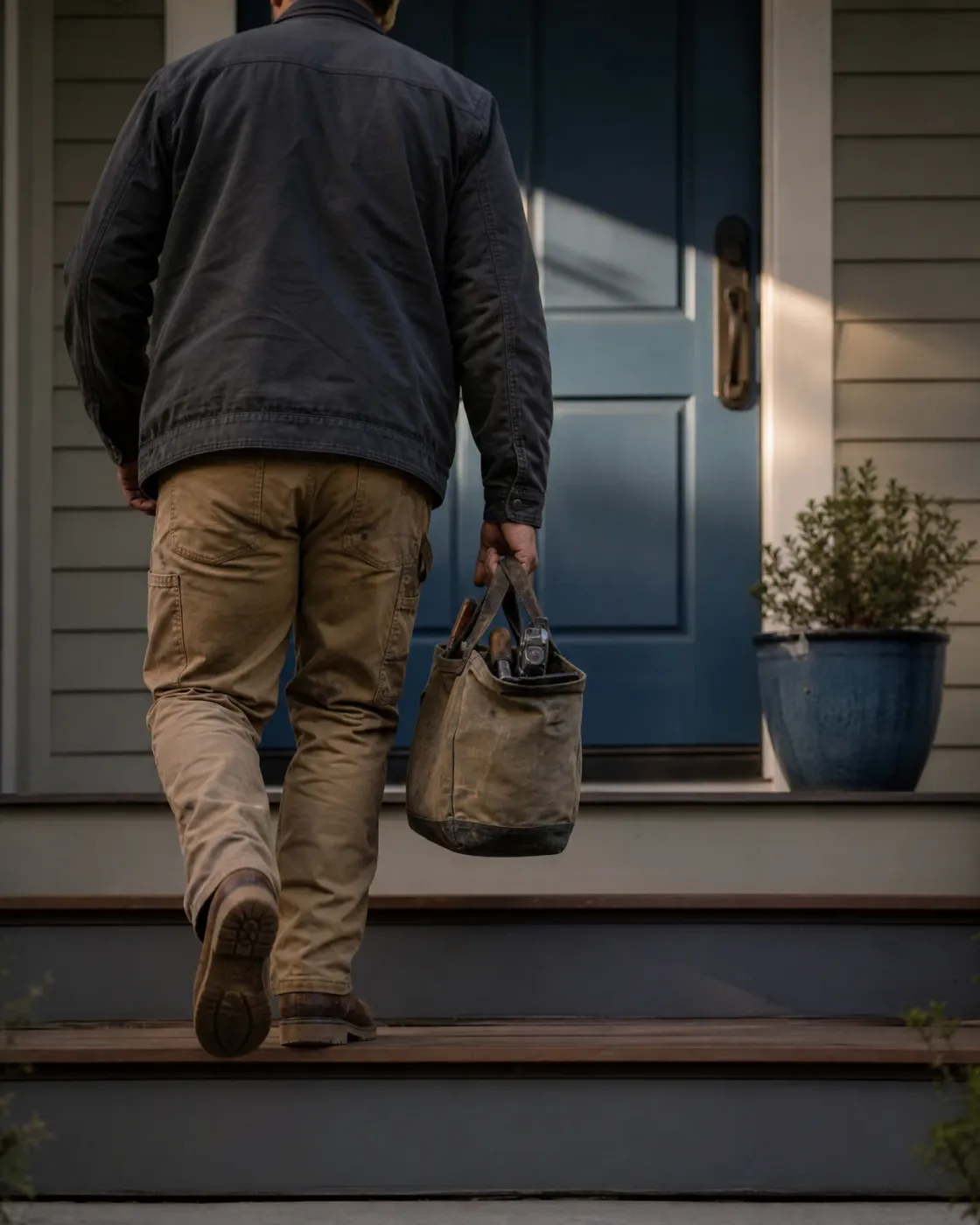
A man seen from behind in a dark jacket and tan work pants climbs wooden porch steps toward a dark blue front door, carrying a worn canvas tool bag in his right hand, with a potted shrub in a blue planter beside the entry.
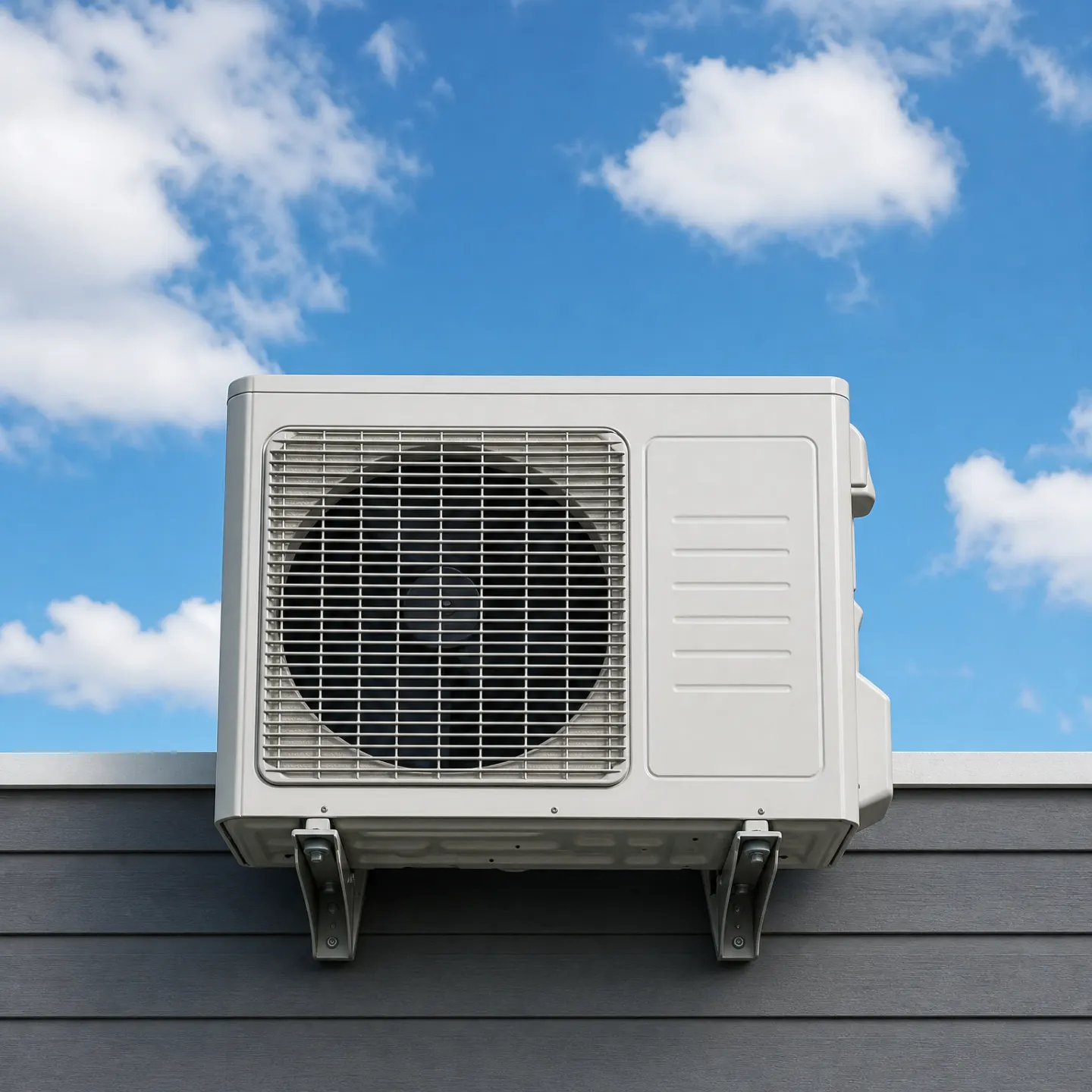
A white outdoor air conditioner condenser unit mounted on metal wall brackets against gray horizontal siding, with a blue sky and white clouds behind it.

A house from 1964 or earlier wasn't built with this in mind

If your house is from that era, the electrical panel probably wasn't sized with a mini-split in mind, and the walls weren't built with a line set path from outside to in. A contractor still has to find a way to run that line set and confirm the panel can take the new circuit, whatever the layout turns out to be. That's a bigger part of the install in a house like this than in one built last year, and it's worth asking about before the crew shows up, not after.

Sizing by room, not by the whole house

A mini-split is matched to the specific room or zone it's heating and cooling, not to square footage alone. A contractor works out the heat loss and heat gain for that space: the windows, the exterior walls, the ceiling height, how the room is used. Too big and the unit short cycles, turning on and off without running long enough to pull moisture out of the air. Too small and it runs constantly without ever catching up on the coldest or hottest days.
Why the paperwork matters as much as the walkthrough

The load calculation is a worksheet, a real set of numbers a contractor runs before quoting equipment, not a guess based on walking through and eyeballing the room. Skipping it is how homes end up with an oversized unit that cost more than it needed to or an undersized one that never keeps up. Ask to see the calculation, not just the recommendation that comes out of it.

When you're comparing systems, ask what happens in the outdoor unit when the power cuts and comes back. Some outdoor units have a base pan heater that keeps meltwater from refreezing into ice around the coil, and it's worth knowing whether that feature is standard or an add-on. Ask about the line set length the quote assumes, since running it farther than that changes how the system performs and may change the quote itself. Ask whether the quote includes a surge protector for the outdoor unit, since it sits exposed to the grid same as anything else plugged into your house. And ask what the warranty covers if the install itself is the problem, not the equipment, because a compressor failure from a bad vacuum or an undercharged line isn't the same claim as a manufacturing defect. The answers tell you whether you're comparing two real quotes or a real one against a guess.

Westmoreland County falls in climate zone 5A, a cool zone where heating carries more of the load than cooling. That's the baseline a contractor has to design around here, not just pick equipment for. Any mini-split installed now, as a split-system heat pump, has to meet the federal minimum for that category: at least 14.3 Btu of cooling delivered per watt-hour of electricity over the summer, and at least 7.5 Btu of heat per watt-hour over the winter. That's not a ceiling on what you can buy, it's the floor. A unit that doesn't clear it can't legally be sold here, so the systems you're quoted should already be built to handle a winter where heating does most of the work.