


A row of gray vinyl-sided two-story houses set back behind a mowed grass lawn, with a weathered wooden stockade fence on the left and large deciduous trees behind.

Mini Split Installation in Uniontown, PA

Tell us about the job

Takes about a minute. No obligation.

Step 1 of 3: Equipment

Gas heats 44 percent of homes in Fayette County, more than electricity, oil or propane. Fuel oil comes in second at 24.5 percent, which is unusual for this part of the state and means a lot of homes here don't have gas line access at all. A mini split doesn't care which camp your house is in. It runs on electricity, installs without any new gas or oil line, and works alongside a furnace you already have or replaces baseboard heat entirely. For a home heating with oil, adding a mini split to the rooms you use most can mean running the oil furnace a lot less.

8 months
October through May, your system heats
3 months
June through August, it cools
22°F
the average winter night it heats against
80°F
the average summer afternoon it cools against
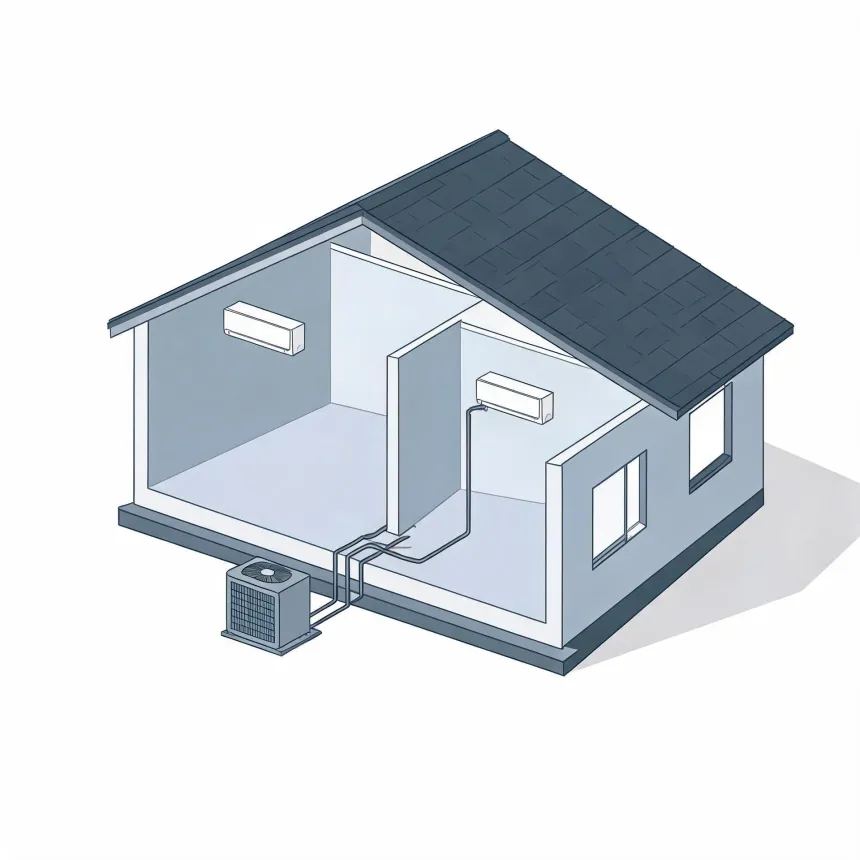
Isometric cutaway illustration of a small house with a dark shingled roof, showing two wall-mounted indoor units connected by lines running to an outdoor condenser unit beside the building.
Your system heats October through May and cools June through August.

NOAA nClimDiv, 1991–2020 normals

A mini split's rated efficiency doesn't change with the electric rate in Fayette County.

At 17.77 cents a kilowatt-hour, a standard-efficiency unit sized for the room is enough. No need to pay more for a higher tier here.

Fayette County weather doesn't call for a bigger or pricier mini split

243 severe weather events from 2015 to 2024
15% of homes statewide lost power a day or more in 2024
185 damaging wind events from 2015 to 2024

Fayette County sits in climate zone 5A, a cool zone where heating carries more of the year's work than cooling. Any mini split installed here still has to meet the federal minimum for a split-system heat pump. That floor is 14.3 SEER2 for cooling and 7.5 HSPF2 for heating, the same as anywhere else in the country. There's no separate, lower bar for ductless systems. A unit that meets this minimum may also qualify for the federal energy efficiency tax credit, worth checking before you settle on a model.

A right-sized mini split covers what Fayette County weather asks of it

Cooling here only runs June through August, with afternoon highs around 80°F. A mini split sized for the room handles that without trouble, and the same unit carries the heating load the rest of the year. There's no local condition that calls for a bigger system or a higher-tier one than the minimum.

Find a contractor
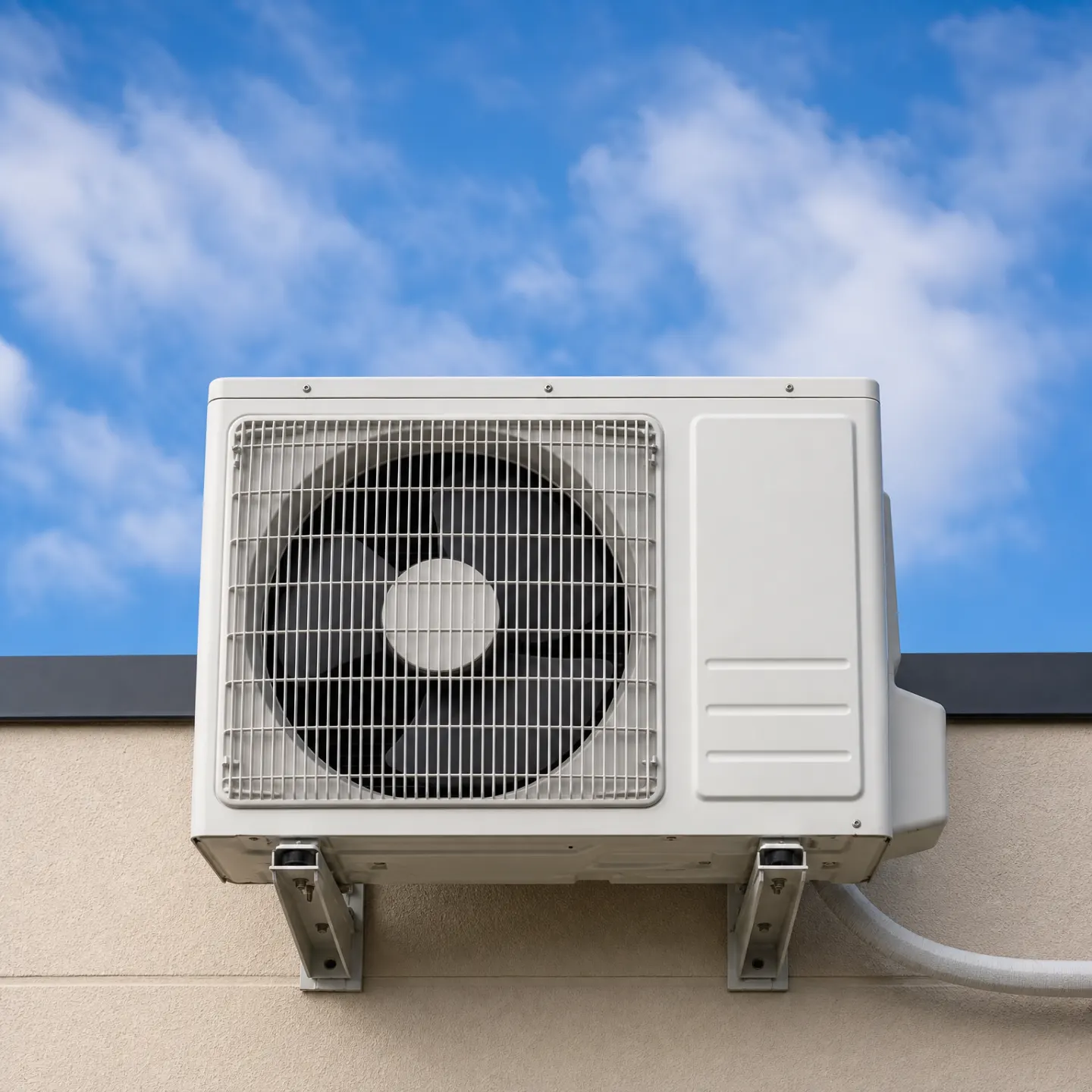
A white mini-split air conditioner outdoor condenser unit mounted on metal brackets against a beige stucco exterior wall, with a blue sky and scattered clouds in the background.

Get it done before May, not during the first heat wave

Cooling in Fayette County runs June through August, three months. May is worth marking on the calendar. A mini split put in before May runs on a quiet schedule, with time to size the room right and order the unit you actually want. Wait until the first hot week and you're choosing from what's in stock, on whatever day a crew can get to it.

The old system doesn't have to come out

If you're adding a mini split alongside a furnace or baseboard heat, nothing about the existing system needs to change. The mini split runs its own line set to the outdoor unit and its own wiring. It doesn't tie into ductwork or a boiler loop, so the old equipment keeps doing exactly what it did before, just with less of the load if you choose to run the mini split as the primary heat for that room.
Taking out baseboard heat is its own job

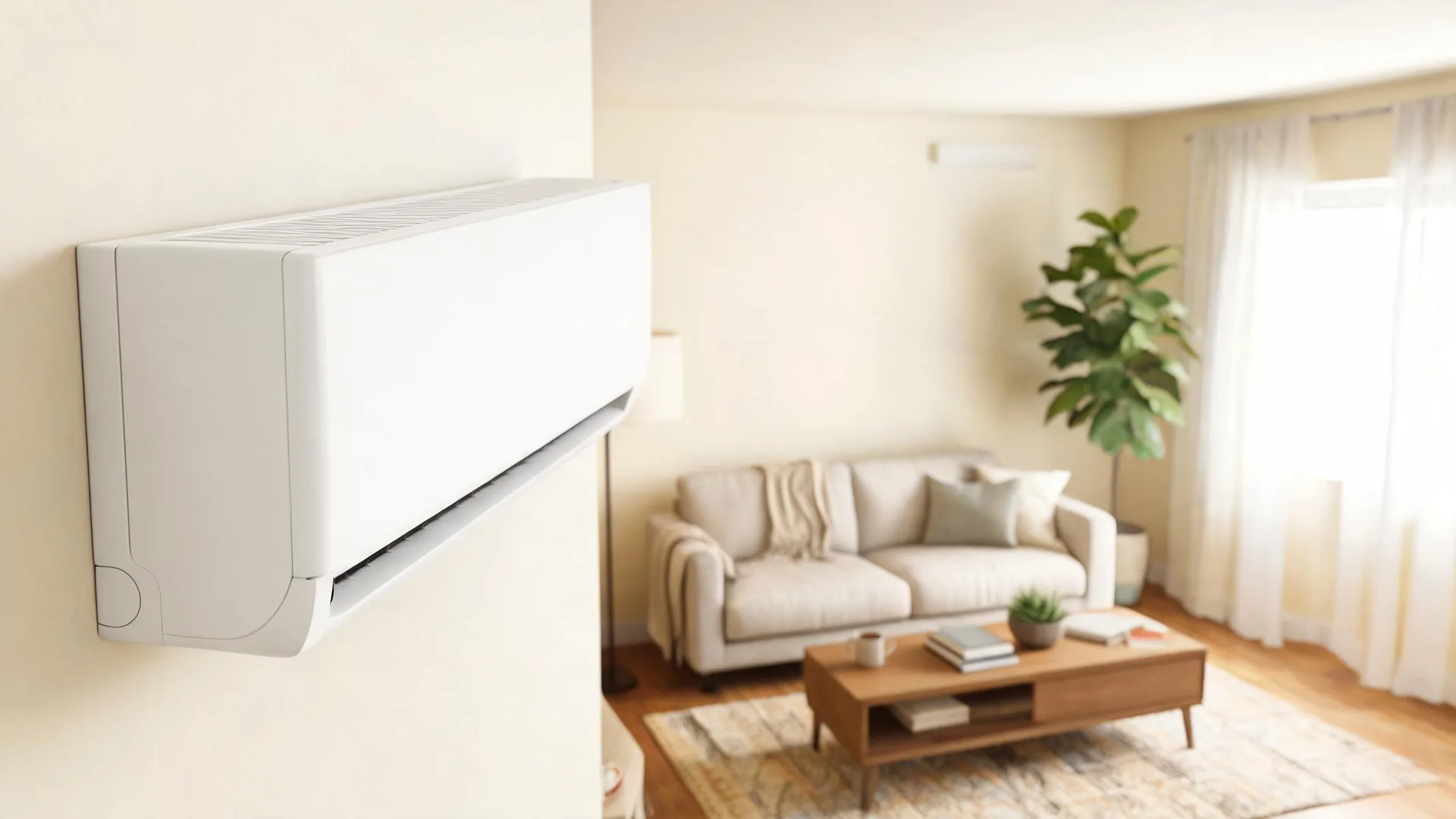
If the plan is to remove electric baseboard heaters entirely, that's separate work from hanging the mini split. The baseboard units get disconnected from the circuit, pulled off the wall, and the wiring either gets capped or reused for the new system, depending on what the mini split needs. Patching the wall where the baseboard sat is usually on the homeowner's list, not the installer's.

Mini splits carrying the same SEER2 number can still perform differently once it gets cold, so ask what the manufacturer rates the unit for at low outdoor temperatures, not just at the standard test point. Some heat pumps hold their heating output as the temperature drops. Others fall off hard, and the room ends up leaning on a backup heat strip you didn't plan on using much. Ask about the defrost cycle too. Every outdoor unit builds up frost in cold, damp weather and has to clear it, but a well-built one does this without dumping cold air into the room while it runs. Ask about parts as well. Some manufacturers keep parts on hand for years after a model stops selling, others stop stocking them much sooner, and that matters more once the unit is no longer new.

SEER2 and HSPF2 on the label tell you how much heat a unit moves for the electricity it uses, measured against a standard lab test. A higher rating means less electricity for the same comfort, all else being equal. It doesn't tell you how fast a room warms up or cools down, or how quiet the outdoor unit runs. Models with the same rating can still behave differently once installed, because the test doesn't account for a room with poor airflow or a lot of window glass. The rating is worth comparing between models side by side. It isn't a promise about what you'll pay to run it, since that comes down to how long the unit runs and where the thermostat gets set, not just the number on the label.