A row of illuminated white colonial houses with black shutters and a stone wall along a road at dusk.

Furnace Repair in Uniontown, PA

Tell us about the job

Takes about a minute. No obligation.

Step 1 of 3: Equipment

October through May, eight months straight

A furnace in Fayette County runs about eight months a year, with overnight lows averaging 22°F in December, January and February. That is a long, steady workload, not an extreme one. It wears parts out the normal way, over normal time.

Likely the common failure, not something unusual

Nothing about Uniontown puts a harder strain on a furnace than it sees anywhere else. When one acts up here, it is usually the same igniter, flame sensor or blower motor issue a tech sees all the time. Finding which one it is, and fixing that part, is the job.

8 months
October through May, your furnace is on duty
22°F
the average winter night it heats against
27 winter storms
in ten years, the nights a failure hurts most
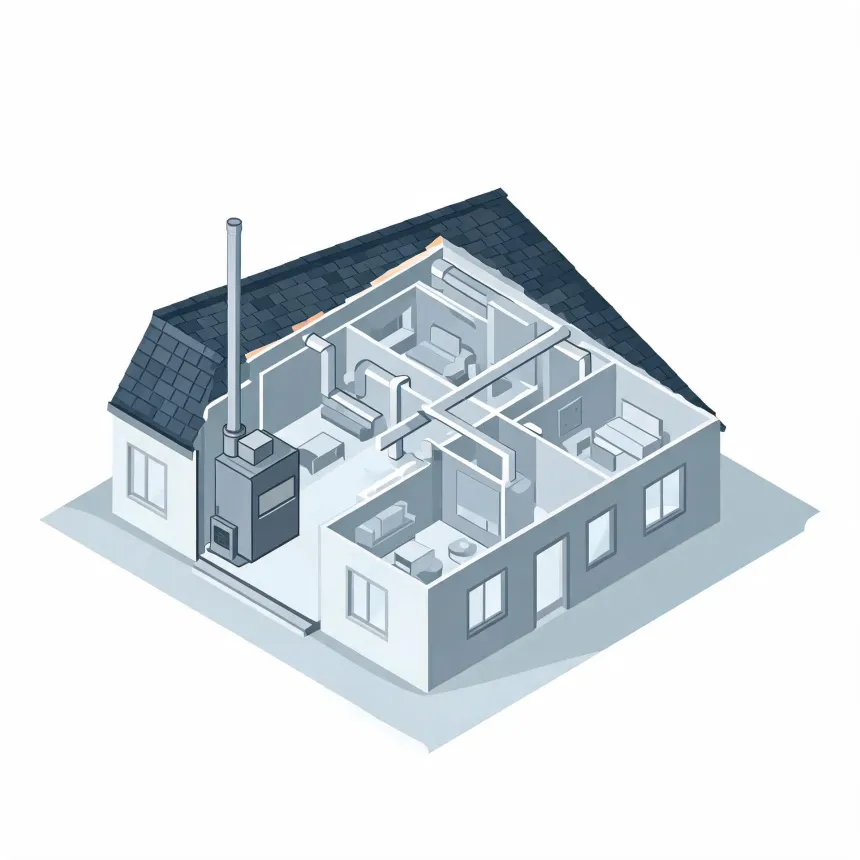
Isometric cutaway illustration of a single-story house showing interior rooms, ductwork, and a dark furnace unit with a tall flue pipe rising past the shingled roof.
Your furnace works hardest from November through March.

NOAA nClimDiv, 1991–2020 normals

Furnaces in Fayette County start running in October, right after September's mild stretch.

The first cold snap finds whatever part was already weak, so early October is when failures show up.

If your furnace is that old, ask about its remaining life before you pay for the part

Half the homes here were built by 1959
Heat runs October through May
Winter nights average 22°F
Weather here doesn't push furnaces any harderFayette County sees 185 damaging wind events and 27 winter storms a decade, but that's wear a furnace is built for, not a reason it's failing now.

Natural gas ran $13.12 per million Btu in Pennsylvania in 2024. A furnace that short cycles or runs longer than it used to is costing more every month it sits unfixed. That does not mean anything is wrong with the gas line or the meter. It means a part is failing and making the furnace work harder to do the same job. The fix is the same one a tech would make anywhere else in the state.

Find out how much life your furnace has left

Half the furnaces in Fayette County are running in houses built in 1959 or earlier. If yours is one of them, a repair might only buy a short stretch of time. Before paying for the part, ask the tech straight out how many years they'd expect to get out of this furnace.

Find a contractor
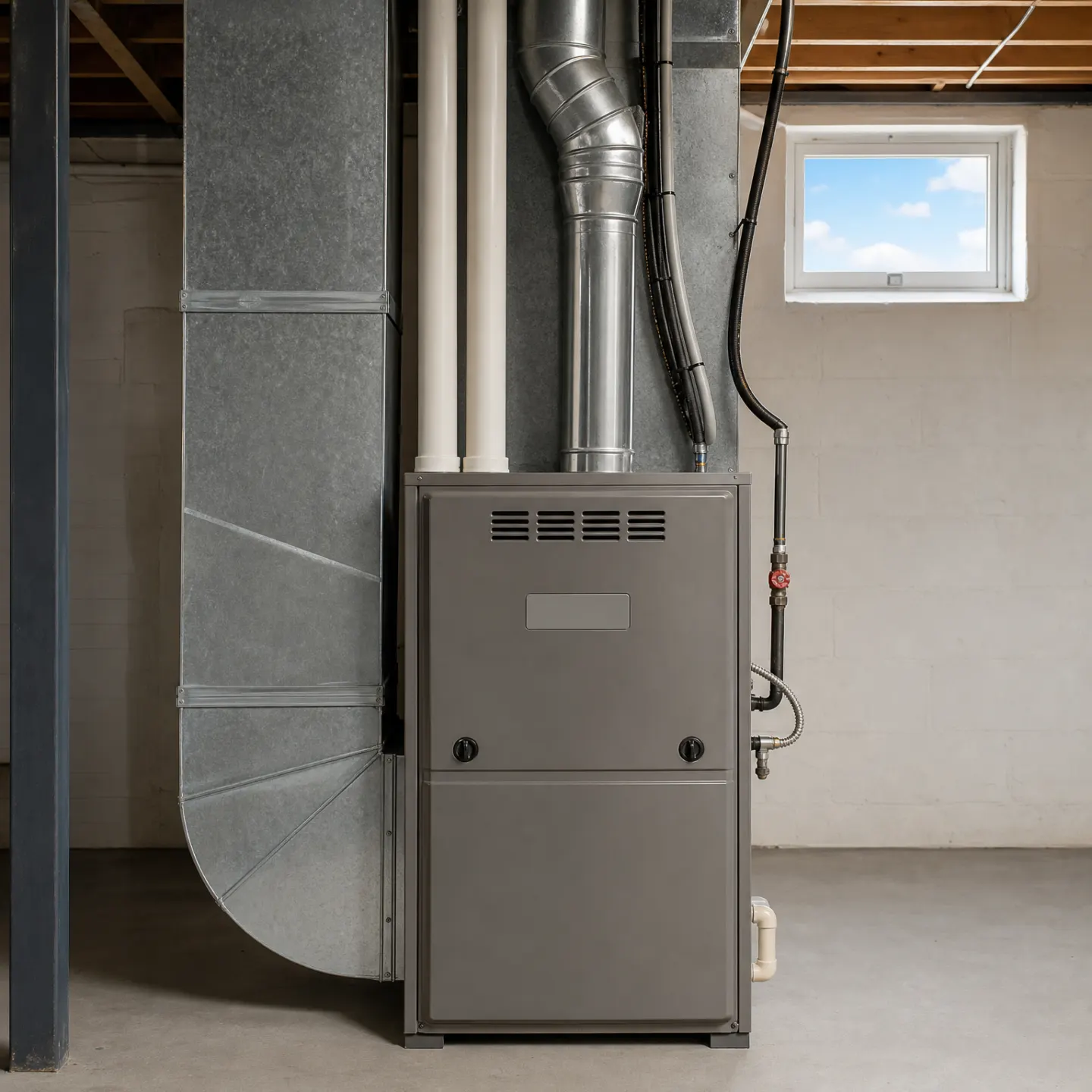
A gray residential gas furnace installed in an unfinished basement, surrounded by ductwork, a metal flue pipe, and a gas supply line.

What to check before you call

Before anyone comes out, there are a few things worth checking. Look at the thermostat first. Make sure it's set to heat, not just fan, and that the set temperature is actually above room temperature. Check the batteries if it uses them. Next, look at the furnace itself for a light. Most have a small window showing a flashing light, and that flash pattern points to a specific fault if you look it up against the panel inside the furnace door. Check the air filter. A filter packed with dust chokes airflow, and some furnaces will shut themselves down rather than run with no air moving across the heat exchanger. Check that the switch on or near the furnace, the one that looks like a light switch, hasn't been bumped off. Also check any switch near the furnace that looks like it belongs to a shop vac, because that's sometimes the furnace's own power switch. If the furnace uses a condensate line, look for a kink or a clog there too, since a blocked line will shut the whole system down on purpose. None of this tells you what part has failed. It just rules out the things that aren't actually broken.

The igniter is usually the first to go

A hot surface igniter is a thin strip that heats up to light the gas, and it gets more brittle every time it cycles. Eventually it cracks or stops glowing hot enough, and the furnace won't light at all. It's a wear part, not a sign of anything else wrong.

A dirty flame sensor mimics bigger problems

The flame sensor tells the control board the burner actually lit. A thin coat of oxidation on the rod can block that signal, so the furnace fires for a few seconds and shuts off, over and over. It looks like a serious fault but it's often just a rod that needs cleaning.

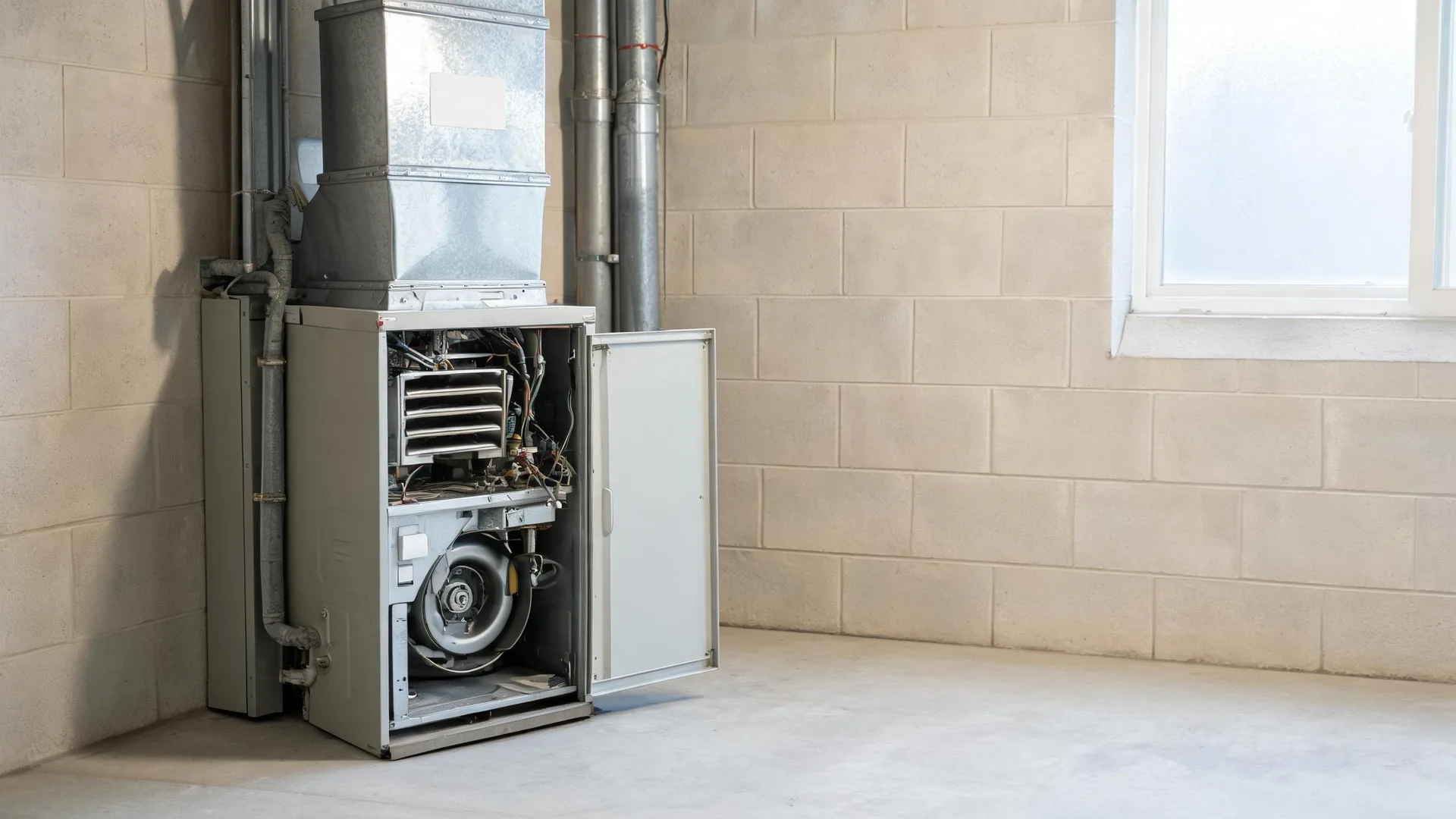
An empty unfinished basement containing a forced-air furnace with overhead ductwork, exposed ceiling joists, and a single hanging light bulb.

A new furnace would cut about $160 a year off heating for a typical Fayette County home.

  • A new high-efficiency furnace$630 a year
  • An older furnace$790 a year

Estimates for a typical Fayette County home, compared with an older unit built to the previous federal minimum, from EIA household energy data, Pennsylvania fuel prices and NOAA climate normals. Your home will differ.

Repair makes sense when one part has failed and the heat exchanger is sound.

Replacement makes sense when the heat exchanger is cracked or the furnace keeps needing parts.

Age matters more than the symptom when you're deciding whether to fix a furnace or replace it. A control board or a blower motor can be swapped on almost any furnace and it runs like normal again. A cracked heat exchanger is a different conversation, because that's the part that keeps carbon monoxide out of the air you breathe, and once it's cracked the furnace needs to be replaced, not patched. The other thing worth asking is how many repairs this same furnace has needed. One failed igniter is normal wear. A furnace that's had the igniter, then the flame sensor, then the blower motor, all within a couple years, is telling you the rest of its parts are wearing out together, not separately. At that point a repair fixes what broke this week, not what's about to break next.