




A new wooden picket fence runs along a grass lawn in front of a row of similar two-story houses with gabled roofs and light siding, under large leafy trees.

Boiler Installation in Uniontown, PA

Tell us about the job

Takes about a minute. No obligation.

Step 1 of 3: Equipment

Fuel oil and gas both show up heavily in Fayette County. Utility gas heats 44 percent of homes here, and fuel oil or kerosene heats another 24.5 percent, which is a bigger share than you'll find in most parts of the state. That matters for a boiler, since oil-fired and gas-fired boilers are built differently and a contractor needs to know which one is going into your house before pricing anything. If your current boiler runs on oil, replacing it with another oil unit usually means the tank and lines already in place can stay put. If it runs on gas, the same logic holds. Either way, matching what's already there is the straightforward route.

A standard boiler sized to your house is built to run on gas at $13.12 per million Btu in Pennsylvania.

There's no reason to pay for a bigger or higher-efficiency unit than this house needs.

Half these homes were built by 1959, and a boiler going in now has to fit the house that's already standing

Half the homes here were built by 1959
Heat runs October through May
Winter nights average 22°F
Get it done before OctoberHeat runs October through May here. September is the month to put in a new boiler, not the month you're stuck without one.

Fayette County sees its share of rough weather, with damaging wind the most common of it. None of that changes what boiler you need. A boiler sized right for your house handles a cold snap the same way it handles any other winter night, because the sizing is based on your home's heat loss, not on how bad the weather gets outside. Where this matters more is the power going out. Most boilers need electricity to run the igniter and circulate water, so if the power drops, the boiler stops with it. That's a question of backup power, not a reason to oversize the unit itself.

Any boiler going in here has to clear zone 5A

Fayette County falls under zone 5A, a cool climate where heating carries the bigger load. A gas-fired boiler installed now has to reach at least 84 percent AFUE to meet that standard. There's also a federal tax credit available for qualifying installations, worth checking before you settle on a unit.

Find a contractor
A man in a cap, dark long-sleeve shirt and tan work pants climbs porch steps toward a blue front door, carrying a waxed canvas tool bag with tools visible inside.

The boiler itself is one line item

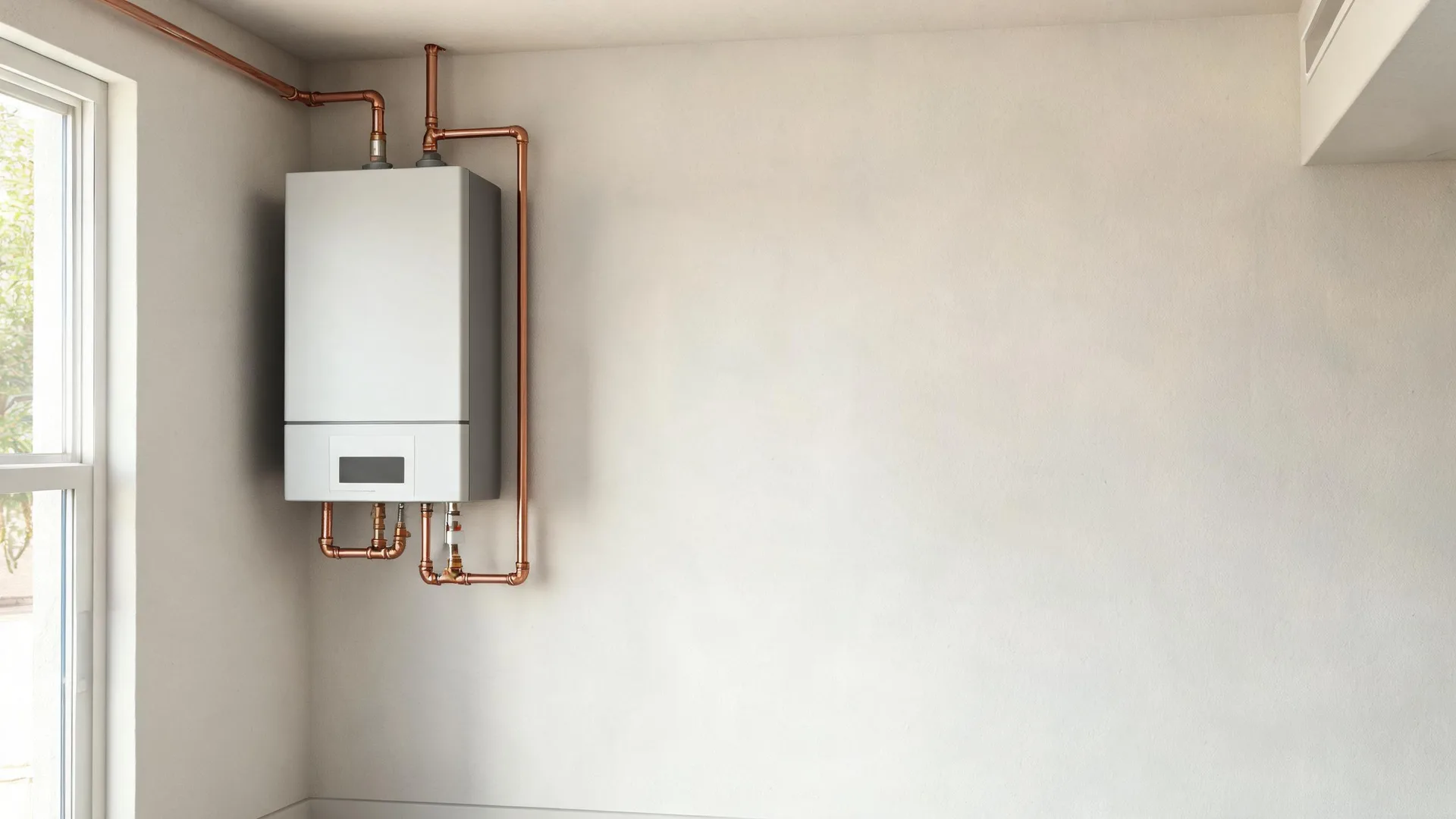
A boiler installation covers more than the unit sitting in the basement. The contractor has to run new venting if the old boiler vented differently, replace the expansion tank if it's worn, add a new flue if the chimney liner won't work with a higher-efficiency unit, and rework the near-boiler piping to match the new unit's connections. Every one of those is a separate job stacked onto the install.
What's already there decides the rest

A straight swap, same fuel, same footprint, same venting, is the cheapest kind of job because the contractor is reusing what works. Switching fuel type, moving the boiler to a different spot, or adding zones that didn't exist before all mean new gas lines, new electrical runs, or new piping through walls and floors that were never opened up before. The further the new setup is from the old one, the more labor it takes to get there.

A boiler that's too big for the house doesn't heat it any better. It cycles on, satisfies the thermostat fast because it's pushing out more heat than the rooms are losing, then shuts off again before it's run long enough to warm the water evenly through the system. That short cycling wears on the ignition system and the pump, and it leaves rooms feeling uneven even though the boiler is working the whole time. A contractor works out the right size with a heat loss calculation, room by room, based on wall area, window area, insulation and ceiling height, not on the size of the boiler that's coming out. Square footage alone doesn't tell you enough, since houses that look alike from the outside can lose heat at very different rates. The output has to match what the house actually loses on a cold night, no more and no less.

Install day starts with the old boiler coming out, and the near-boiler piping going with it if the new unit connects differently. The contractor runs new venting or a new flue where the setup calls for it, sets the new boiler, and ties in the gas line, the water lines and the electrical. Once it's connected, the system gets filled and purged of air, because trapped air in the lines keeps water from circulating the way it should. Then comes the combustion test, checking that the burner is firing clean and the flue is drawing properly, and the controls get set so the boiler responds to the thermostat the way it's supposed to. A straight swap can wrap up in a day. Anything that means opening walls for new piping or running a flue through a space that didn't have one before takes longer, since that work has to happen before the boiler itself can go in.