


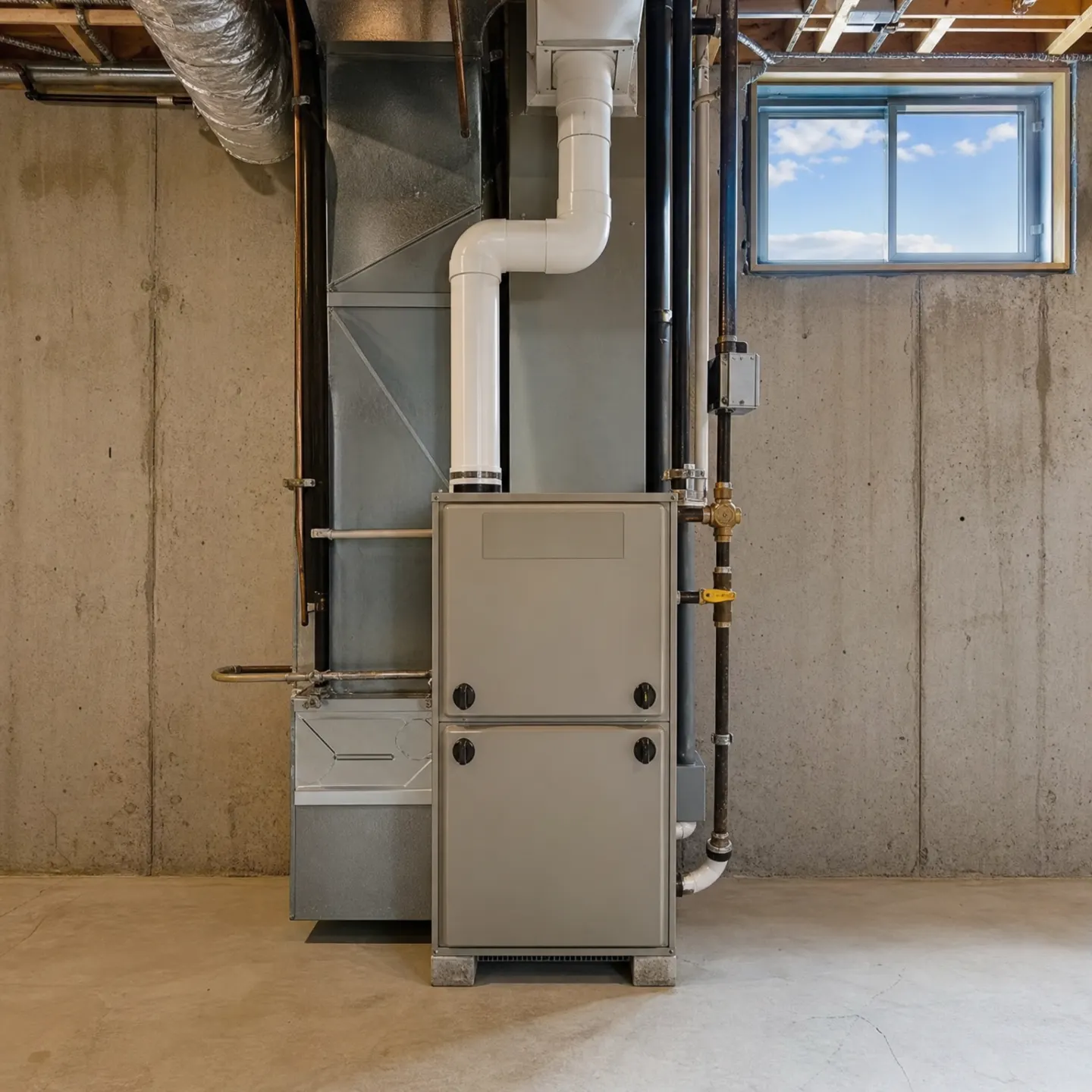
A gas furnace and sheet-metal air handler unit installed in an unfinished concrete basement.

Furnace Repair in Washington, PA

Tell us about the job

Takes about a minute. No obligation.

Step 1 of 3: Equipment

Washington County saw 344 severe weather events between 2015 and 2024. Damaging wind caused 263 of those, hail caused 59, and 12 tornadoes touched down in that stretch. A furnace doesn't sit out in that, but the outdoor parts of a heating system do, and wind-driven debris can bend a cabinet or crack a line without stopping the unit from running. Across Pennsylvania, 15% of households went at least a day without power in 2024, long enough for pipes to get cold and for a furnace to need a clean restart once power comes back. If a storm has come through and your furnace seems fine, it's still worth having someone look at what's outside.

8 months
October through May, your furnace is on duty
23°F
the average winter night it heats against
67%
of homes here heat with gas, so most furnaces here burn gas
10 winter storms
in ten years, the nights a failure hurts most
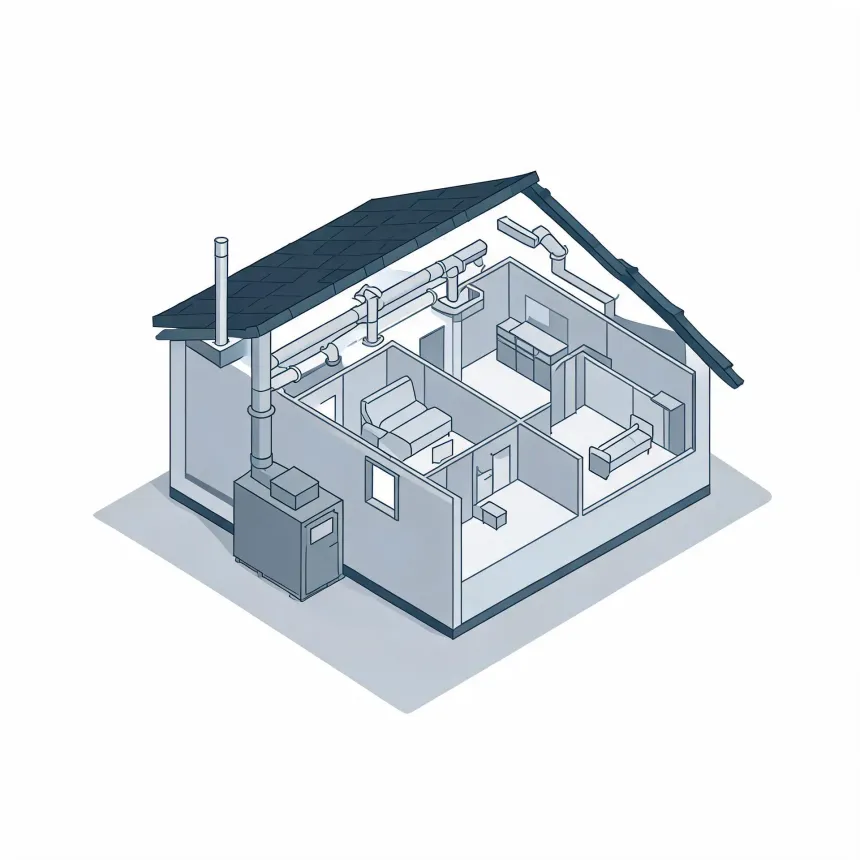
Isometric line illustration of a cutaway single-story house showing interior rooms with furniture, ceiling ductwork, a chimney flue, and a furnace unit outside the exterior wall.
Your furnace works hardest from November through March.

NOAA nClimDiv, 1991–2020 normals

Half the furnaces in Washington County sit in houses built in 1966 or earlier.

A furnace that old may be near the end of its working life, so a repair call is also the time to ask how much life is left in it.

Eight months of heat starts in October, right when a weak part fails

Heat runs October through May
Climate zone 5A
Winter nights average 23°F

If your house was built in 1966 or earlier, ask the contractor straight out how many years a furnace like yours usually has left, not just what today's fix will run. A repair still makes sense when the part failing is small, a flame sensor or a pressure switch, something cheap next to the cost of a new system. It makes less sense when the part failing is the heat exchanger itself. Get the answer in writing if you can, so you're not guessing again next winter.

If a storm came through, have the outside of your furnace checked

A furnace that still runs isn't the same as one that came through a storm fine. If wind or hail has hit your property, have someone look at what's outside before the next cold stretch asks more of it.

Find a contractor
A gray gas furnace with attached ductwork and piping installed in an unfinished concrete basement.

What the furnace tells you before it fails

A furnace rarely quits without warning. It usually tells you first. Short cycling is one of the clearest signs, where the burner fires, runs for a minute or two, then shuts off before the house warms up. That points to a flame sensor losing its read on the flame, a clogged filter choking airflow, or a cracked heat exchanger tripping a safety switch. A burner that won't light at all, or lights and then drops out, often means a bad igniter or a dirty flame sensor rod. Listen for sounds that weren't there before: a low rumble, a squeal from the blower motor, a bang when the burners light. A banging sound right at startup can mean gas is pooling before it catches, which isn't something to wait out. Watch the air coming out of the vents too. Weak airflow from every register points to the blower or a blocked duct. Warm air from some rooms and cold from others usually isn't the furnace at all, but it's worth mentioning when someone comes to look. A yellow or flickering burner flame instead of a steady blue one means the gas isn't burning clean, and that's worth a same-day call. So is a furnace that trips its breaker more than once. One trip can be an accident. A second one is the machine telling you something's wrong inside it.

Most failures start small

A furnace rarely breaks all at once. An igniter weakens, a flame sensor builds up a film, a pressure switch starts sticking before it fails outright. These are wear parts, worn down by every cycle the furnace runs, and they're the pieces that usually give out first.

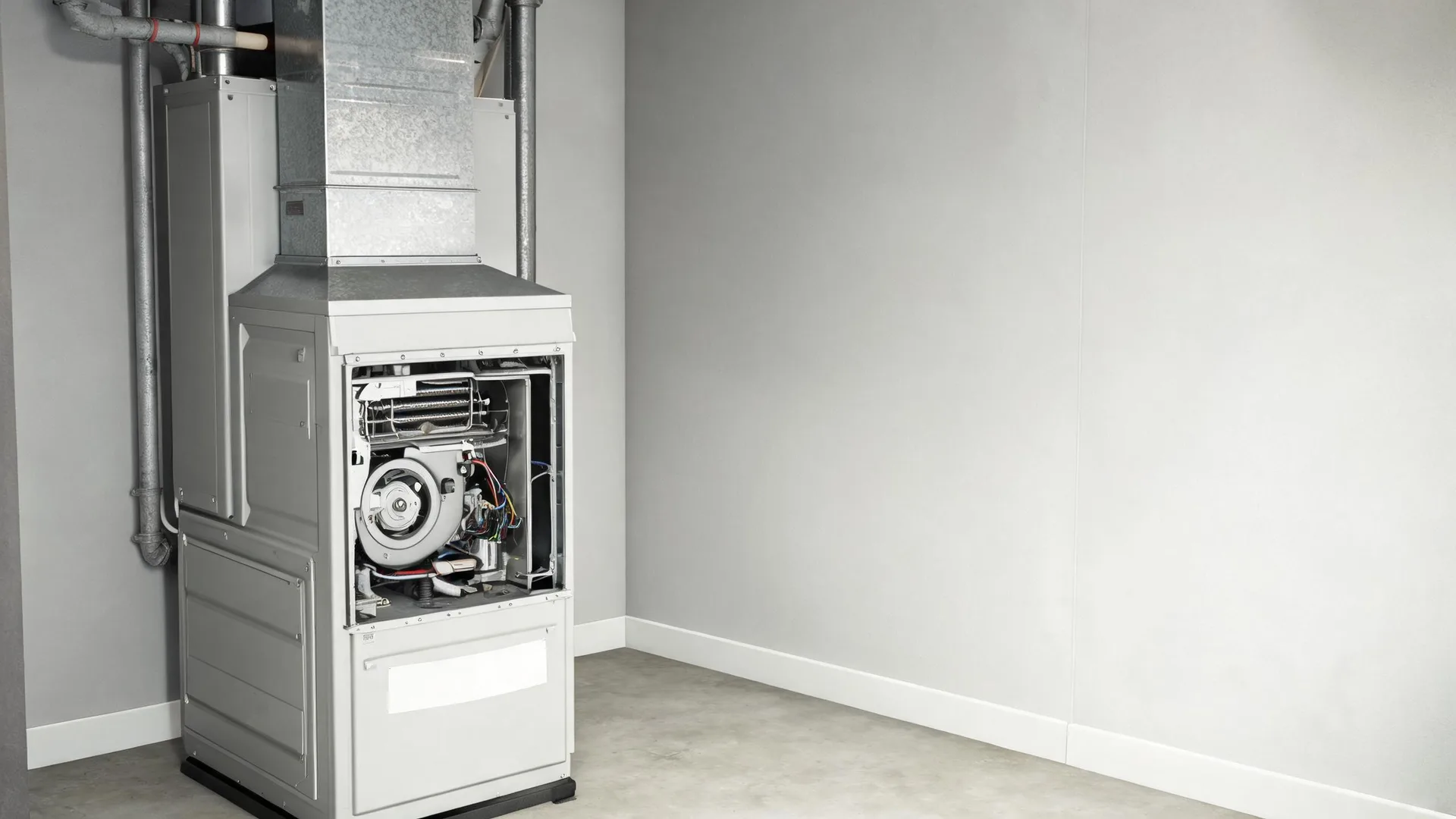
The heat exchanger is the one that matters most

Everything else in the furnace can be swapped out on its own. The heat exchanger is the one part where a crack usually means the whole unit gets replaced instead of repaired, so a tech checking a cracked exchanger is looking at more than just this one repair.

An unfinished basement containing a forced-air furnace with metal ductwork, exposed wooden ceiling joists, a hanging Edison bulb, and bare concrete floors.

A new furnace would cut about $140 a year off heating for a typical Washington County home.

  • A new high-efficiency furnace$610 a year
  • An older furnace$750 a year

Estimates for a typical Washington County home, compared with an older unit built to the previous federal minimum, from EIA household energy data, Pennsylvania fuel prices and NOAA climate normals. Your home will differ.

Repair makes sense when one part has failed and the heat exchanger is sound.

Replacement makes sense when the heat exchanger is cracked or the furnace keeps needing parts.

A repair decision really comes down to which part failed and what that part means for the rest of the furnace. A flame sensor or an igniter wears out on its own schedule and replacing it tells you nothing about the blower motor or the heat exchanger sitting next to it. Those are small jobs, and once they're done the furnace runs like nothing happened. A cracked heat exchanger is different. It usually means the furnace has been working harder than it should for a while, and other parts worn by the same years of use may not be far behind it. A tech looking at the failed part should also be willing to look at the furnace as a whole and say plainly whether this is a repair worth making or one that's buying time on a unit near the end of its run.