


A row of illuminated white colonial houses with black shutters and a stone wall along a road at dusk.

Furnace Repair in Economy, PA

Tell us about the job

Takes about a minute. No obligation.

Step 1 of 3: Equipment

October through May is when furnaces here carry the real load, eight months straight. Whatever was already weak in a furnace tends to show up in those first cold weeks of October, when it has to run hard for the first time since spring. A furnace that short-cycled last winter, or made a noise someone put off looking into, is likely to do the same thing again once it starts up this fall. Checking it in September, before it has to work, is the better time to catch that than waiting for it to quit on a cold morning.

8 months
October through May, your furnace is on duty
23°F
the average winter night it heats against
70%
of homes here heat with gas, so most furnaces here burn gas
9 winter storms
in ten years, the nights a failure hurts most
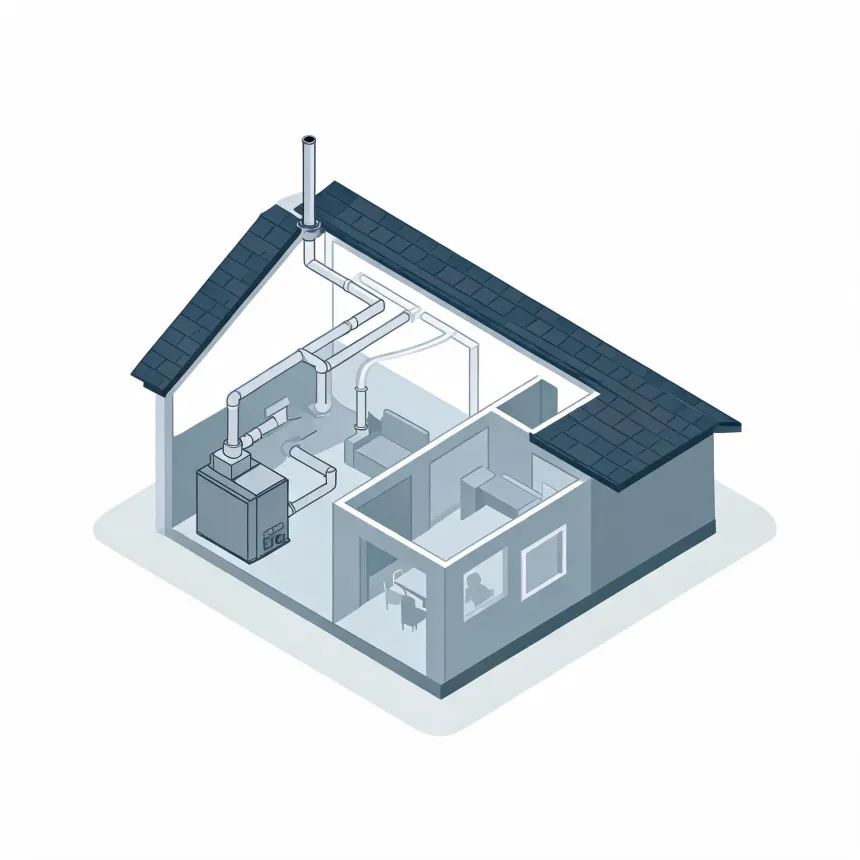
Isometric cutaway illustration of a single-story house showing interior rooms, a furnace unit with connected ductwork, and a flue pipe extending through the dark shingled roof.
Your furnace works hardest from November through March.

NOAA nClimDiv, 1991–2020 normals

Furnaces in Economy run eight months straight, October through May.

An eight month season wears furnace parts out in the usual order, so a repair is usually a known fix.

Beaver County's weather isn't what's hard on a furnace

235 severe weather events from 2015 to 2024
15% of homes statewide lost power a day or more in 2024
190 damaging wind events from 2015 to 2024

A cracked heat exchanger is the one to stop on. Keep running it and the crack doesn't hold still. It spreads a little more with every heat cycle, and that crack is what lets exhaust mix into the air moving through the house. A flame sensor caked with residue works the same way in miniature. The furnace fires, can't confirm the flame, shuts off, and tries again. Each short cycle beats on the ignition system a little more than the last. Low airflow from a clogged filter raises the heat exchanger's temperature every time the burners fire, so a small problem left alone becomes a bigger one. None of this announces itself. The furnace still blows warm air right up until the part it was wearing out finally gives.

Get it looked at early

Problems tend to show up in the first weeks of the season, when the load hits a part that was already weak.

Find a contractor
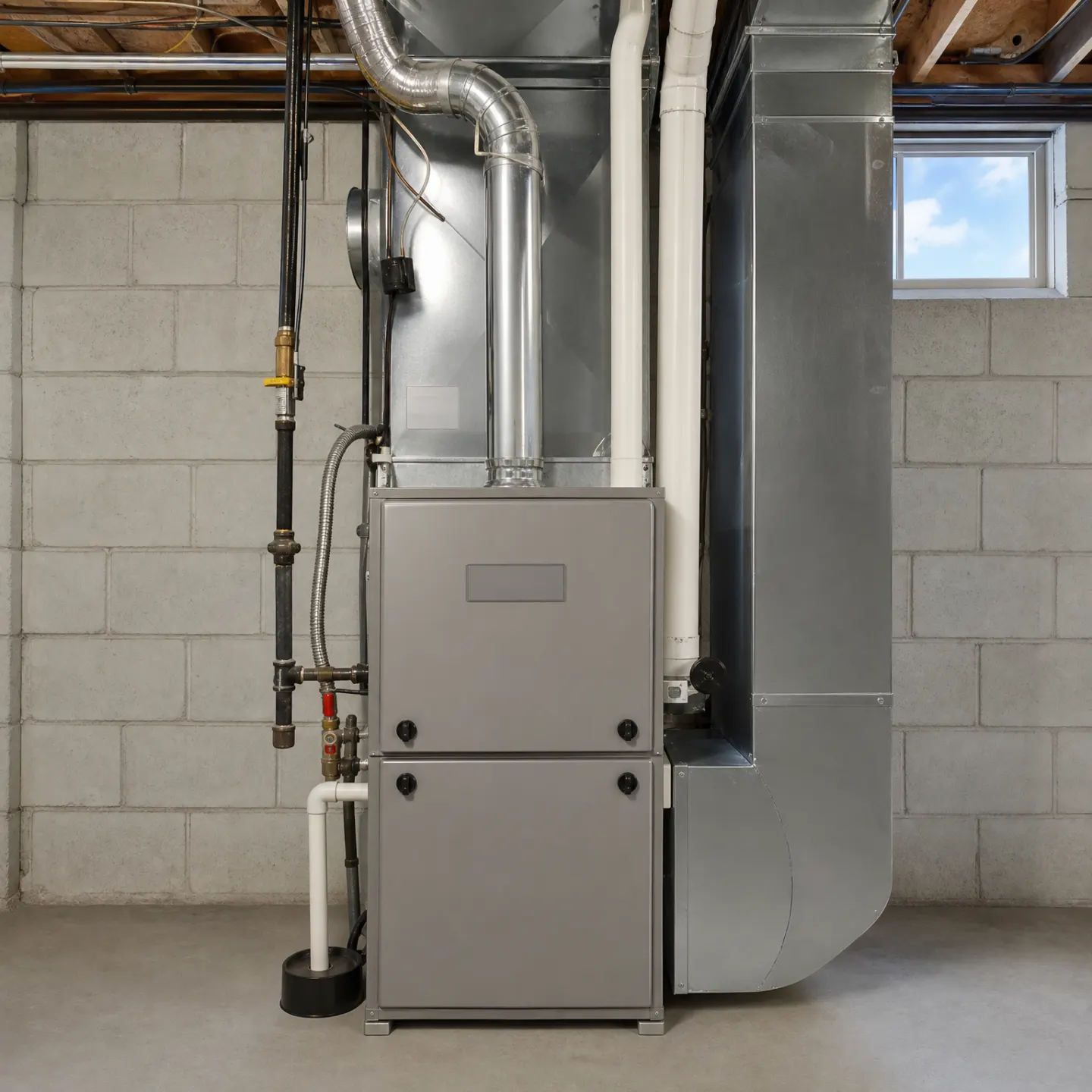
A gray high-efficiency gas furnace installed in an unfinished basement, surrounded by gas lines, a condensate drain, and sheet-metal ductwork.

How old is the furnace actually

Half the homes in Beaver County were built in 1957 or earlier. A furnace that came with a house that age is probably not the original one. If yours was swapped in at some point with no record of when, a repair call is really deciding something bigger than the part in front of you. The part can likely be fixed. What's worth asking first is how many winters are left behind it.

The igniter wears from the cycle itself

Every time the furnace fires, the igniter heats up fast and then cools down once the burners shut off. That repeated swing is what eventually cracks it. A furnace that takes several tries to light, or won't light at all, is pointing at the igniter before anything else.

A blower motor usually warns before it quits

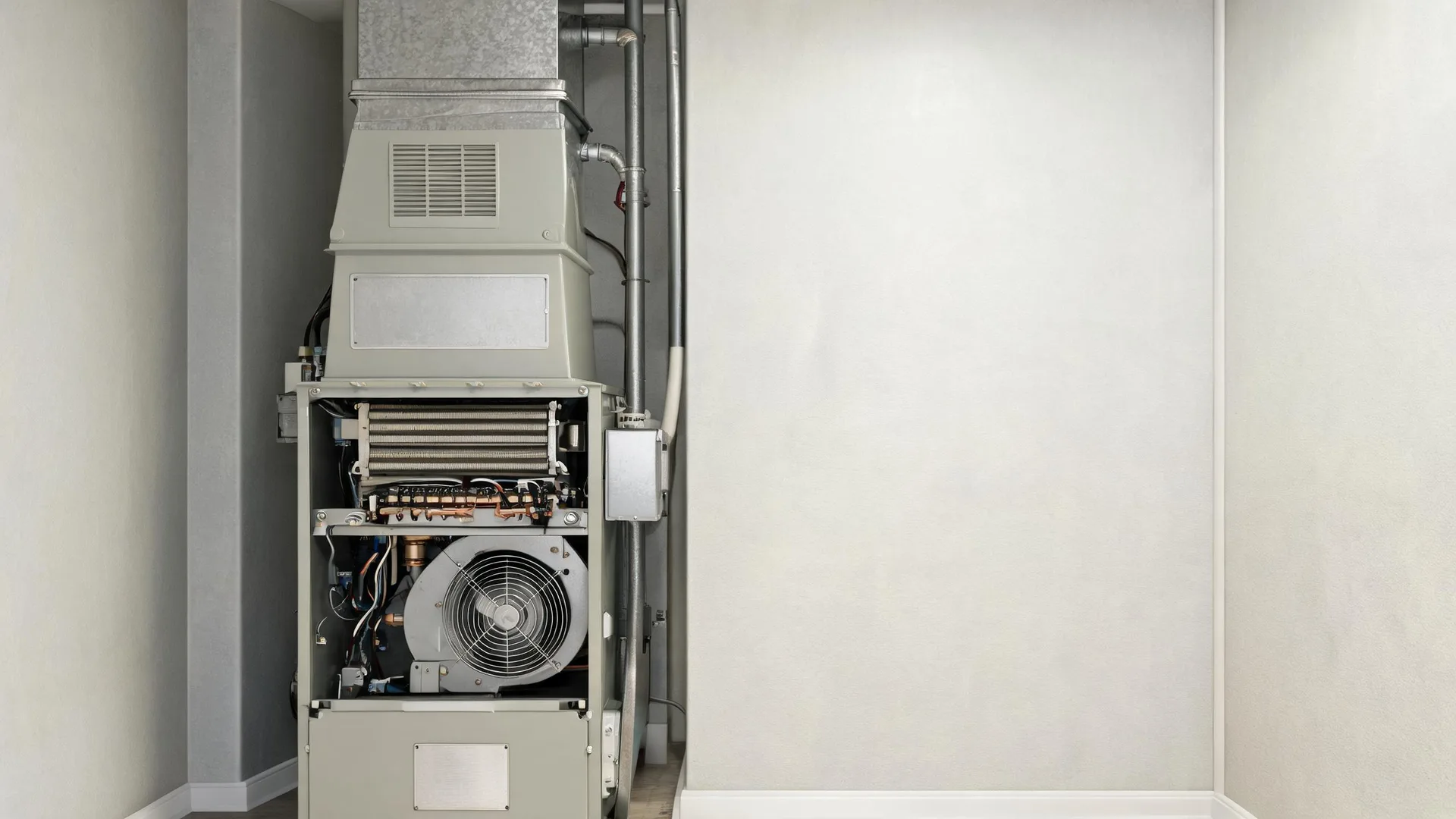
The bearings inside a blower motor wear down slowly, so the motor tends to hum, grind or run slower than it should well before it fails outright. Catching it at that stage is a repair. Waiting for it to seize usually turns the job into a replacement.

An unfinished basement featuring concrete block walls, exposed floor joists, and a metal forced-air furnace with ductwork near a central pillar.

A new furnace would cut about $150 a year off heating for a typical Beaver County home.

  • A new high-efficiency furnace$620 a year
  • An older furnace$770 a year

Estimates for a typical Beaver County home, compared with an older unit built to the previous federal minimum, from EIA household energy data, Pennsylvania fuel prices and NOAA climate normals. Your home will differ.

Repair makes sense when one part has failed and the heat exchanger is sound.

Replacement makes sense when the heat exchanger is cracked or the furnace keeps needing parts.

A diagnostic call starts before any panel comes off. A tech wants to know what the furnace was doing. A noise, a smell, a short cycle, a pilot light that won't hold. That story usually points to a system first. Then comes power to the unit, the thermostat call, and the sequence of operation, watching whether ignition, flame sensing and blower all happen in the right order. A combustion analyzer checks what's actually coming out of the flue, since a flame can look normal and still be burning wrong. Static pressure readings across the filter and ductwork show whether the furnace is breathing the way it should. None of this is guesswork. Each reading either matches what a healthy furnace does or it doesn't, and the one that doesn't is usually the answer.