White colonial-style houses with lit windows photographed at dusk along a tree-lined street.

Boiler Repair in Economy, PA

Tell us about the job

Takes about a minute. No obligation.

Step 1 of 3: Equipment

Eight months of real work

Boilers in Economy run from October through May. Overnight lows average 23°F in January. That is a normal winter workload for a boiler. A breakdown now is most likely wear catching up with it, not anything unusual about this area.


Find the real cause

A boiler acting up usually traces back to one part. A failed igniter, a bad circulator pump, low pressure, a thermostat that stopped signaling right. Each one calls for a different fix. Getting the actual cause right the first time matters more than guessing at the obvious answer.

Boilers in Economy start the season in October.

October's first cold snap finds the part that was already wearing out.

Half the homes in Beaver County date to 1957 or earlier, old enough to have outlasted a boiler or two

Half the homes here were built by 1957
Heat runs October through May
Winter nights average 23°F
Nothing unusual here, just a normal boiler wearing outPennsylvania homes paid $13.12 per million Btu for natural gas in 2024.

Beaver County gets its share of rough weather. Damaging wind, hail, the occasional tornado. None of that is unusual for this part of Pennsylvania, and none of it reaches a boiler directly. Wind and hail hit the outside of a house. A boiler sits inside, running on gas or electricity, and what stops it is almost always something inside the unit itself. The one thing worth checking against the weather is the power. A boiler with electronic ignition will not fire without it. If the power went out and the boiler never came back on, that is the first thing to rule out before assuming a part has failed.

Ask how much life is left before repairing it

If the boiler came with the house, it's worth asking how much life it has left before fixing what's wrong with it now. That's a question for whoever comes out to look at it.

Find a contractor
A person in a dark long-sleeved shirt and tan pants, seen from behind, carries a worn canvas tool bag up stone steps toward a blue front door with a shrub in a blue planter beside it.

Where it usually starts

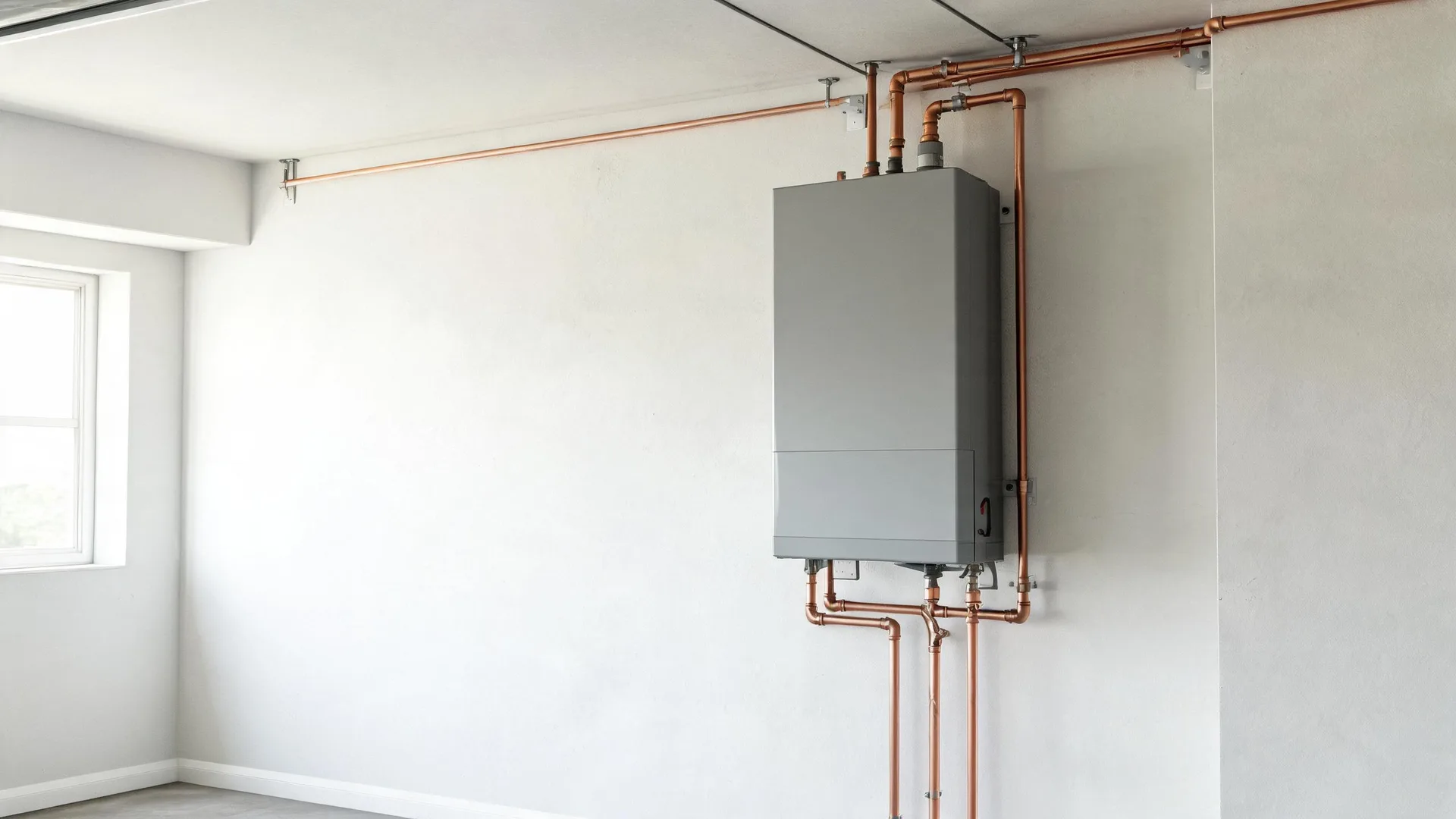
A boiler fails one part at a time. The igniter wears out and stops lighting the burner. A circulator pump seizes and stops moving water through the system. The pressure drops low enough that the boiler locks out rather than run dry. A flame sensor gets a coating on it and tells the control board there's no flame when there is. Each of these is a separate part doing its own job, and age is usually what gets them.

Why it shows up as no heat

Most boilers are built to shut themselves down rather than run unsafely. Low pressure, a failed sensor, an ignition fault, any of these trips a safety lockout and the boiler just stops. From the house it looks like the boiler died. From the inside it's doing exactly what it's supposed to do when one part stops working right.

A boiler that's losing pressure or short cycling on a bad sensor will still run if you let it, right up until it trips a lockout or damages something that was fine before. Low water pressure is the clearest case. The boiler keeps firing, water keeps getting pushed through as steam or hot water, and the level keeps dropping. Run it long enough on the same leak and you go from a quick refill to a cracked heat exchanger, which is not a repair anymore. A circulator pump going bad works the same way. It starts noisy or weak, still moving some water, and the boiler keeps firing against that reduced flow. Keep running it and the pump seizes completely, or the boiler overheats because the heat it's making isn't getting carried away fast enough. A dirty flame sensor is a smaller problem that turns into a bigger one if it's ignored. It starts cutting out every few hours, and the burner keeps relighting and cycling on and off. Every one of those cycles stresses the igniter a little more, and igniters are the part that tends to fail outright.

A boiler lasts decades, and most of what fails on one is a single part, not the whole unit. That's why repair is usually the right call. A new circulator pump or a new igniter brings an old boiler back to running the way it always did. Replacement starts making more sense when the heat exchanger itself is cracked or leaking, because that's the part that isn't sold on its own and isn't worth forcing a repair around. Age matters too, but not on its own. A boiler near the end of its expected life that needs a second or third repair in a short stretch is telling you something different than one that's run clean for years and just had a pump give out. The question worth asking isn't just what broke, it's whether the same boiler keeps coming back with a new problem every season.