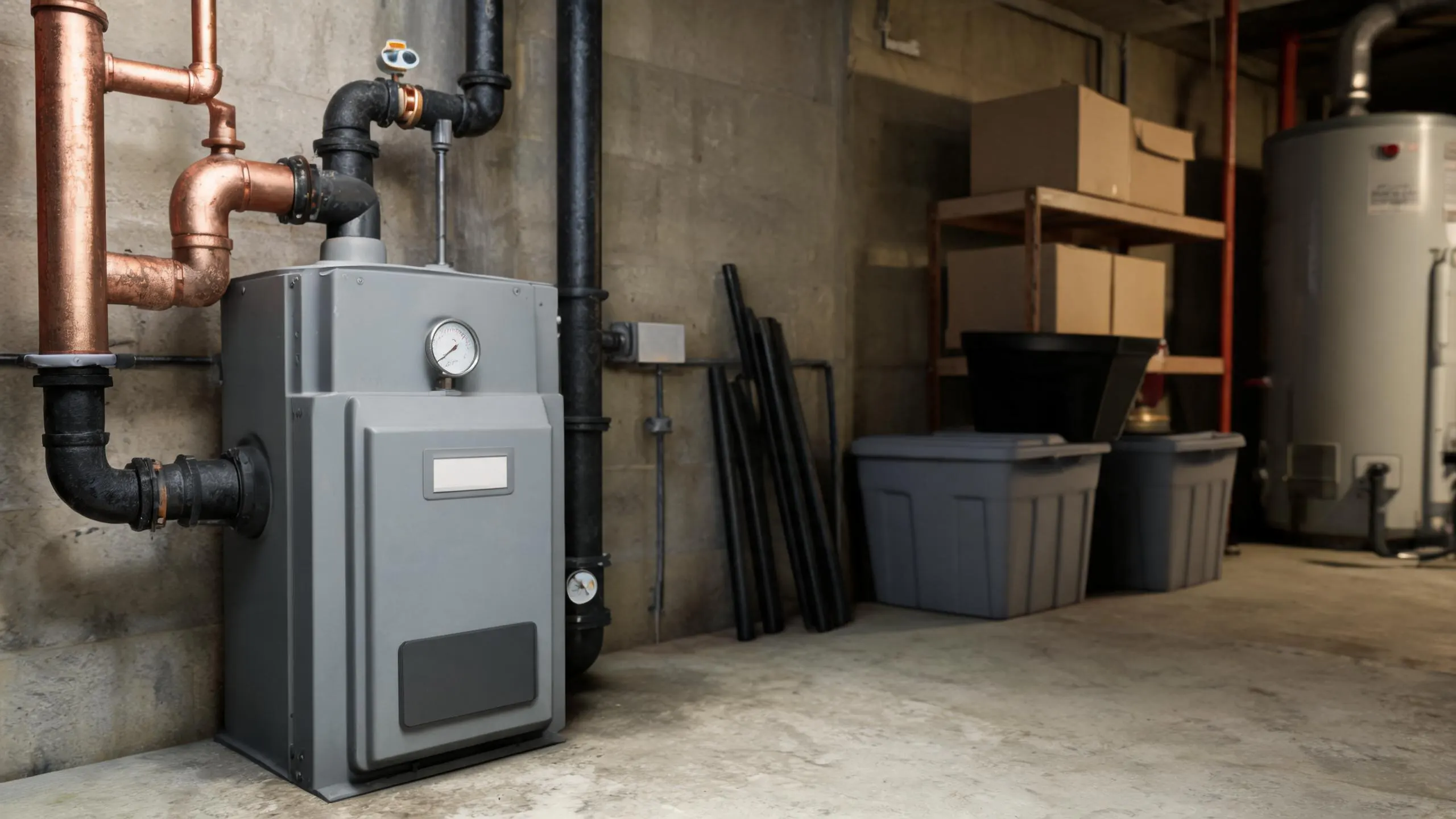





A gray boiler with copper and black iron pipe connections stands against a concrete basement wall, with a water heater and storage shelving visible in the background.

Boiler Repair in Butler, PA

Tell us about the job

Takes about a minute. No obligation.

Step 1 of 3: Equipment

Boilers in Butler County run heat from October through May, close to eight months of the year. Winter nights here average 21°F, so the boiler is doing real work most evenings, not just taking the edge off. That kind of regular use is still normal wear, nothing more. A boiler acting up after a stretch like that is usually dealing with the same handful of problems any boiler runs into, a failed igniter, a stuck valve, low pressure, air in the lines. Finding which one it is matters more than how long the system has been running.

A boiler that bangs or gurgles has air trapped in the lines, not a cracked heat exchanger.

Bleeding a valve is a quick fix, but a tech should still check why the air got in there.

Nothing about Butler winters overworks a boiler

Heat runs October through May
Winter nights average 21°F
Climate zone 5A
Boiler trouble shows up fast in OctoberHeat starts running in October here, and that first cold stretch finds whatever was already weak.

Half the homes in Butler County were built in 1980 or later. If your boiler came with a newer house, there's a good chance it's not that old either, and most boilers have plenty of working life left at the point when something first goes wrong. A failed igniter or a stuck valve doesn't mean the system is done, it means one part needs attention. Check what came with your house against when the trouble started. That tells you more than the age of the neighborhood does.

If your boiler came with a newer house, repair it

Get the actual part looked at before you think about replacing anything. A tech can tell you in one visit whether it's the igniter, the valve, or something with the pressure, and whether it's worth fixing. For most boilers in houses this age, it is.

Find a contractor
A man in a cap, long-sleeved shirt and work pants carries a canvas tool bag up porch steps toward a dark blue front door, beside a blue ceramic planter.

Check the pressure gauge first

Most boilers want the needle somewhere in a marked range, usually a band of green on the gauge. If it's sitting low, the system is short on water and won't heat right. There's a feed valve for adding water back in, and the manual for your model shows where it is. If the pressure keeps dropping after you've topped it off more than once, that's a leak somewhere in the system, and that part is for a tech to find.
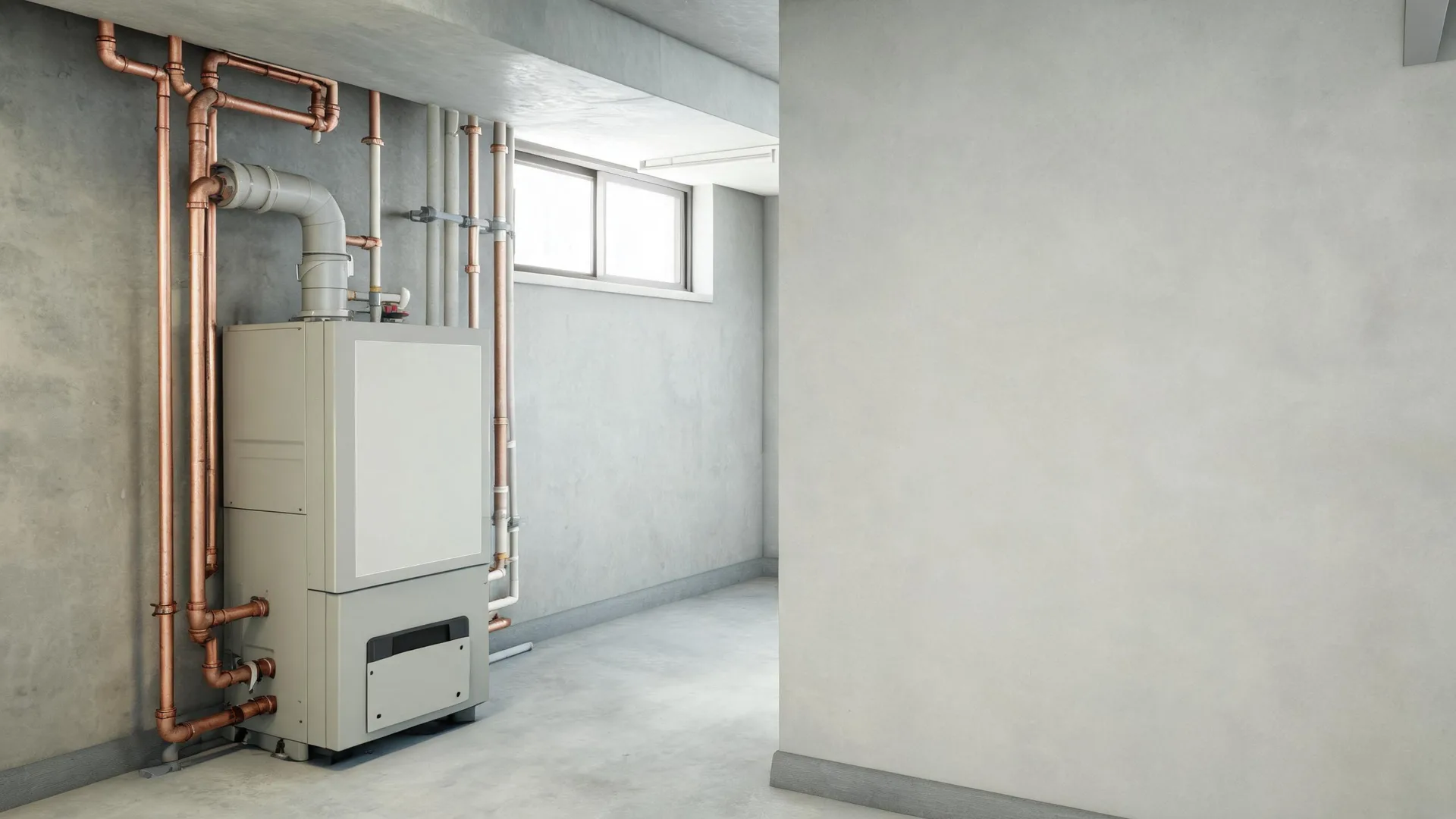
Look at what the boiler is telling you

Most boilers have a small window or panel that shows a fault code or a blinking light when something trips. Write down what it shows before you reset anything. Also check that the thermostat has power and is calling for heat, and that no switch near the boiler got bumped off. These few checks take a minute and they tell a tech exactly where to start instead of having to find it themselves.

A boiler that's losing pressure or short-cycling will keep trying to do its job, and that's what causes the real damage. Low water pressure means less water moving past the heat exchanger, and a burner firing against a dry or near-dry exchanger can crack it, which turns a feed valve fix into a full replacement. A stuck or failing valve left alone makes the pump work against resistance it wasn't built for, and pumps don't last long running that way. Even a bad igniter that causes the burner to attempt ignition over and over puts wear on the control board that one clean start wouldn't. None of this happens because the boiler is old. It happens because a small problem was left to run instead of getting looked at.

Most of the time a boiler problem is worth fixing, and the cases that aren't tend to look the same. A cracked heat exchanger is one of them, because that's the part that actually makes the heat, and it isn't something a tech can patch. If a boiler needs that part along with a pump or a control board, the repairs start adding up to the point where a new unit makes more sense than fixing each piece separately. Short of that, an igniter, a valve, a pump or a pressure problem are all ordinary repairs on their own. The question isn't really how old the boiler is. It's whether what's wrong is the kind of part that fails by itself or the kind that takes others down with it.