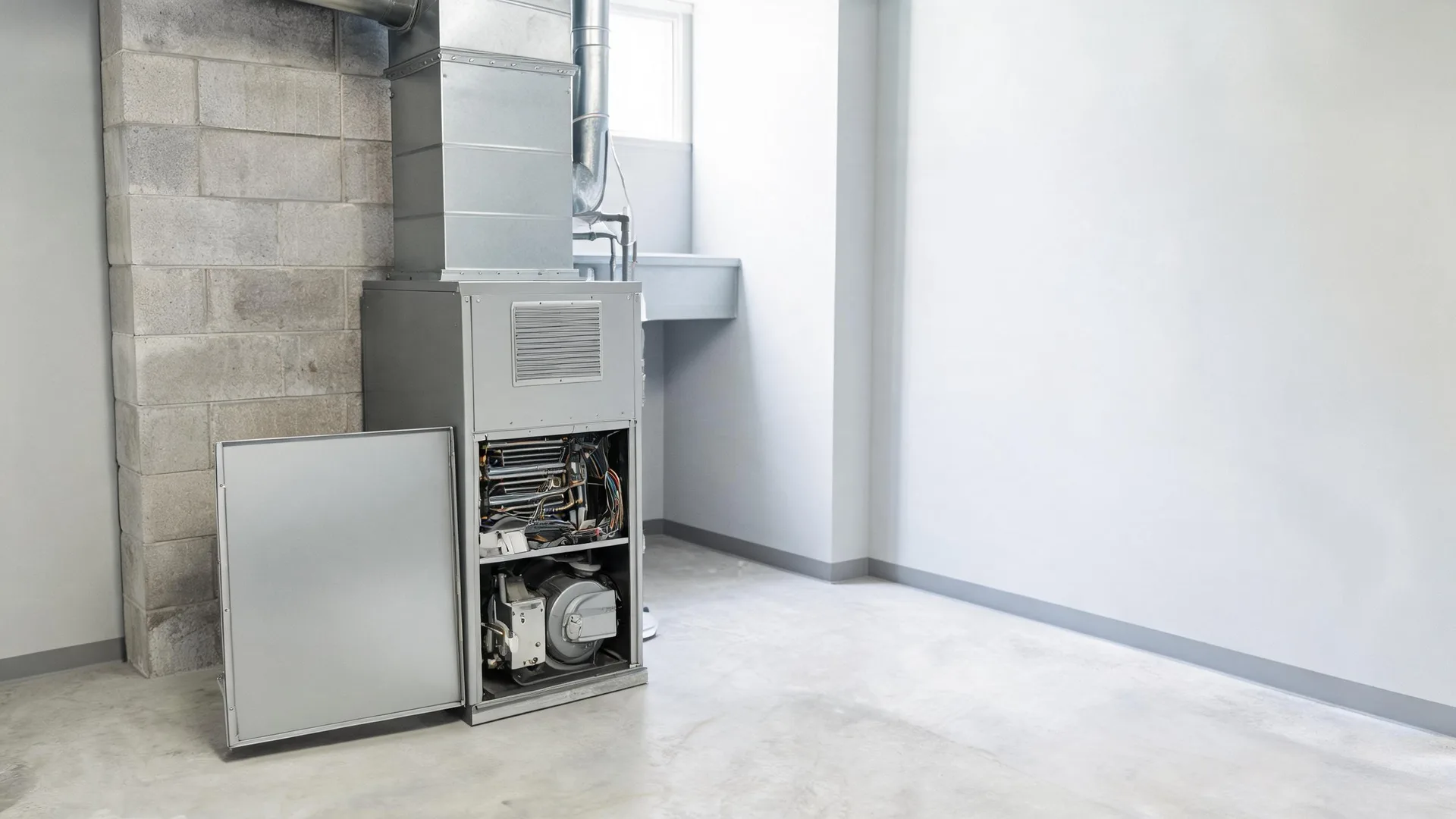
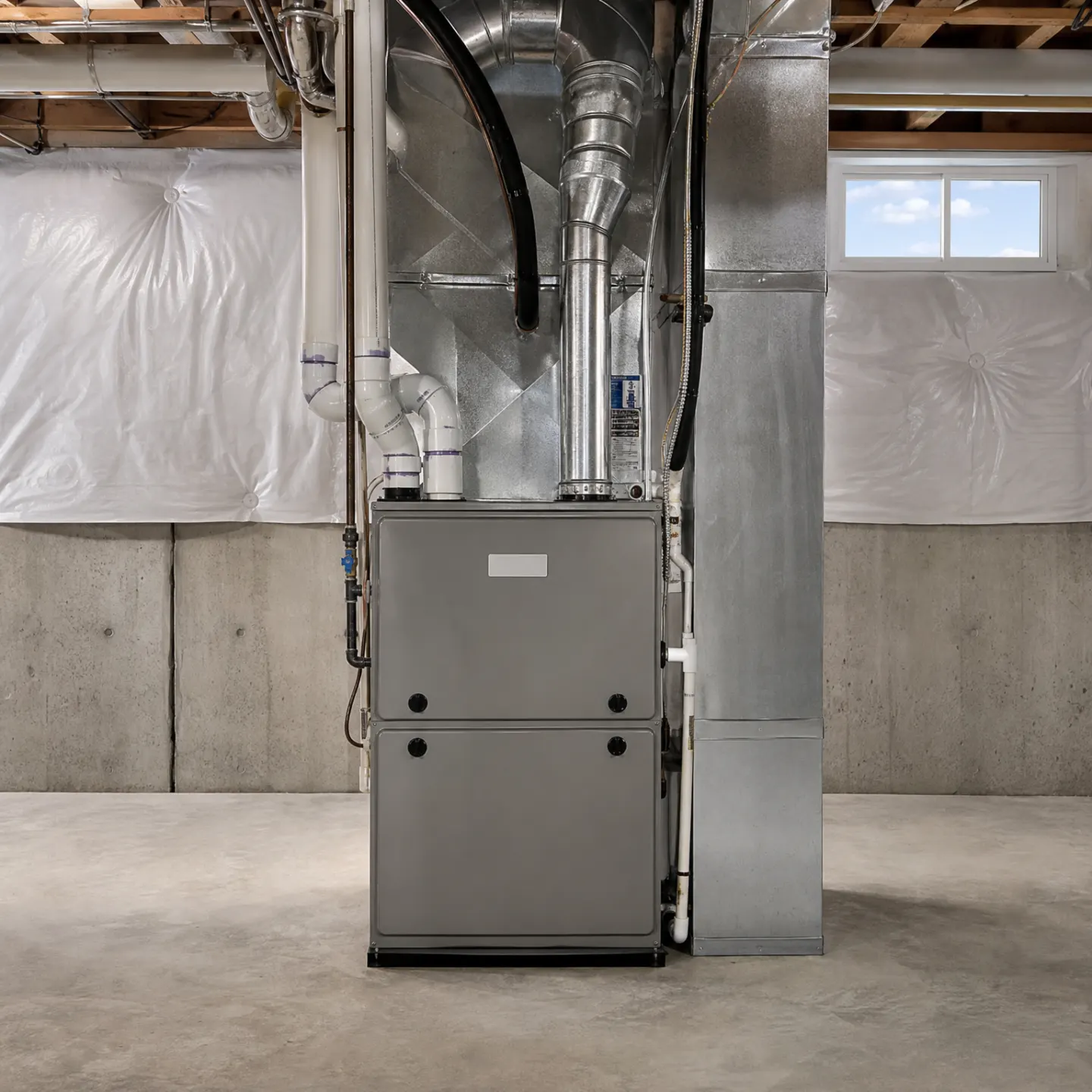
September is the month to get it looked at
Furnaces here sit unused from spring until October. A weak igniter or a failing blower motor can sit quiet all summer and only show itself the first cold week it has to run.
Takes about a minute. No obligation.
Furnaces here sit unused from spring until October. A weak igniter or a failing blower motor can sit quiet all summer and only show itself the first cold week it has to run.
Once heat is running October through May, a furnace that was already struggling won't wait to fail. Getting a repair done early in the season means fixing the real problem before it leaves you without heat on a cold night.
NOAA nClimDiv, 1991–2020 normals
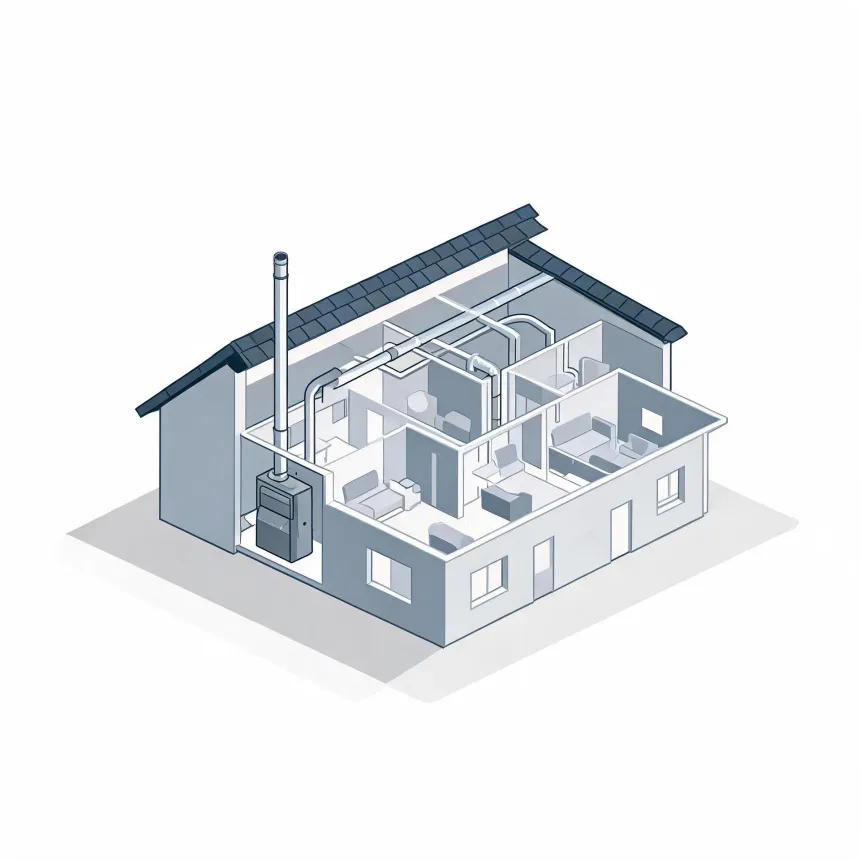
Furnaces in Butler County run about eight months a year, October through May.
Eight months of runtime wears a part out on schedule. Nothing about this place speeds that up.
Butler County doesn't do anything strange to a furnace. No weather pattern here, no fuel quality issue, makes these systems fail faster than the same furnace anywhere else. When one stops working, it's almost always an ordinary part reaching the end of its life. An igniter, a flame sensor, a blower motor. The fix is to find out which one and replace it, not to treat the house as a special case. Most homes here run on natural gas, which cost $13.12 per million Btu in Pennsylvania in 2024. That's worth knowing when you're weighing a repair against a replacement, since it factors into what the furnace costs to run either way.
Nothing in Butler County's weather works a furnace harder than normal. What's wrong with yours is most likely one part at the end of its life, not a sign of something bigger. Finding that part and replacing it gets your heat back and settles the question.
Find a contractor
Half the homes in Butler County were built in 1980 or later. If yours is one of them, the furnace itself may be newer too, especially if it's the one the house came with. A furnace that age has usually seen a lot less wear than an older one running the same months every year. That favors a repair. Replacing a part on a system with years of working life left gets you back to a furnace that's good for winters to come, not just this one.
A heat exchanger that's starting to crack won't heal itself. Every cycle flexes the metal a little more, and running the furnace on a cracked exchanger risks pushing exhaust into the air in the house instead of out the flue. This is the one furnace problem where shutting it off and calling for a repair matters more than staying warm another night.
An igniter or flame sensor nearing the end of its life doesn't always quit outright. It can light the burners some cycles and fail others, so the furnace seems to recover on its own. Each restart is the same weak part doing the same job a little worse. Replacing it once ends the pattern instead of waiting out the next cold morning it doesn't come on.
Estimates for a typical Butler County home, compared with an older unit built to the previous federal minimum, from EIA household energy data, Pennsylvania fuel prices and NOAA climate normals. Your home will differ.
Repair makes sense when one part has failed and the heat exchanger is sound.
Replacement makes sense when the heat exchanger is cracked or the furnace keeps needing parts.
Most of the time, the choice comes down to the part that failed and what else is still working. A cracked heat exchanger or a failed control board tends to end the conversation, since those repairs start to rival putting in a new furnace. A bad igniter, a failed flame sensor, a worn capacitor, those get replaced on their own and the rest of the furnace keeps running like nothing happened. Age matters less than people think. A furnace that keeps coming back with a different repair every year is wearing out across the board, not failing in one spot, and the next breakdown is already waiting. One that's run clean for years and just lost a single part is still a good furnace with a bad part in it.