An unfinished concrete basement containing a metal HVAC air handler, exposed wooden ceiling joists with sheet-metal ducts, a hanging bare bulb, copper pipes, and stacked cardboard boxes.

Furnace Repair in New Castle, PA

Tell us about the job

Takes about a minute. No obligation.

Step 1 of 3: Equipment

September is when to catch problems early

Furnaces in Lawrence County sit idle most of the summer, then start running again in October. The first cold stretch is when a weak igniter or a tired blower motor finally gives out, because that's the first real load it's seen in months.

A furnace that runs eight months a year needs to be right

Heat stays on here from October through May. A furnace that's limping along in October will be running that way for most of the year, so it's worth finding out what's actually wrong instead of waiting to see if it gets better.

8 months
October through May, your furnace is on duty
22°F
the average winter night it heats against
57%
of homes here heat with gas, so most furnaces here burn gas
6 winter storms
in ten years, the nights a failure hurts most
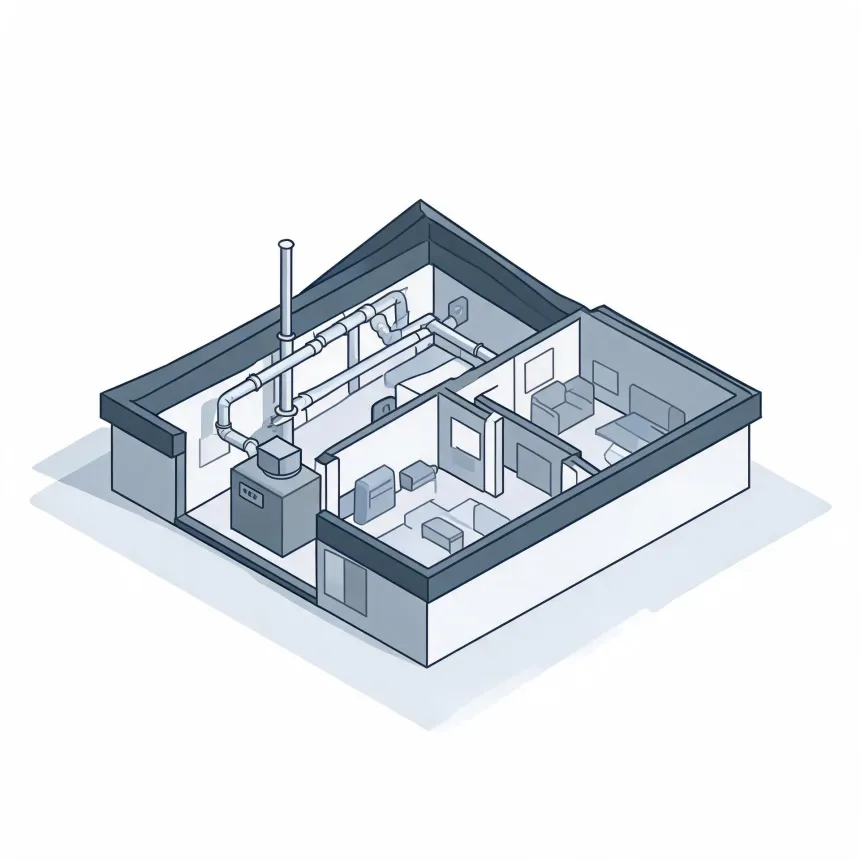
Isometric line illustration of a cutaway building interior showing a furnace unit with a flue pipe and ductwork running along the ceiling, plus adjacent rooms with simplified furniture.
Your furnace works hardest from November through March.

NOAA nClimDiv, 1991–2020 normals

Eight months of heat and 22 degree nights are normal for a furnace here.

So when one stops working right, the cause is usually a known part, not the weather.

Half the furnaces here are working in houses built by 1957

Half the homes here were built by 1957
Heat runs October through May
Winter nights average 22°F
Lawrence County doesn't ask more of a furnace than any other county206 severe weather events hit Lawrence County between 2015 and 2024, and none of them get inside your furnace

A furnace that won't light or won't stay lit is usually down to one part. The igniter cracks. The flame sensor gets a coat of residue. The pressure switch sticks. None of that has anything to do with New Castle winters being harder on a furnace than anywhere else nearby. It's a part reaching the end of its life after another full season of running. Natural gas ran $13.12 per million Btu in Pennsylvania in 2024, so a furnace cycling more than it should to make up for a bad part is worth fixing for that reason alone. A contractor can usually tell which part it is by how the furnace is failing. No ignition at all, ignition that won't hold, and short cycling each point to a different place to look.

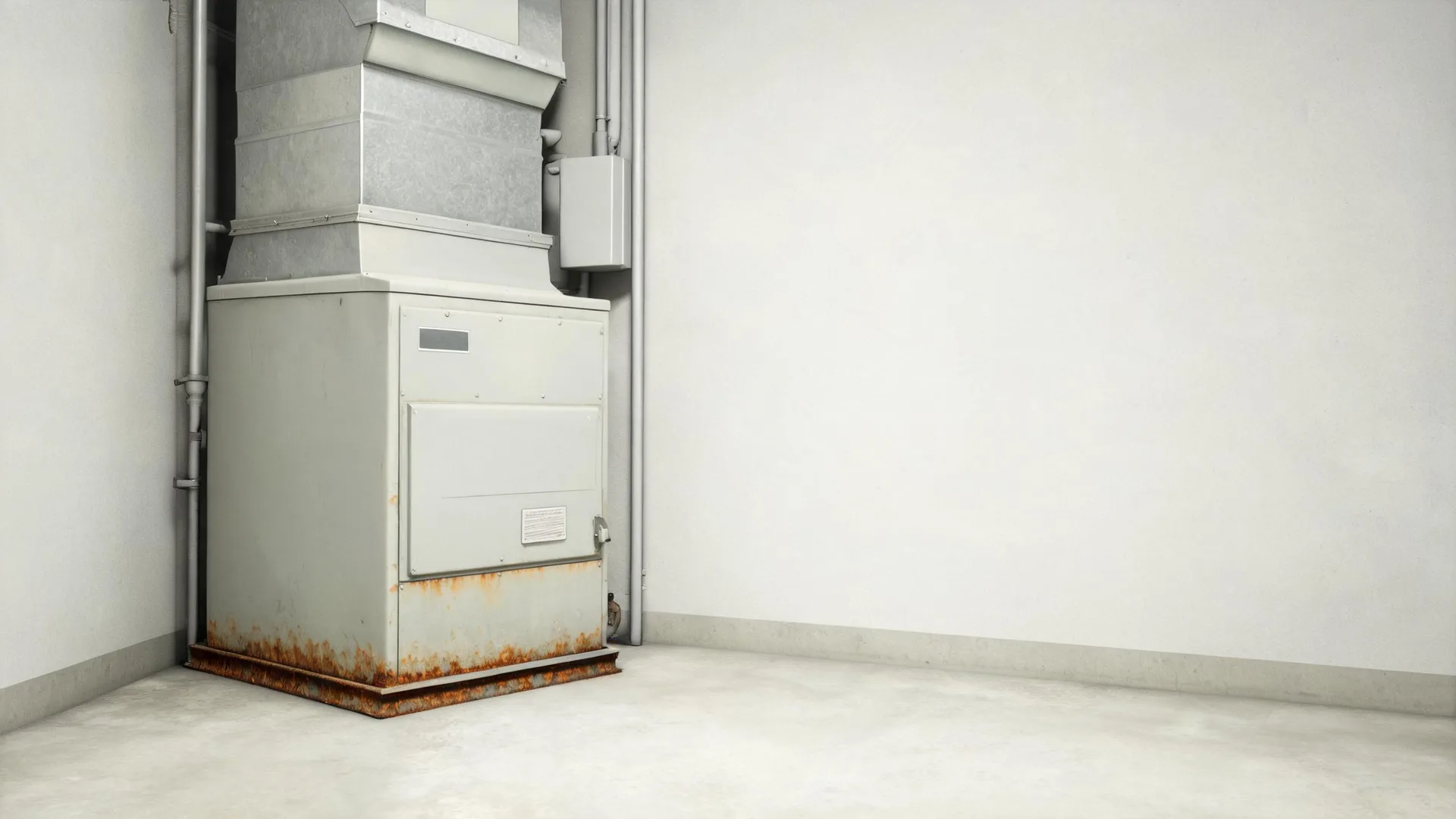
A furnace in a house that old is worth asking about before it's worth fixing

If your furnace came with a house built around 1957 or earlier, ask whether it's worth repairing before you pay for the repair. A contractor can tell you what's actually wrong, and whether it has real life left or is close to the end.

Find a contractor
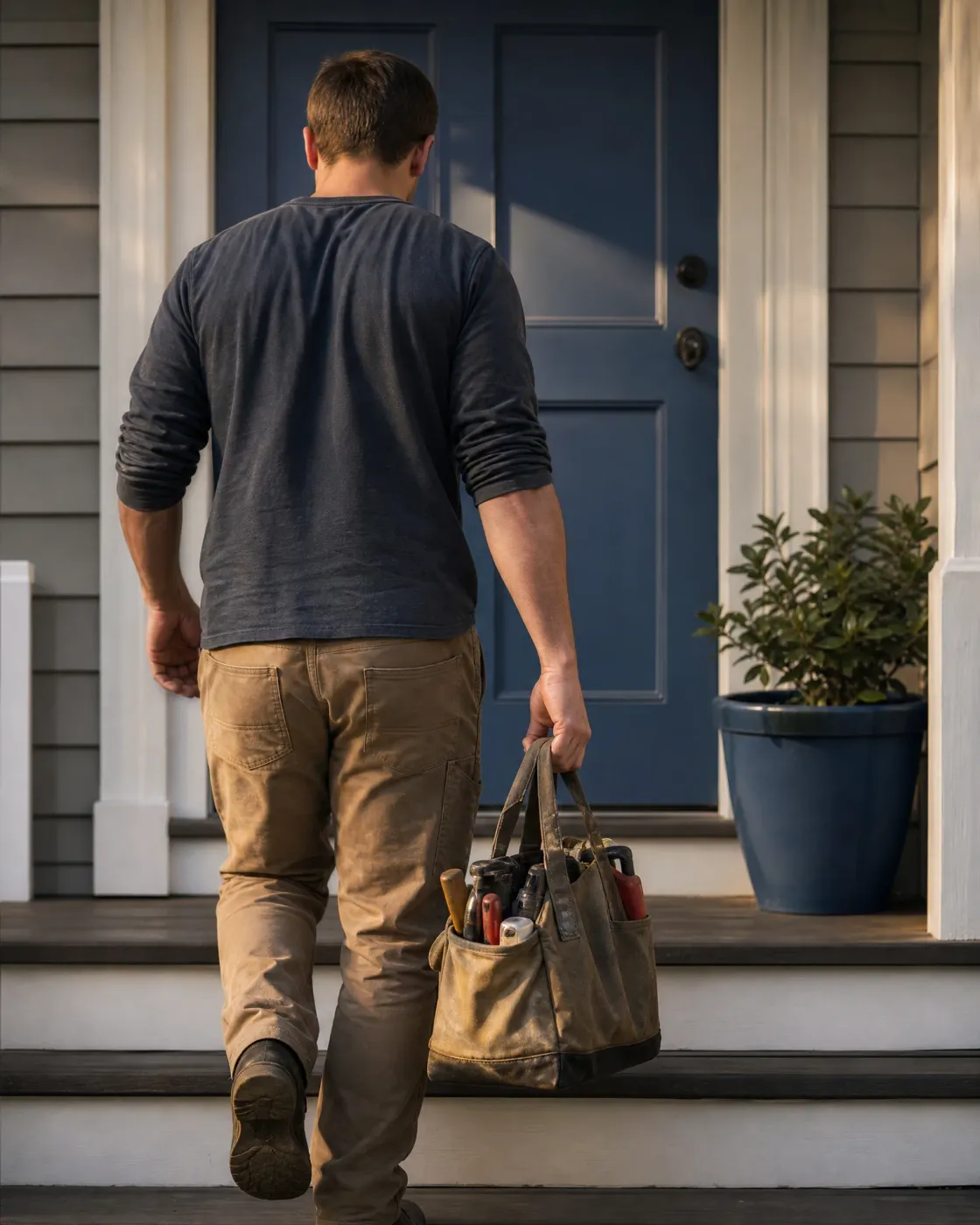
A man in a dark long-sleeved shirt and tan work pants, seen from behind, carries a canvas tool bag up porch steps toward a blue front door beside a potted shrub.
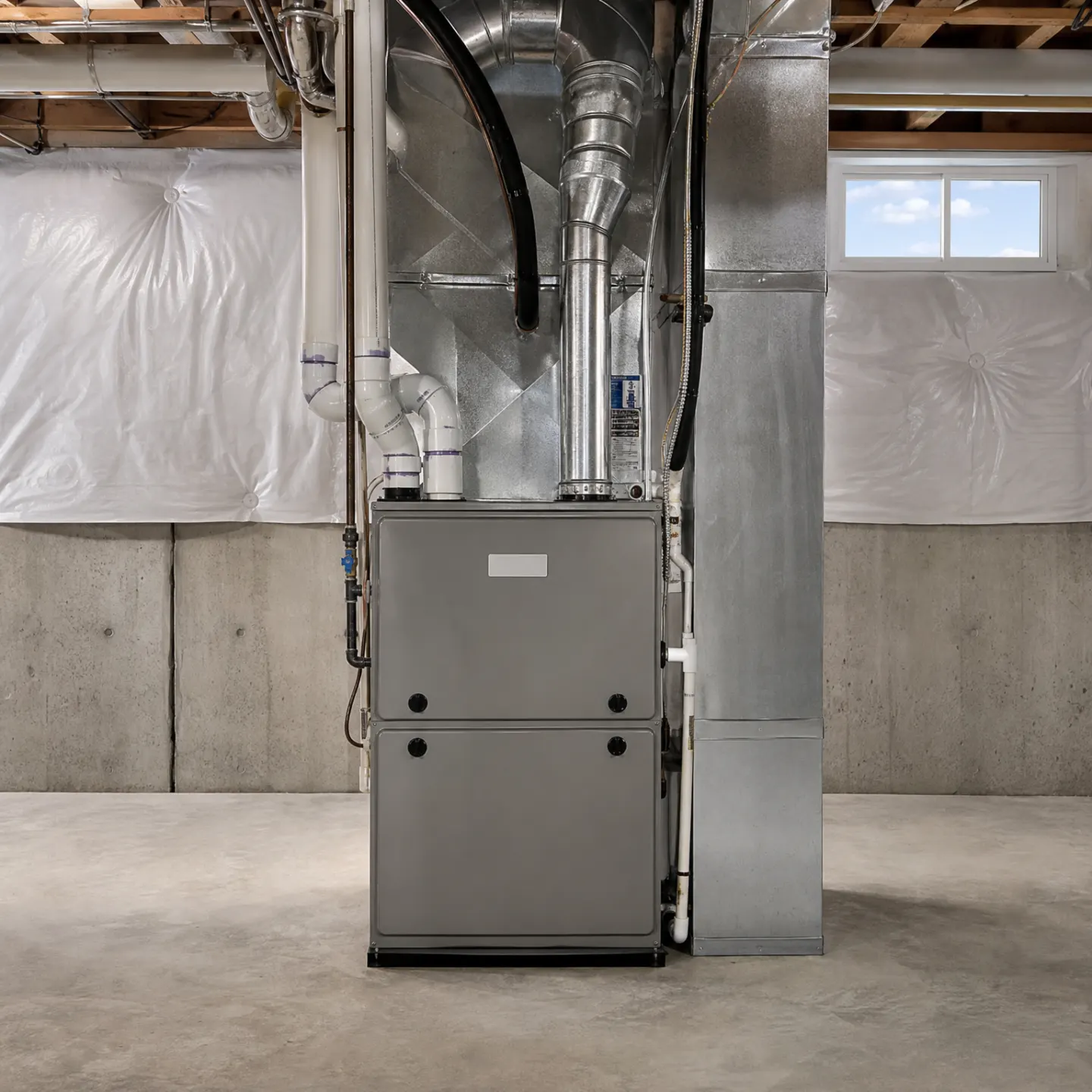
A gray residential gas furnace installed in an unfinished basement, connected to sheet-metal ductwork and PVC pipes.

The parts that fail are the ones doing the work every cycle

Most furnace failures trace back to wear on one part, not a sudden breakdown. The igniter is usually first. It heats up to light the burners every single cycle, and that repeated heating and cooling eventually cracks it. A flame sensor works nearly as hard, sitting right in the burner flame, and over time it picks up a film that keeps it from sensing the fire at all, so the furnace shuts itself off as a safety measure. Blower motor bearings wear down from spinning for the length of every heat cycle, and a motor on its way out will usually get louder or slower before it quits outright. Pressure switches and draft inducers fail less often but still have moving parts that stick or wear. None of this is random. It is what happens to the same parts, doing the same job, cycle after cycle, for as long as the furnace is asked to run.

Check the thermostat and the switch first

Make sure the thermostat is set to heat and set a few degrees above room temperature, and check that its batteries aren't dead. Then find the furnace switch, it looks like a light switch on or near the unit, and make sure nobody bumped it off. Check the breaker too. None of that takes a tech to rule out.

Look at the filter and the vents before you call

Pull the filter and hold it up to a light. If you can't see light through it, it's choking off airflow and the furnace is working harder than it should. Walk the house and make sure no vents are closed or blocked by furniture. A furnace starving for air can overheat and shut itself off as a safety measure, which can look like a bigger problem than it is.

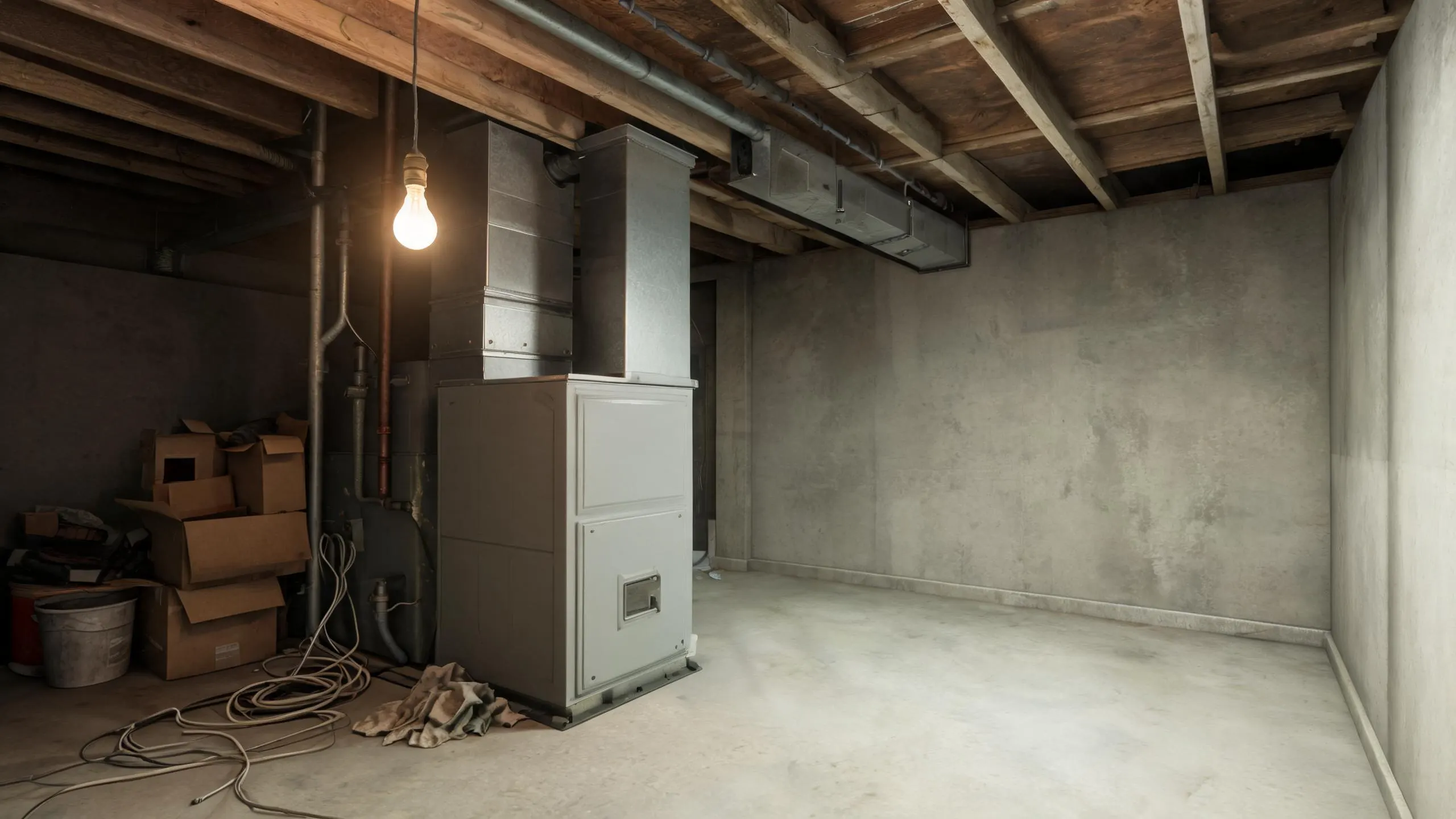
A bare concrete basement containing a gray gas furnace with metal ductwork and a vertical flue pipe, lit by a single hanging bulb.

A new furnace would cut about $160 a year off heating for a typical Lawrence County home.

  • A new high-efficiency furnace$640 a year
  • An older furnace$800 a year

Estimates for a typical Lawrence County home, compared with an older unit built to the previous federal minimum, from EIA household energy data, Pennsylvania fuel prices and NOAA climate normals. Your home will differ.

Repair makes sense when one part has failed and the heat exchanger is sound.

Replacement makes sense when the heat exchanger is cracked or the furnace keeps needing parts.

Once the easy checks are out of the way, a diagnostic visit starts with watching the furnace try to run. A tech wants to see the actual failure, not just hear about it. So the first step is usually setting the thermostat up and watching what happens from a cold start. Does it try to ignite and fail. Does it light and then drop out. Does it run a short cycle and shut off. That sequence narrows things down fast. From there it's testing with meters, not guessing. Checking voltage at the igniter. Reading the flame sensor's signal. Watching the pressure switch as the inducer spins up. Each part has a range it should read in, and a part outside that range is the answer. The furnace gets opened up, not just looked at.