Heat pump vs furnace in Lawrence County, Pennsylvania

Start My Quote

Local pros in Lawrence County

Which costs less to run in Lawrence County?

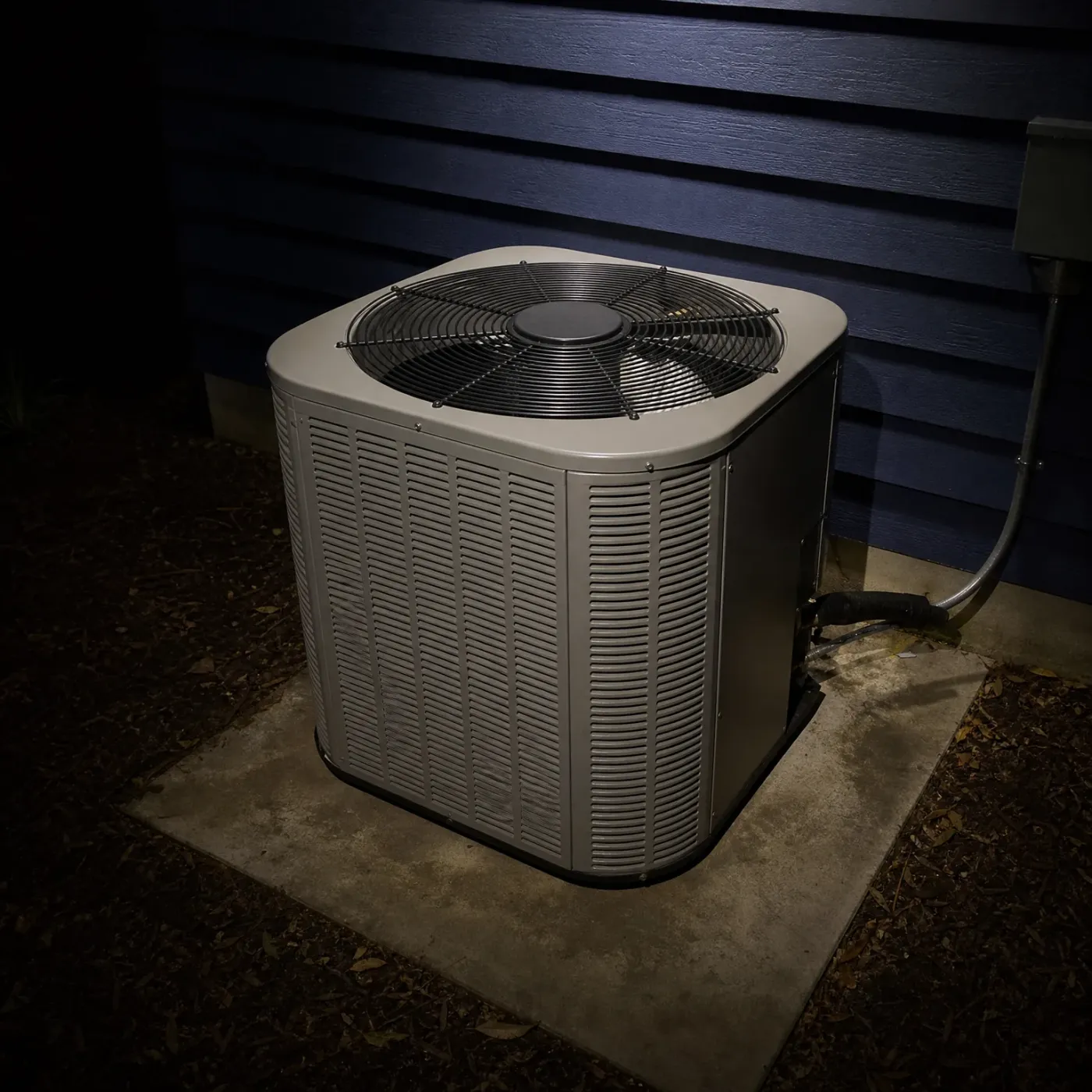
An outdoor air conditioner condenser unit with a top-mounted fan sits on a concrete pad beside a dark blue lap-sided wall at night, with refrigerant lines and conduit running to the wall.

Heat pump

To heat your home here$2.37per 100,000 Btu

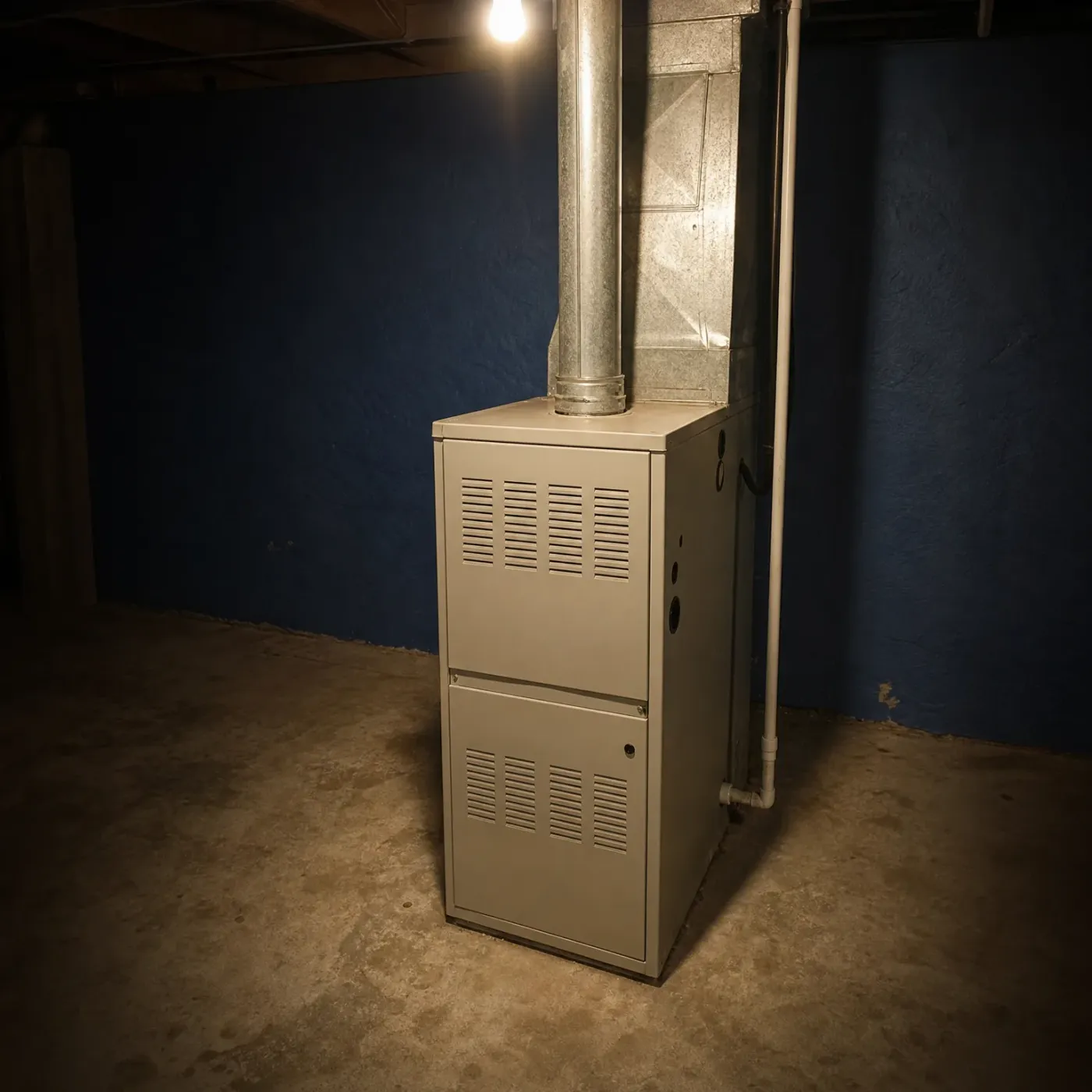
A beige furnace with louvered panels stands on a concrete basement floor against a blue painted wall, with a galvanized metal flue pipe and ductwork above and a white pipe running down the wall.

Furnace

To heat your home here$1.64per 100,000 Btu

At Pennsylvania's gas and electricity prices, a gas furnace makes the same heat as a heat pump for at least 30% less.

Btu stands for British thermal unit, the standard measure of heat energy.

Where does a heat pump shine?

  • Heats and cools in one system

    Winter and summer are covered by the same outdoor unit. That's one machine to service instead of two.

    A living room with a cream sectional sofa holding navy and light blue cushions and a blue fringed throw, a wooden coffee table with books, a mug and a vase of green and white flowers, a navy armchair, a dark built-in bookshelf with a lamp, and an open doorway looking onto a lawn and flowering garden.
  • No gas line, nothing burning in the house

    It moves heat instead of making it from fire. That means no combustion, no flue and no gas bill for heat.

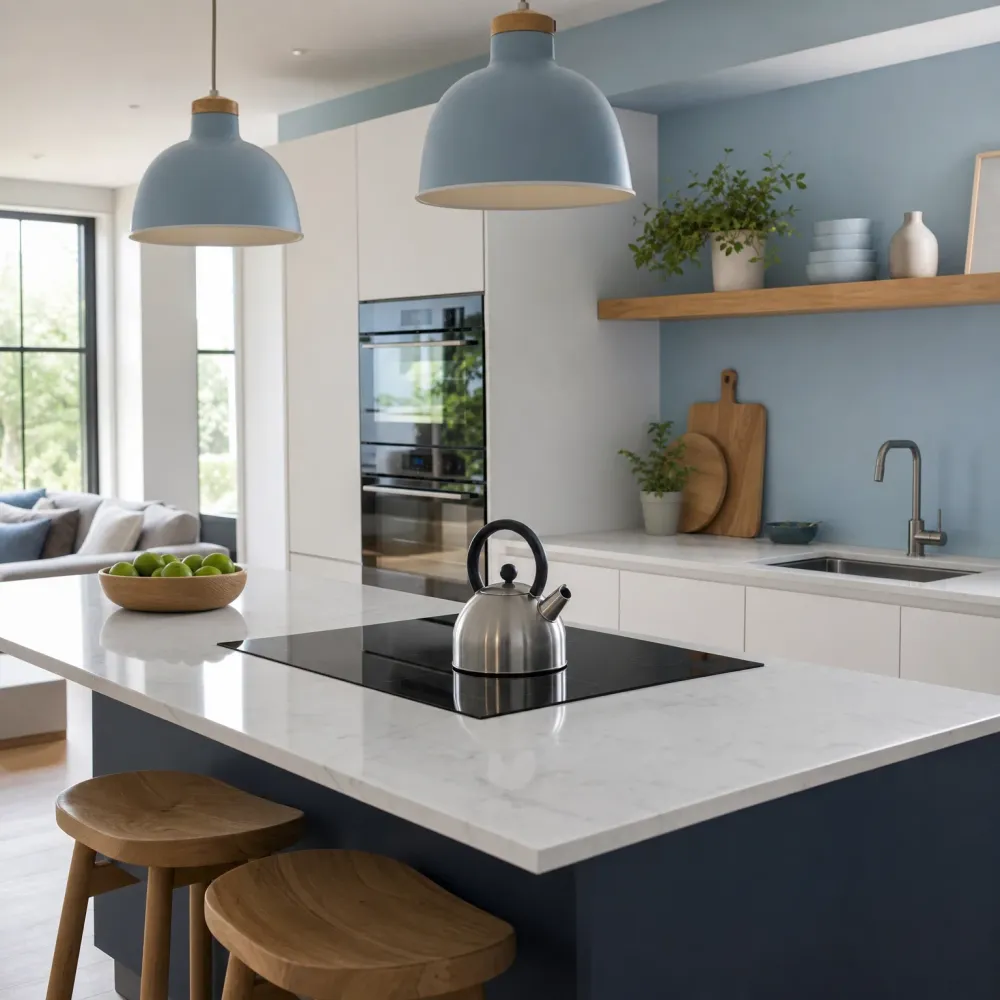
    A kitchen with a white marble-look island counter over navy cabinetry, a black induction cooktop with a stainless steel kettle, two light blue pendant lamps, wooden stools, a bowl of green apples, a wooden shelf with plants and dishes against a blue wall, and a built-in oven.
  • Steady, even comfort

    A heat pump runs long and low instead of blasting on and off. Rooms hold an even temperature all day.

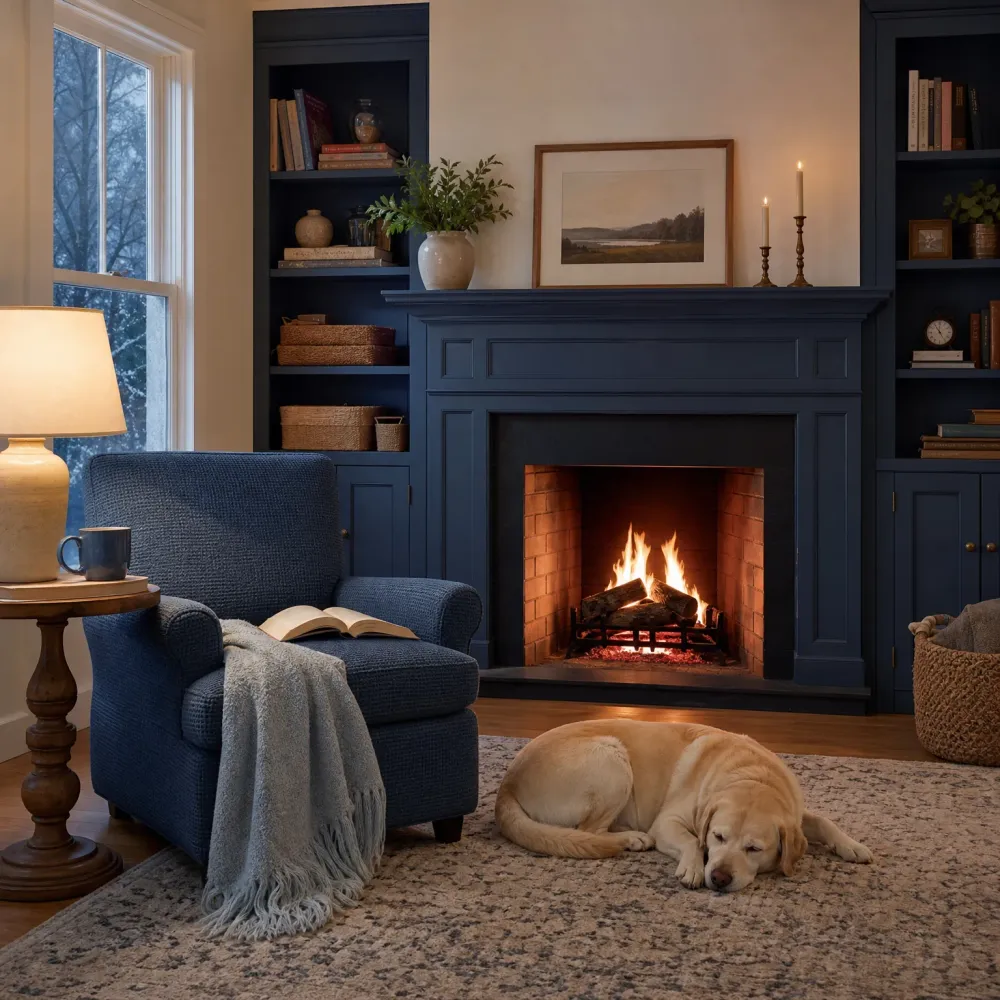
    Living room with a lit fireplace in a dark navy mantel and built-in shelves, a navy armchair with a gray throw and open book, a table lamp, and a yellow Labrador lying on a patterned rug.

Where does a furnace shine?

  • Runs on the gas most homes here already use

    Most homes in Lawrence County already heat with gas, so a gas line is likely already run to your house. A furnace puts that hookup to use instead of leaving it idle.

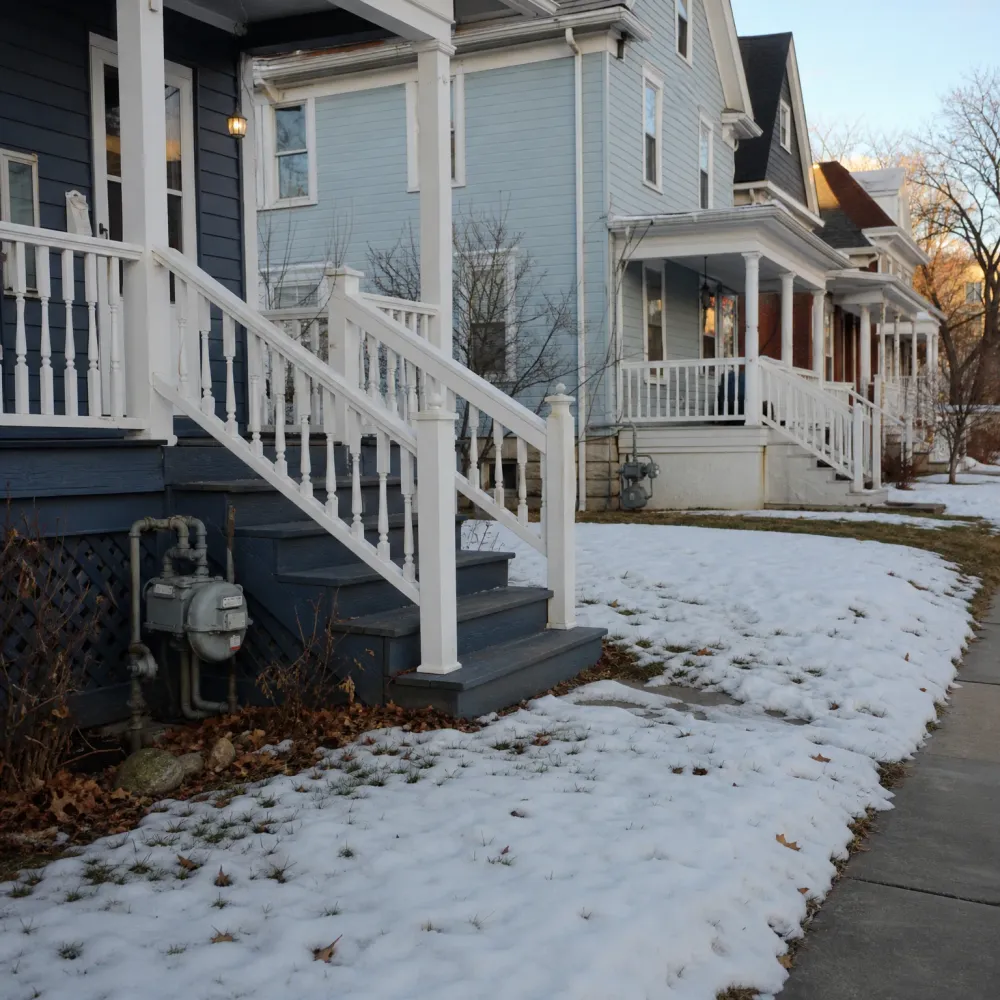
    A row of wood-sided houses with white-railed front porch stairs, a gas meter beside the foundation, and patchy snow covering the lawn next to a concrete sidewalk.
  • Pairs with any central AC

    The ductwork that delivers heat in winter delivers cool air in summer once an AC coil is added.

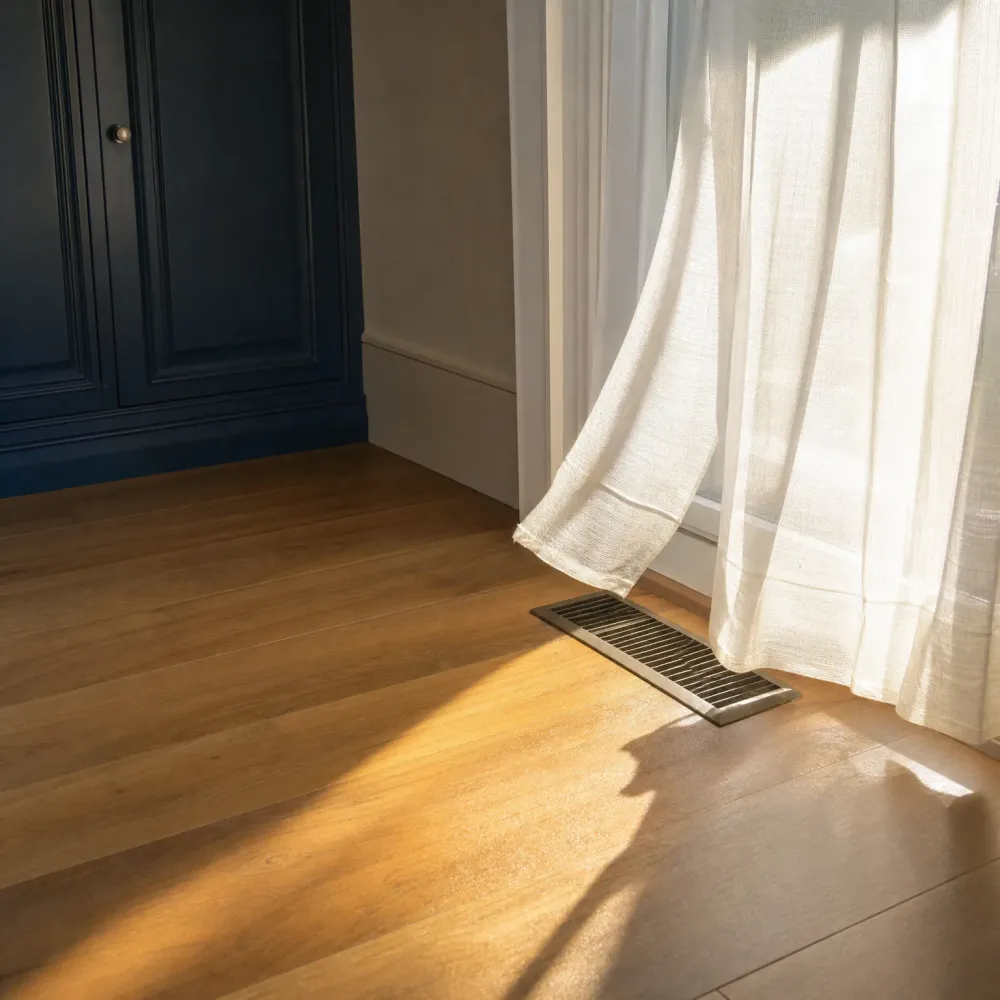
    A metal floor vent set into wood plank flooring near a window with a sheer white curtain, with sunlight casting shadows across the floor and a dark blue cabinet at left.
  • Proven, simple, easy to get serviced

    Gas furnaces have heated homes for generations. Almost every HVAC tech knows them inside and out.

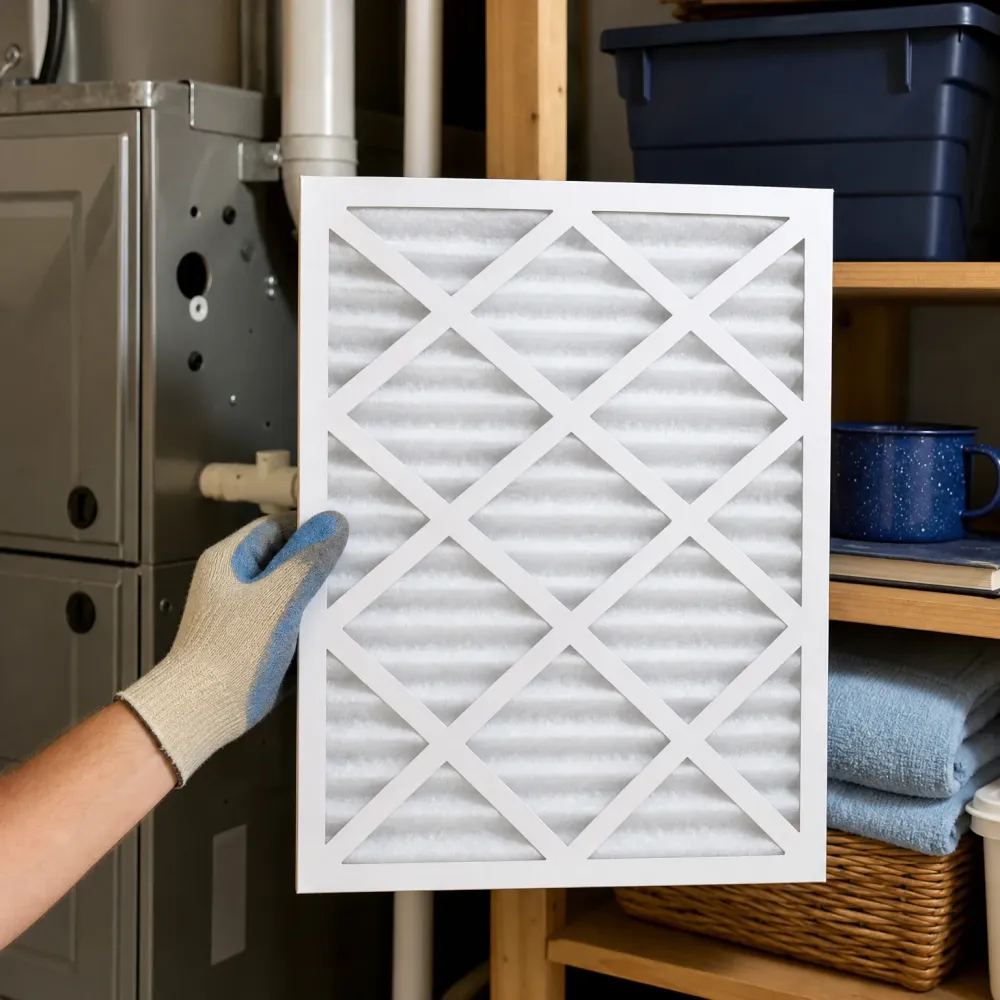
    A gloved hand holds a pleated white air filter in front of a furnace, beside wooden shelves holding a storage bin, mug, folded towels and a basket.

Can a heat pump keep up here

Your winter low here averages 22°F, and that matters because a standard heat pump starts losing ground before it gets that cold. Below 40°F it puts out less heat than its rating says. Below about 35°F it usually needs backup heat to make up the difference. Both marks sit above your average low, and every one of the 135 nights a year that hit freezing or below is colder than both.

That doesn't rule out a heat pump. It means the ordinary kind needs help on more than half the nights of your 8-month heating season. If you go this route, look for the ENERGY STAR Cold Climate label. To earn it, a heat pump has to keep making 1.75 units of heat per unit of electricity at 5°F and hold onto 70 percent of its warm-weather capacity at that temperature, checked by outside testing, not the manufacturer's word. That is a different machine than the federal minimum one priced in the cost band above.

A two-winter study of cold-climate heat pumps in real homes backs this up. Between 0°F and 35°F, backup heat only covered a small share of the load. Running on backup alone was rare even above 0°F. Lawrence County only sees about 5 nights a year that cold, a small slice of the 135 freezing nights. So the nights that would actually stress a cold-climate heat pump are the exception here, not the rule.
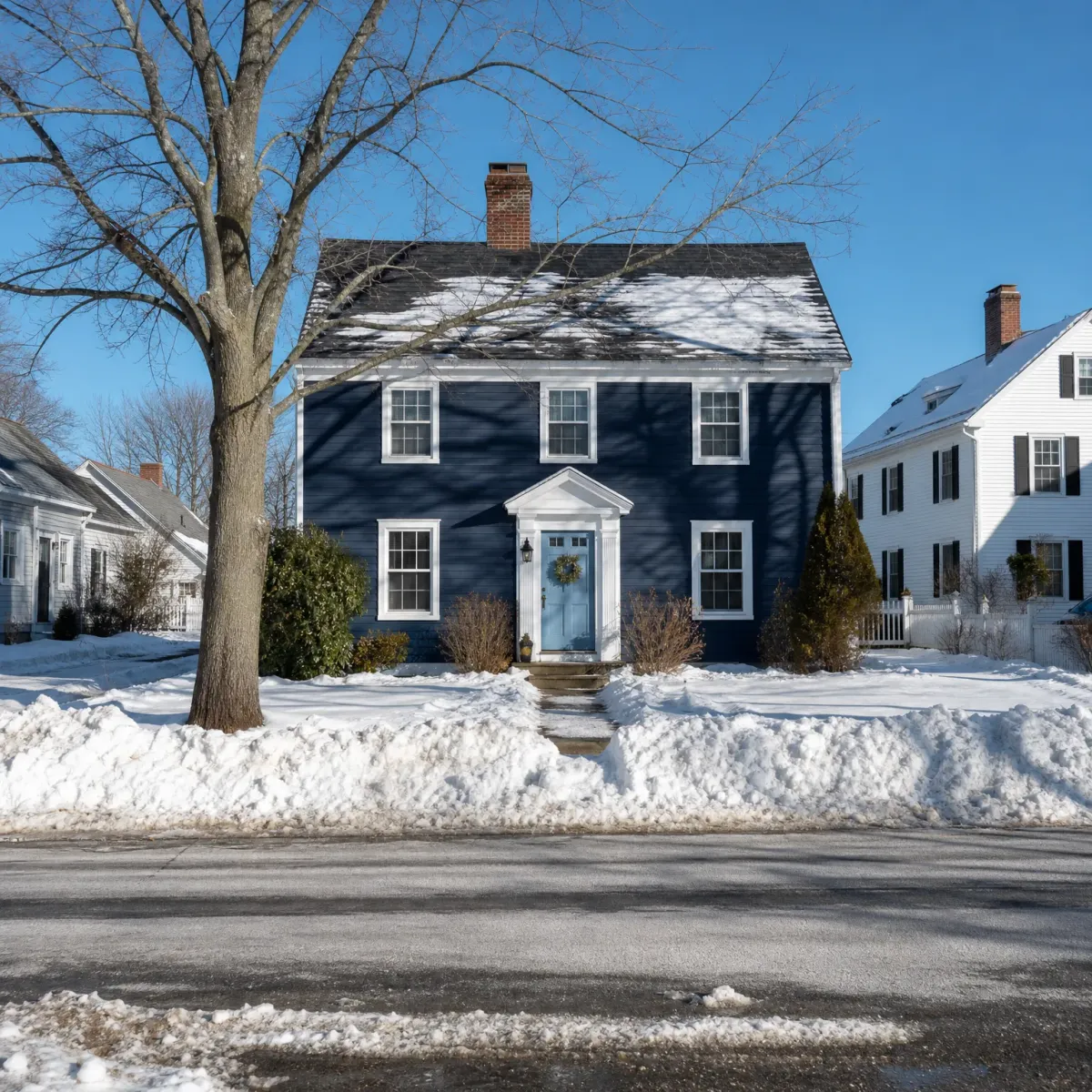
A two-story dark blue clapboard house with white trim, a brick chimney and a light blue front door with a wreath, behind snow-covered ground and a bare tree, with white neighboring houses and a cleared road in the foreground.

What it costs to run, and what to weigh

The gas furnace is the cheaper machine to run at Pennsylvania's prices: $1.64 to make 100,000 Btu of heat, against $2.37 for a heat pump built to the federal minimum. That heat pump figure doesn't add anything for backup heat on the cold nights above, so a standard heat pump's real cost here likely runs higher than $2.37. A cold-climate model, needing less backup, would land closer to it.

Oil comes in above both at $3.03, so if your furnace runs on oil, either a gas furnace or a heat pump costs less to operate than what you have now, if the fuel is the only thing you're weighing.

Fuel matters too, apart from price. Utility gas already heats close to three in five homes in Lawrence County, electricity about one in four. If gas line and a working furnace are already there, a new gas furnace is a straightforward swap. A heat pump adds air conditioning as part of the same system and keeps the house off burning anything indoors, worth something on its own regardless of the fuel bill. Which one is right for your house depends on whether that trade, lower running cost on one side, cooling and no indoor combustion on the other, is worth the difference to you.

Sources: NOAA nClimDiv · NOAA 1991–2020 seasonal normals · PNNL Building America guide · PNNL-37127 field study · ENERGY STAR product criteria · EIA SEDS 2024 · 10 CFR 430.32 · Census ACS 2020–2024

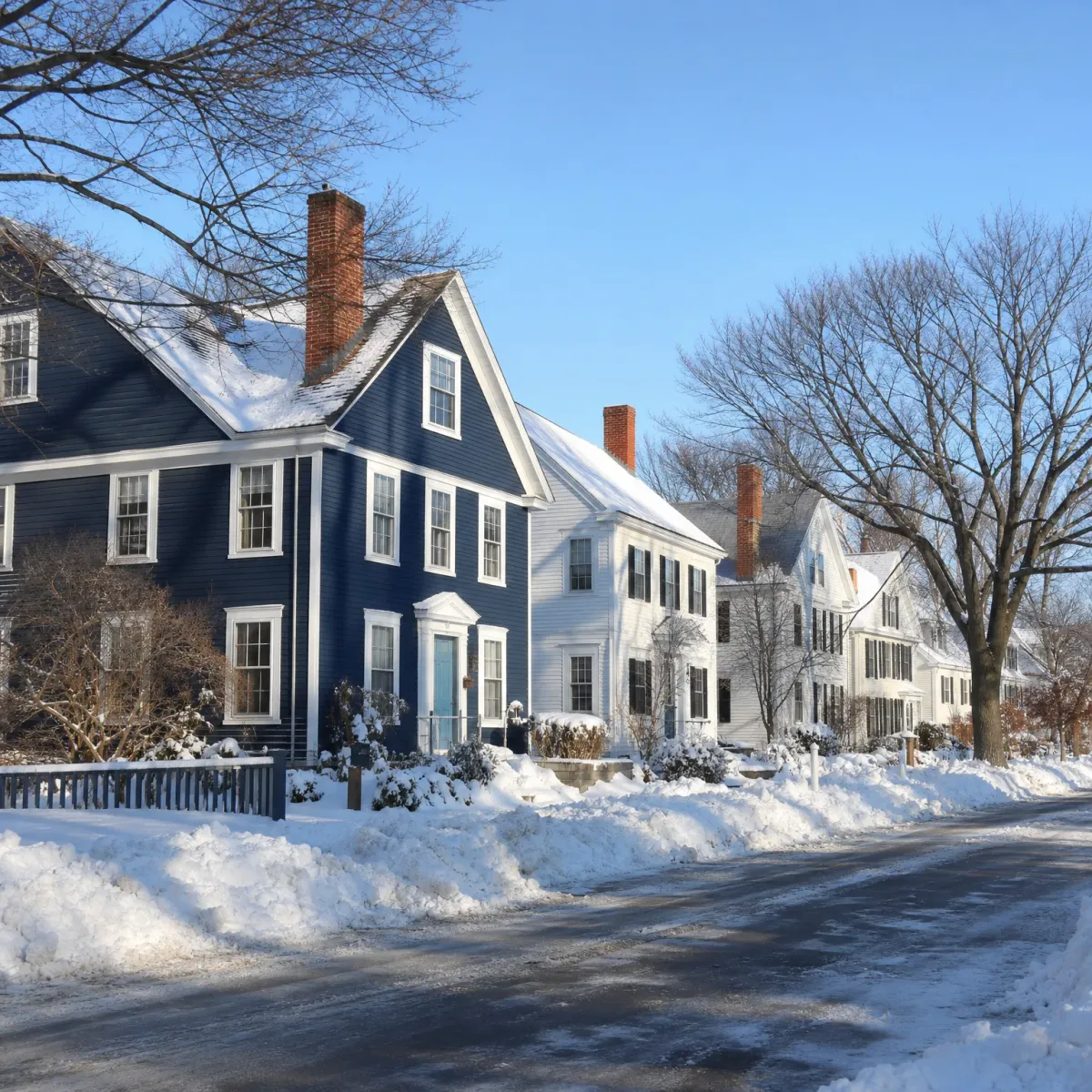
A snowy residential street lined with clapboard houses, including a dark navy house with brick chimneys, under a clear blue sky with bare trees.

Common questions about heat pumps and furnaces

  • Can a heat pump heat a house through a Pennsylvania winter?

    It can, but a standard heat pump struggles on the coldest nights here. The overnight low averages 22°F across December, January and February, well below the 40°F mark where heat output starts to fall short and the 35°F mark where backup heat often kicks in. About 135 nights a year here hit freezing or below, and all of them sit below both marks. A heat pump built to the ENERGY STAR Cold Climate spec is tested to hold 70 percent of its capacity at 5°F, which covers most of what this county sees.

  • Do I need backup heat with a heat pump here?

    For most of the winter here, yes. The average overnight low in December through February is 22°F, and a standard heat pump's output falls short of its rating below 40°F, with backup heat often needed below about 35°F. Only about 5 nights a year reach 0°F or below, so the backup is leaned on for the many nights in between, not just the rare deep cold.

  • Can I keep my furnace and add a heat pump?

    Yes, and in Lawrence County that pairing works for about four months a year on its own. Cooling runs June through August, so a heat pump alone can handle that stretch. A furnace left in place can take over on the cold nights, since a standard heat pump's output falls short of its rating below 40°F and often needs backup heat below about 35°F.

  • Is a heat pump cheaper to run than a furnace in Lawrence County?

    No. A gas furnace here makes 100,000 Btu of heat for $1.64, a heat pump for $2.37. That is Pennsylvania's gas and electricity prices applied to each machine at its federal minimum efficiency, so the gas furnace comes out at least 30 percent cheaper to run.

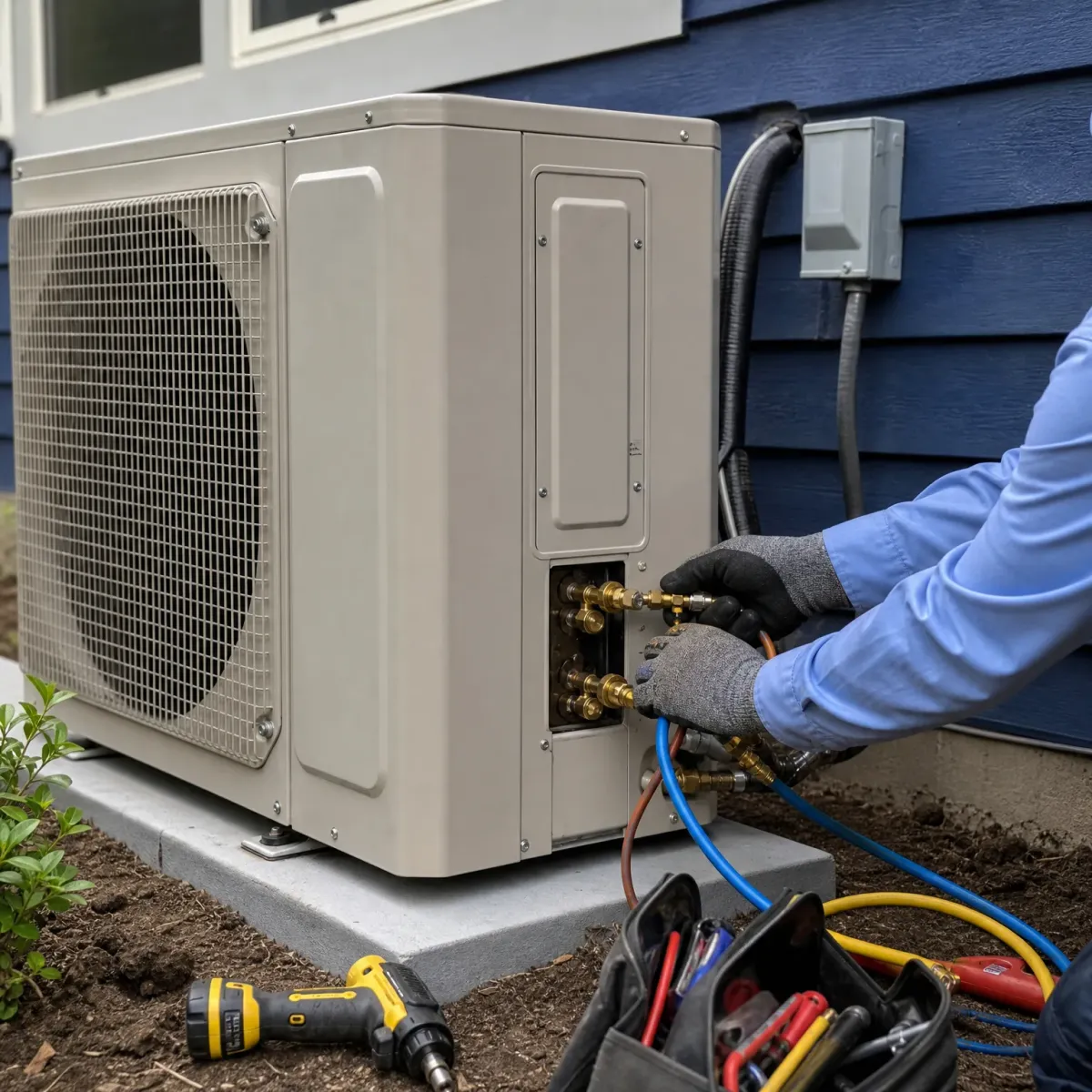
A gloved technician in a blue shirt connects colored refrigerant hoses to the brass service valves of a beige outdoor heat pump unit mounted on a concrete pad beside a dark blue clapboard wall, with a cordless drill and open tool bag on the soil in the foreground.

Tell us about the job

Takes about a minute. No obligation.

Step 1 of 3: Equipment