
A two-story red brick house with black shutters, a dark roof and a chimney stands on a mown lawn behind a dry stone wall, framed by large spreading deciduous trees under an overcast sky.

Furnace Repair in Pittsburgh, PA

Tell us about the job

Takes about a minute. No obligation.

Step 1 of 3: Equipment

Allegheny County saw 690 severe weather events between 2015 and 2024. Most of that was damaging wind, 548 times in that stretch, along with 115 hail events and 12 tornadoes. A furnace shares the house with an AC unit sitting outside, exposed to all of it. Wind-blown debris and hail can hit that outdoor unit without stopping it right away, so it keeps running while something inside is bent or cracked. The furnace itself depends on electricity to run even on gas, and 15% of Pennsylvania households were without power for a day or more in 2024. When the power drops in the middle of winter, a furnace that was already due for a look is the one that won't restart.

8 months
October through May, your furnace is on duty
24°F
the average winter night it heats against
81%
of homes here heat with gas, so most furnaces here burn gas
12 winter storms
in ten years, the nights a failure hurts most
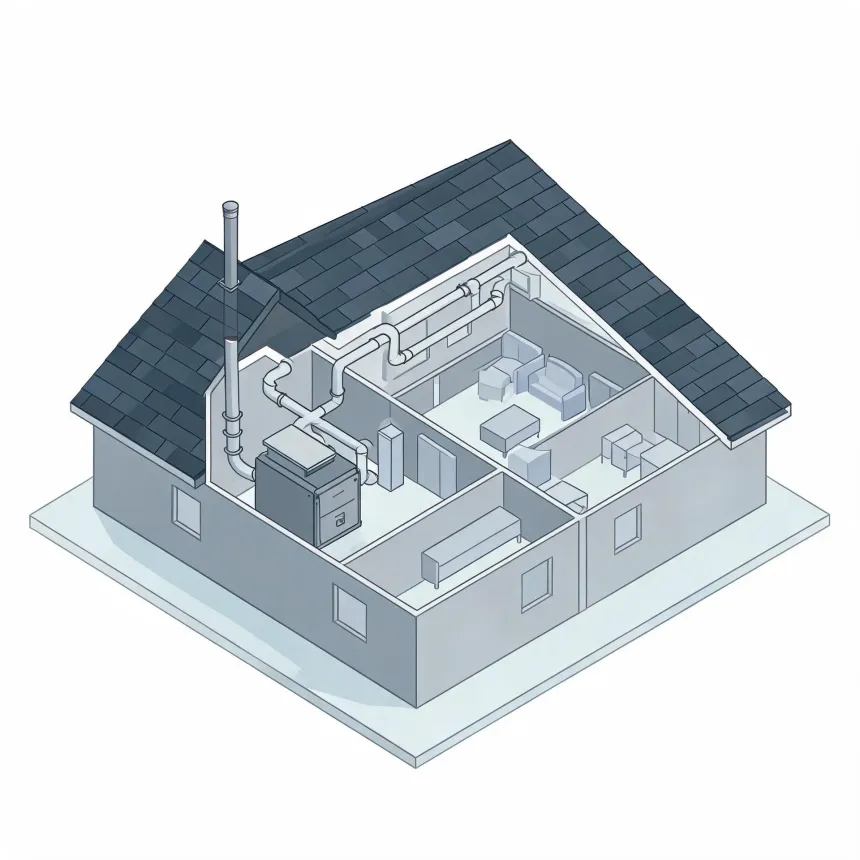
Isometric cutaway illustration of a single-story house with a dark shingled roof, showing interior rooms with furniture, ductwork, a flue pipe, and a furnace unit.
Your furnace works hardest from November through March.

NOAA nClimDiv, 1991–2020 normals

Furnaces in Allegheny County start running in October.

A weak part that made it through last winter is the one that fails in the first cold week.

Half the homes here were built in 1957 or earlier

Half the homes here were built by 1957
Heat runs October through May
Winter nights average 24°F

A furnace installed when a lot of these houses were built has likely already been replaced once, maybe twice since. If you don't know how old yours is or whether it's the original unit, that's worth asking a technician before paying for a repair. A furnace that's near the end of its life can take a weak part and a cracked heat exchanger at the same time, and a repair on one won't fix the other. Ask what's actually failing and what shape the rest of the unit is in. That tells you whether this repair buys a few more winters or just one.

Get the furnace checked before winter tests it

If your outdoor unit took a hit from wind or hail this year, it's worth having the furnace looked at too. The furnace still needs power to run, and a part already strained by a storm is a reasonable thing to find once a tech is in there.

Find a contractor
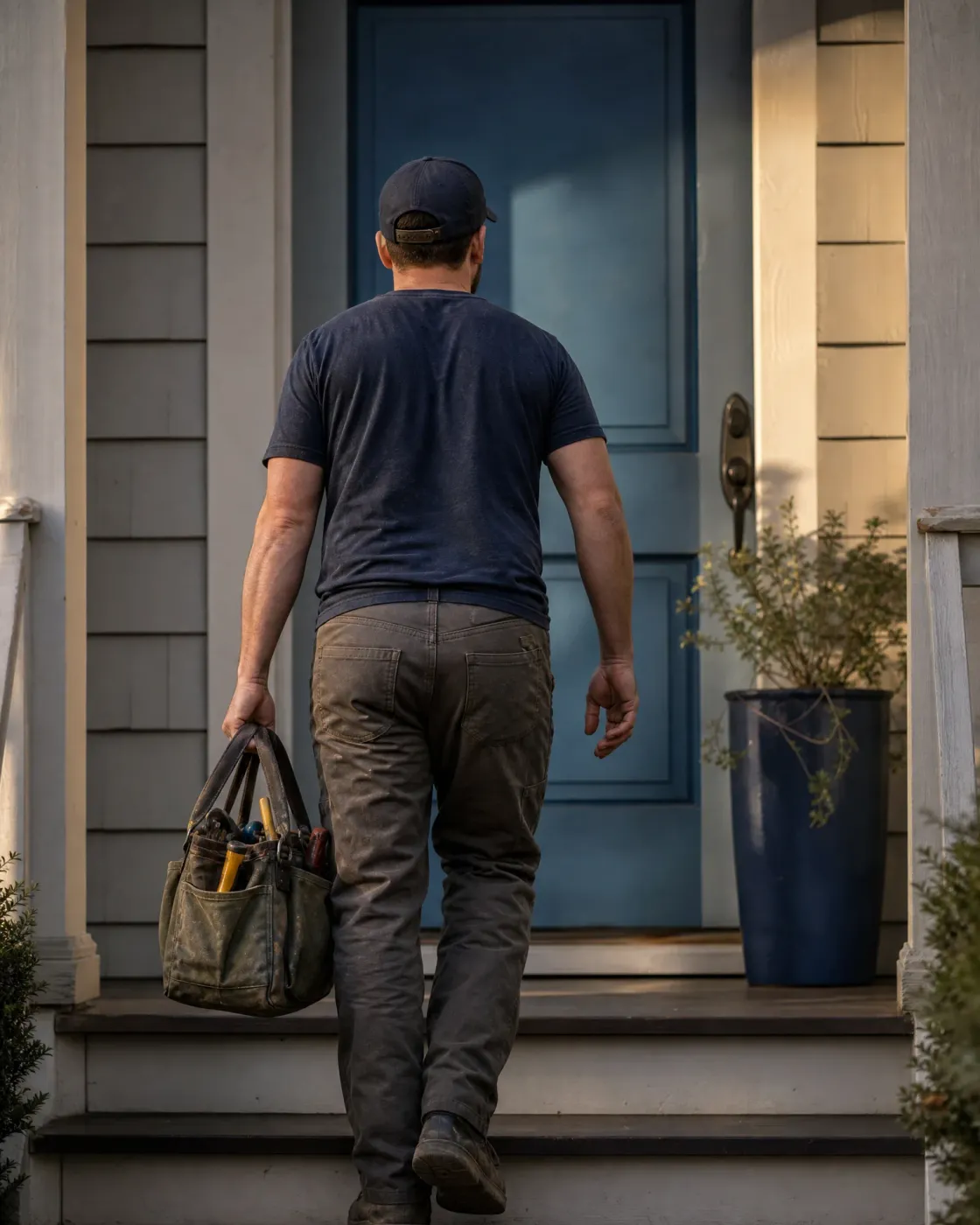
A man in a cap, dark t-shirt and work trousers carries a canvas tool bag up porch steps toward a blue front door, with a tall planter and shrub beside the entry.
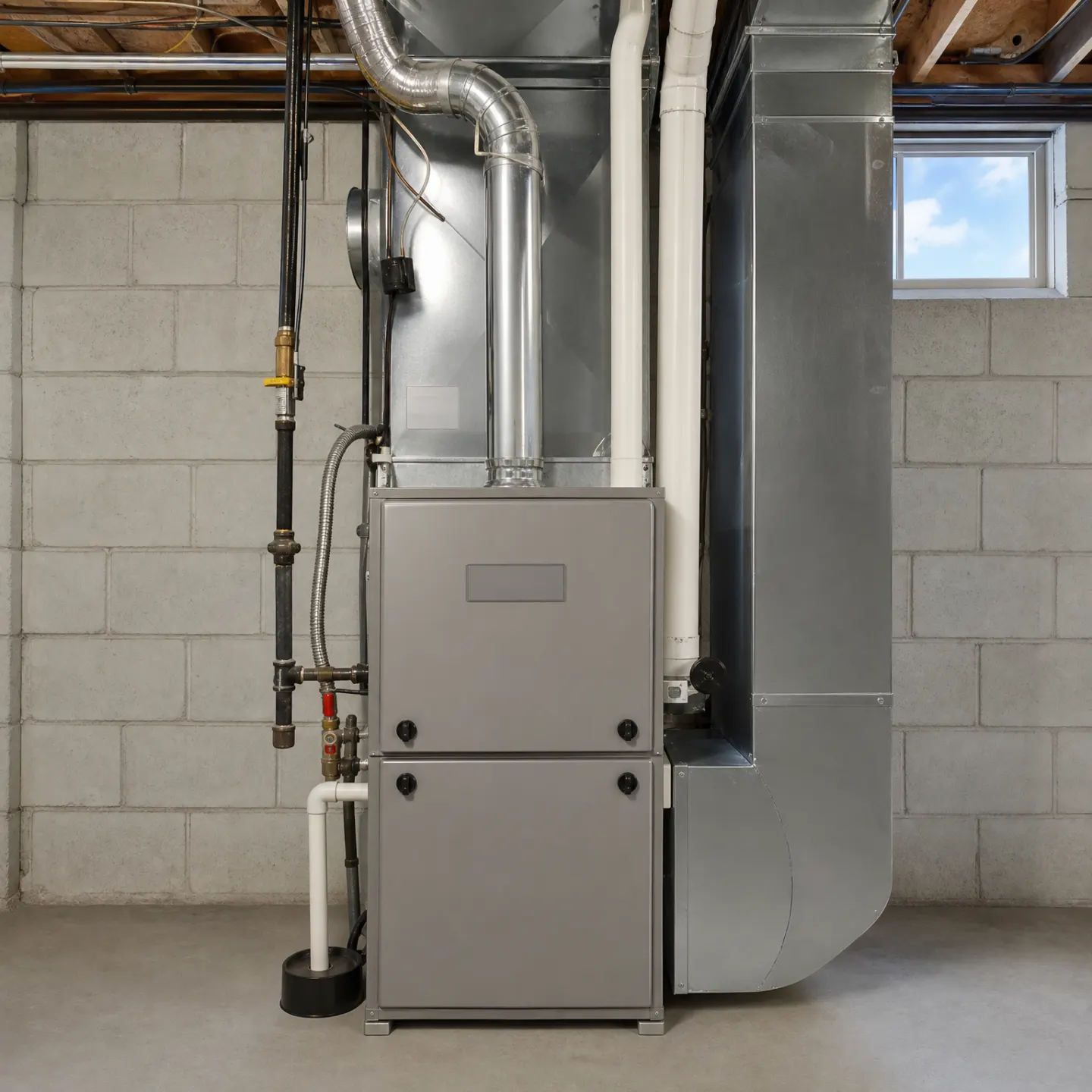
A gray high-efficiency gas furnace installed in an unfinished basement, surrounded by gas lines, a condensate drain, and sheet-metal ductwork.

Some furnace problems get worse the longer they run

A cracked heat exchanger stays quiet at first. The furnace keeps heating, the air coming out still feels warm, and nothing looks wrong from the thermostat. Keep running it and that crack spreads, because every cycle flexes the metal with heat and lets it contract again going cold. A dirty flame sensor tells a similar story. It still lets the burner light some of the time, so the furnace seems to be working, right up until the sensor can't tell the flame is there at all and shuts the gas off mid-cycle. A blower motor running on a worn bearing will keep pushing air long after it starts making noise, until the bearing seizes and takes the motor with it. None of these fail clean. They fail while the furnace is still technically doing its job, which is exactly why running it through the symptom costs more than the symptom itself.

What's safe to check yourself

Look at the thermostat first. Make sure it's set to heat and the set temperature is actually above room temperature. Check the furnace switch, the one that looks like a light switch near the unit or on the basement stairs, and make sure nobody bumped it off. Check the breaker it's on. If the furnace uses a standing pilot, see if the pilot light is still lit. Replace the air filter if it's been a while and you can see it's gray or packed with dust. These take a few minutes and rule out the simplest causes before anyone gets charged for a service call.

What to leave alone

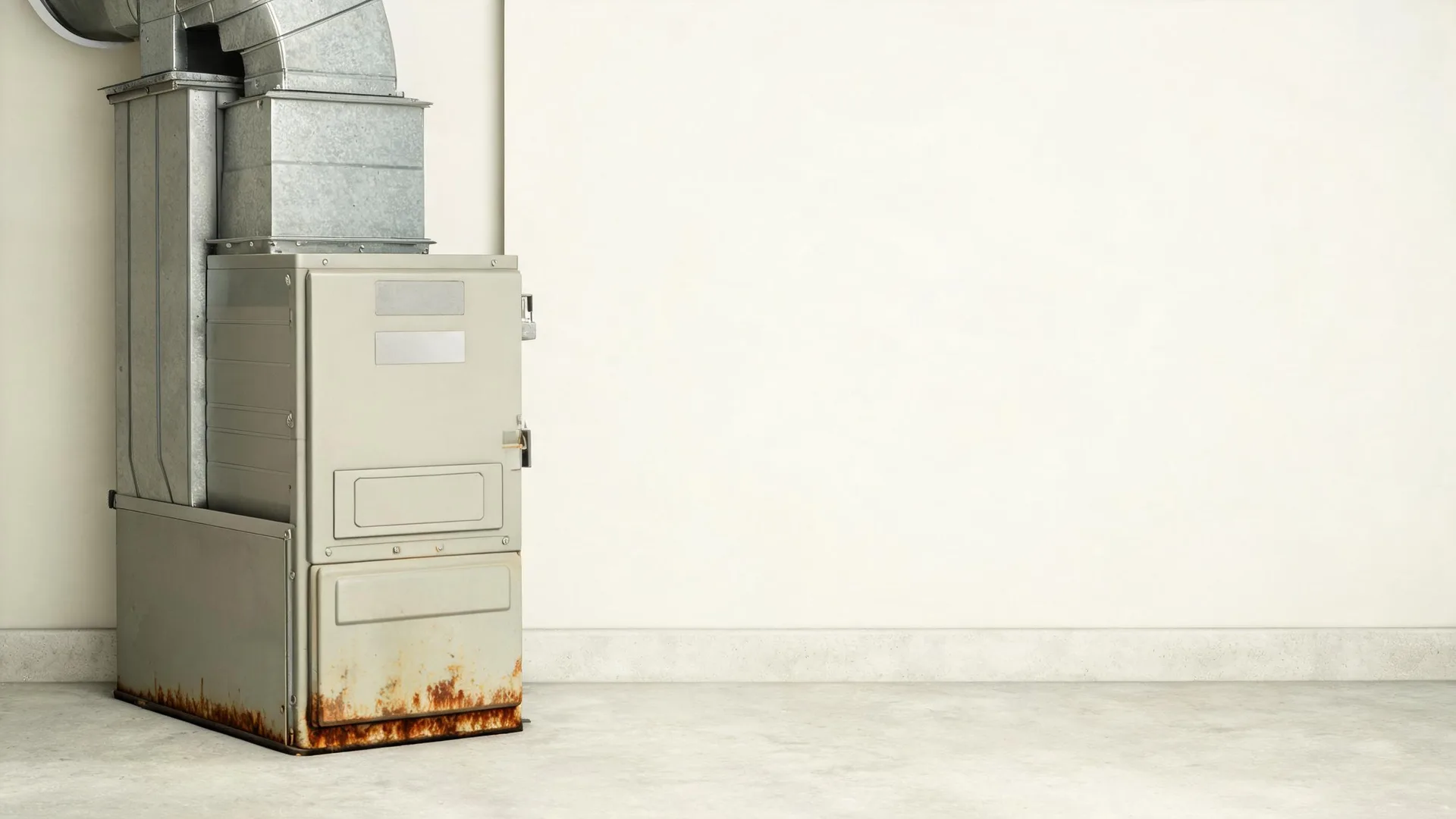
Don't open the burner compartment or go near the flame sensor, the igniter or the gas valve. Don't try to relight a pilot that keeps going out. That's usually a sign of a bad thermocouple or a draft problem, and relighting it over and over doesn't fix either one. If you smell gas, don't flip any switches or look for the problem at all. Leave the house and call the gas company from outside. A furnace that trips its breaker repeatedly needs a technician too, not another reset.

An unfinished basement containing a gray HVAC furnace with ductwork, exposed wooden joists, a concrete floor, and miscellaneous clutter in one corner.

A new furnace would cut about $150 a year off heating for a typical Allegheny County home.

  • A new high-efficiency furnace$600 a year
  • An older furnace$750 a year

Estimates for a typical Allegheny County home, compared with an older unit built to the previous federal minimum, from EIA household energy data, Pennsylvania fuel prices and NOAA climate normals. Your home will differ.

Repair makes sense when one part has failed and the heat exchanger is sound.

Replacement makes sense when the heat exchanger is cracked or the furnace keeps needing parts.

A diagnostic starts before any panel comes off. A technician will ask what the furnace is doing, when it started, and whether it's one room or the whole house running cold. Then they check the easy things first, same as you would, but go further: pull the filter, check static pressure in the ducts, look at the flame through the sight glass. Inside the burner compartment they're checking the flame sensor for corrosion, looking at the igniter, and watching how the burners light. A combustion analyzer can read what's actually coming out of the flue, which tells them whether the heat exchanger is cracked even when nothing looks wrong from outside. They'll check the gas pressure at the valve and test the limit switches that shut the furnace down if it overheats. All of this points to one failing part, sometimes two, and a tech worth paying tells you which one is actually broken instead of replacing everything in the compartment to be safe.