



Low-angle view across a grassy lawn toward a light-gray house with a dark shingled roof, dormer windows and dark shutters, framed by large leafy trees under an overcast sky.

Mini Split Installation in Butler, PA

Tell us about the job

Takes about a minute. No obligation.

Step 1 of 3: Equipment

Most homes in Butler County heat with utility gas, about 68 percent. A mini split works differently than the furnace you're used to. It doesn't replace your gas heat here, it gives you cooling and a second heat source in the rooms it serves, without ductwork. That makes it a fit for additions, finished attics, or garages where running gas or extending ducts isn't practical. If your home is part of the 18.6 percent that heats with electricity, a mini split can take over more of the job, since there's no gas line it's competing with.

8 months
October through May, your system heats
3 months
June through August, it cools
21°F
the average winter night it heats against
81°F
the average summer afternoon it cools against
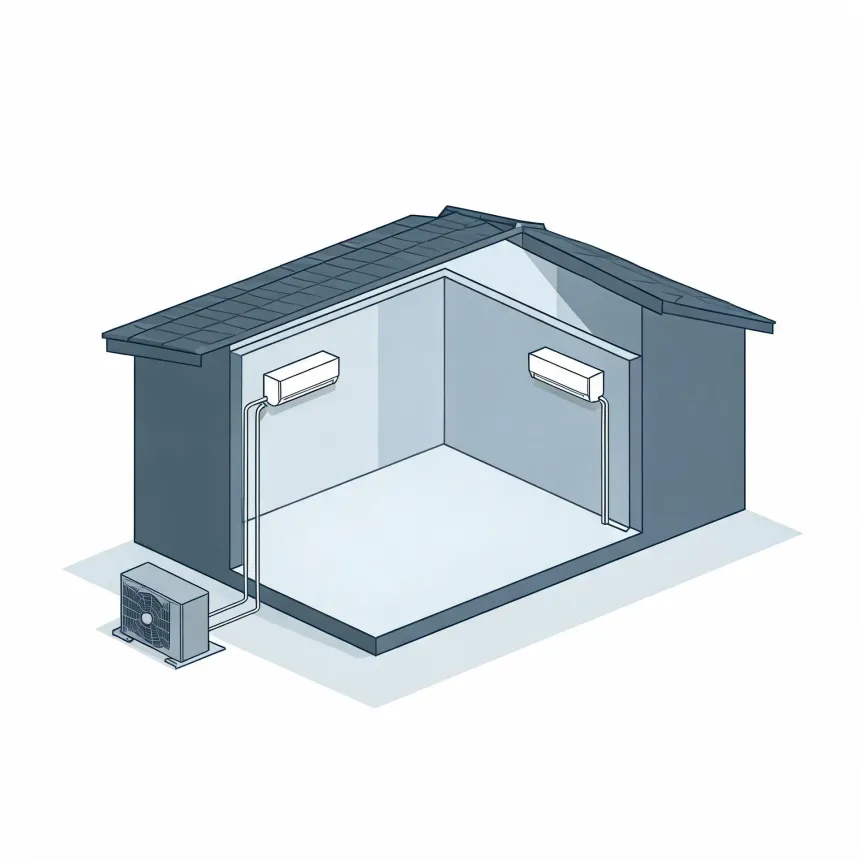
Cutaway isometric illustration of a small building interior showing two wall-mounted indoor air conditioning units connected by line sets running down to a single outdoor condenser unit on the ground outside.
Your system heats October through May and cools June through August.

NOAA nClimDiv, 1991–2020 normals

Butler County sees its share of wind, hail and winter storms, but none of that changes what a mini split needs to be.

A standard size and efficiency level handles the heating and cooling load here just fine.

A standard mini split handles summer here without any upsizing

Power costs 17.77 cents a kWh statewide
Cooling runs June through August
Summer afternoons average 81°F

Cooling in Butler County only runs three months a year, June through August, with afternoon highs averaging 81°F. That's a mild load. A mini split sized for the room it's heating and cooling doesn't need extra capacity to keep up with a summer like that. The bigger job here is winter, since Butler County sits in zone 5A, where heating carries more of the year than cooling does. A standard unit, sized to the space, covers both ends without paying for capacity that never gets used.

Have it installed before June, not after

Cooling starts in June here. Mini split installation takes some time to do right, from sizing the unit to running the line set, so getting it scheduled in May means it's done before the first hot week, not during one.

Find a contractor
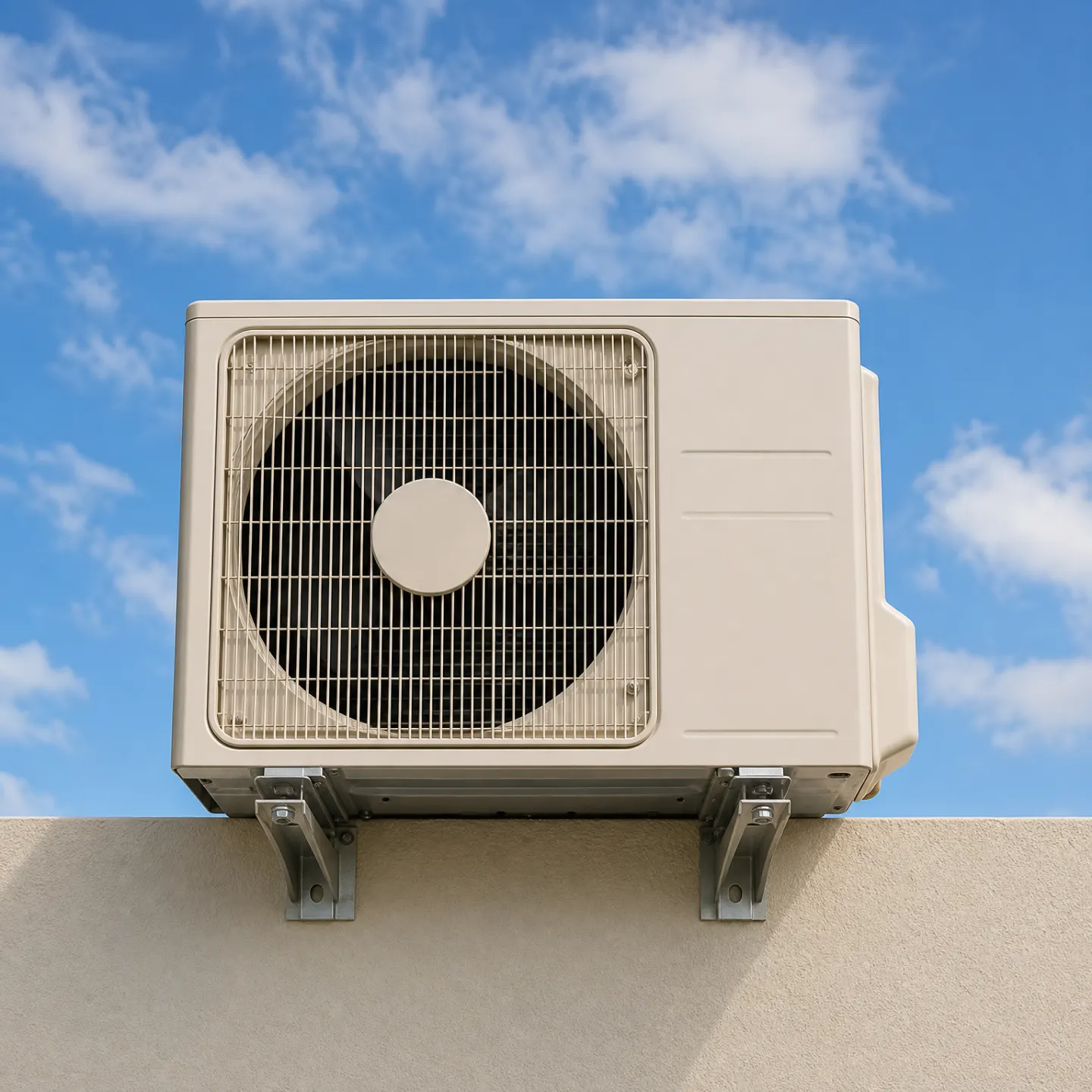
A beige split-system air conditioner outdoor condenser unit mounted on metal wall brackets atop a stucco wall.

It runs longer than a window unit, ask what that means for upkeep

A mini split runs more months than a window unit ever did, since it's handling heat along with cooling. That's worth asking about directly. Ask the installer where its heating output starts to fall off, because every outdoor unit has a low temperature where it has to work harder to keep up, and you want to know where that point is before you're counting on it. Ask how the line set is protected where it runs outside, since that line sits exposed to weather for as long as the system is installed, not just during the work. Ask what the warranty covers on the compressor separately from the rest of the unit, since that part carries the steadiest load and costs the most to replace. And ask who handles service afterward. A system doing this much of the year's work still needs its filter checked and its coil looked at on some kind of schedule, and it's worth knowing who does that before the day it's needed.

A mini split going into a new space usually isn't replacing anything

Additions, finished attics and garages typically don't have an old heating or cooling unit sitting in them already. In that case there's no old system to deal with, just a wall or ceiling cavity for the new line set and a spot outside for the condenser.
If a window unit or space heater was doing the job before, that part's on you to remove

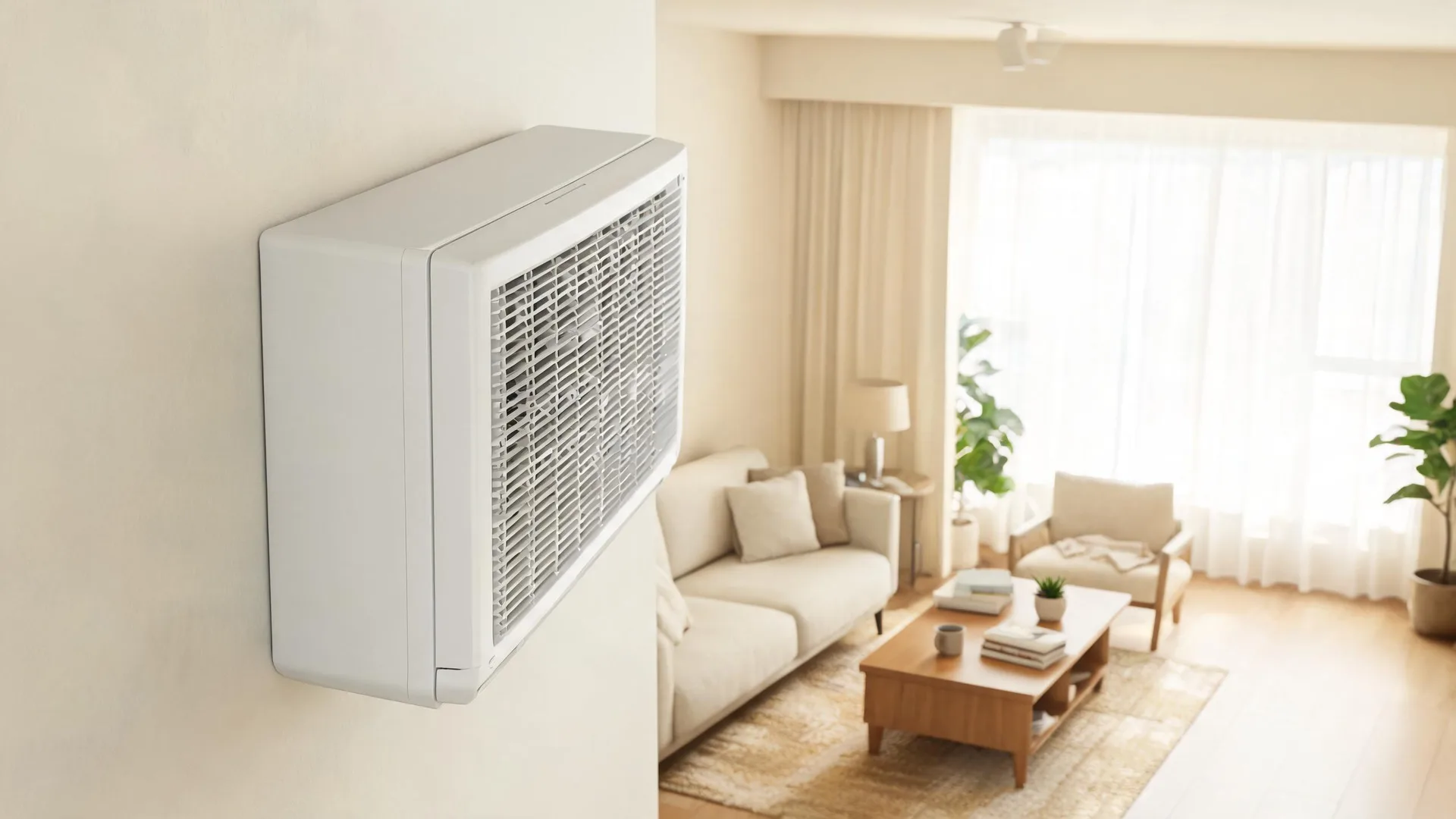
A mini split installer sets the new indoor and outdoor units and runs the line between them. Clearing out whatever was handling that room before, a window AC, a portable heater, baseboard electric, isn't part of that job, so plan on dealing with it yourself before or after the install.

Sizing a mini split comes down to matching the unit's output to the room's heat gain and heat loss, not the square footage alone. An installer works through the walls, windows, insulation and ceiling height in that specific room, because rooms that look alike on paper can lose heat at very different rates. Too big and the unit short cycles, running in quick bursts that cool the air but never run long enough to pull moisture out, leaving the room feeling damp. Too small and it runs constantly without ever catching up on the coldest or hottest days. Either mistake shows up as a comfort problem, since the unit still turns on, it just doesn't do the job right. That's also why a mini split moved from one room to another doesn't just drop in. The load has to be worked out again for the new space before the right size is known.

Installation starts with the indoor and outdoor units already chosen and sized, so the first part of the day is about putting them where they were planned. The indoor unit goes up on its mounting plate, and a hole gets drilled through the wall behind it for the line set. That line set, the refrigerant lines, power cable and condensate drain bundled together, runs from the indoor unit to wherever the outdoor unit sits, so some of the day goes into routing it cleanly, through a wall cavity, along an exterior corner, wherever the path is shortest and protected from weather. The outdoor unit goes on a pad or wall bracket with clearance around it for airflow. Once both units are set and connected, the line gets pulled down to a vacuum to clear out air and moisture before refrigerant is released into it, since trapped moisture is what causes problems later. Last comes the startup check, running the system in both heating and cooling to confirm it responds right and holds steady.