Gas heats most homes here
Utility gas heats 62.9% of homes in Mercer County, far more than any other fuel. Electricity is next at 18.0%, with fuel oil, kerosene, and propane covering the rest.
Takes about a minute. No obligation.
Utility gas heats 62.9% of homes in Mercer County, far more than any other fuel. Electricity is next at 18.0%, with fuel oil, kerosene, and propane covering the rest.
If your home heats with gas, a mini split can cover one room or a whole addition without touching the furnace or ductwork already in place. It gives you cooling and backup heat in the space it serves, while the rest of the house keeps running on gas like it always has.
NOAA nClimDiv, 1991–2020 normals
Mercer County logged 237 severe weather events between 2015 and 2024, mostly wind and hail.
A mini split sized right for the room doesn't need anything bigger to handle that.



Cooling here only runs July and August, so June is when to get a mini split in. Install it in June and it's already broken in by the time the first hot week hits. Wait until July and you're asking for same-week scheduling along with everyone else whose window unit just gave out. Two months a year is not a lot of runtime to justify emergency timing. Get it done in June and the only thing left to do in July is turn it on.
Two months of cooling a year doesn't call for an oversized system, and 80 degree afternoons don't either. A mini split sized to the room handles what this climate asks of it, nothing more. Get the sizing right now and it's one less thing to think about before July.
Find a contractorAn old wall doesn't always give a clean line for a line set, and old wiring doesn't always have the circuit a mini split needs. Have the installer check both before the outdoor unit goes in. That's a shorter job than finding out mid-install.
An installer works out the load from the room's square footage, its windows, its insulation, and what's on the other side of its walls. A room with west-facing glass needs more capacity than one buried in the middle of the house. This isn't a chart lookup. Rooms the same size can still need different sized units.
A unit too big for the room cools the air fast and shuts off before it pulls the moisture out, so the room feels cold and damp instead of just comfortable. It also cycles on and off more, which wears the compressor harder than a properly sized unit running a longer, steadier cycle. Bigger isn't a safety margin here. It's a different failure.
The number on a mini split's label tells you how much cooling or heating it squeezes out of the power it uses. A higher rating means less electricity for the same comfort, but that number only holds up if the unit is sized right for the room it's serving. An efficient unit that's too big for the space still cycles on and off too much, and all that stopping and starting costs you the efficiency the rating promised. Ductless systems lose less than ducted ones because there's no ductwork for air to leak out of along the way. That's part of why the rating tends to run higher than what you'd see on a central system, not because the compressor is some different breed of machine. The rating is a ceiling for what the unit can do, not a guarantee. How long it holds that number depends on keeping the filter clean and the outdoor coil clear of leaves and debris.
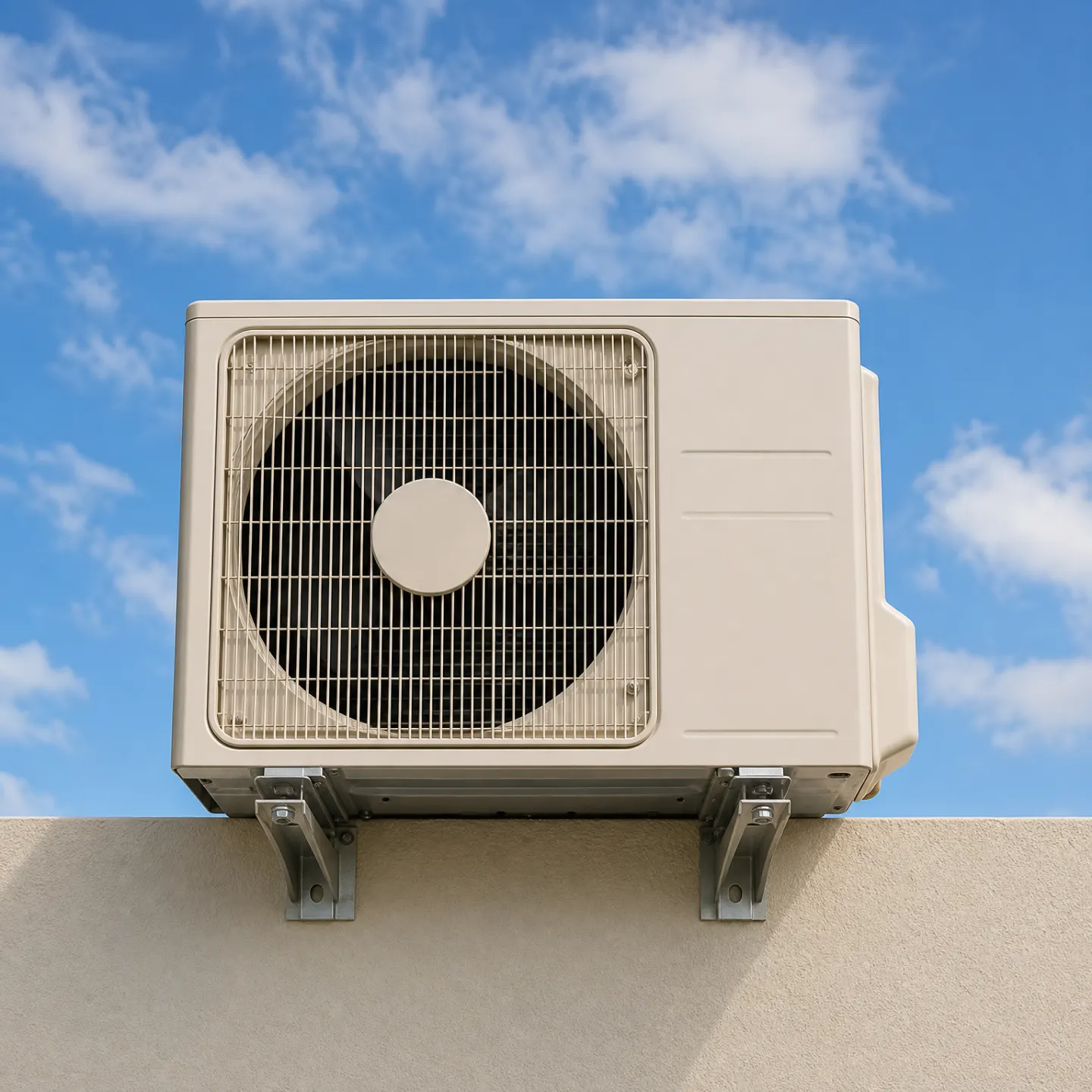
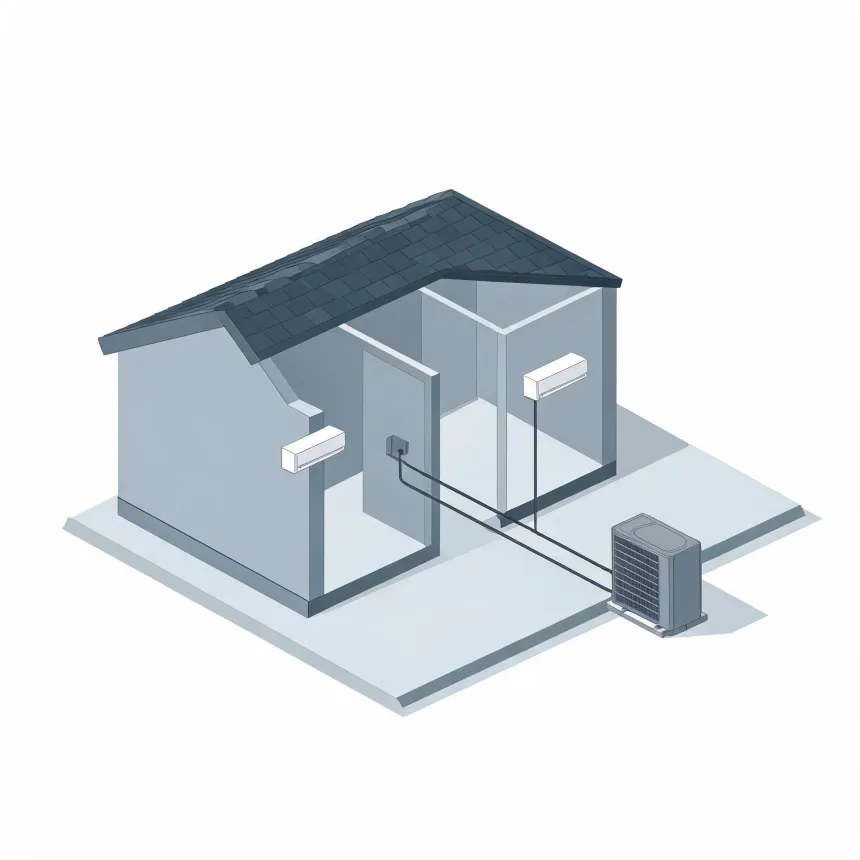
Installation starts outside with the condenser placement, a spot with clear airflow and a clean line to the wall. Inside, the installer mounts the wall plate and runs the line set through a small hole drilled behind it, usually hidden by the unit itself once it's hung. That line carries refrigerant lines, a condensate drain, and electrical wiring together through one penetration, so the hole only gets drilled once. After the indoor and outdoor units are connected, the system gets evacuated with a vacuum pump to pull out moisture and air before refrigerant is released into the lines. That step matters more than people expect. Any moisture left in the lines can damage the compressor down the road, so the installer checks the vacuum holds before calling the job done. Once it's charged and powered on, they'll run it through both heating and cooling to confirm it responds the way it should.