




A two-story red brick house with black shutters and a columned entry sits behind a mown lawn, framed by two large deciduous trees, with a long dry-stacked stone wall across the foreground.

Mini Split Installation in Oil City, PA

Tell us about the job

Takes about a minute. No obligation.

Step 1 of 3: Equipment

Most homes in Venango County heat with utility gas, at 67.7 percent. A mini split works differently. It runs on electricity, and it both heats and cools from the same unit. For a home with gas heat, that often means adding cooling to a room that does not have it, or putting heat into a space the furnace does not reach well, like a garage or an addition. Some homeowners add one to cut down on gas use in the room they spend the most time in. Either way, it is not a one for one swap with what is already installed. It is a second system working alongside the first.

8 months
October through May, your system heats
2 months
July through August, it cools
20°F
the average winter night it heats against
80°F
the average summer afternoon it cools against
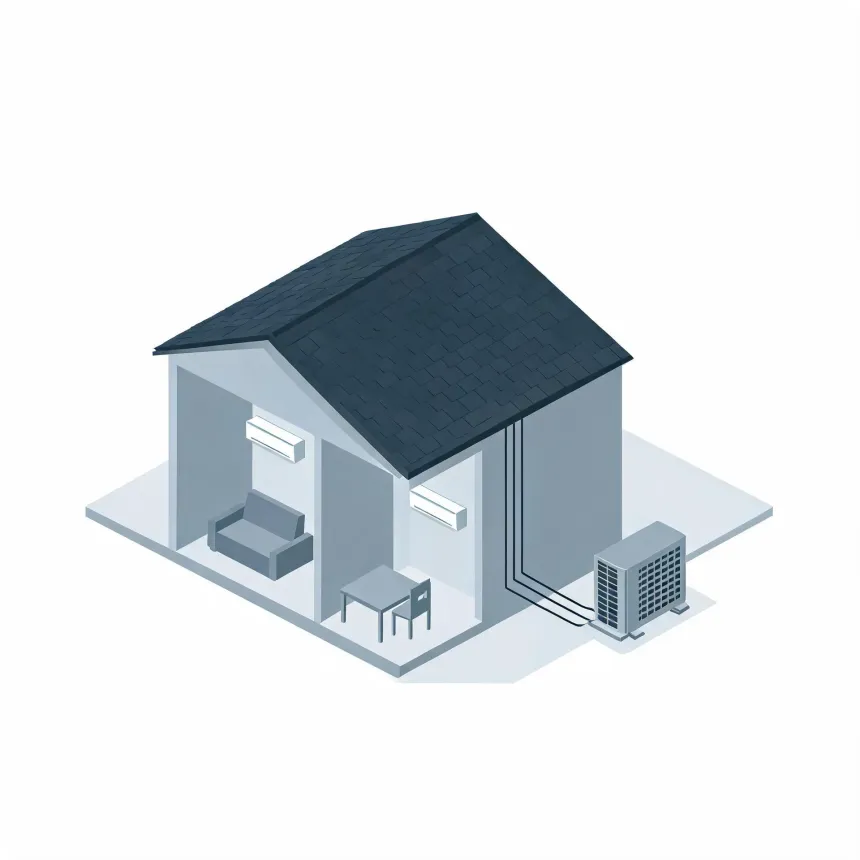
Isometric illustration of a cutaway house with a dark shingled gable roof, showing two wall-mounted indoor air handlers, a sofa, table and chair inside, and refrigerant lines running to an outdoor condenser unit beside the building.
Your system heats October through May and cools July through August.

NOAA nClimDiv, 1991–2020 normals

Venango County logged 138 damaging wind events between 2015 and 2024.

None of that calls for an oversized mini split. A correctly sized unit holds up here the same as it would anywhere else.

A standard mini split handles summers here

Power costs 17.77 cents a kWh statewide
Cooling runs July through August
Summer afternoons average 80°F
Two months of cooling a yearAfternoon highs average 80°F in June, July and August, the only months Venango County homes run AC.

Cooling here runs July through August, so June is the month to get a mini split installed. Book it before summer and the crew can take their time with the line set and the mounting spot. Wait until July and you're getting a unit put in during the two months you actually need it running, which means a day or more of no cooling while the work gets done. There's no rush to pick a date months out either. Lining it up in June, once the gas furnace season is behind you, just keeps the install off the calendar when it matters most.

Older homes need a mini split sized for the house that's actually there

Half the homes in Venango County were built in 1959 or earlier. A mini split going into a house that old has to work with the walls, the wiring and the layout that are already there, not a blank slate. Sizing and placement matter more than they would in new construction.

Find a contractor
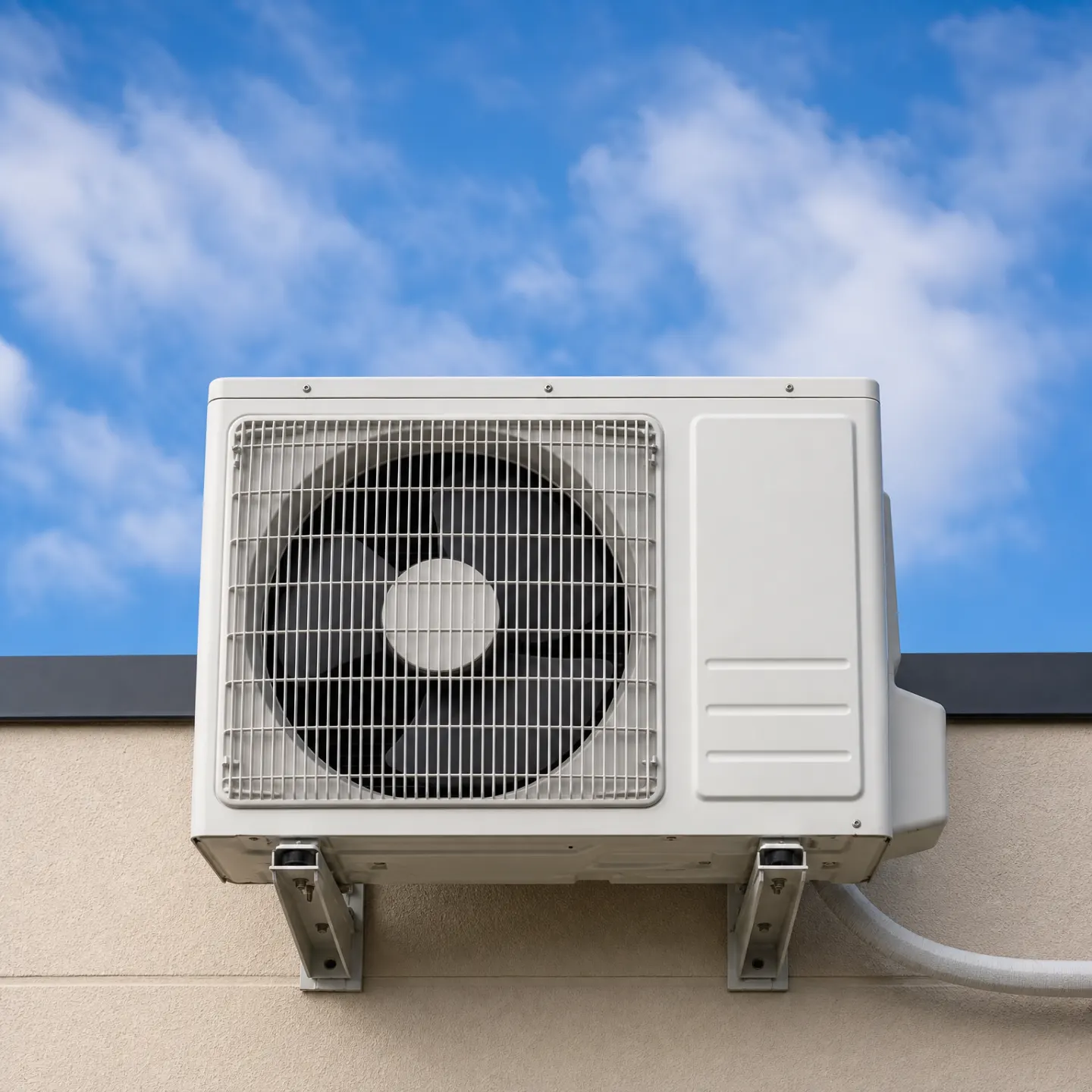
A white mini-split air conditioner outdoor condenser unit mounted on metal brackets against a beige stucco exterior wall, with a blue sky and scattered clouds in the background.

Sized for your house, not a formula

A load calculation done for your actual house catches what guesswork misses. The contractor sizing your mini split should walk the rooms, check the windows and look at what's already there before settling on a unit, not just match it to square footage off a chart.

The rating tells you the ratio, not the bill

The efficiency number on a mini split's label is a ratio of heat moved to electricity used. A higher number means the unit gets more heating or cooling out of the same amount of power. It is not a guarantee of what you will pay, because that also depends on how the unit is sized for the room, where it is mounted and how the installer sets the line set and refrigerant charge.

A high rating on a bad install won't show up

An oversized or poorly placed mini split will not hit the efficiency printed on its label, no matter how good that number looks on paper. It will short cycle, or struggle to hold a room, and run harder than it should. The rating only holds up when the unit is matched to the space and installed the way it is designed to run.

A mini split that's too big for the room cools it fast, shuts off, and kicks back on a few minutes later. That cycling is harder on the compressor than running a steady stretch, and it leaves the room swinging between too cold and not cold enough instead of holding steady. It also skips the slow pass that actually pulls moisture out of the air, so the room can still feel damp even once it reads at the right temperature. Go too small and the unit just runs and runs, straining through the hottest afternoons without catching up. Getting the size right means weighing the room's dimensions against its windows, its exposure, and what's already drawing heat in or out, not reading a number off a chart. That's a judgment call a contractor works out room by room, and it's worth more than picking the biggest unit on the lot.

Installation day starts with the outdoor unit and the indoor head going up, and most of the work is in between. The line set runs from one to the other through a single hole in the wall, carrying refrigerant, a drain line, and the wiring that lets them talk to each other. That hole gets sealed tight, because any gap is a path for outside air and moisture. Once both units are mounted and connected, the line gets pulled down to a vacuum before any refrigerant moves, which clears out air and moisture that would otherwise sit in the system and cause problems later. Only after that holds does the installer open the valves and let refrigerant into the line. Then it's a matter of running the unit, checking the temperature split between the air going in and the air coming out, and confirming the drain is actually draining before calling it done.