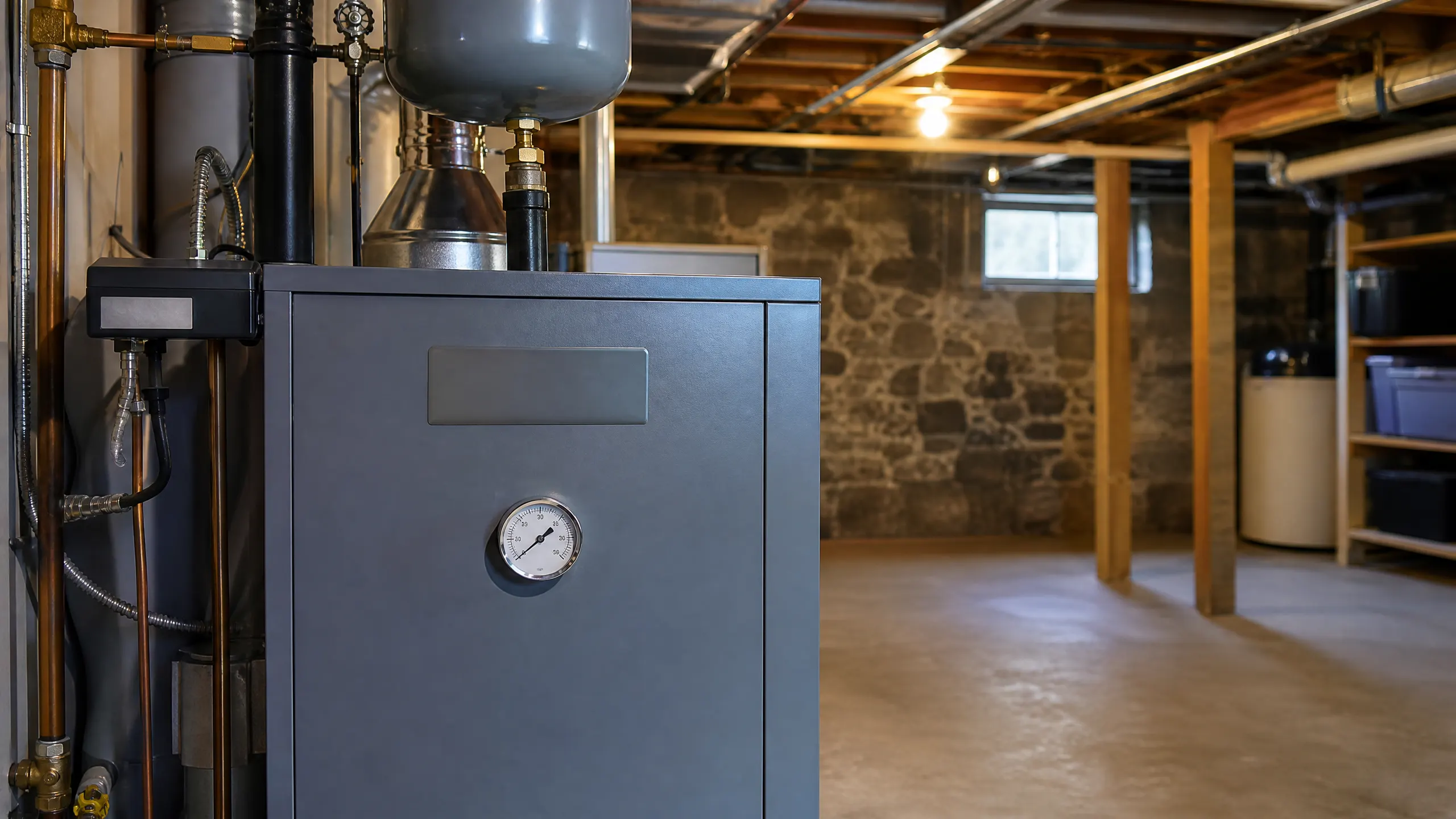



A gray boiler with a pressure gauge and copper pipes stands in an unfinished basement with stone walls and exposed ceiling joists.

Boiler Repair in Oil City, PA

Tell us about the job

Takes about a minute. No obligation.

Step 1 of 3: Equipment

Half the homes in Venango County were built in 1959 or earlier. A boiler that came with a house that age has likely been replaced once already, maybe twice, and whatever is running now still has to heat through a hard winter every year. Old pipes and old radiators do not change the math on the boiler itself. What matters is how many years of service are already on it. A cracked heat exchanger or a failing circulator pump on a boiler that old is a different decision than the same repair on one installed five years ago.

A boiler that won't light at all usually means the pilot is out or the ignition control lost power.

Check the pilot first. If it's lit and the boiler still won't run, the problem is past what you can see.

Eight months of heat a year wears a boiler down faster than most places ever ask of one

Heat runs October through May
Winter nights average 20°F
Climate zone 5A

September is worth a look before heat goes back on in October. A boiler that sat quiet since spring can have a weak circulator or a failing ignition control that only shows itself once it's asked to run for hours at a stretch. That first cold snap puts load on whatever part was already marginal, and it tends to fail in the first weeks, not in the middle of January when it's been running fine for a while. Homes here run heat for eight months, October through May, so there isn't much slack to put off a repair once the season starts. Getting it looked at before the first cold week means finding out now instead of on the night it's 20 degrees out.

Know What You're Paying For Before You Fix It

A repair bill on a boiler this age is really a question about how many winters it has left. Get a diagnosis before you pay for the fix, so you know whether you're buying another year or starting over on a decision you'll face again soon.

Find a contractor

What actually fails first

The circulator pump is usually the first thing to go. It runs every time the boiler calls for heat, and the bearings or seal wear out from just doing the job year after year. After that, the ignition control and the flame sensor are the common failure points on gas boilers. A flame sensor coated with residue will make the burner shut off seconds after lighting, which looks like a bigger problem than it is.
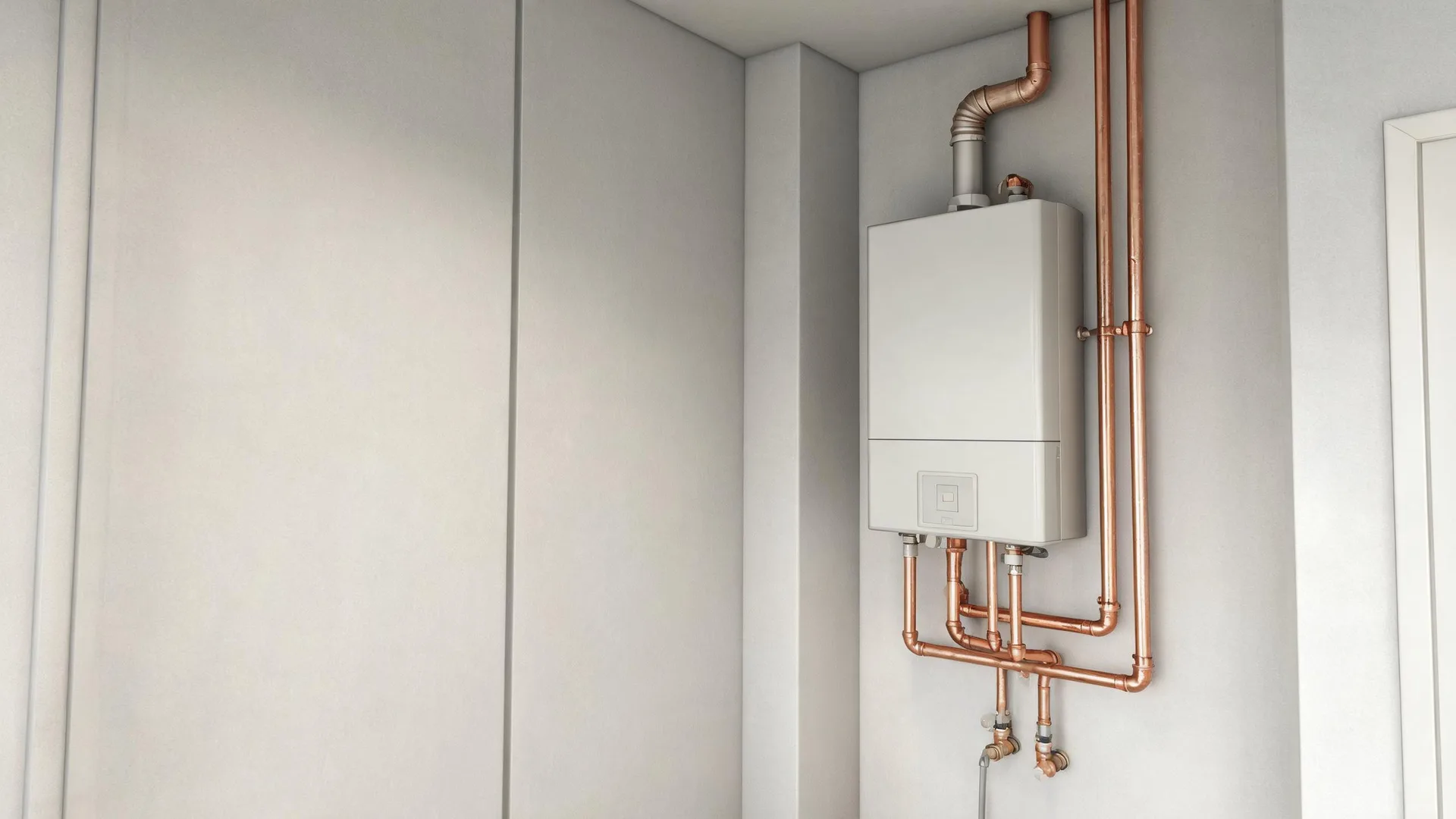
What it means for a repair call

A boiler that short cycles, makes noise, or won't hold a flame is usually a part failure, not the whole machine giving out. Those repairs are often straightforward on their own. The harder question is the heat exchanger. Cracks there show up as soot, a strange smell, or water where it shouldn't be, and that's a repair that usually isn't worth making on an older unit.

Eight months of heat a year is why a repair call here is worth getting right the first time. A circulator pump or ignition control replaced on its own is a reasonable fix, and worth paying for. What it needs first is someone looking at the boiler itself, not just the part that quit. If the tech finds soot, a strange smell, or water near the unit, that points to the heat exchanger, and that changes the decision. Ask what they found before you agree to the repair, not after. A straight answer now is cheaper than a repair that only gets you through to the next failure.

A diagnostic call starts with the thermostat call for heat and the tech watching what the boiler actually does in response. Does it try to light and fail, light and shut off, or not respond at all. That sequence narrows things down before any panel comes off. From there it's a combustion check if it's gas, pressure and temperature readings, and a look at the circulator to see if it's turning freely and moving water. A multimeter checks whether the ignition control is getting power and sending it where it should. None of this takes guessing once the tech knows the sequence of what should happen and where it stopped. The last step is pulling the cover near the heat exchanger, since soot or a burnt smell there changes the whole conversation about whether the repair is worth making.