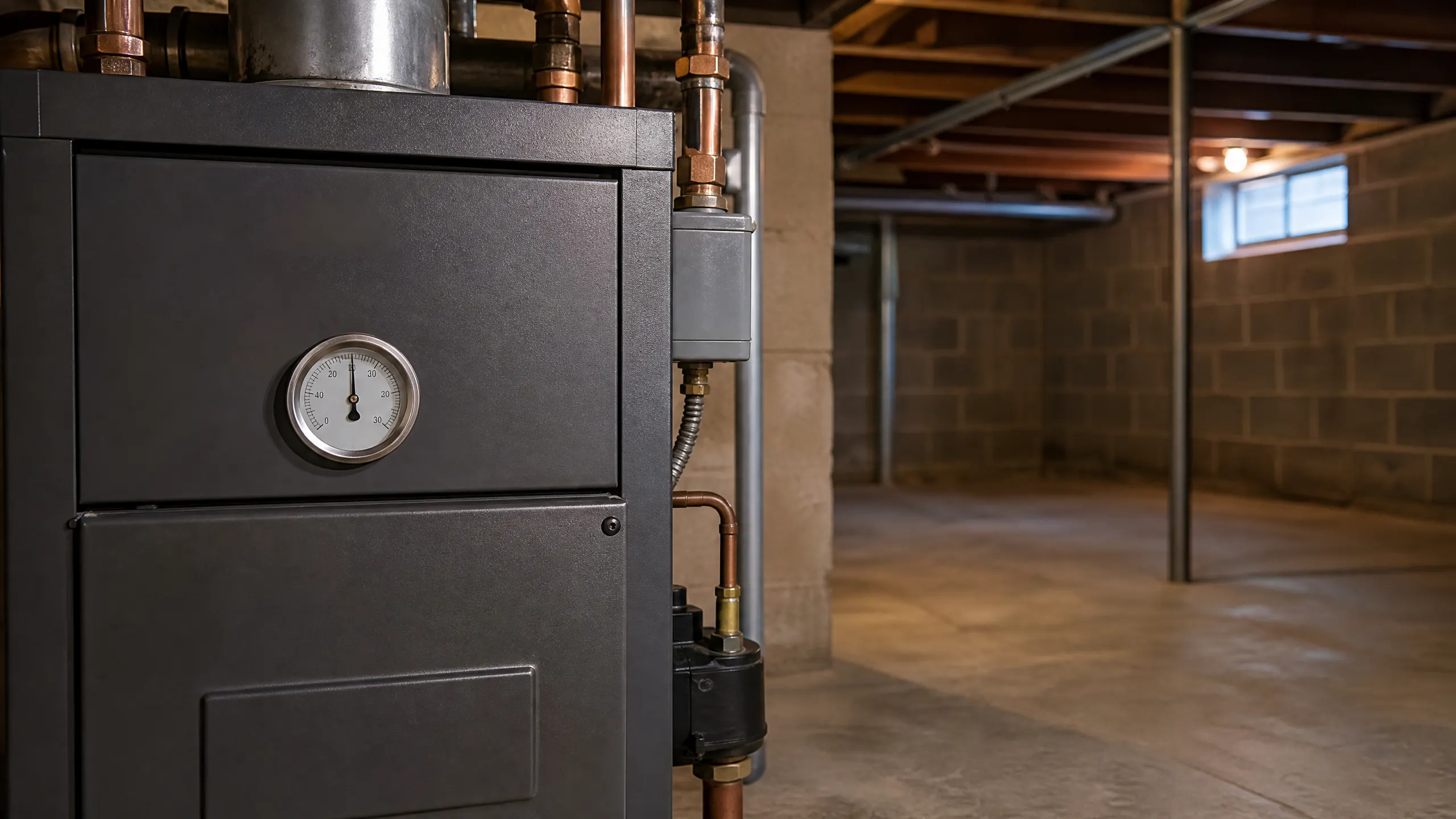




A dark metal boiler with a pressure gauge and copper pipe connections installed in an unfinished concrete basement.

Boiler Installation in Oil City, PA

Tell us about the job

Takes about a minute. No obligation.

Step 1 of 3: Equipment

Half the homes in Venango County were built in 1959 or earlier. A boiler going into a house that age is going into whatever piping and radiators came with it, not a blank slate. Some of those homes still have the original distribution system, and some have been updated piecewise over the years by different owners. Whoever installs the new boiler needs to look at what's actually there, not just swap in a new unit and assume it matches. Getting that fit right from the start matters more in an older home than in a new build.

A boiler in Venango County runs from October through May, about eight months of the year.

Size the new system for that kind of use, not for a mild winter somewhere else.

Most homes here already run on gas, and a new boiler can use what's already in place

67.7% of homes heat with gas
Heat runs October through May
Winter nights average 20°F

Heat starts here in October, which puts September on the clock. An old boiler that's struggling tends to show it in the shoulder months first, running longer to keep up before the hard cold sets in. Get the new one in before October and it's a planned job, done at a normal pace, with time to size the piping and radiators correctly. Wait for a December morning when the overnight low is sitting near 20°F and the old boiler finally quits, and it's an emergency instead, with whoever's available installing whatever's on the truck. Eight months of heating a year doesn't leave much room for that kind of rush.

Size it for eight months of heat, not a mild winter

Eight months of heat a year means a new boiler here gets sized for real use, not a mild winter somewhere else. Get that sizing right and the piping and radiators matched to it before the install, not after.

Find a contractor
A person in a dark long-sleeved shirt and tan pants, seen from behind, carries a worn canvas tool bag up stone steps toward a blue front door with a shrub in a blue planter beside it.

The boiler itself is rarely the biggest cost

The unit is one line item. What usually drives the total is everything around it: venting, gas line sizing, the condensate line if it's a condensing model, and whether the existing piping and radiators can take the new boiler as is or need work. A straight swap in good working order costs less than a job where the installer has to rework pipe runs or correct venting that was never right to begin with.
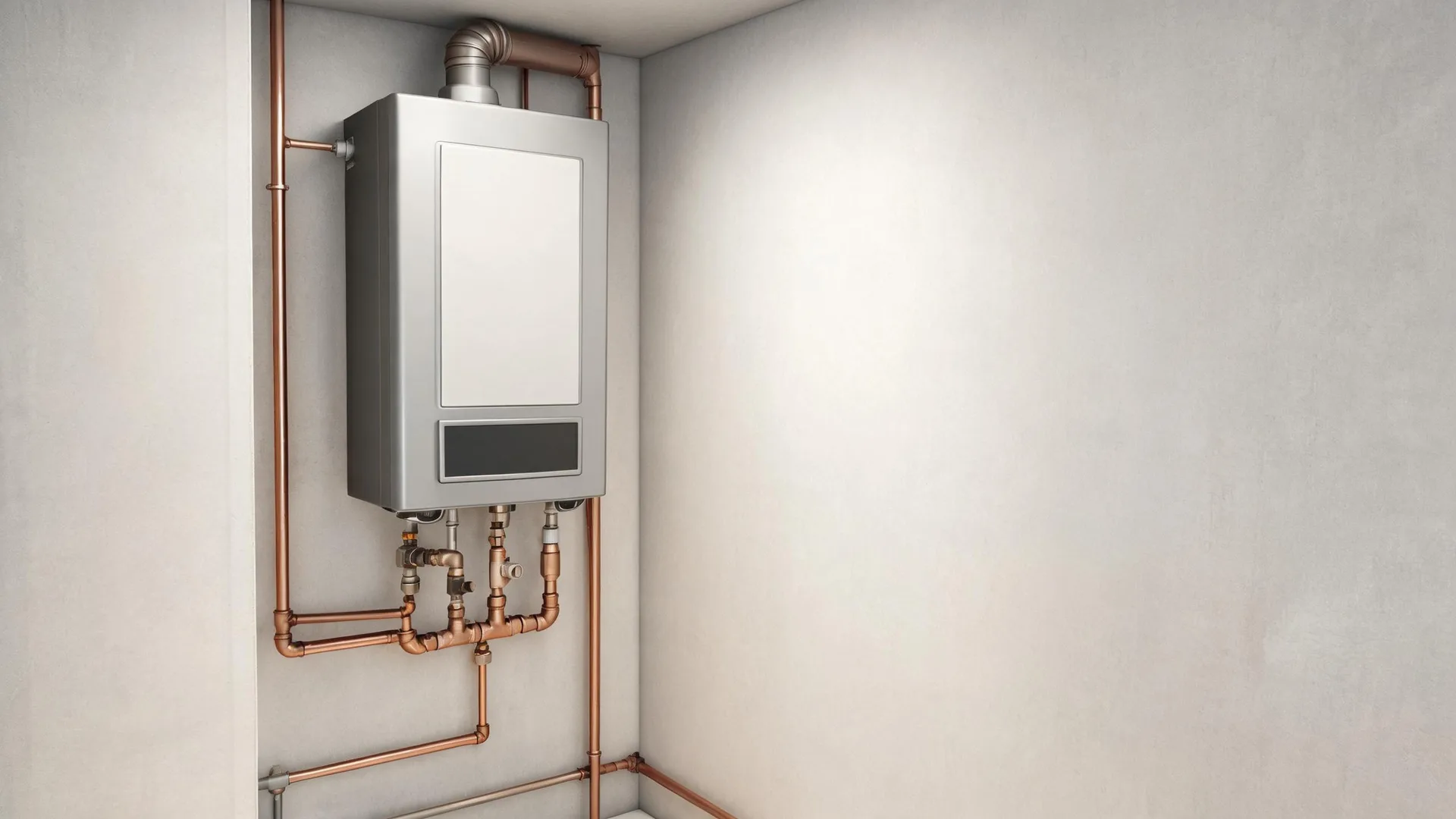
Matching output to the heating system adds real labor

A boiler has to be sized to the radiators or baseboard it's feeding, not just the square footage of the house. Undersize it and it runs constantly without getting the place warm. Oversize it and it short cycles, wearing out parts faster and wasting fuel. Getting that match right means the installer has to calculate heat loss and check the distribution system, and that work shows up in the price whether or not the boiler itself is the most expensive model on the lot.

The rating on a boiler label tells you how much of the fuel it burns turns into heat for the house, and how much goes out the flue. A higher number means less waste. That rating only holds up if the boiler is actually sized and installed to match the radiators or baseboard it's feeding. A unit with a strong rating still runs inefficiently if it short cycles because it's too big for the load, or if it runs constantly because it's too small. The rating describes the machine on a test bench, not the machine bolted into a specific house. Installation is what decides whether the house ever sees that number.

Venango County falls under zone 5A, a cool, humid climate where heating carries most of the load. The 2021 energy code sets that zone's rules, and any gas boiler installed here has to clear them. Since January 2021, gas-fired hot water boilers have had to turn at least 84 percent of the fuel they burn into heat over a season. That floor rules out the old low-efficiency units some homes here still have running. A federal tax credit is available toward a qualifying new system, on top of whatever the efficiency gain saves on gas.