

A row of similar small gabled houses with light siding behind a long wooden picket fence, with mown grass in the foreground and leafy trees above.

Boiler Installation in Meadville, PA

Tell us about the job

Takes about a minute. No obligation.

Step 1 of 3: Equipment

A boiler in Crawford County runs about eight months a year, October through May. That is most of the calendar. Overnight lows average 20°F through December, January and February, and the boiler has to answer for that every night, not just on the coldest week. Getting the size right for this place matters more than picking a model off a brochure. A boiler that is too small will run flat out all winter trying to keep up. One that is too big will short cycle, switching on and off more than it should, and that wears its own parts down early. Either way the mismatch stays with you for as long as you own it.

Half the homes in Crawford County were built in 1966 or earlier.

A boiler going into a house that old has to match the pipes and radiators already there, not just the floor plan.

September is the month before heat season starts here, and the last chance to replace a boiler without the rush

Heat runs October through May
Winter nights average 20°F
Climate zone 5A

Gas heats close to half the homes in Crawford County, more than any other fuel. That is why most boilers going into these houses are gas-fired, and why parts and know-how for them are easy to find locally. Bottled or LP gas heats another 16.5% of homes, usually where gas lines don't run, and electricity and fuel oil split most of the rest. If your home already runs on gas, staying with a gas boiler keeps the install simpler, since the line and venting are already there. If it runs on LP, oil or electric, that changes what the installer needs to plan for, down to how the fuel gets delivered.

A new boiler here has to clear a higher bar, and there's a credit for it

Crawford County falls in climate zone 5A, a cool zone where heating carries the bigger share of the year's work. Any new gas-fired hot water boiler built since January 2021 has to hit 84 percent AFUE to be sold at all, so that floor is already set before you compare models. A federal tax credit is available on qualifying high-efficiency equipment, worth checking against whatever you install.

Find a contractor
A man in a cap, dark long-sleeved shirt and brown work pants, seen from behind, carries a worn leather tool bag up porch steps toward a blue front door beside a blue planter with a shrub.

Ask how it will vent

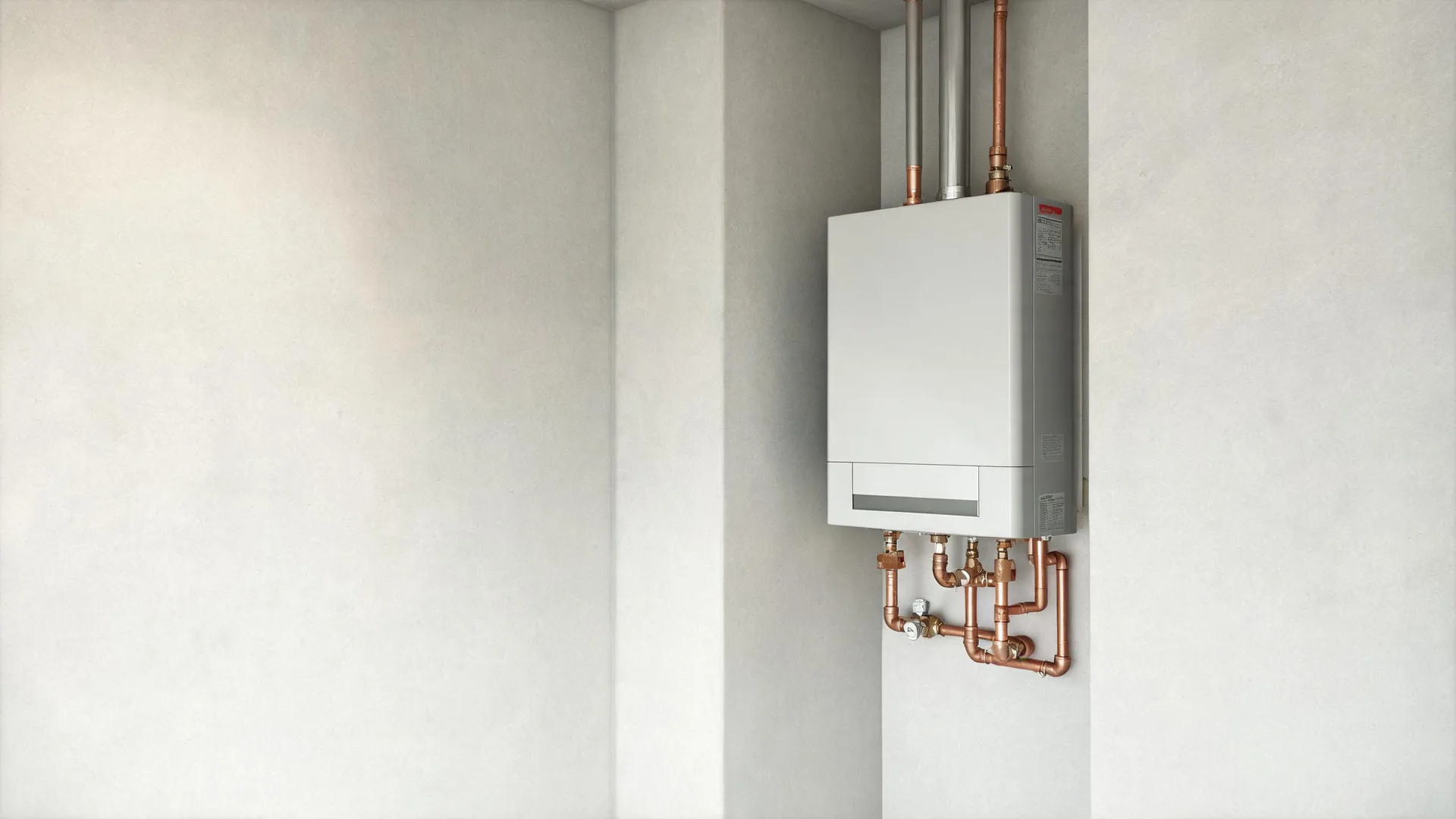
A condensing boiler vents through PVC pipe out a side wall or up through the roof, not up the old chimney. That changes where the unit can sit and where the exhaust ends up outside. Ask the installer where the vent will run and whether the chimney gets capped off or reused for something else, like a water heater.
Ask what it will connect to

A new boiler has to match whatever is already moving heat through the house, whether that's cast iron radiators, baseboard, or radiant floor loops. Each one wants a different water temperature to work right. Ask how the new boiler gets set to match what's already there, not just what size unit goes in.

Several things drive the price besides the boiler itself. Venting is one. A condensing unit needs new PVC venting run through a wall or roof, and that run is longer and harder in some spots than others. Piping is another. If the new boiler doesn't sit where the old one did, the supply and return lines have to travel further, and every extra foot of pipe and fitting adds labor. The near-boiler piping, the part right at the unit, has to be built to match that specific model's manual, and that takes time regardless of the boiler's size. Controls add cost too. An outdoor reset control or a zone valve system does more than a single thermostat ever could, but it's more parts and more time to wire in. And if the gas line or electrical circuit feeding the old boiler isn't rated for the new one, that gets upgraded first, before the boiler ever goes in.

Installation day starts with the old boiler coming out, and that's often slower than putting the new one in. Draining the system, disconnecting the flue, and clearing the pad or the wall bracket all take time before any new part shows up. Once the space is clear, the installer sets the new unit, runs the vent, and connects the gas, water and electrical. Then comes the near-boiler piping, built to that model's spec, and the controls get wired in. Before anyone calls it done, the system gets filled, purged of air, and fired up to check pressures and temperatures against what the manual calls for. A boiler that's installed but never properly commissioned can run, but it won't run right, and that often doesn't show up until the first real cold snap.