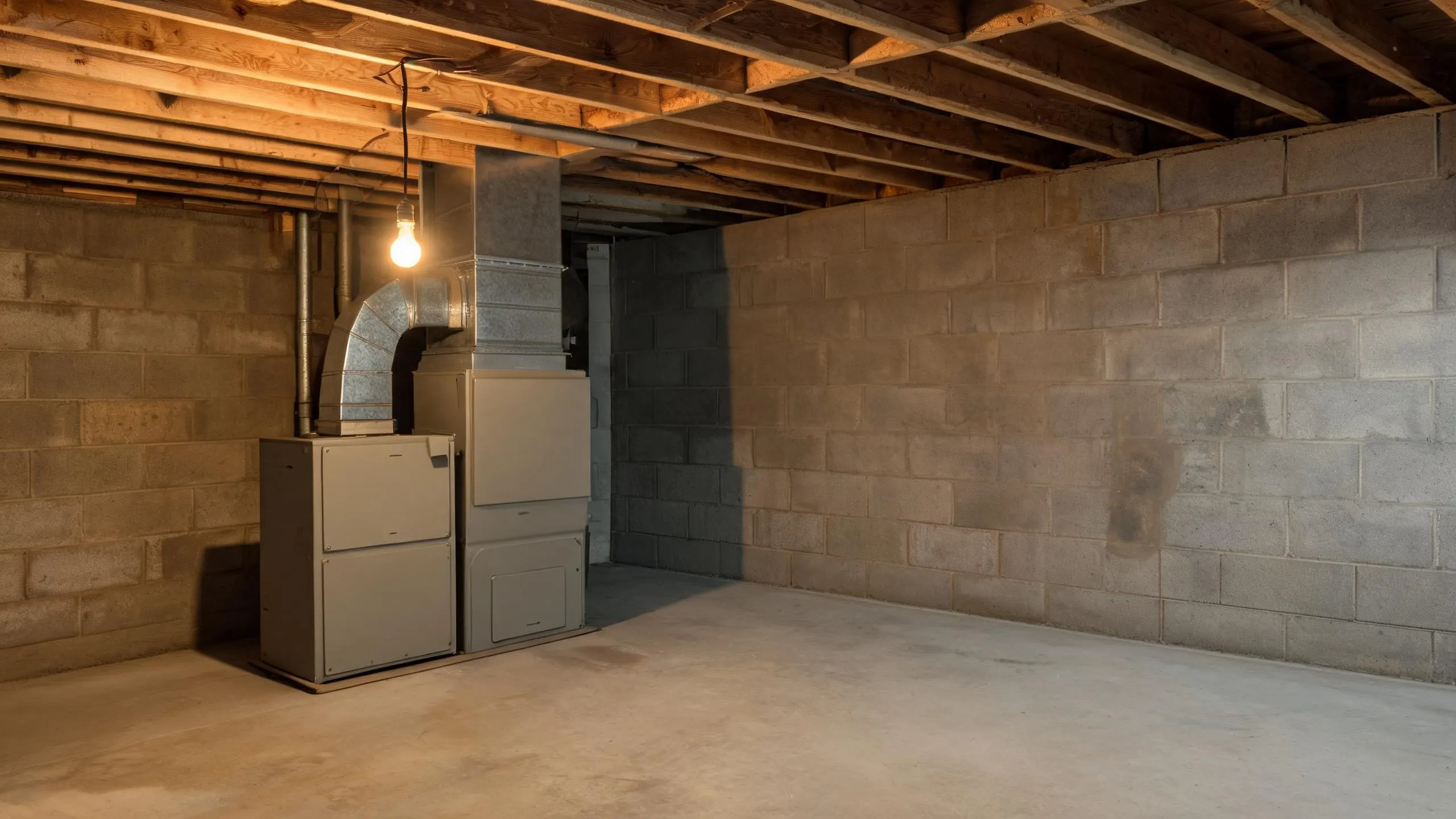
An unfinished basement featuring concrete block walls, exposed floor joists, a bare concrete floor, and a forced-air furnace with a large metal exhaust duct in the corner.

Furnace Repair in Meadville, PA

Tell us about the job

Takes about a minute. No obligation.

Step 1 of 3: Equipment

Half the homes here were built in 1966 or earlier

Crawford County's housing stock skews old. A furnace that came with one of these houses may not be the original. If you don't know when yours was installed, that's the first thing to find out before paying for a repair.

An old furnace changes the math on a repair

A cracked heat exchanger or a failing blower motor means something different on a furnace that's already had a long run than on one a few years old. Before paying for the fix, ask whether the furnace has enough life left to be worth it.

8 months
October through May, your furnace is on duty
20°F
the average winter night it heats against
14 winter storms
in ten years, the nights a failure hurts most
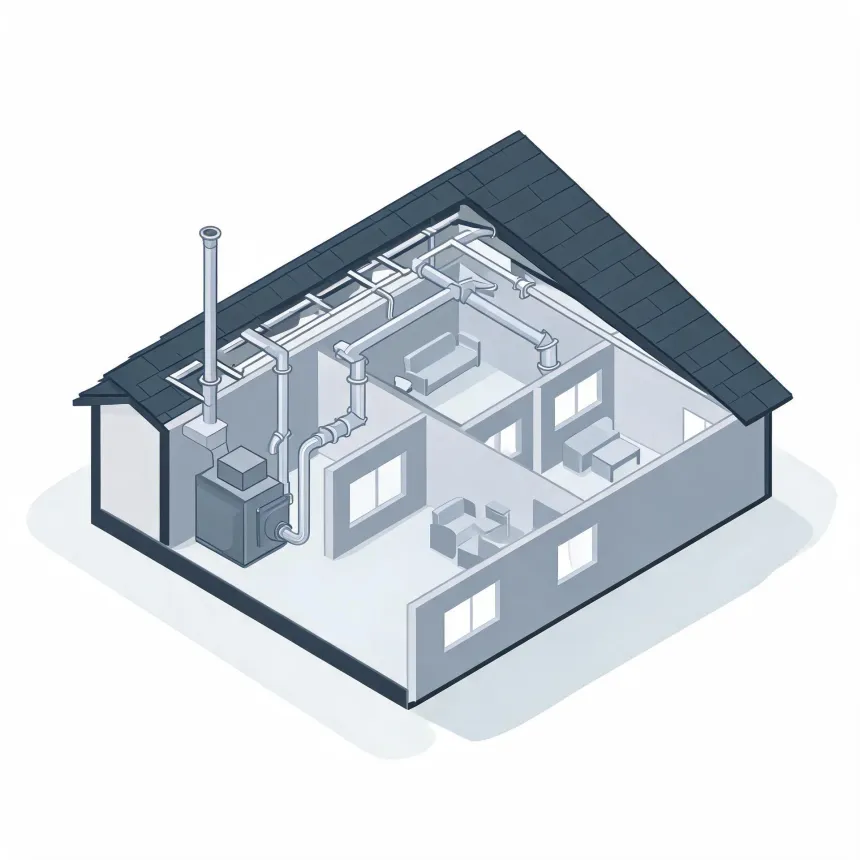
Isometric cutaway illustration of a single-story house showing interior rooms, a furnace unit with flue pipe, and branching ductwork running through the ceiling space under a dark shingled roof.
Your furnace works hardest from November through March.

NOAA nClimDiv, 1991–2020 normals

A furnace that short cycles, turning on and off before the house warms up, is telling you the heat exchanger or the flame sensor is failing.

A homeowner who waits on that noise usually calls back a few weeks later for a furnace that won't start at all.

Eight months of heat a year wears a furnace down faster

Heat runs October through May
Winter nights average 20°F
Climate zone 5A
Furnace Repair in Meadville, PAHeat starts in October here. Get a weak furnace looked at in September, before it has to prove itself.

Before you call anyone, check the thermostat batteries and make sure it's set to heat, not just fan. Then go look at the furnace itself. If the light is amber or red instead of steady green, that code is worth writing down, it tells a tech what the control board already caught. Check the air filter next. A filter clogged with dust chokes off airflow, and that alone can cause a furnace to overheat and shut itself down as a safety measure. Look at the switch on the furnace or the one near the basement stairs that looks like a light switch, it's easy to bump off by accident. If you've got a newer furnace, check that the condensate line isn't blocked or frozen, since a full drain pan will stop the unit cold. None of this fixes a cracked heat exchanger or a dying blower motor, but it rules out the simple stuff first.

Have it diagnosed, not just patched

Eight months of heat a year puts real hours on a furnace, more than it would see almost anywhere else. That's the wear behind most of the calls in this county. Have the furnace looked at properly so whoever repairs it is fixing what's actually wrong, not just the symptom that showed up first.

Find a contractor
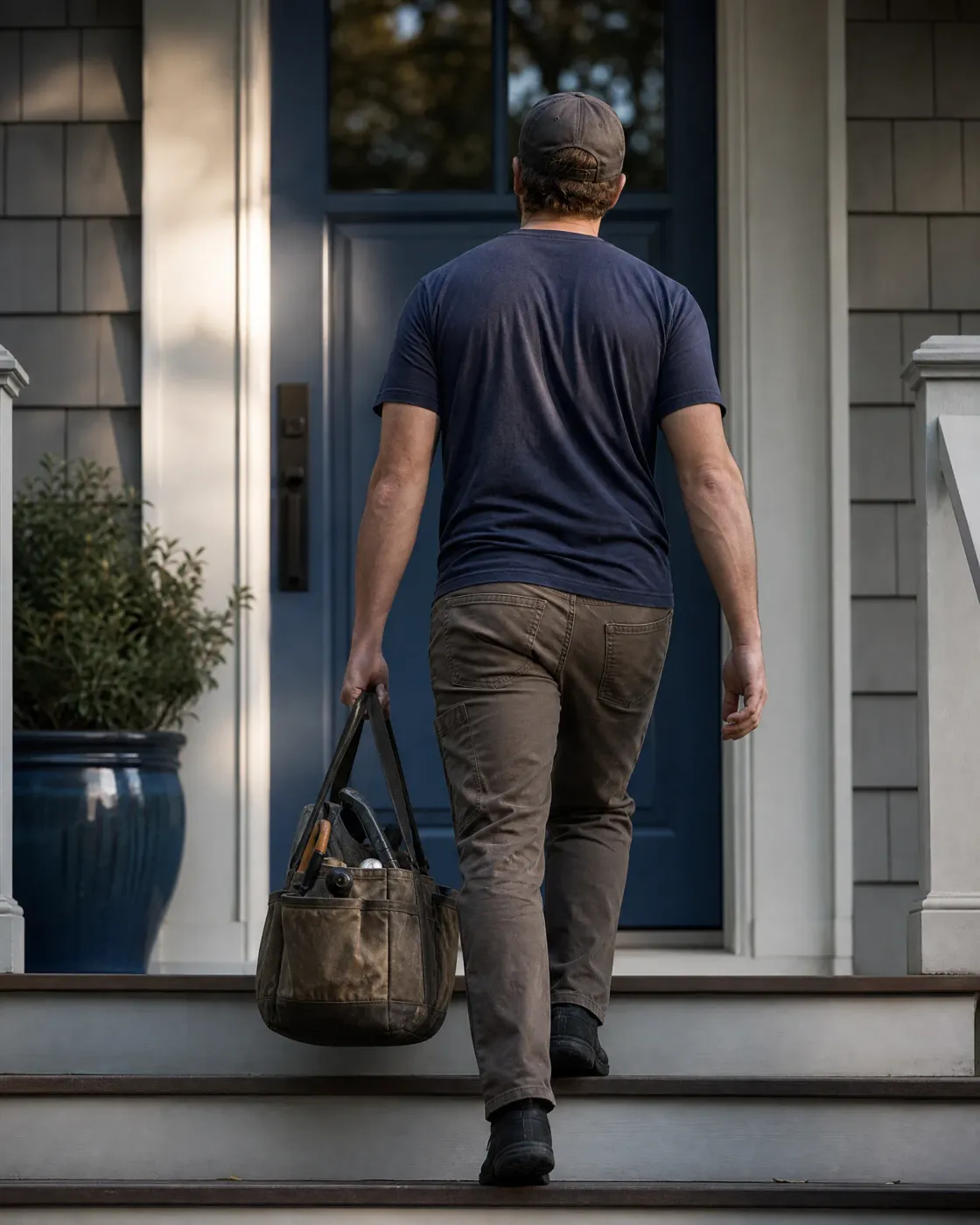
A man in a cap, navy T-shirt and brown pants carries a waxed canvas tool bag up the steps toward a blue front door of a shingled house, beside a potted shrub.
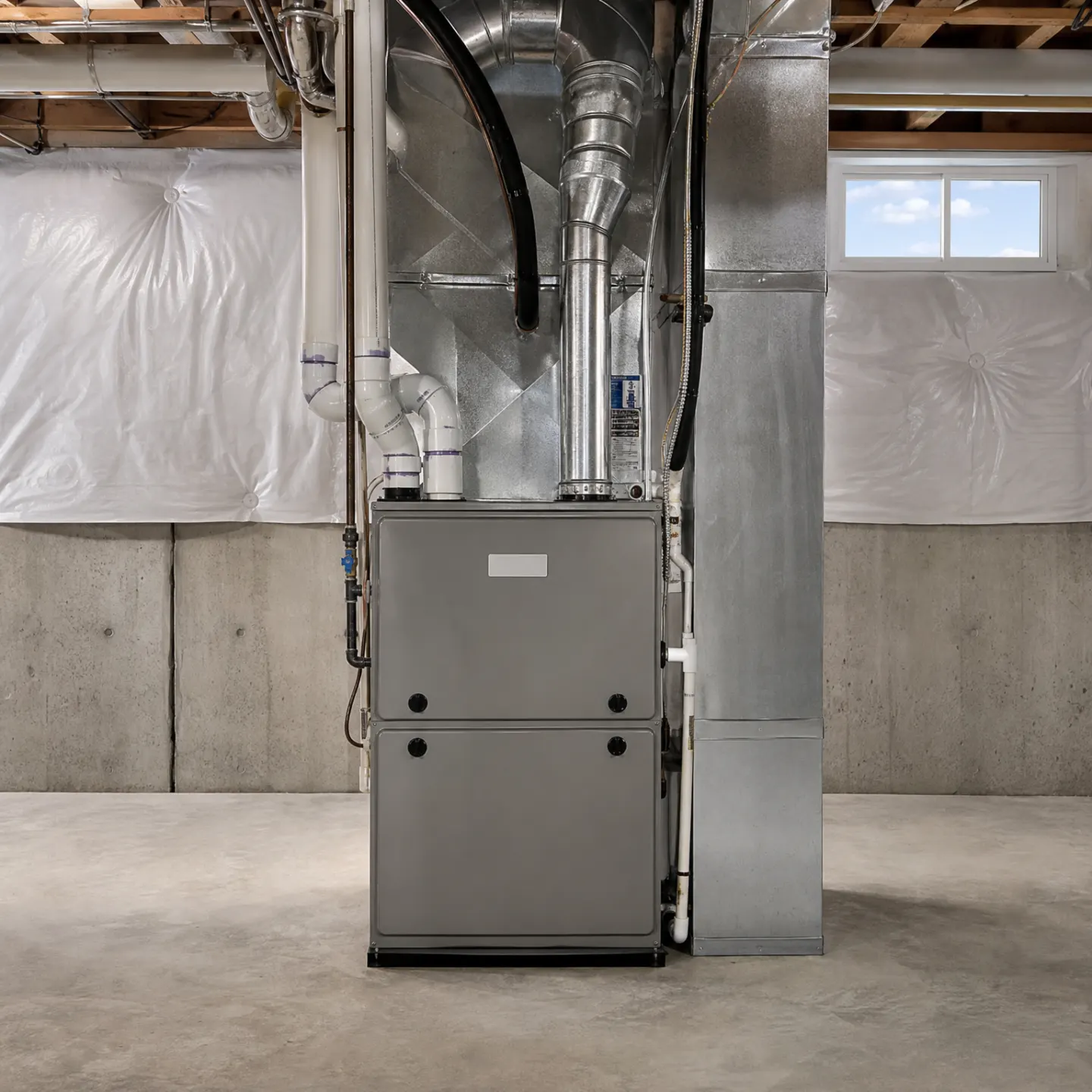
A gray residential gas furnace installed in an unfinished basement, connected to sheet-metal ductwork and PVC pipes.

How many winters has this furnace already put in

A furnace installed around the time one of these older houses was built is well past the point where a repair is a sure bet. If yours still has its original equipment, a major failure now is the moment to ask a tech straight out how many years it has left before you pay for the part. That answer should decide the repair, not the other way around.

A small fault stresses the parts around it

A furnace with one bad part doesn't fail in isolation. A cracked heat exchanger lets a blower keep pulling combustion air it shouldn't. A failing flame sensor makes the igniter strike over and over, trying to hold a flame that won't stay lit. Each cycle it's allowed to keep running pushes wear onto the parts that were fine to begin with.

Shutting itself off is the furnace protecting itself

A furnace that cuts out mid-cycle is usually tripping a safety switch on purpose, not failing randomly. Running it anyway, by resetting the switch again and again, defeats the reason that switch exists. Left alone, the same fault tends to move from a shutdown you can reset to a part that has to be replaced.

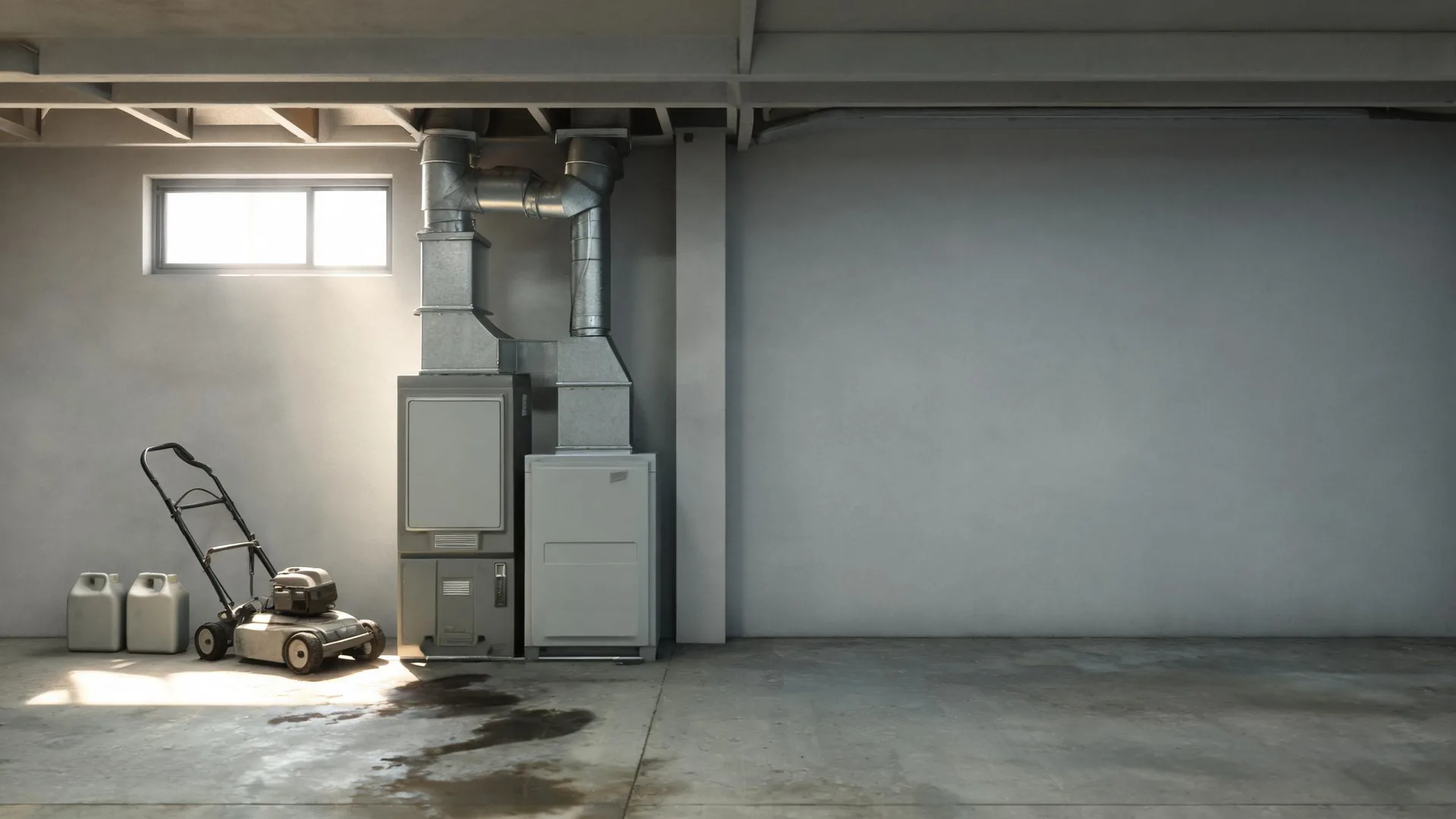
An unfinished concrete basement containing a gas furnace with sheet-metal ductwork, utility shelving, and exposed overhead joists.

A new furnace would cut about $180 a year off heating for a typical Crawford County home.

  • A new high-efficiency furnace$710 a year
  • An older furnace$890 a year

Estimates for a typical Crawford County home, compared with an older unit built to the previous federal minimum, from EIA household energy data, Pennsylvania fuel prices and NOAA climate normals. Your home will differ.

Repair makes sense when one part has failed and the heat exchanger is sound.

Replacement makes sense when the heat exchanger is cracked or the furnace keeps needing parts.

A diagnostic visit starts before any panel comes off. A tech asks what the furnace was doing, whether it was short cycling, blowing cold, making noise, tripping off, and when it started. Then the cover comes off and the blower compartment gets checked against the control board's own fault code. From there it's a sequence: check for flame, check the igniter or pilot, check the flame sensor's reading, check the pressure switch, check the draft from the inducer motor. Each test rules something in or out so the next one means something. A tech who skips that order and swaps a part on a guess is as likely to replace something that was never the problem. The visit ends with a straight answer: what failed, what it takes to fix it, and whether that repair is worth making on this furnace.