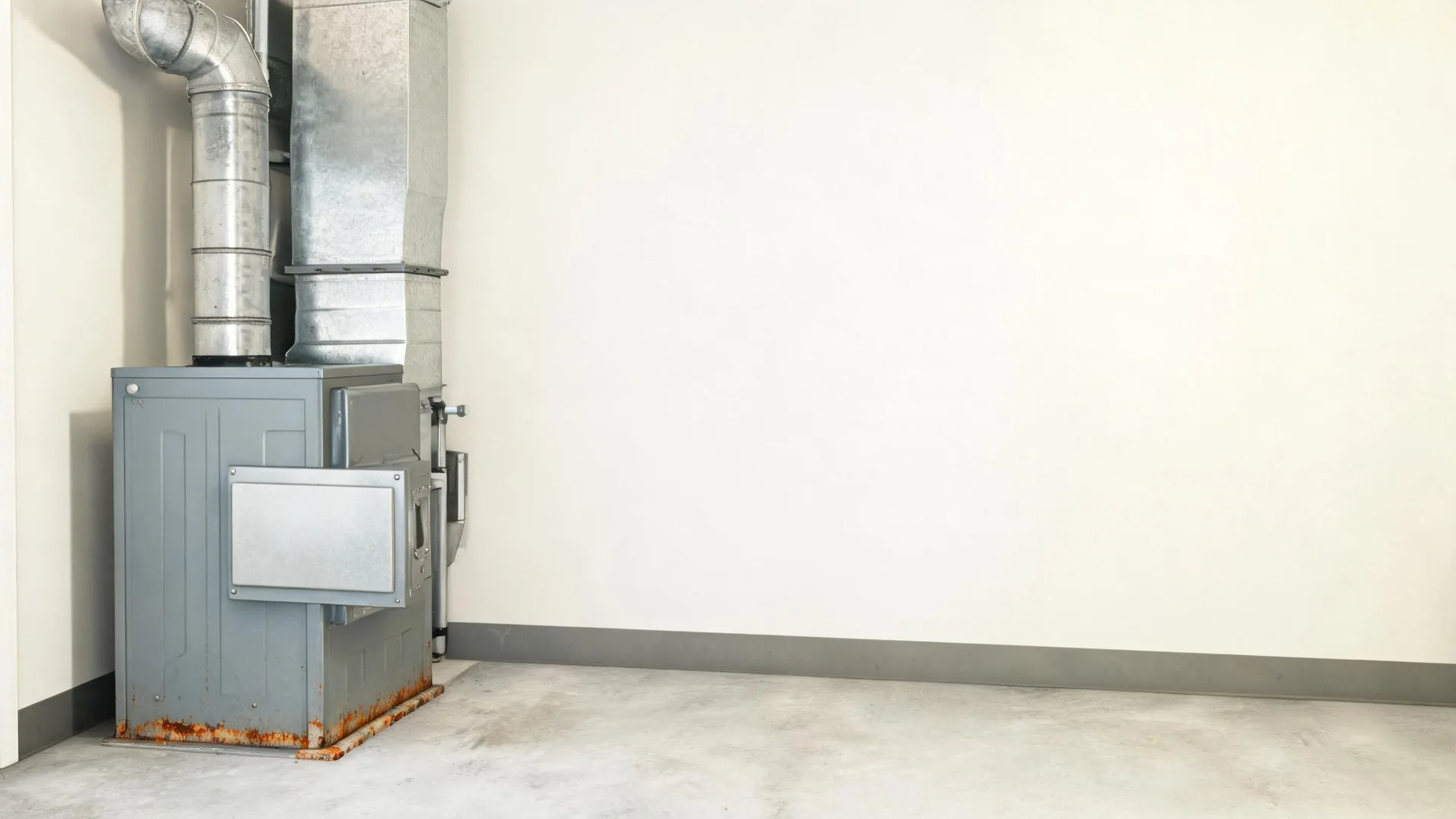
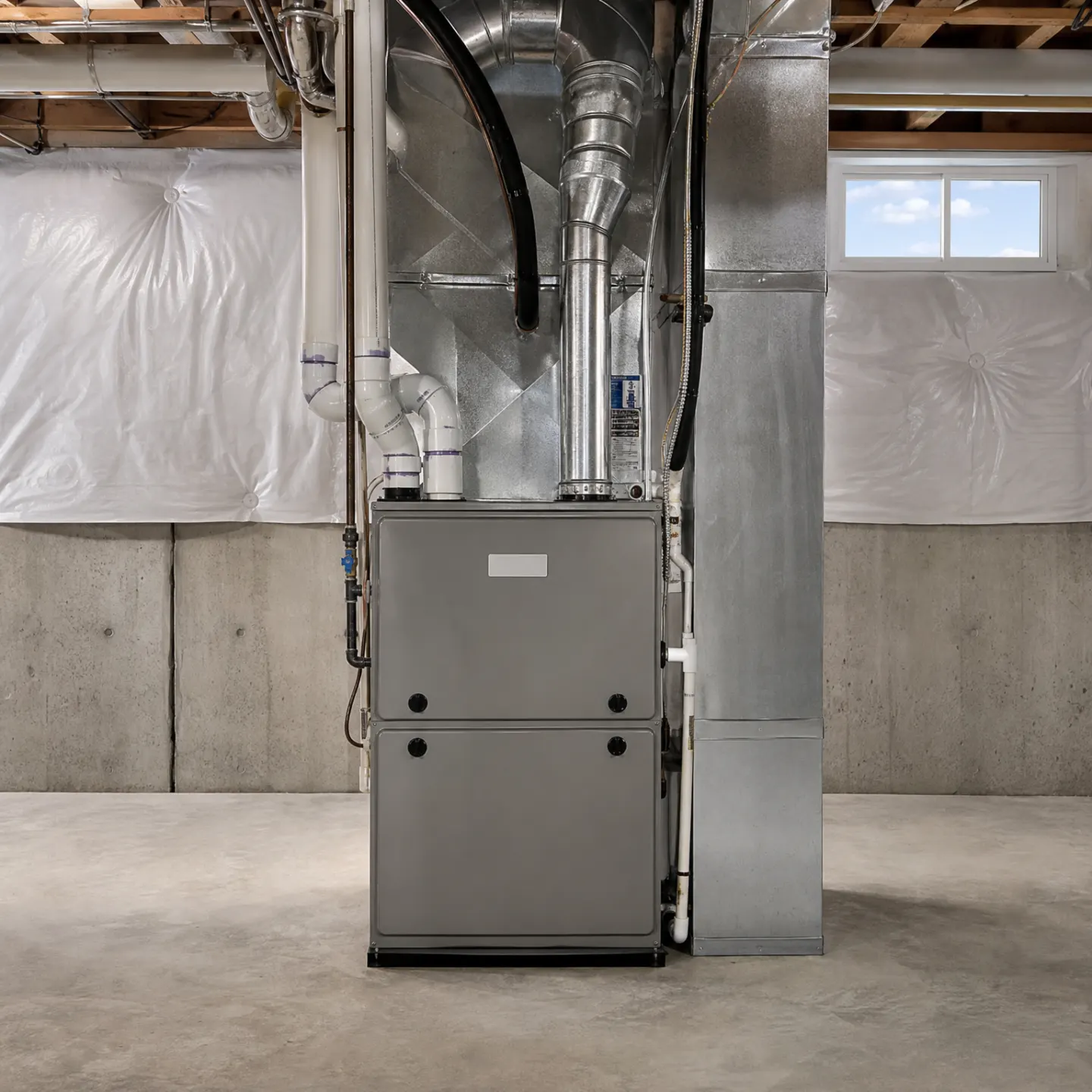
Half the homes here were built in 1964 or earlier
That's the midpoint for Erie County. A furnace in a house that old has usually been replaced at least once already, maybe more, and whatever is running now may be on borrowed time.
Takes about a minute. No obligation.
That's the midpoint for Erie County. A furnace in a house that old has usually been replaced at least once already, maybe more, and whatever is running now may be on borrowed time.
Furnace models from decades ago used parts that can be harder to find now. Before paying for a big repair, it's worth asking how many years that furnace has left in it.
NOAA nClimDiv, 1991–2020 normals
Most furnace failures trace back to one worn part, not the whole machine.
Find which part gave out and you know whether this is a repair or a sign to start planning ahead.




A cracked heat exchanger is the clearest case. Keep running a furnace with a cracked exchanger and combustion gas can mix into the air the blower pushes through the house. A dirty flame sensor works the same way in miniature. It starts by making the burner shut off a few seconds early, then earlier, until the furnace won't stay lit at all. A clogged filter restricts airflow across the heat exchanger, and that makes it run hotter than it was built to, which is what leads to the crack in the first place. An igniter that's starting to fail will often still light the furnace, just weakly, and each cycle stresses it further until it stops lighting altogether. The furnace that limps along for another week on a bad part is rarely cheaper to fix than the one shut off and looked at now.
A furnace nearing the end of its life doesn't always fail all at once. It can send a part out at a time, and a repair bill can show up before the question of replacing it ever does. Before you pay for the fix, get a straight answer on how many years are left in the furnace itself.
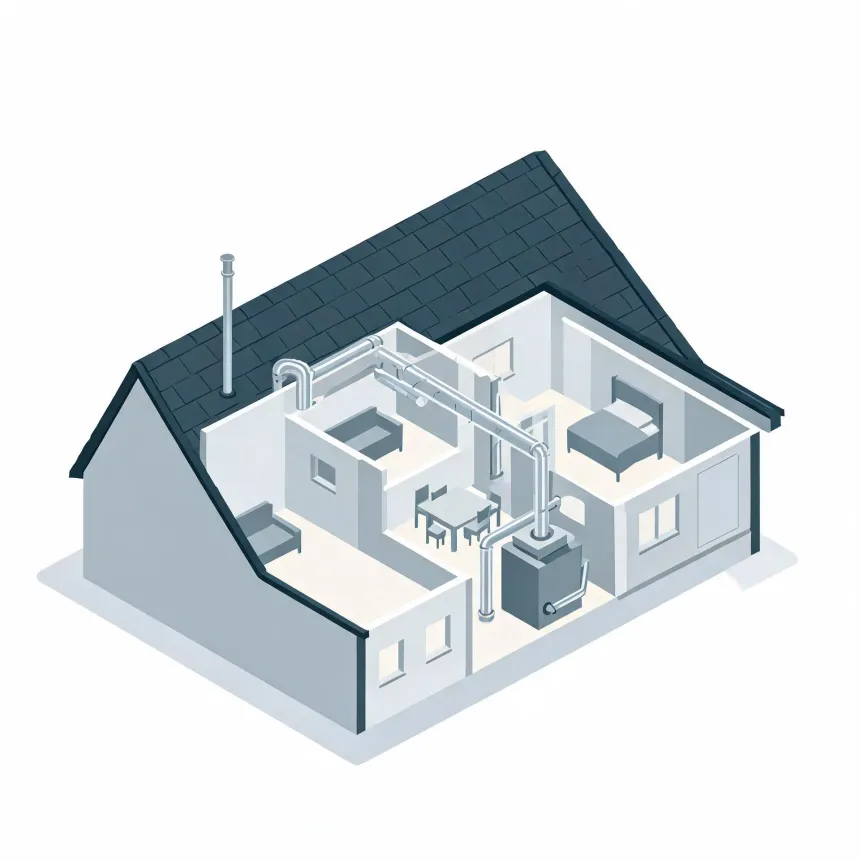
Find a contractorWatch this furnace through a full day here and it barely shuts off. Eight months of run time wears a furnace down faster than one that only has to work a few months a year. When it starts acting up, that wear is usually the reason. Have the actual part checked before anything gets replaced. A repair built on a real diagnosis holds. One built on a guess just sends the same problem back.
A burner that cycles on and off more than it used to, a blower that runs but puts out cool air, a flame that burns yellow instead of blue. These are a furnace telling you something is already wrong before it quits for good. Catching the signal early is usually what keeps a repair small.
A burning smell that doesn't fade after the first few minutes, a furnace that won't stay lit, or soot around the vent hood are not wait and see problems. Those point to parts that affect how safely the furnace runs, not just how well. The sooner a tech looks at it, the fewer parts it takes down with it.
Estimates for a typical Erie County home, compared with an older unit built to the previous federal minimum, from EIA household energy data, Pennsylvania fuel prices and NOAA climate normals. Your home will differ.
Repair makes sense when one part has failed and the heat exchanger is sound.
Replacement makes sense when the heat exchanger is cracked or the furnace keeps needing parts.
A diagnostic visit starts before any panel comes off. A tech asks what the furnace was doing right before it quit, whether it was short cycling, blowing cold, or making noise, because that narrows things down fast. From there it's a sequence: check the thermostat call, check for power at the board, check the flame sensor and igniter, check the pressure switch and venting. Each step rules something out rather than guessing at a fix. A gas furnace also gets a check of the flame itself, since a yellow or flickering flame points to a combustion problem that a blower or filter never would. By the end, the part at fault should be named, not just suspected, and that's what the repair gets built around.