




White colonial houses with lit windows photographed at dusk along a tree-lined residential street.

Boiler Repair in Erie, PA

Tell us about the job

Takes about a minute. No obligation.

Step 1 of 3: Equipment

Half the homes in Erie County were built in 1964 or earlier. If your boiler came with a house that old, it's probably not the original unit, but it may well be the second one, and that one has its own years on it. An older boiler that needs a repair is at a different point in its life than a five-year-old one with the same problem. Ask whoever comes out to look at it how much life is likely left before you put money into it.

A boiler that won't fire might just need the pressure checked.

If the gauge reads low, that's something you can see yourself before anyone comes out.

Eight months of heat a year is a long season to ask a boiler to run

Heat runs October through May
Winter nights average 20°F
29 winter storms from 2015 to 2024

Heat goes on in October here and runs through May. The first cold snap is when a boiler earns its keep, and it's also when a weak part finally gets tested. A pump that was already starting to go, or an igniter on its way out, usually waits for that first real demand to fail. If yours gave you trouble last season, don't assume it worked itself out over the summer. September is the month to have it looked at, before the first morning you actually need it.

Get the real cause found before it costs you more

Eight months of heat a year adds up to real wear, and a boiler that's already struggling has that much more working against it before spring. Get it diagnosed now, so whatever's wrong gets fixed instead of patched.

Find a contractor
A man in a dark long-sleeve shirt and tan pants climbs porch steps toward a blue front door, carrying a worn canvas tool bag with tools in its side pockets, beside a potted shrub in a blue planter.

Kettling, banging, or a knocking pipe

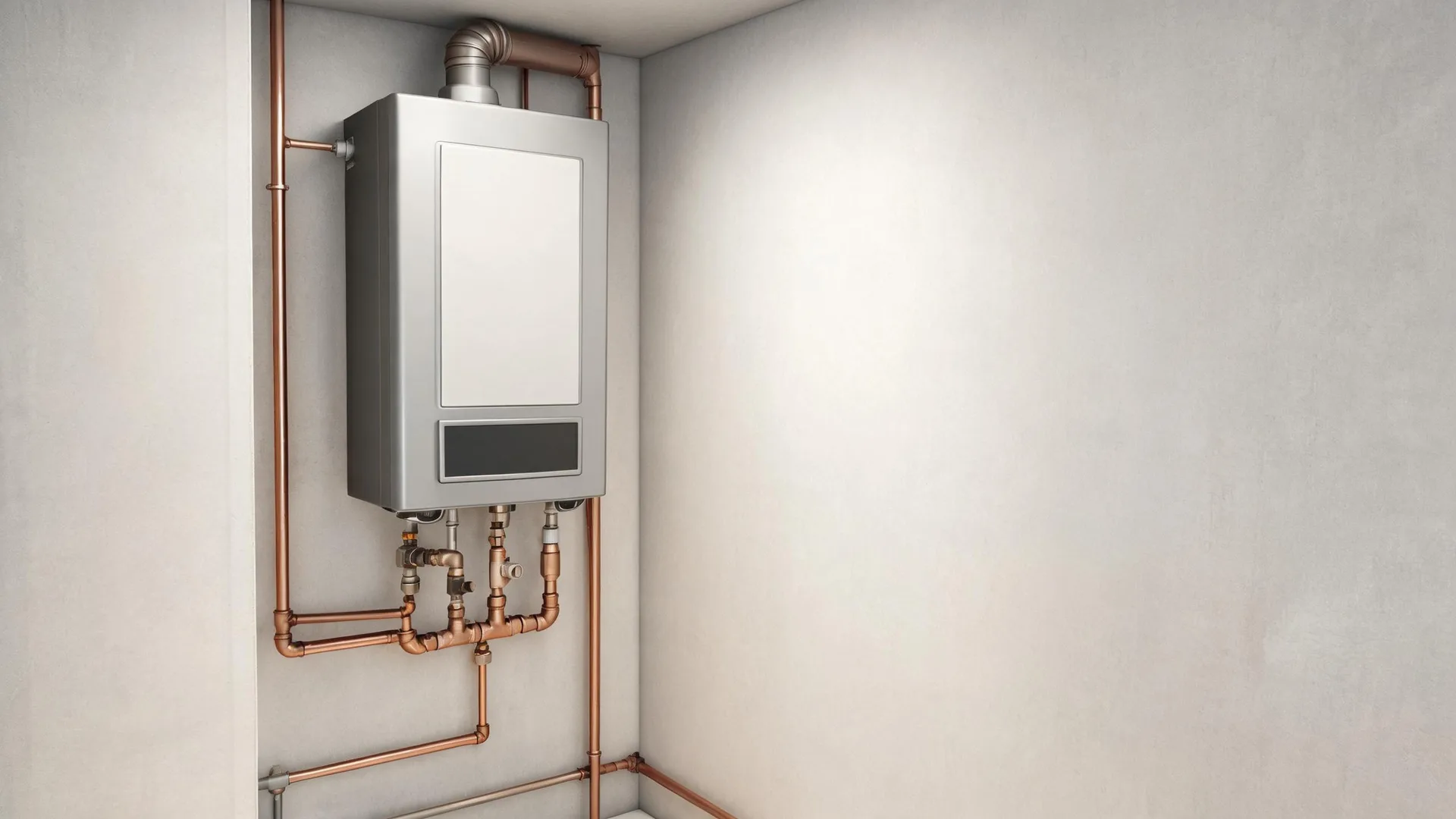
A boiler that's gone quiet for years and suddenly starts making noise is telling you something changed inside it. Kettling, that rumbling or popping sound, usually means sediment has built up on the heat exchanger and water is boiling in pockets around it. Banging or knocking as the system heats up can mean a pump is wearing out or air has gotten into the lines. None of these fix themselves, and the longer the heat exchanger runs that way, the more it costs it.
Radiators that stay cold or heat unevenly

If some radiators get hot and others stay lukewarm or cold, the problem usually isn't the boiler itself, it's that water isn't circulating evenly through the system. Trapped air is the common cause, and bleeding the radiator sometimes clears it. If bleeding doesn't help, or if it keeps happening, that points to a failing pump or a valve that isn't opening the way it should. Either way, uneven heat is a sign to get it looked at rather than just living with the cold room.

If your boiler is already old enough to be acting up, the honest question is whether it's worth putting more money into it. A boiler that's twenty or more years old and needs a real repair, not just a pressure reset, is usually closer to the end than the middle. Replacing it costs more up front, but a new one won't be fighting the same wear going into next winter. Whoever comes out to look at yours can tell you roughly where it stands. That's worth knowing before you decide what to spend.

A diagnostic visit starts before any panel comes off. A tech will ask what you've noticed: a noise, a cold radiator, a pilot that won't hold, how long it's been going on. Then they check pressure and look for signs of leaking at the joints and the relief valve. They'll open it up to look at the heat exchanger and burner, since scorch marks or rust tell them things a gauge can't. A combustion analyzer checks how the burner is actually firing, not just whether it lights. If the problem is electrical, they'll test the igniter or pilot assembly and the control board with a meter rather than guessing from symptoms alone. By the end, you should hear what's actually wrong, not just what part gets swapped.