




An orange cat rests on a dark grey bed in a minimalist monochrome bedroom.

Mini Split Installation in Erie, PA

Tell us about the job

Takes about a minute. No obligation.

Step 1 of 3: Equipment

Most homes in Erie County heat with gas, 78 percent of them. A mini split doesn't replace that setup, it works alongside it. The mini split handles cooling in summer and takes the load off your furnace in the shoulder months, spring and fall, when it doesn't make sense to fire up a gas system for a little warmth. Some homeowners run the mini split as their main heat in rooms the ductwork never reached well. Either way, you're not choosing between gas and a mini split. You're deciding how much of the year each one does the work.

8 months
October through May, your system heats
2 months
July through August, it cools
20°F
the average winter night it heats against
78°F
the average summer afternoon it cools against
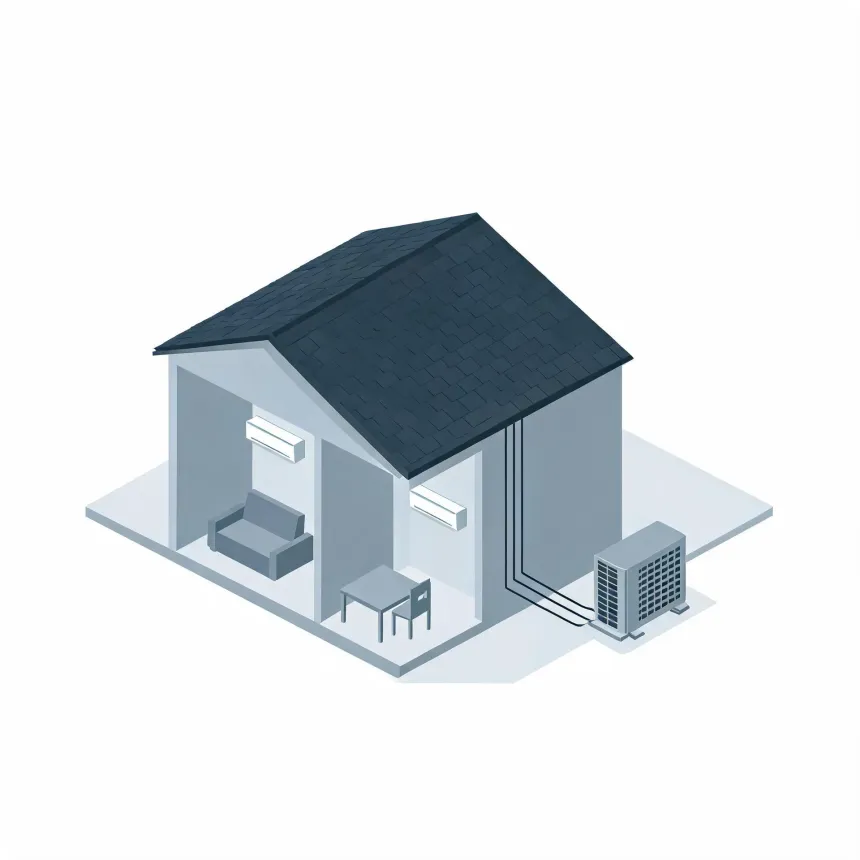
Isometric illustration of a cutaway house with a dark shingled gable roof, showing two wall-mounted indoor air handlers, a sofa, table and chair inside, and refrigerant lines running to an outdoor condenser unit beside the building.
Your system heats October through May and cools July through August.

NOAA nClimDiv, 1991–2020 normals

Erie County sees damaging wind, hail or a winter storm most years, and 15% of Pennsylvania homes lost power for a day or more in 2024.

A mini split sized right for the rooms it serves doesn't need anything bigger just because the power sometimes goes out.

Half the homes here were built by 1964, and an old house changes the install

Half the homes here were built by 1964
Cooling runs July through August
Summer afternoons average 78°F
Two months of real workCooling runs July and August here, with afternoon highs near 78°F.

There's no reason to size a mini split bigger than the rooms call for here. Erie County doesn't push the equipment harder than it would run anywhere else in this climate, so a standard size and efficiency rating does the job. That matters most on the electric bill. Pennsylvania homes paid 17.77 cents per kilowatt-hour in 2024, and that rate applies no matter how big the unit is. Sizing it to the space, not above it, is what keeps that cost down.

Have it installed before July

Cooling starts in July here. Get the mini split installed in June and it's ready on day one, with no pressure to rush the work or settle for whatever unit a contractor has on the truck that week.

Find a contractor
A man in a cap, dark long-sleeved shirt and brown work pants, seen from behind, carries a worn leather tool bag up porch steps toward a blue front door beside a blue planter with a shrub.
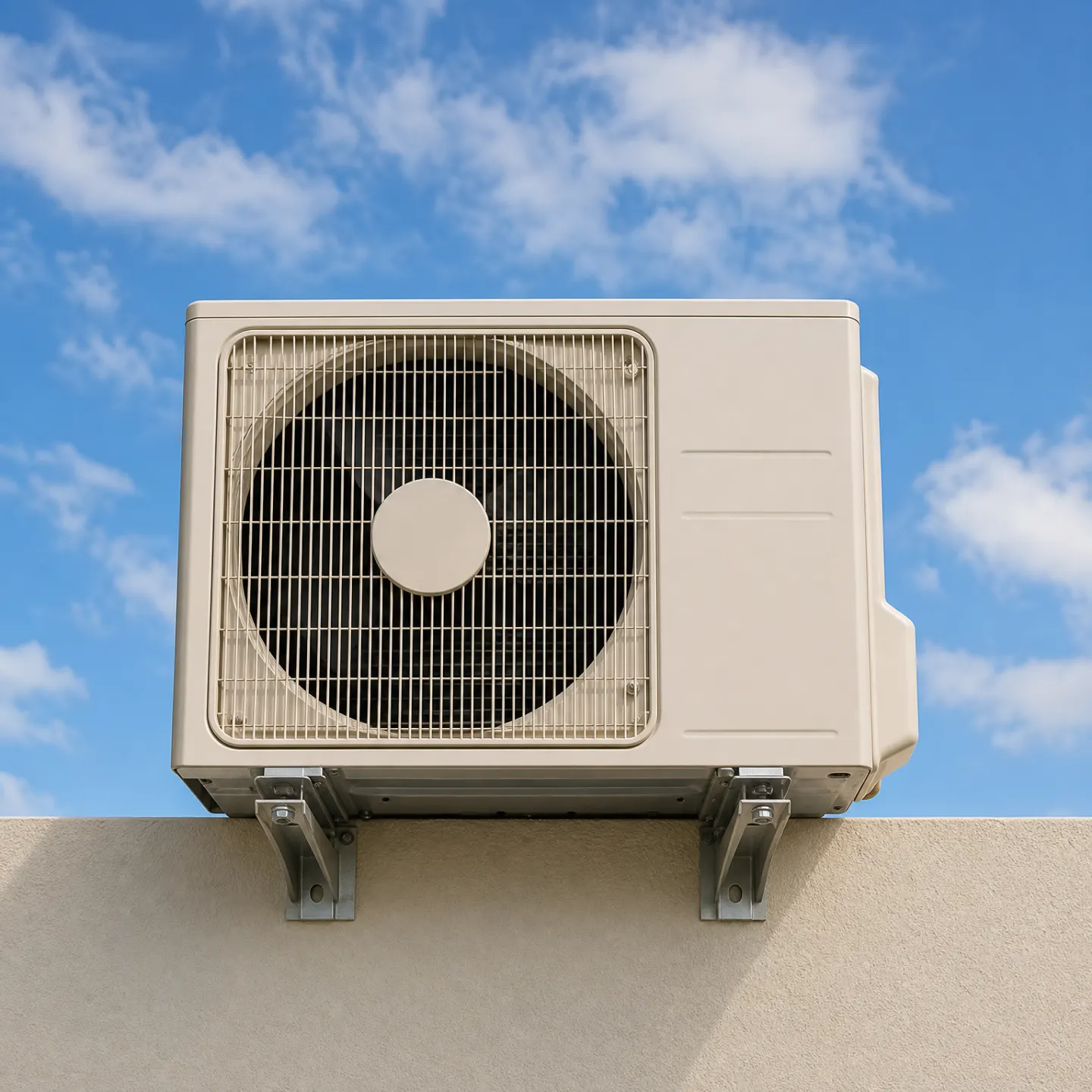
A beige split-system air conditioner outdoor condenser unit mounted on metal wall brackets atop a stucco wall.

Ask what happens at the edges, not just the middle

When you're comparing systems, ask how each one is rated to perform at low outdoor temperatures, not just how it cools. Every mini split has a point where the outdoor unit can't pull enough heat from the air to keep up, and that point is different for every model. If you're planning to lean on it for heat in the shoulder months, that number matters more than the cooling rating does. Ask what the compressor is covered for under warranty, separate from the rest of the unit, since that's the part doing the work every time the system runs and the part most expensive to replace if it fails early. Ask whether the indoor head has a washable filter or one that needs replacing, and how often. A filter that's clogged makes the whole system work harder to move the same air. Ask who can service the unit locally. Not every contractor works on every brand, and a mini split that's easy to get parts for is worth more over time than one that saves a little upfront.

Sizing is a room by room calculation

A contractor works out the load for each room by looking at its square footage, how many windows it has, which way they face, and how well the walls and ceiling hold heat. Add more rooms to one system and that math has to account for how each one is used, since a bedroom and a sunroom don't carry the same load at the same time of day.
Oversized cools the air, not the room

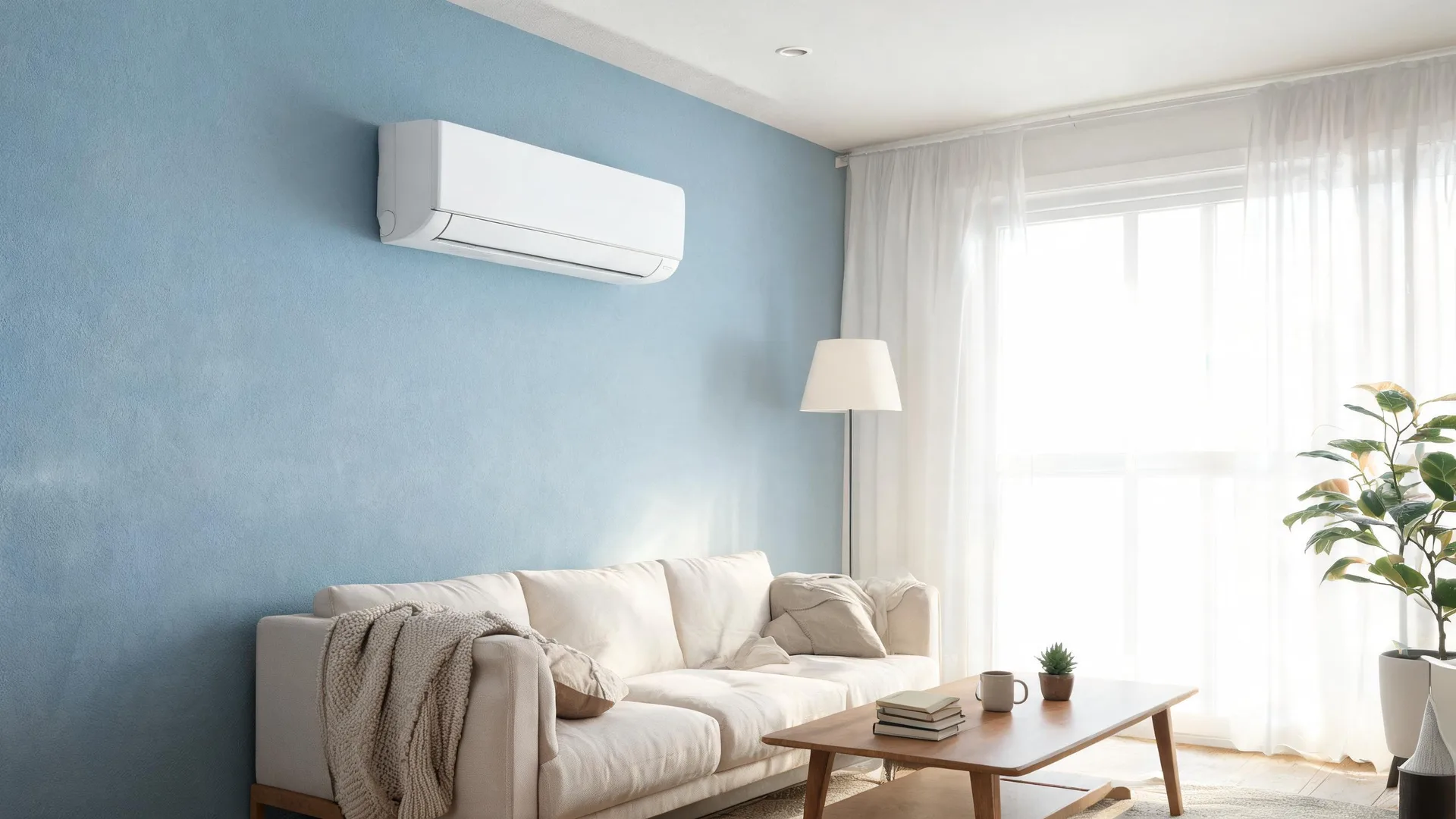
A mini split that's too big chills the space fast and shuts off before it pulls the moisture out, so the room feels cool and damp instead of just cool. It also short cycles, switching on and off more than a unit that's sized to run steady at a lower output. Right sized, it runs longer at a gentler pace and the room ends up drier and more even.

If you're replacing a central system with a mini split, the old equipment doesn't just get unplugged and left there. A contractor recovers the refrigerant from the lines before anything comes apart, since it can't legally be vented into the air. The indoor and outdoor units come down, and if ductwork is being abandoned rather than reused, that gets sealed off or pulled depending on what's behind it. The old condenser pad usually stays, or gets reused for the new outdoor unit if the location still makes sense. Any copper line set left behind either gets reused if it's sized right for the new system or removed, since old line sets are often the wrong diameter for an inverter driven compressor. None of this is work you do yourself. It's part of what the installation includes.

Installation day starts outside. The outdoor unit gets mounted on a pad or brackets, leveled, and set somewhere with clear airflow on all sides. Inside, the crew marks where the air handler goes on the wall, usually high up, away from direct sun and clear of furniture that would block airflow. A small hole goes through the wall for the line set, the refrigerant lines, power wire and condensate drain that connect indoor to outdoor. Once the lines are run and connected, the system gets evacuated with a vacuum pump to pull out moisture and air before refrigerant is released into the lines. That step matters more than people expect. Any moisture left in the lines can damage the compressor over time. After that, it's a matter of powering it on, checking refrigerant pressure, and testing the system at both ends before anyone calls it done.