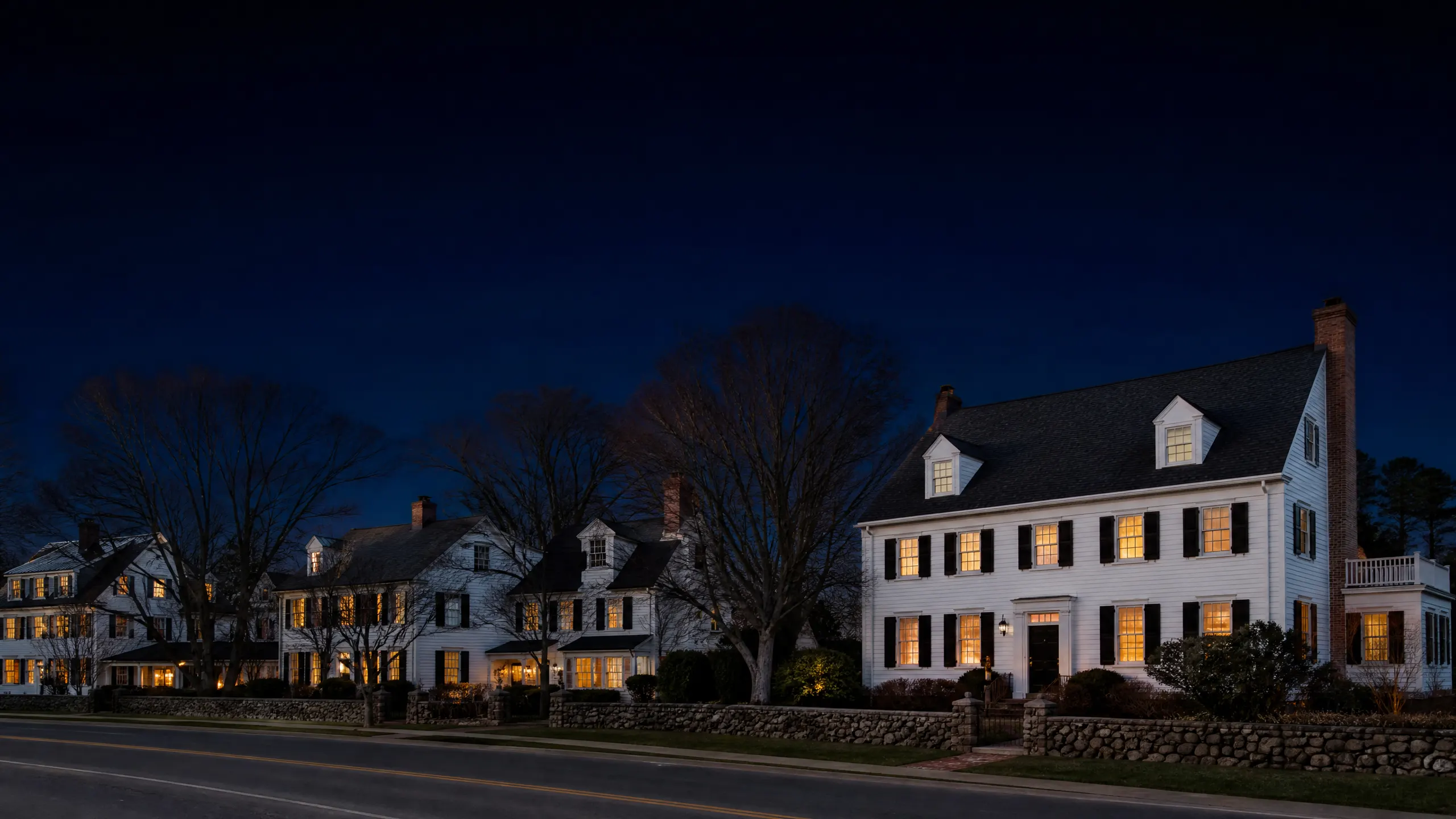
A row of illuminated white colonial houses along a road photographed at dusk.

Furnace Installation in Erie, PA

Tell us about the job

Takes about a minute. No obligation.

Step 1 of 3: Equipment

Eight months of runtime

A furnace in Erie County works from October through May. That's most of the year asking the same parts to start up, run and shut off, over and over. A furnace installed here earns its keep differently than one in a place where heat only runs a few months.

Storms add to the load

Erie County saw 29 winter storms between 2015 and 2024, heavy snow, ice and blizzards included. A furnace has to keep up through those stretches, not just on an ordinary cold night. That's the job a new system here needs to be sized and built for, not an average day.

8 months
October through May, your furnace is on duty
20°F
the average winter night it heats against
78%
of homes here heat with gas, so most furnaces here burn gas
80% AFUE
the federal minimum any new unit must meet
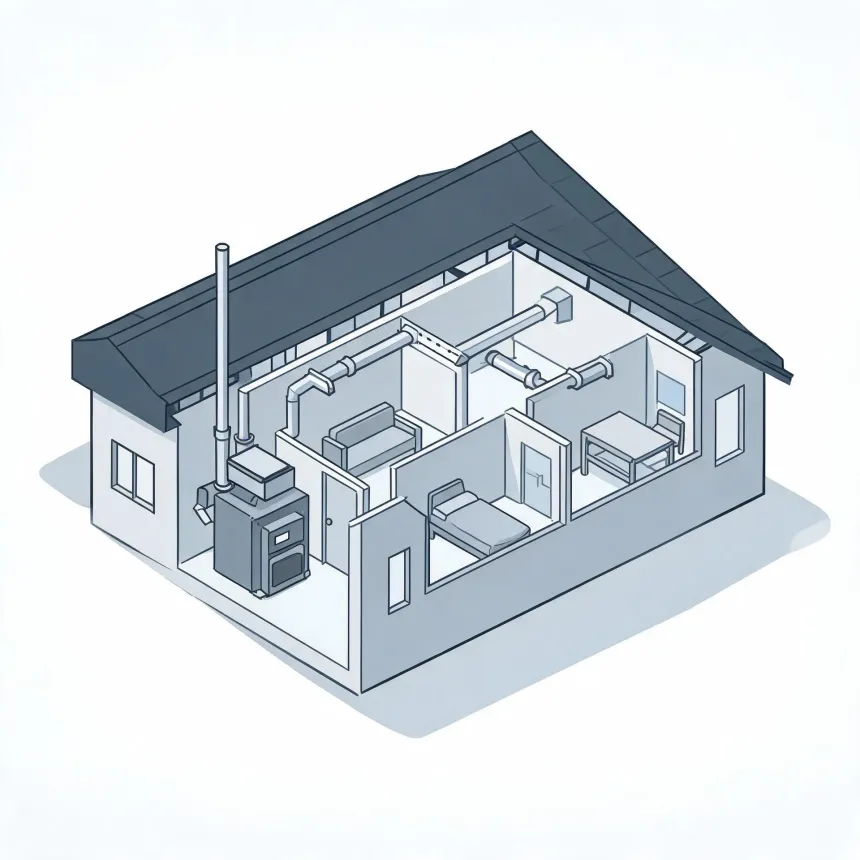
Isometric cutaway illustration of a single-story house showing interior rooms with furniture, overhead ducting, a flue pipe, and a furnace unit against an interior wall.
Your furnace works hardest from November through March.

NOAA nClimDiv, 1991–2020 normals

Half the homes in Erie County were built in 1964 or earlier.

A furnace going into a house that old has to match the ductwork and venting already there, not a generic spec sheet.

Eight months of heat means the old furnace fails on its own schedule, not yours

Heat runs October through May
Winter nights average 20°F
29 winter storms from 2015 to 2024
Gas Runs This CountyUtility gas heats 78 percent of homes in Erie County, more than every other fuel combined.

Erie County falls under zone 5A in the 2021 energy code, a cool, humid climate where heating carries the bigger share of the work. Any furnace installed here now has to clear 80.0 percent efficiency, the minimum set for units built since November 2015. That floor is changing. Furnaces manufactured from December 18, 2028 onward will need to hit 95.0 percent, so the baseline is moving up, not staying put. A homeowner installing now still gets to choose where above that floor to land. Pair that choice with the federal tax credit available on qualifying equipment, and a higher-efficiency furnace costs less to own than the sticker suggests.

Match the New Furnace to the House You Have

A furnace going in now has to work with the ductwork and venting already there, sized for the house, not a spec sheet. That's a job for someone who can look at what's already in place before anything gets installed.

Find a contractor
A man in a cap, dark shirt and tan work pants, seen from behind, carries a canvas tool bag up steps toward a blue front door beside a potted shrub.
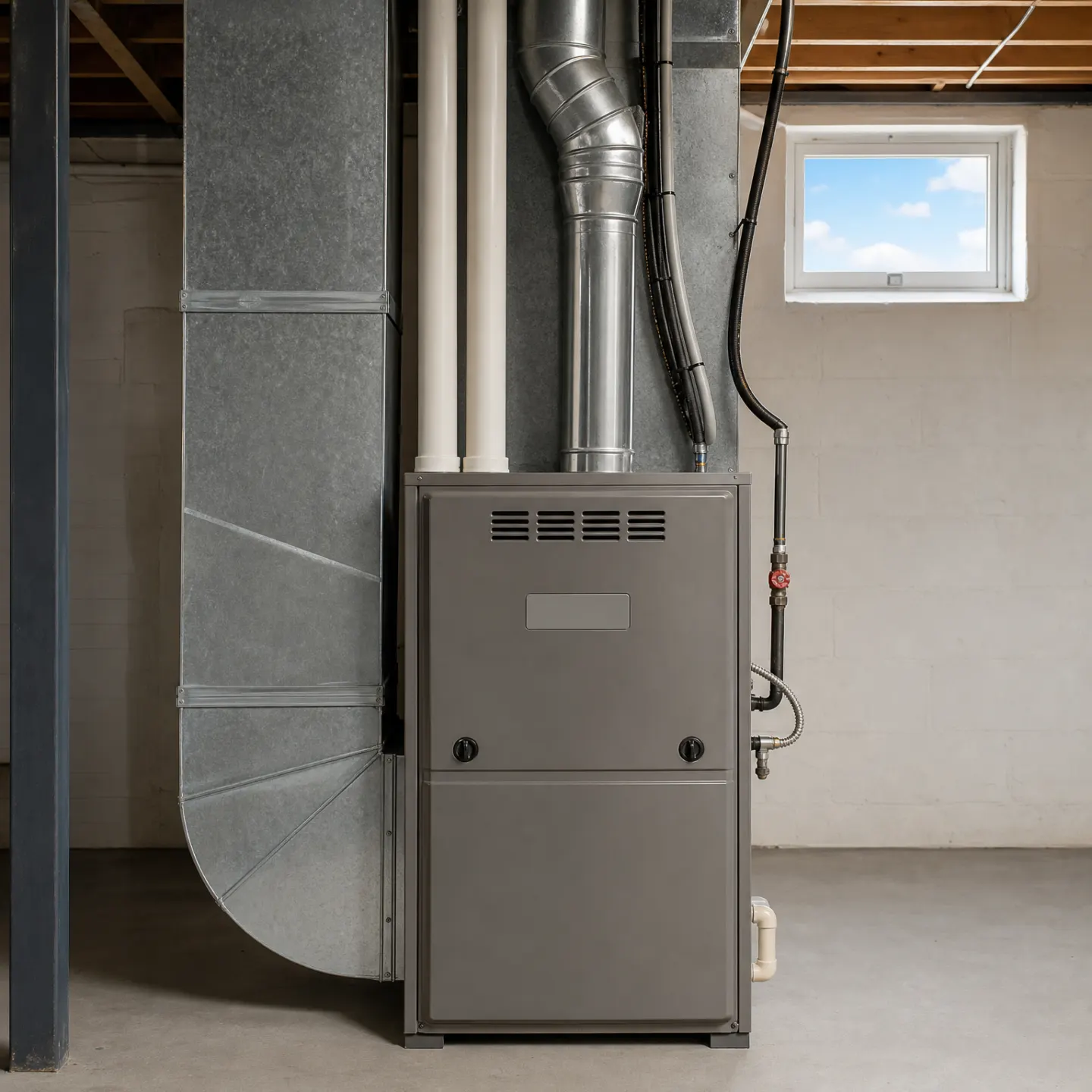
A gray residential gas furnace installed in an unfinished basement, surrounded by ductwork, a metal flue pipe, and a gas supply line.

Built for the Hours It Will Run

Eight months of heat, year after year, is what a new furnace here signs up for. Get the size wrong and it shows fast, short cycling in mild weeks or struggling to keep up when a storm sits over the county for days. This is where a contractor earns the fee: pulling a load calculation for the house instead of swapping in whatever size was there before. The cheapest unit on the quote is rarely the one built for that kind of year.

Bigger Isn't Better

A furnace too big for the house heats the air fast, hits the thermostat setting, and shuts off before it's finished warming the floors and walls. It cycles on and off all day instead of running steady. Short cycles wear out the ignition system faster and leave rooms farther from the thermostat cold even though the one near it feels fine.

How a Load Calculation Works

A contractor figures the right size by working through the house itself: square footage, ceiling height, window count and type, insulation, air leakage, and how the ductwork is laid out. That math is called a load calculation, and it's what tells you the furnace size the house actually needs. A nameplate from the old unit doesn't answer that question. It just tells you what someone installed last time, right or wrong.

A gray forced-air furnace with sheet-metal ductwork stands in an unfinished basement with exposed wooden joists, concrete walls, and a hanging incandescent bulb.

A high-efficiency gas furnace would save about $150 a year to run in Erie County compared with a gas furnace.

  • A high-efficiency gas furnace$710 a year
  • A gas furnace$860 a year

Estimates for a typical Erie County home, from EIA household energy data, Pennsylvania fuel prices and NOAA climate normals. Your home will differ.

Installation day starts with the old furnace coming out, not the new one going in. The crew disconnects the gas line, the electrical, and the venting before anything else moves. Ductwork gets checked at the connection points, since the new unit has to seal to it tight, no gaps where warm air can leak out into the attic or crawlspace. Setting the furnace itself is usually the fast part. What takes the time is the venting, the gas line pressure test, and wiring the thermostat and control board correctly. Before anyone leaves, the system gets run through a full cycle, checking the flame, the airflow at the registers, and the carbon monoxide reading at the vent. A furnace that's installed right gets tested before anyone calls the job finished, not after the first cold night finds a problem.