

Heat pump vs furnace in Erie County, Pennsylvania

Quote Both Systems

Get a price before you decide

Which costs less to run in Erie County?

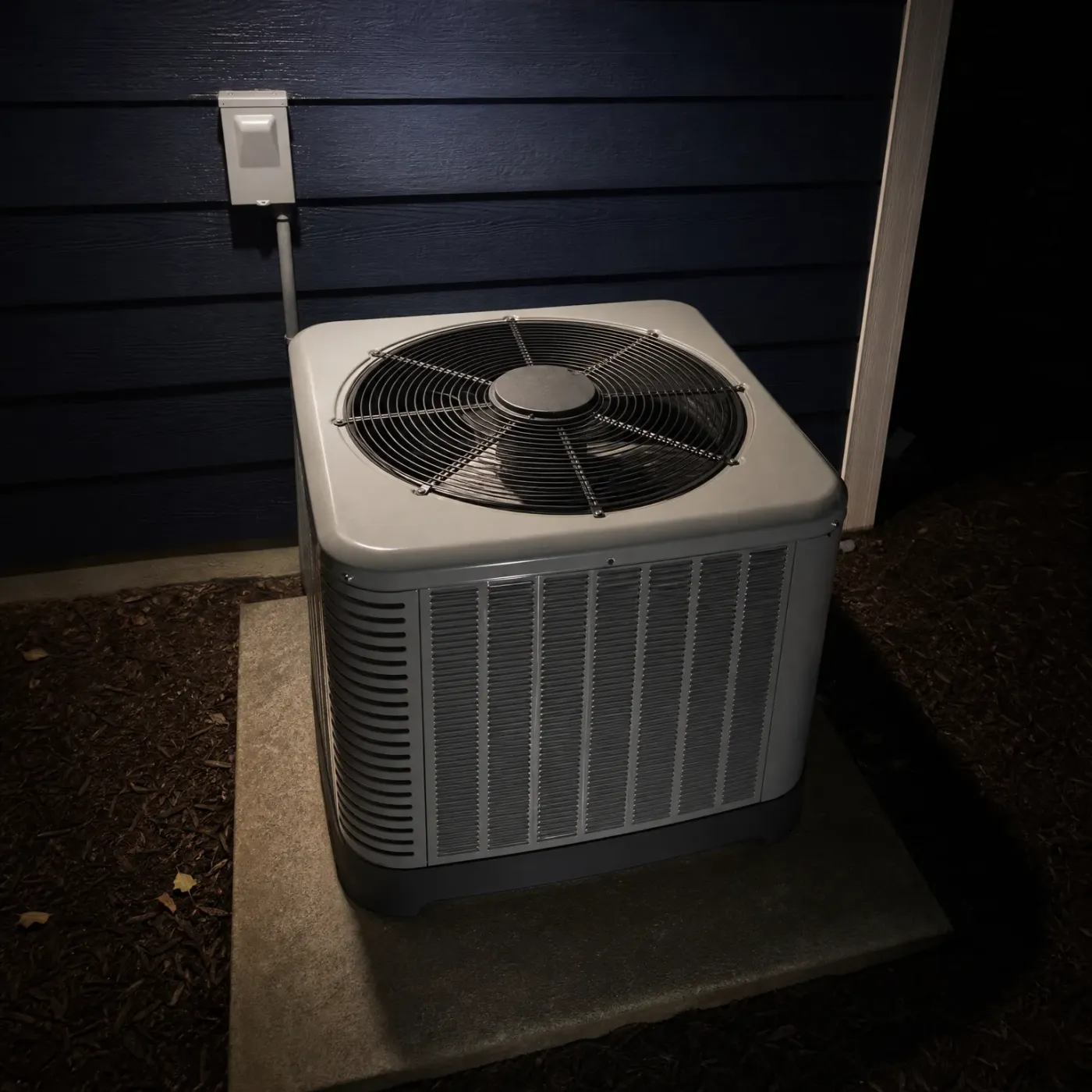
An outdoor air conditioning condenser unit with a top-mounted fan grille sits on a concrete pad beside a dark blue lap-sided wall with a small electrical disconnect box and conduit above it, surrounded by mulch at night.

Heat pump

To heat your home here$2.37per 100,000 Btu

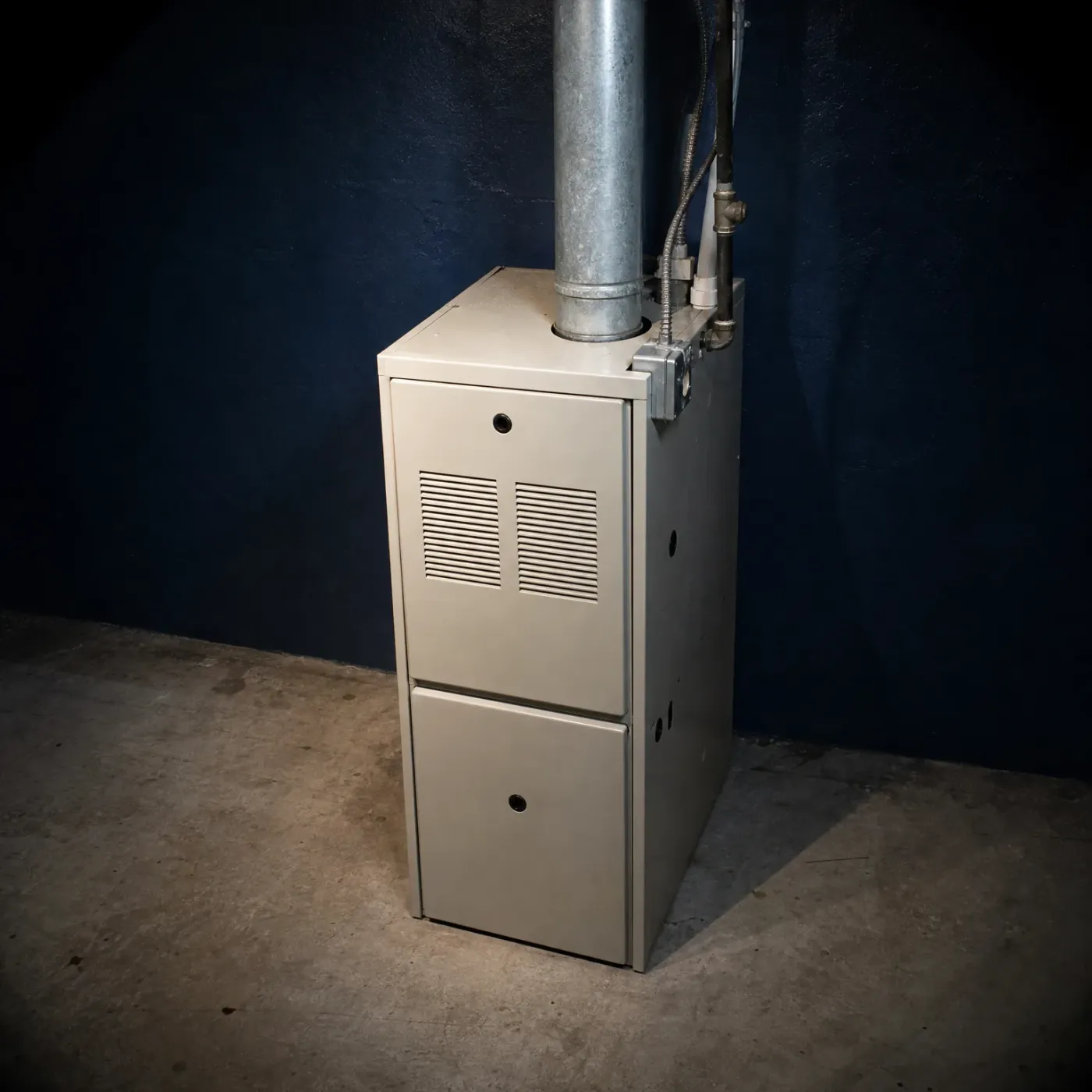
A beige residential furnace with louvered vent panels stands on a concrete floor against a dark blue wall, with a metal flue pipe and conduit running up from its top.

Furnace

To heat your home here$1.64per 100,000 Btu

At Pennsylvania's gas and electricity prices, a gas furnace makes the same heat as a heat pump for at least 30% less.

Btu stands for British thermal unit, the standard measure of heat energy.

Where does a heat pump shine?

  • Steady, even comfort

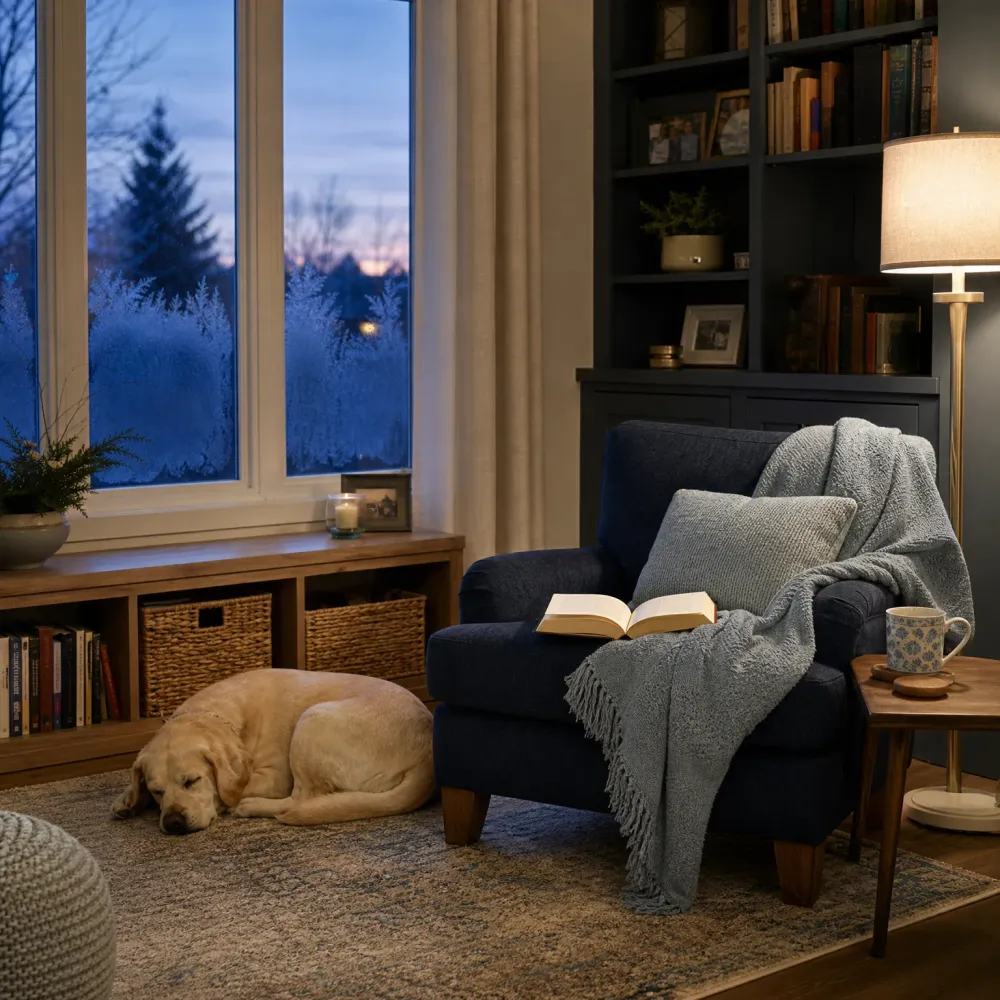
    Instead of short bursts of heat, it keeps a gentle, steady output going. The house stays at one comfortable temperature.

    A dimly lit living room at dusk with a navy armchair holding an open book, pillow and gray throw, a yellow dog sleeping on a patterned rug, a lit floor lamp and side table with a mug, and frost-edged windows showing evergreen trees outside.
  • No gas line, nothing burning in the house

    There's no gas line to the unit and no flame anywhere in it. Carbon monoxide isn't part of the picture.

    Kitchen with navy blue cabinets, white marble countertops, white subway tile backsplash, stainless steel range hood and kettle, a wooden bowl of green apples, a glass vase of white hydrangeas, and two wooden stools at the island.
  • Heats and cools in one system

    Winter and summer are covered by the same outdoor unit. That's one machine to service instead of two.

    A living room with blue interior shutters framing a window overlooking a green garden, a cream sofa with blue cushions and a blue knitted throw, a wicker trunk, and a wooden coffee table holding a vase of white flowers, a blue mug, and stacked books.

Where does a furnace shine?

  • Runs on the gas most homes here already use

    Most homes in Erie County already have gas line run to the house, since 78% of occupied homes here heat with utility gas. A furnace just taps into that line, no new fuel setup needed.

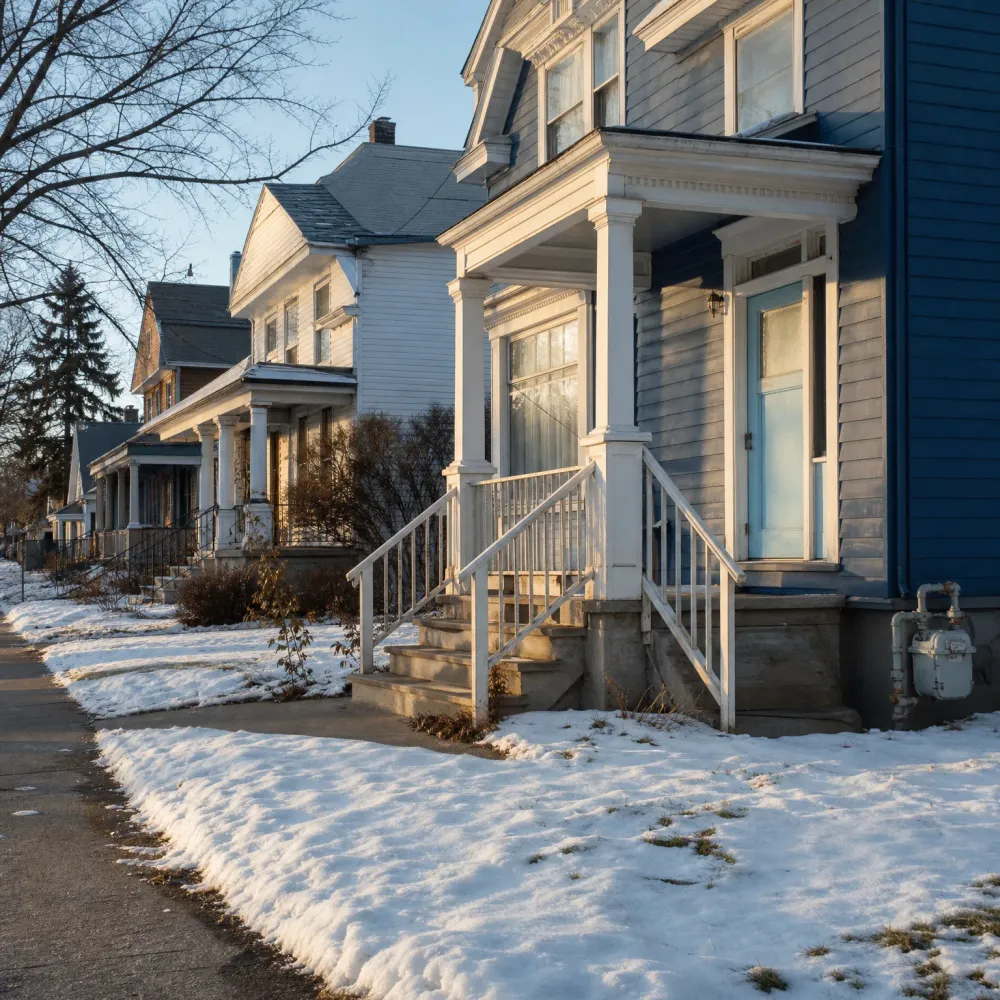
    A row of wood-sided houses with covered front porches and white railings along a snow-covered yard and sidewalk in low sunlight.
  • Pairs with any central AC

    A furnace's blower and ducts carry cooled air too. Adding central AC uses the same system.

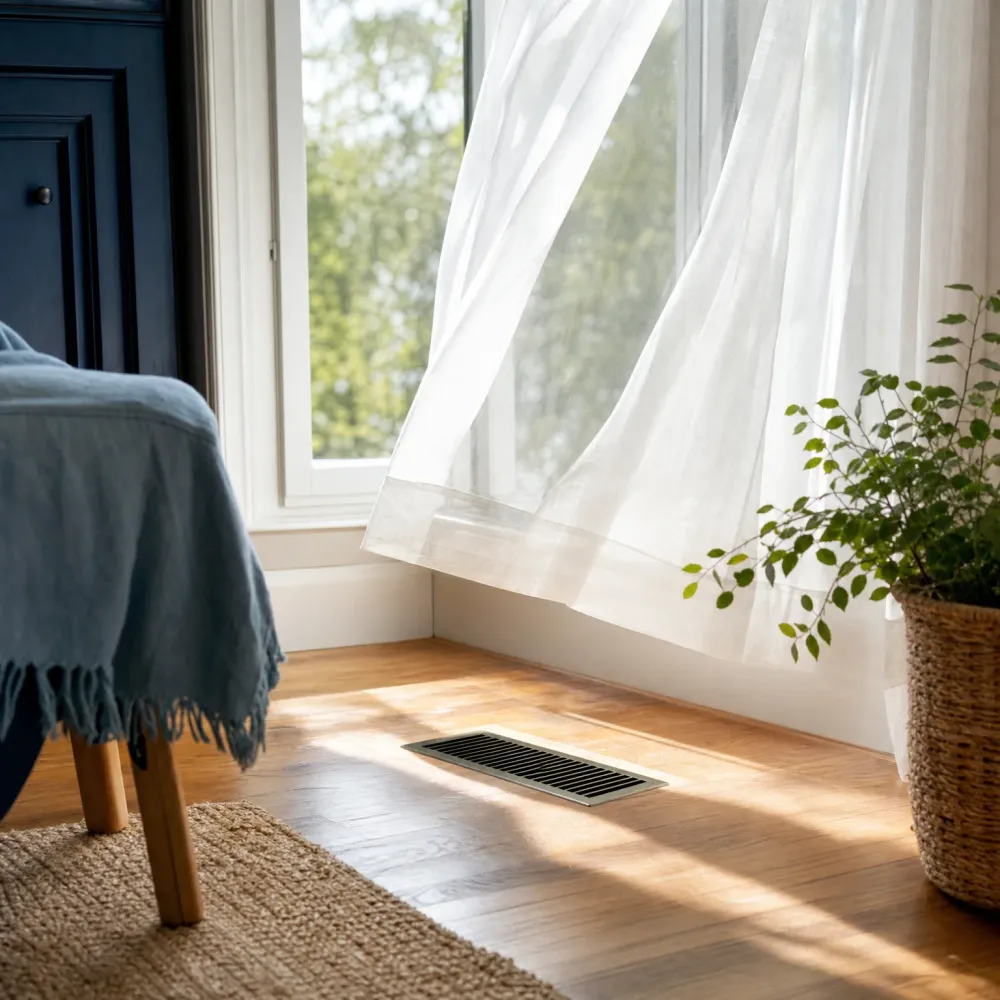
    A metal floor vent set into a hardwood floor near a window with a sheer white curtain, with a potted plant in a woven basket, a jute rug, and a blue throw over a wooden-legged stool.
  • Fast, strong heat on demand

    Turn the heat up and the furnace answers right away. There's no long wait for the house to catch up.

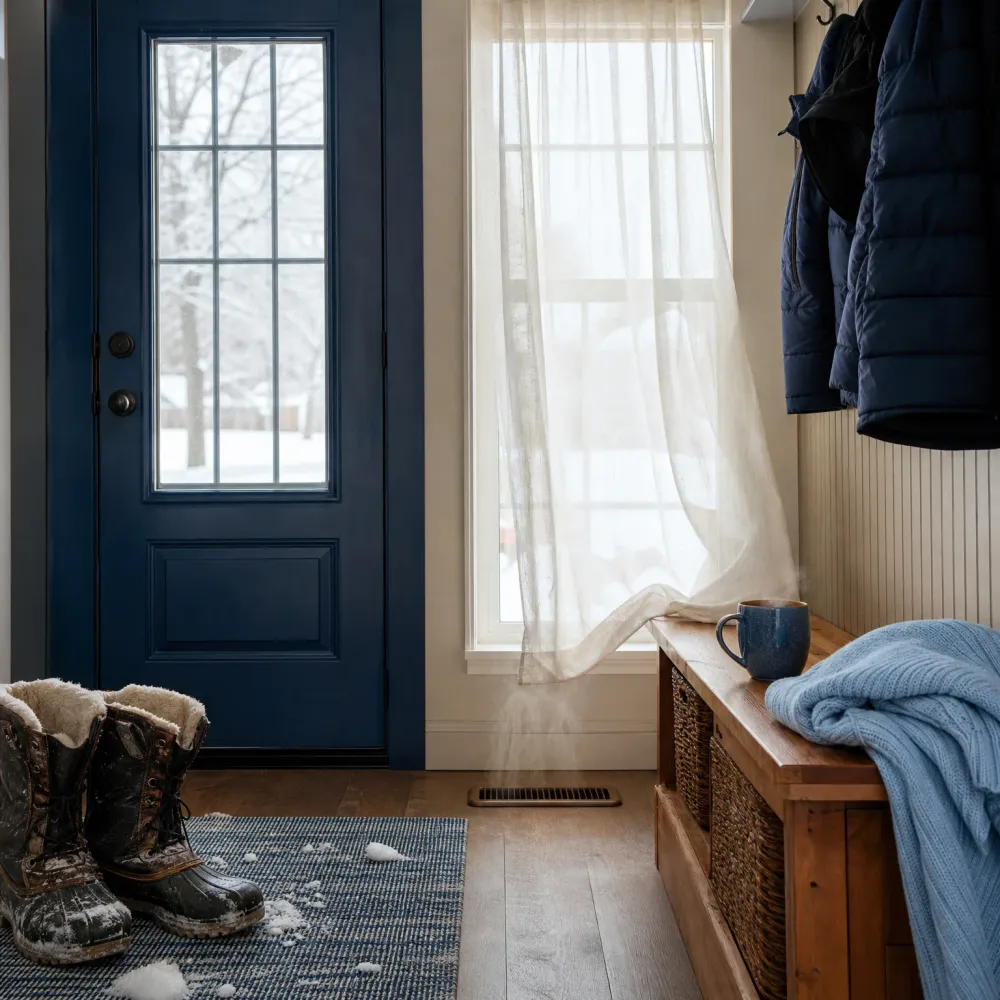
    Mudroom entry with a navy front door with snowy trees visible through its glass panes, snow-covered boots on a blue woven rug, a floor vent, a wooden bench with wicker baskets, a blue mug and knit blanket, and dark coats hanging on wall hooks.

What winter here does to a heat pump

Your furnace, if you go that way, only has to deal with gas prices. A heat pump here has to deal with the weather. Erie County winters run cold enough, long enough, that the choice comes down to what happens on the coldest nights, not just what the meter shows.

A standard heat pump starts losing ground below 40°F, and by about 35°F it typically needs backup heat to keep up. The average overnight low here across December, January and February is 20°F. That is not an edge case. That is the normal winter night here, already below both marks.

Heat runs about eight months a year in Erie County, October through May. Of the roughly 245 nights in that stretch, about 120 drop to freezing or below, about half of them. Every one of those nights is below the point where a standard heat pump starts to strain. Only about 3 nights a year reach 0°F, so the real story isn't extreme cold, it's that ordinary winter nights here already sit in the range where a standard heat pump needs help.

A cold climate heat pump is built for exactly this. To earn that label, it has to produce at least 1.75 units of heat per unit of electricity at 5°F and hold onto at least 70 percent of its warm-weather capacity at that temperature, checked by outside testing. In a two-winter field test of prototype cold climate models in occupied homes, backup heat covered only a small share of the heat needed between 0°F and 35°F, and running on backup alone was rare even above 0°F. A standard heat pump was not built with this county in mind. A cold climate one was.
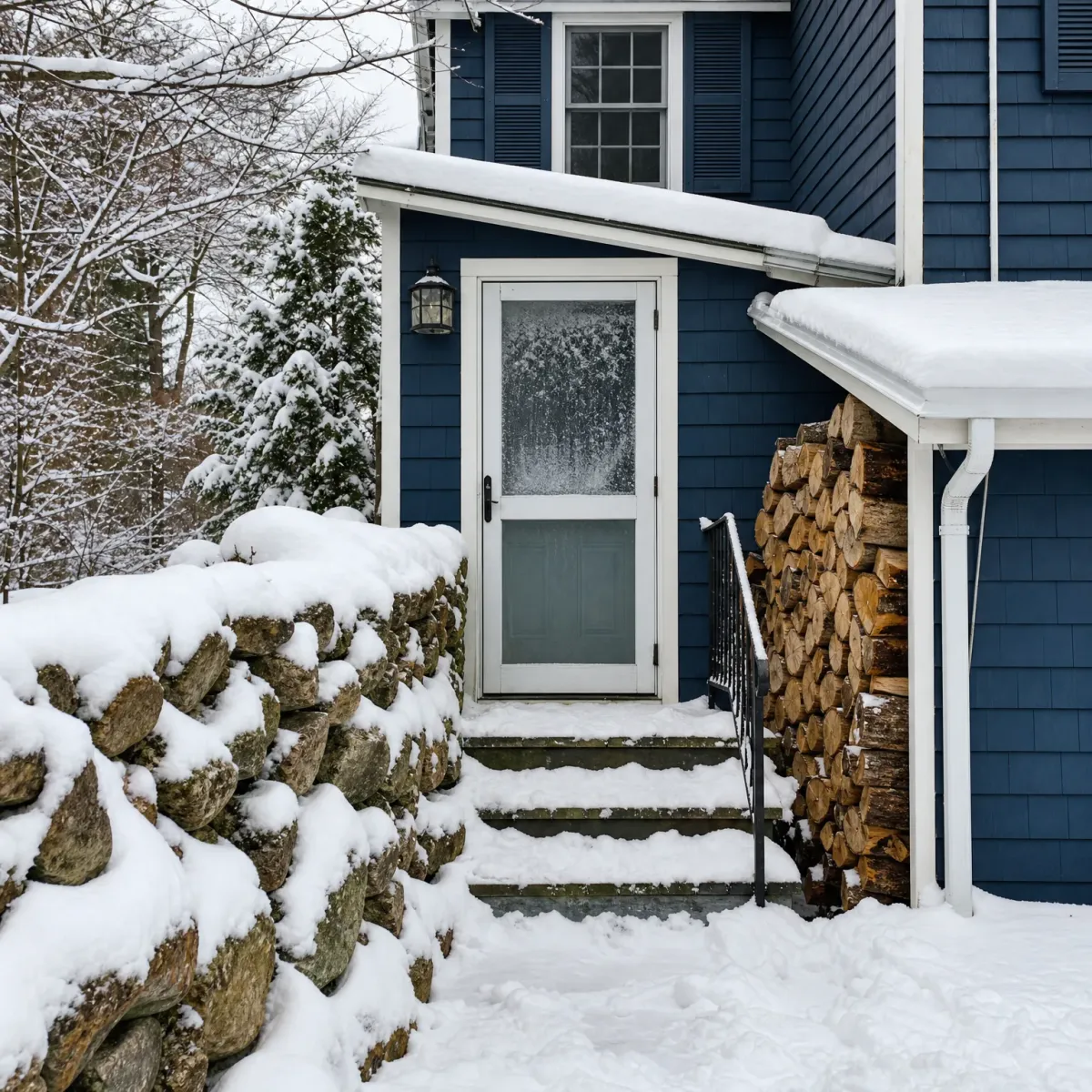
Snow-covered entrance to a blue shingled house with a white storm door, stone steps, a dry stone wall topped with snow, and a stacked firewood pile under the eaves.

What it costs to run, and what to weigh against that

At Pennsylvania's current prices, a furnace is cheaper to run. Gas heat costs $1.64 per 100,000 Btu here against $2.37 for a heat pump at the federal minimum efficiency, over 30 percent less. That gap is the real tradeoff, not a detail to skim past.

That heat pump number has nothing added for backup heat on the coldest nights, and a standard heat pump in Erie County will lean on backup heat more than that figure assumes. A cold climate model narrows the gap some, since it is doing more of the heating itself even in single digits, but gas still stays on the cheaper side of the ledger.

Gas is also just what this county already runs on. Utility gas heats about four in five homes here, 78 percent, against 11 percent on electric heat. If your house already has a gas line in, a furnace uses what's there. If it doesn't, bringing one in is a cost of its own to weigh.

A furnace only heats. For the other four months of the year, when cooling runs, it does nothing and has to be paired with a separate central air system. A heat pump does both jobs with one system, no separate AC to install or maintain. Where that's worth something depends on whether you'd rather buy one machine that does both, or buy the cheaper fuel and pair it with AC on the side.

Sources: NOAA nClimDiv · NOAA 1991–2020 seasonal normals · Census ACS 2020–2024 · EIA SEDS 2024 · 10 CFR 430.32 · PNNL Building America guide · PNNL-37127 field study · ENERGY STAR product criteria

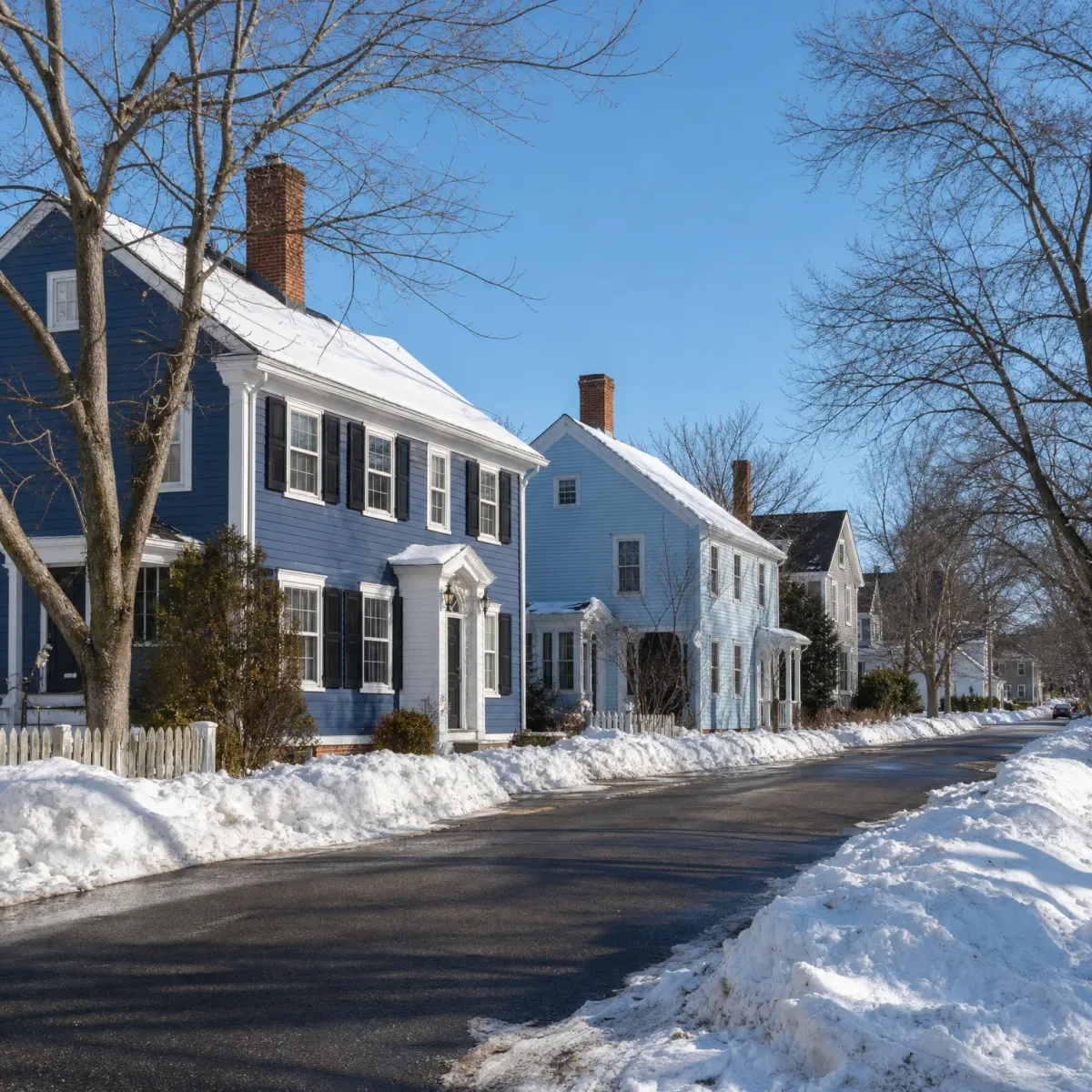
A plowed residential street lined with snowbanks, with blue and white clapboard houses, brick chimneys, a white picket fence, and bare trees under a clear sky.

Common questions about heat pumps and furnaces

  • Can a heat pump heat a house through a Pennsylvania winter?

    Yes, but not at full strength on the coldest nights. A standard heat pump puts out less than its rated heat once it's below 40°F outside, and Erie County sees overnight lows at or below freezing on about 120 nights a year, so it needs help on a good share of the winter.

  • Do I need backup heat with a heat pump here?

    Most homes here will need it. A standard heat pump's efficiency drops below about 35°F, and the average overnight low across December, January and February here is 20°F, well past that mark. A cold-climate model holds up further, but check what you're buying against that 35°F line.

  • Can I keep my furnace and add a heat pump?

    Yes, and in Erie County that pairing is worth a look. The heat pump carries the mild months and the furnace switches in once it gets cold, so you're never running a heat pump on backup power through the 20°F nights that average here each winter.

  • Is a heat pump cheaper to run than a furnace in Erie County?

    No, not at Pennsylvania's current prices. A gas furnace makes the same heat for $1.64 per 100,000 Btu against $2.37 for a heat pump, so the furnace costs less to run through the eight months a year heat is on here.

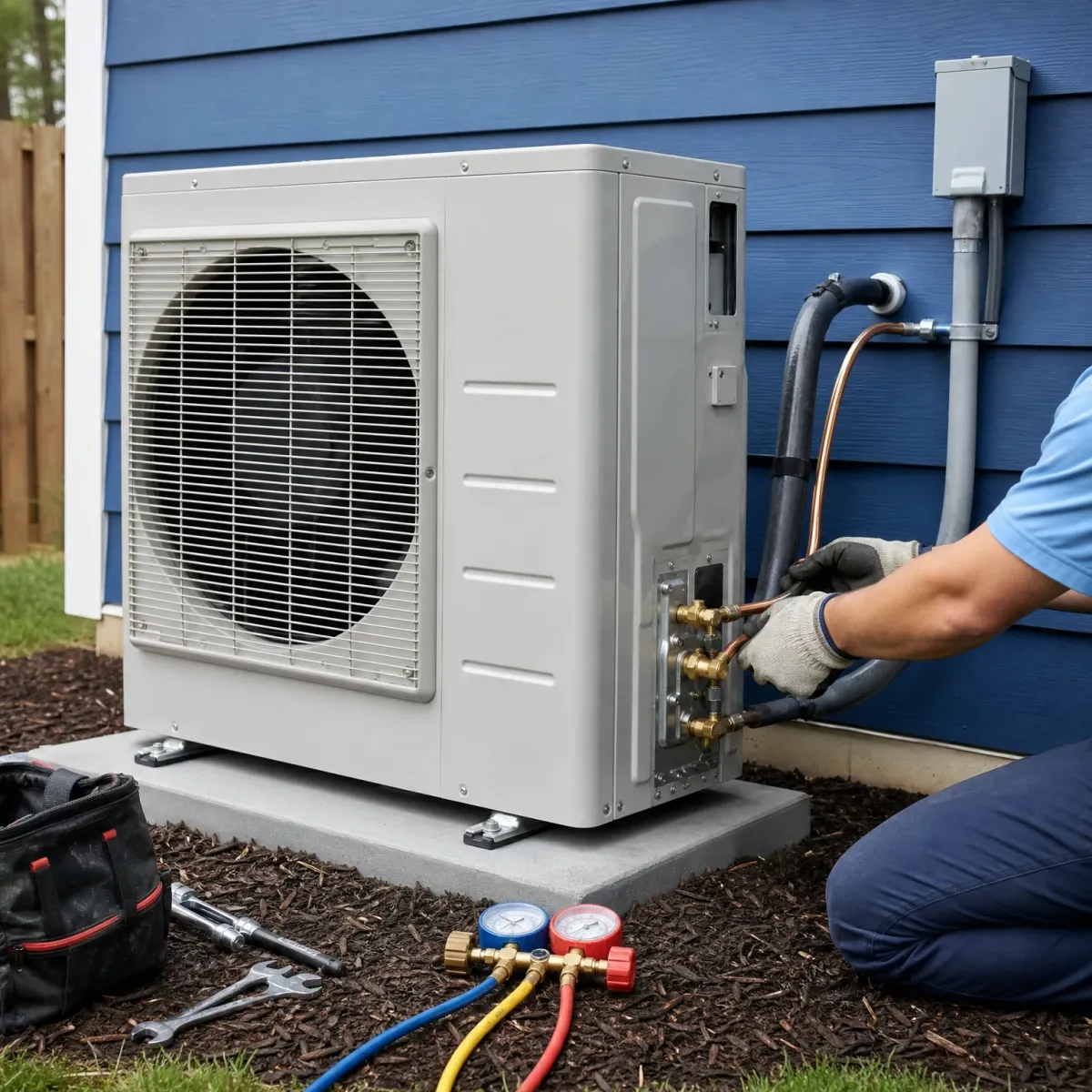
A kneeling person in a blue shirt and work gloves connects refrigerant lines at the side of a gray outdoor heat pump unit on a concrete pad beside a blue clapboard house, with a manifold gauge set and hand tools lying on mulch in the foreground.

Tell us about the job

Takes about a minute. No obligation.

Step 1 of 3: Equipment