
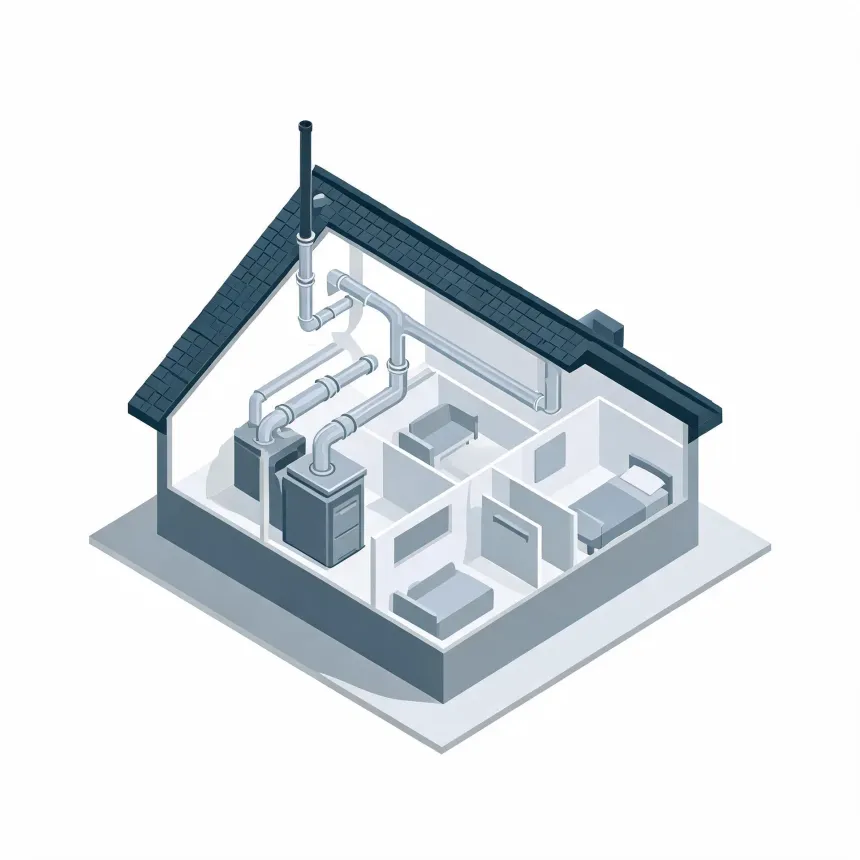


An empty unfinished basement containing a forced-air furnace with overhead ductwork, exposed ceiling joists, and a single hanging light bulb.

Furnace Installation in Hermitage, PA

Tell us about the job

Takes about a minute. No obligation.

Step 1 of 3: Equipment

Half the homes in Mercer County were built in 1963 or earlier. A furnace going into one of these houses isn't working with a blank slate. The ductwork, the venting, the spot where the old unit sits, all of that was laid out decades ago, often for a furnace very different from what's available now. A contractor sizing a new system has to work with what's already there, not a hypothetical. That's a different job than fitting a furnace into a house built last year, and it's worth knowing going in.

8 months
October through May, your furnace is on duty
20°F
the average winter night it heats against
63%
of homes here heat with gas, so most furnaces here burn gas
80% AFUE
the federal minimum any new unit must meet
Isometric illustration of a cutaway house showing a furnace unit with ductwork and a flue pipe running through the interior rooms, which contain simple furniture.
Your furnace works hardest from November through March.

NOAA nClimDiv, 1991–2020 normals

Furnaces in Mercer County run eight months a year, October through May.

A new system here barely gets a break, so sizing it right matters more than finding the lowest price.

Most homes here already run on gas, which points straight to what replaces it

62.9% of homes heat with gas
Heat runs October through May
Winter nights average 20°F

Furnaces here start running in October. September is the month to have a new one already in and tested, not torn apart while the first cold night hits. Waiting until the old one quits partway into the season means whoever shows up is working around your schedule, not the other way around. Doing it earlier gives a contractor time to size the system right for the house instead of rushing to get heat back on. Overnight lows average 20°F across December, January and February, so this isn't a machine that gets to ease into the work.

Get the size right, since this furnace won't get much rest

Eight months of runtime a year doesn't leave much room for a furnace that's the wrong size or a cheap fit. Get the sizing right at installation and the system settles into that long season instead of fighting it.

Find a contractor
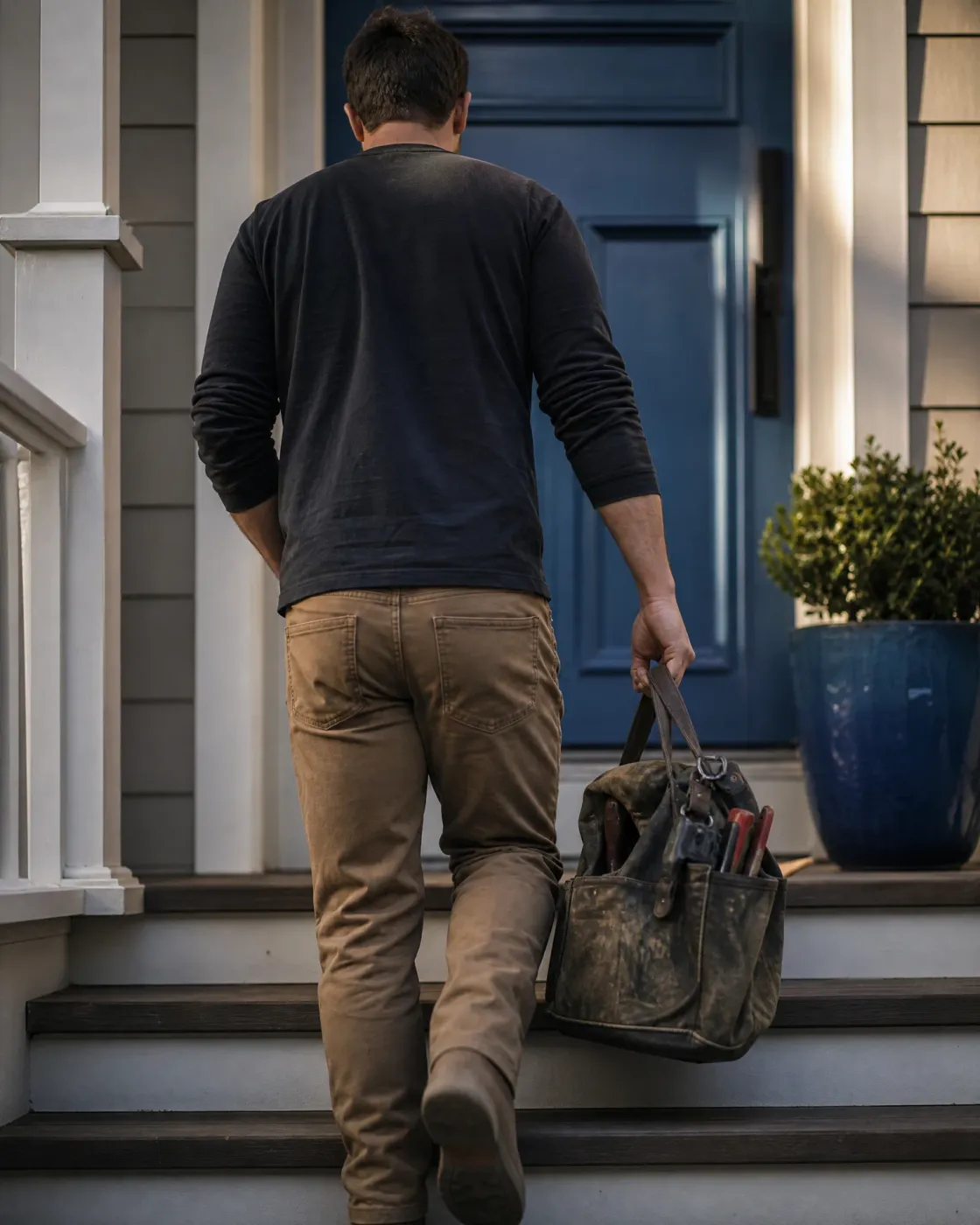
A man in a dark long-sleeve shirt and tan pants climbs porch steps toward a blue front door, carrying a worn canvas tool bag with tools in its side pockets, beside a potted shrub in a blue planter.
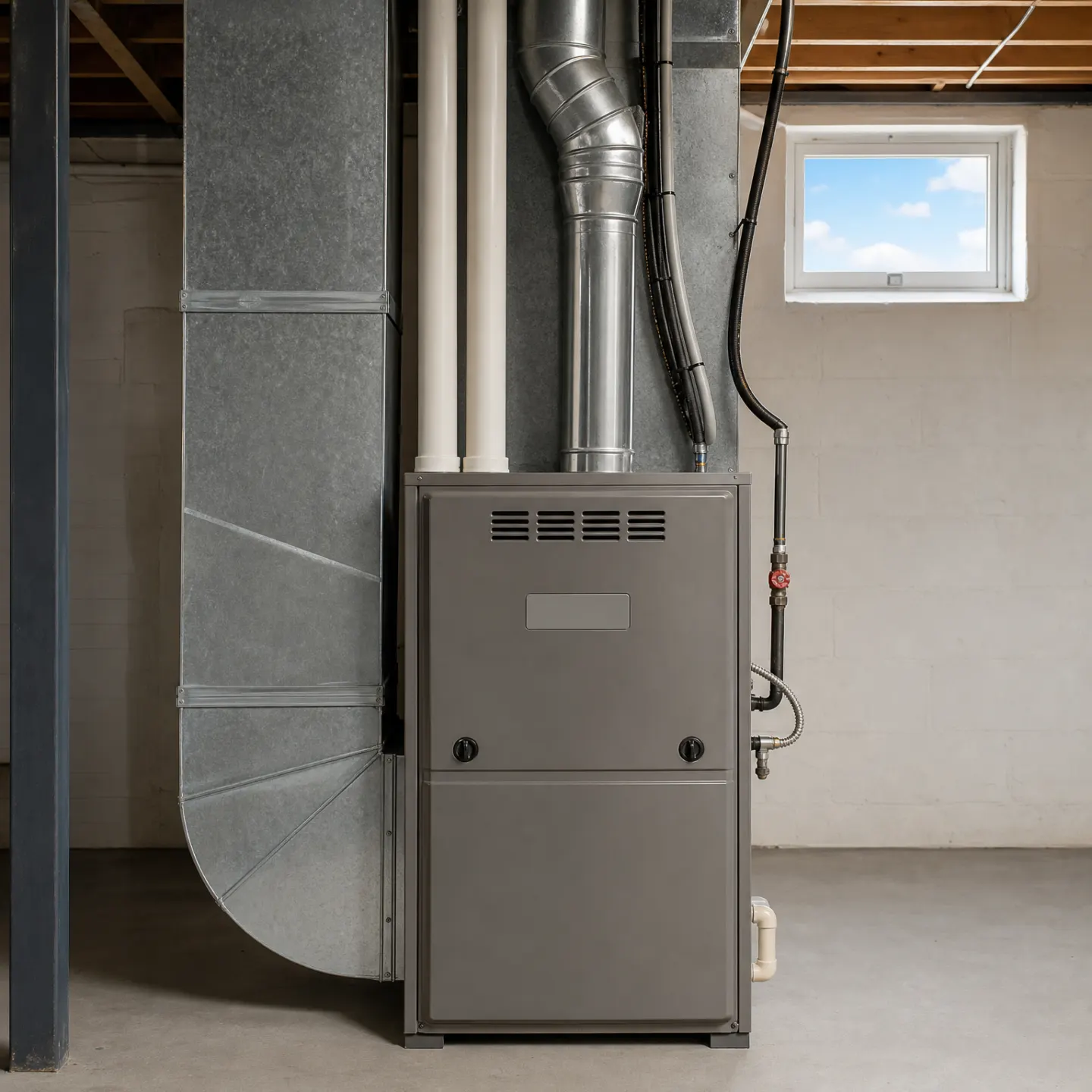
A gray residential gas furnace installed in an unfinished basement, surrounded by ductwork, a metal flue pipe, and a gas supply line.

Let a contractor see the house before quoting the furnace

A contractor can't size this furnace off a spec sheet alone. They need to see the ductwork and the venting that are already in the house, since a lot of that dates back to 1963 or earlier here. That walkthrough is part of the job, not an extra step, and it's worth doing before the old furnace is pulled out rather than after.

Ask what the AFUE rating actually means for this house

A higher AFUE number means less fuel burned for the same heat, but the gain only shows up if the furnace is matched to the ductwork and the house. A contractor should be able to say why a given rating makes sense here instead of just quoting the highest one on the shelf.

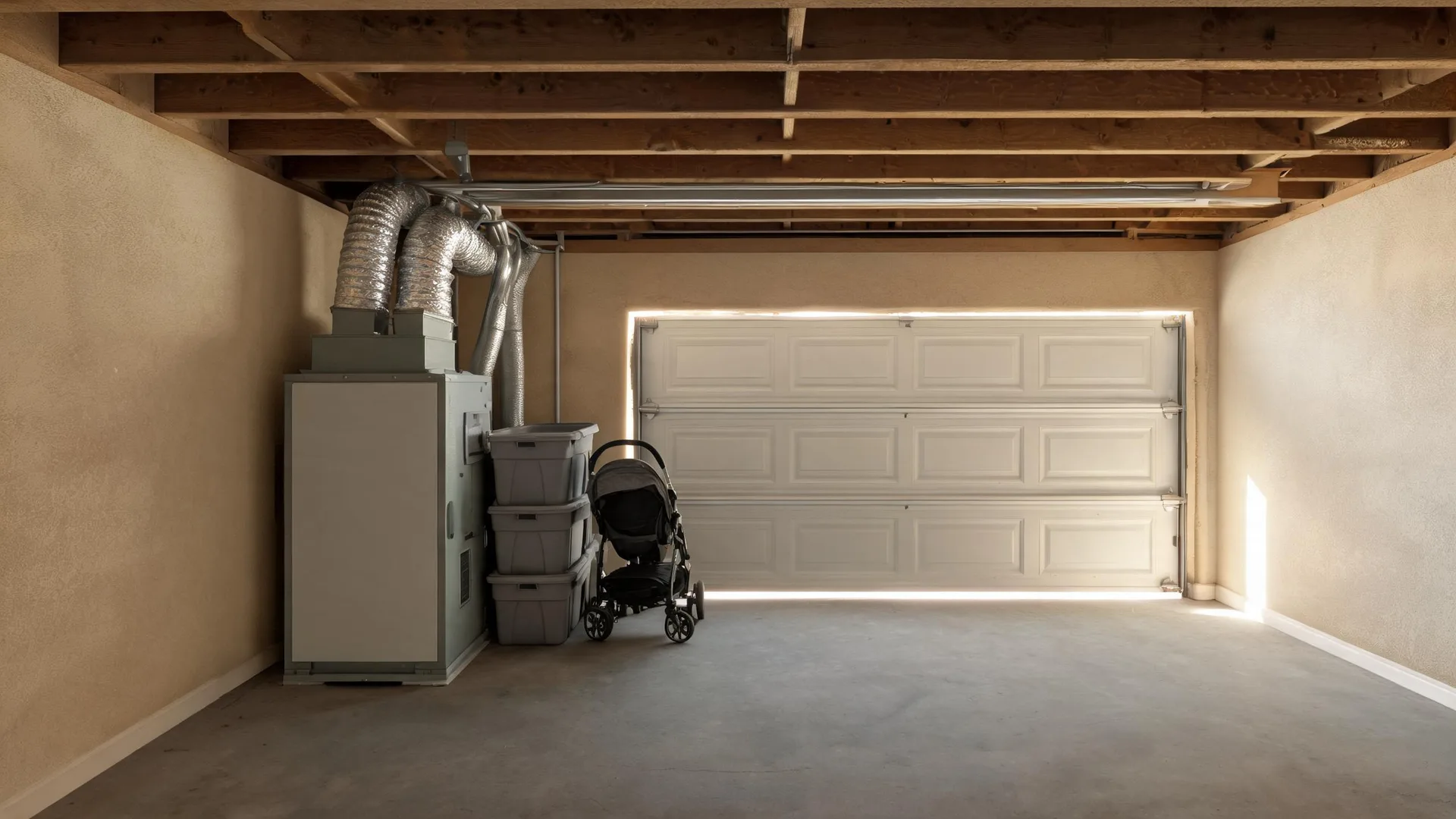
Ask how they arrived at the size, not just the size itself

Two furnaces with the same output on paper can behave differently once installed. A contractor who did a load calculation based on the house can explain the number. One who just matched the old unit's size is guessing that the old one was sized right in the first place, which isn't always true.

An unfinished basement interior featuring a large metal furnace unit, exposed ceiling joists, concrete walls, and scattered boxes and cables on the floor.

A high-efficiency gas furnace would save about $140 a year to run in Mercer County compared with a gas furnace.

  • A high-efficiency gas furnace$690 a year
  • A gas furnace$830 a year

Estimates for a typical Mercer County home, from EIA household energy data, Pennsylvania fuel prices and NOAA climate normals. Your home will differ.

Installation day starts with the old furnace coming out, and that alone takes a few hours once the gas line, ductwork and venting are disconnected. The new unit gets set in place, then the real work is the connections: gas line, supply and return ducts, venting, and the electrical. A gas line gets pressure tested before anything is fired up, and the venting gets checked for the right pitch and clearances, since that's what carries exhaust safely out of the house. Once it's hooked up, a contractor runs it through a full cycle, checking the flame, the heat exchanger, and the temperature rise against what the unit is rated for. Airflow gets checked at the registers too, since a furnace can be wired and vented correctly and still not heat the house evenly if the ductwork isn't moving enough air. The whole job is tested running before anyone calls it finished, not just installed and left.