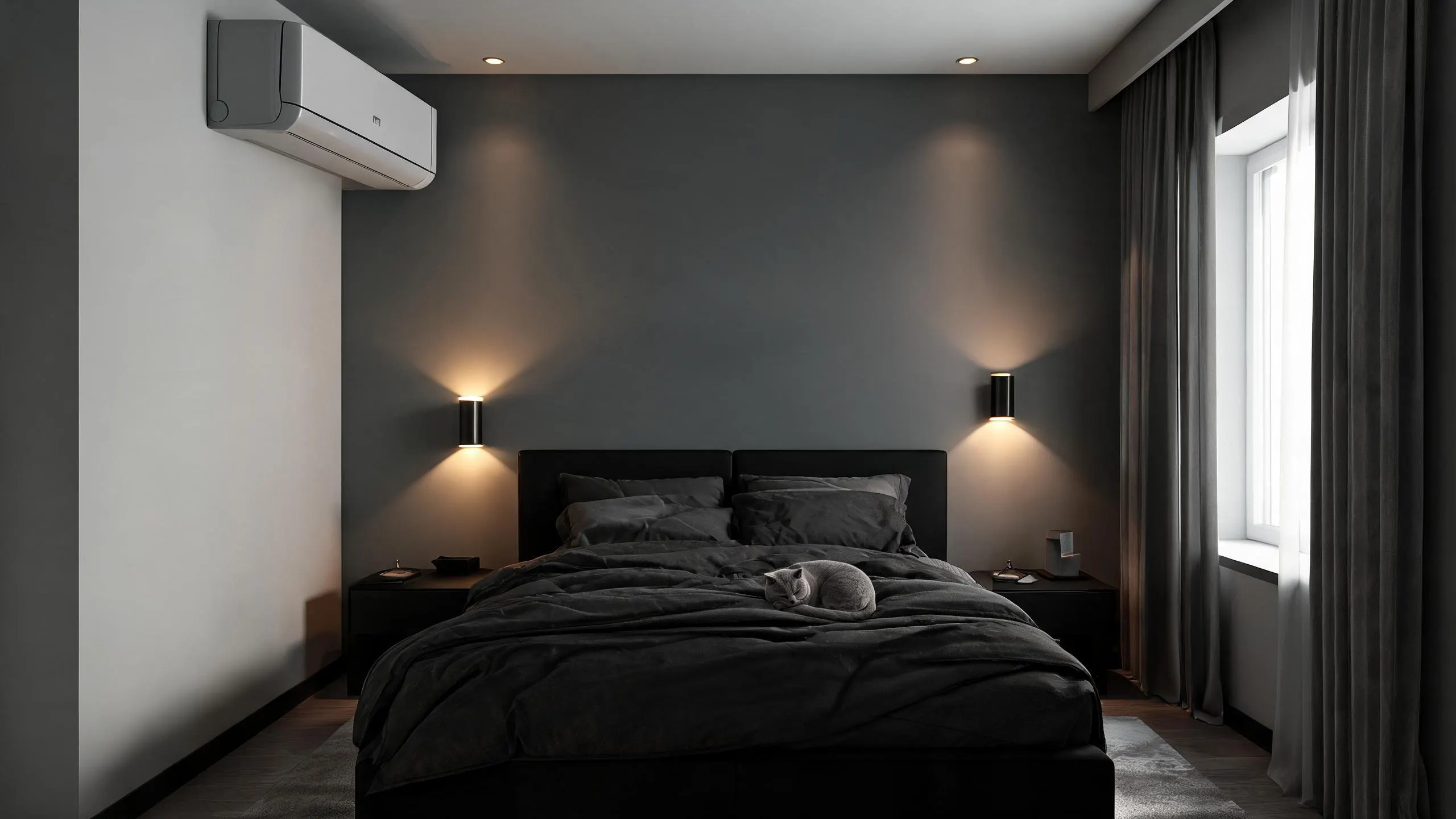




A minimalist bedroom with dark grey walls, a large bed with charcoal bedding, a sleeping cat, two warm-toned wall sconces, and a wall-mounted air conditioning unit.

Mini Split Installation in Kittanning, PA

Tell us about the job

Takes about a minute. No obligation.

Step 1 of 3: Equipment

Gas heats 74.2% of homes in Armstrong County, and most of those homes have ductwork built around a furnace. A mini split works differently. It runs on electricity, and it both heats and cools from the same outdoor unit, with no ducts involved. For a home with no ductwork, or a room an existing system doesn't reach well, that's the appeal. It's less a replacement for a gas furnace than a way to handle one room, or a whole house, without tying into the gas system at all.

8 months
October through May, your system heats
3 months
June through August, it cools
21°F
the average winter night it heats against
81°F
the average summer afternoon it cools against
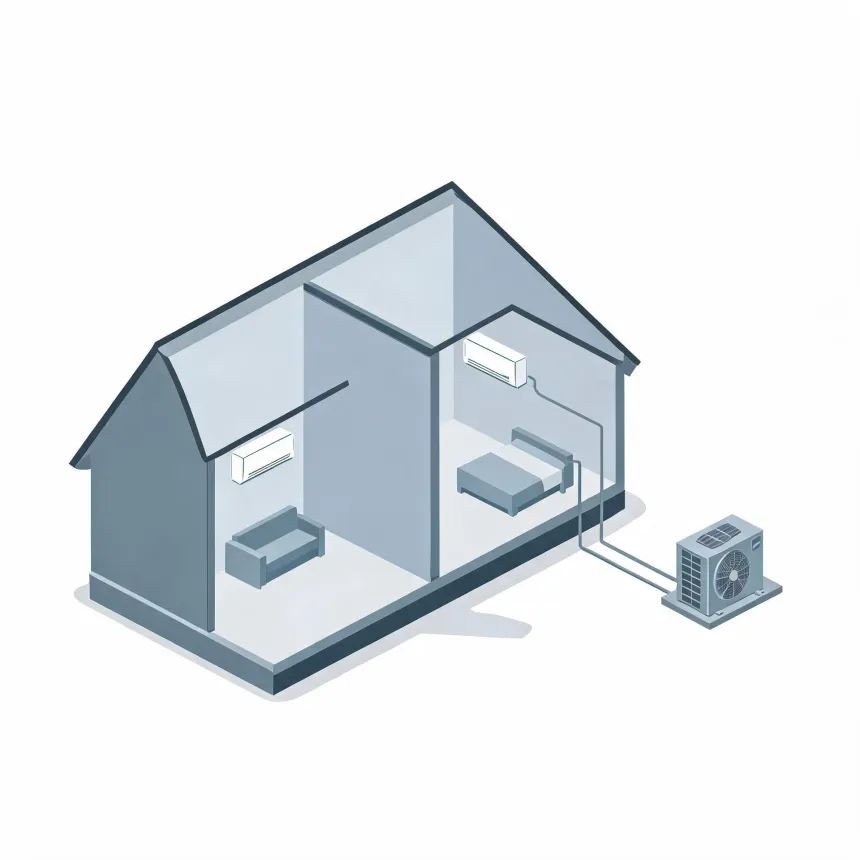
Isometric grey illustration of a cutaway house showing two rooms with wall-mounted indoor air conditioning units connected by lines to an outdoor condenser unit beside the building.
Your system heats October through May and cools June through August.

NOAA nClimDiv, 1991–2020 normals

Cooling here runs June through August.

May is the month to get a mini split installed, before the first warm week puts you on a waiting list.

Armstrong County's weather calls for a solid install, not a bigger unit

156 severe weather events from 2015 to 2024
15% of homes statewide lost power a day or more in 2024
116 damaging wind events from 2015 to 2024
These homes were here before central air was commonHalf the homes in Armstrong County were built in 1959 or earlier.

A mini split's size depends on the room or the house it's conditioning, not on the county it's in. Kittanning doesn't call for anything oversized. What matters more is the electric rate, since the whole system runs on electricity with no gas backup to share the load. Pennsylvania homes paid 17.77 cents per kilowatthour in 2024. A correctly sized unit matches its output to the space and holds steady near its rated efficiency. An oversized one cycles on and off, which wastes power and wears the compressor faster. The right size for your room is the cheaper choice to run, not just the cheaper one to buy.

A standard size and a solid install, that's what this county needs

Summers here top out around 81°F and last from June through August. A mini split sized to the room handles that without trouble, and holds its efficiency doing it. The wind and hail that come through Armstrong County are a reason to get the install done right, not a reason to size up or spend more on the unit itself.

Find a contractor
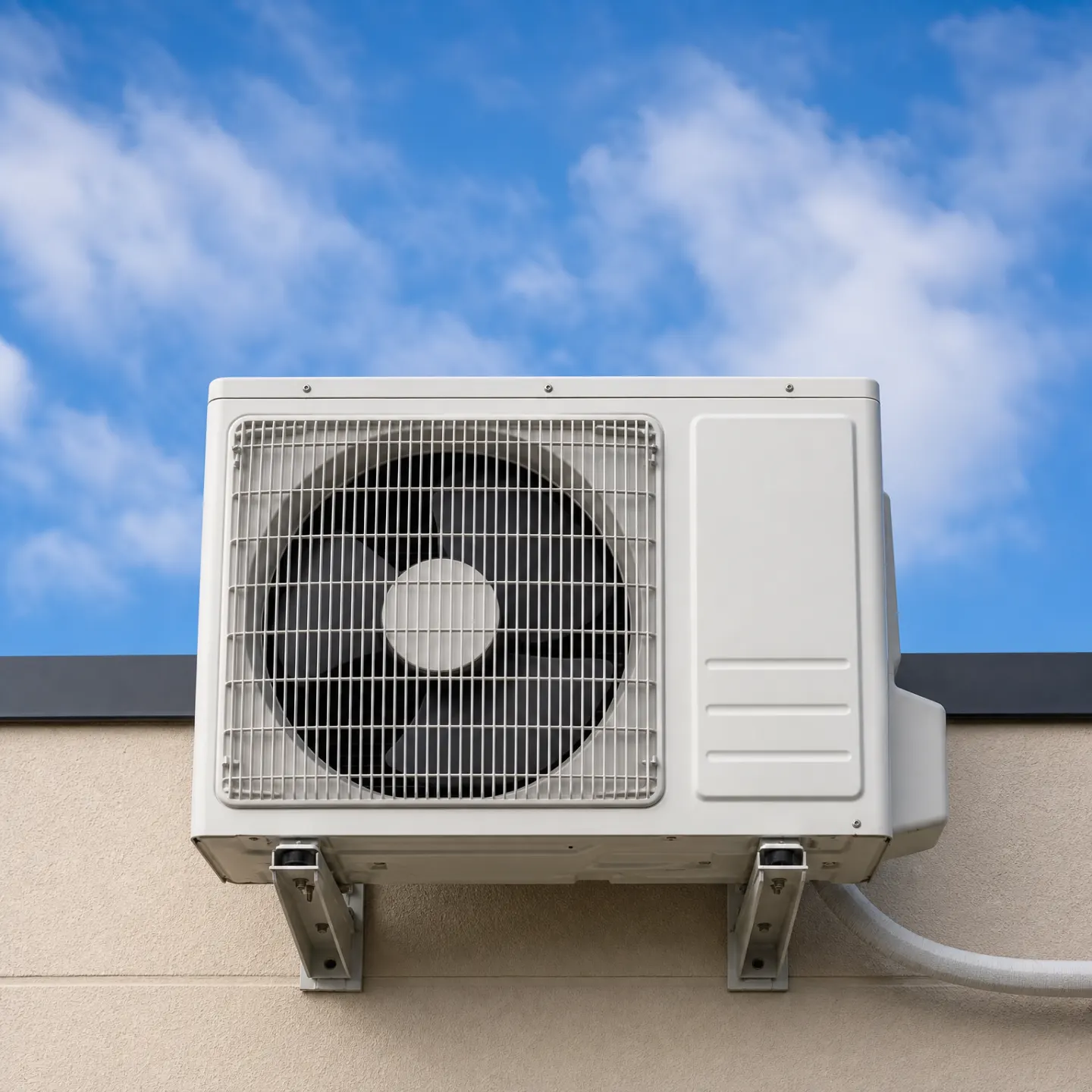
A white mini-split air conditioner outdoor condenser unit mounted on metal brackets against a beige stucco exterior wall, with a blue sky and scattered clouds in the background.

Fitting the line set to the house you have

A mini split needs a place on an outside wall for the line set to pass through, and a spot outdoors for the compressor. In a home built in 1959 or earlier, the contractor doing the install will work out that path on site rather than assume anything about what's behind the wall. That's a normal part of sizing the job here, not an extra step.

SEER2 tells you the efficiency, not the output

The SEER2 number on the label is a seasonal average, worked out under set test conditions. It tells you how much cooling the unit delivers for the electricity it uses. It doesn't tell you how big a space the unit can handle. A high rating and the right size are separate questions, and a unit can be rated well while still being the wrong fit for the room.
A higher rating only pays off if the unit runs a lot

A better rating lowers the cost of every hour the unit runs, but it only matters if the unit is running. A mini split covering a room that sits empty most of the day won't earn back a higher rating the way one running through the afternoon will. Matching the rating to how the space actually gets used counts for as much as the number on the label.

Sizing a mini split starts with a room by room heat loss and heat gain calculation, not a guess based on square footage alone. The contractor looks at wall area, window size and direction, ceiling height, and how much insulation is behind the drywall. A room with a lot of west facing glass gains heat differently than an interior room with none. That calculation produces a number in BTUs, and the indoor unit gets matched to it. Go too small and the unit runs flat out on the hottest afternoons without ever catching up. Go too big and it cools the room fast, shuts off, then starts again a few minutes later, which keeps humidity high since the unit never runs long enough to pull moisture out of the air. The right size is the one that runs long steady cycles, not the one with the highest number on the box.

Install day starts outside, with the contractor marking where the line set passes through the wall and where the outdoor compressor will sit. Inside, the indoor unit gets mounted high on the wall, level, with enough clearance to pull air across the coil. The line set, a run of refrigerant tubing and a condensate drain, gets routed through the wall and insulated along its length so it doesn't sweat. Once the indoor and outdoor units are connected, the contractor pulls a vacuum on the line set to clear out air and moisture before the system ever runs on refrigerant. That step matters more than it looks, since moisture left in the lines causes problems well after the crew is gone. Only after the vacuum holds does the system get charged and tested, running it through both heating and cooling to check that it responds and holds temperature.