Gas is the normal choice here
Utility gas heats 74.2% of homes in Armstrong County. A gas furnace is what most contractors here install and service week to week.
Takes about a minute. No obligation.
Utility gas heats 74.2% of homes in Armstrong County. A gas furnace is what most contractors here install and service week to week.
If your old furnace ran on gas, the new one can usually connect to the same gas line and vent path already in your house. That keeps the job simpler than switching fuel types.
NOAA nClimDiv, 1991–2020 normals
Half the homes in Kittanning were built in 1959 or earlier.
Your furnace and ductwork need to fit the house you have, not a house built to today's standards.




A furnace that's too big for the house will short cycle, heating the place fast then shutting off before it ever runs long enough to warm the rooms evenly or clear the moisture out of the air. One that's too small runs constantly and still can't keep up on the coldest days. Getting the size right isn't a guess. A contractor works it out with a load calculation, which looks at the square footage, the ceiling height, how many windows and doors you have and where they face, and how much insulation is in the walls and attic. The old furnace's size is a starting point, not the answer, especially if anything about the house has changed since it was installed. Done right, the new furnace matches the house as it actually is now.
A standard furnace, sized to the house with a proper load calculation, is what most homes in Kittanning need. Gas here runs $13.12 per million Btu, and nothing about that price pushes you toward a bigger or more efficient unit than the house calls for. Get the size right and the furnace handles the rest.
Find a contractorOctober through May, the furnace is what keeps the house warm, about eight months of the year. Overnight lows average 21°F in December, January and February, so it's doing real work on those nights, not just running in the background. None of that calls for anything beyond a standard furnace sized to the house. It just means the sizing has to be right, because the furnace will earn its keep most of the year here.
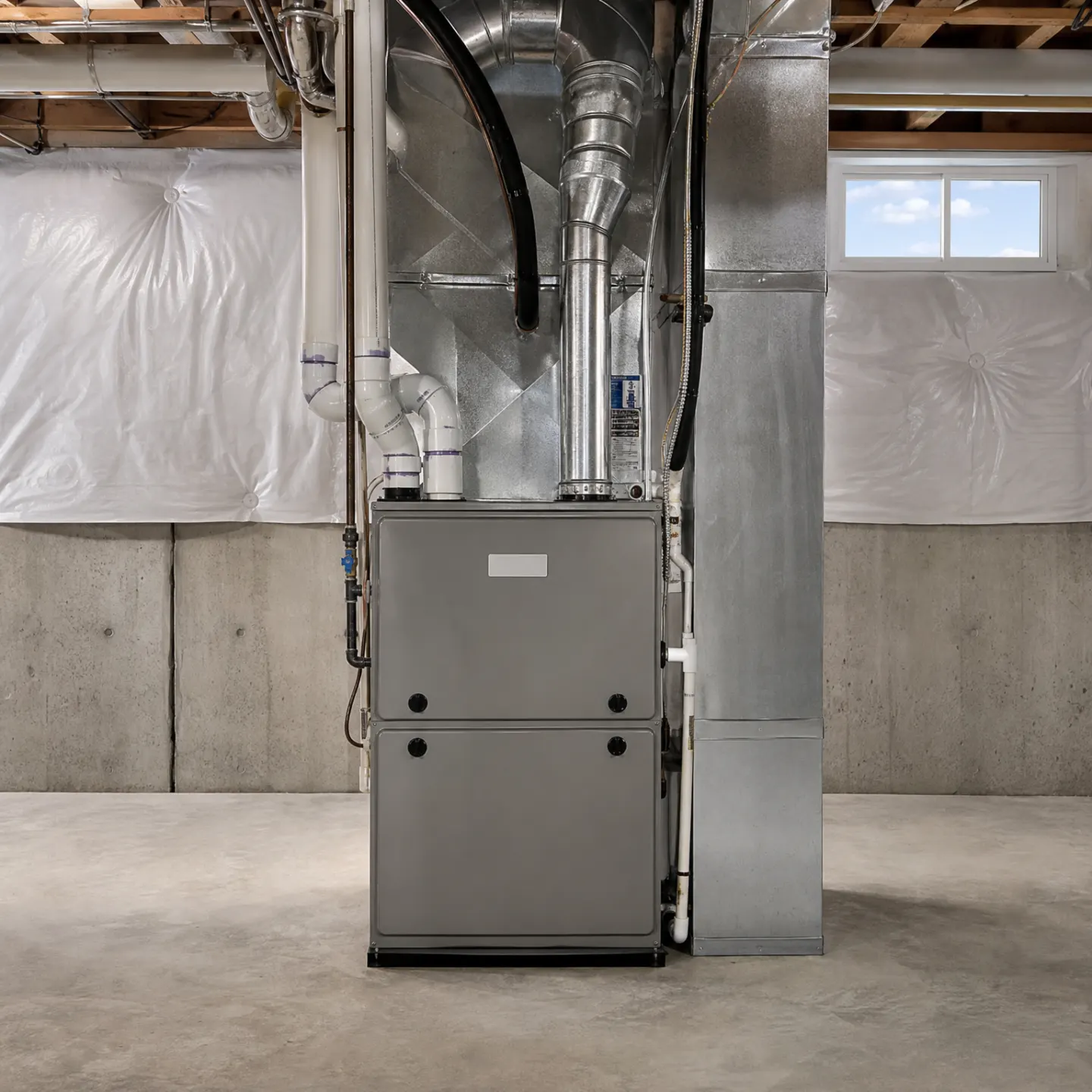
A higher efficiency furnace condenses exhaust gas into water and vents through PVC pipe out a wall. A standard furnace vents through metal pipe, often into a chimney. Switching from one type to the other changes what has to be run through the house, not just what sits in the basement or closet. Ask what the venting job involves before you compare prices.
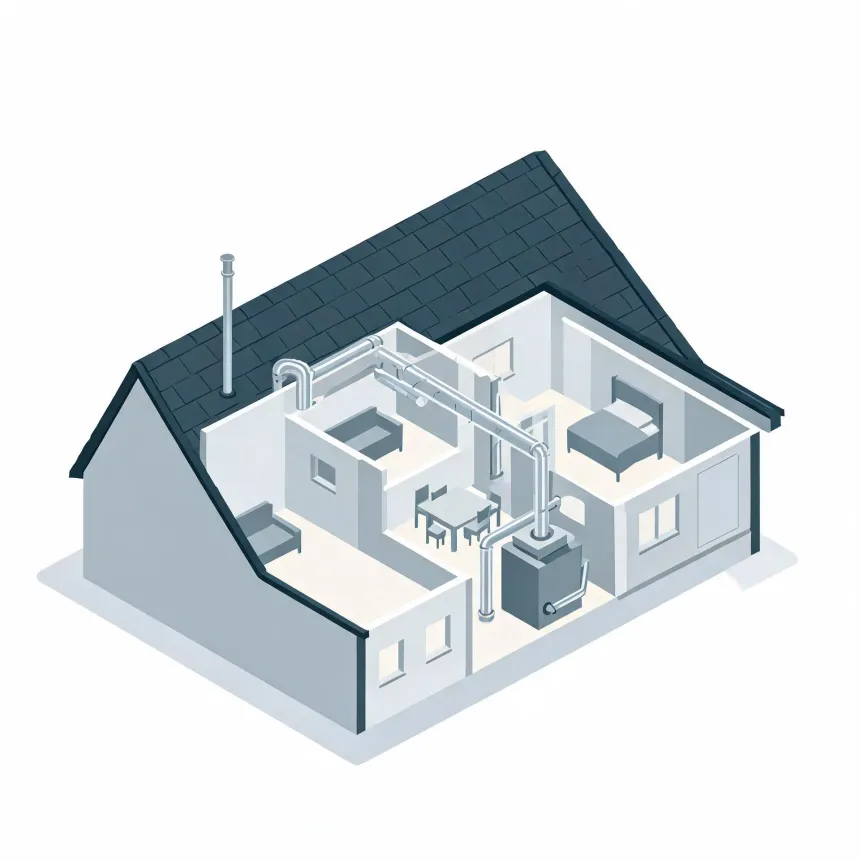
A new furnace moves a specific amount of air, and the ducts have to be sized to carry it. If nobody checks the existing ductwork against the new furnace's output, you can end up with rooms that run hot or cold no matter how good the furnace itself is. Ask whether the ducts were part of the calculation or just left as they were.
Estimates for a typical Armstrong County home, from EIA household energy data, Pennsylvania fuel prices and NOAA climate normals. Your home will differ.
Installation day starts with the old furnace coming out, not the new one going in. The gas line gets capped and the power disconnected before anyone touches the new unit. Setting the furnace in place is the fast part. The gas line, the vent pipe, the duct trunk, the condensate line on a higher efficiency model, and the thermostat wiring all have to be connected and tested before the job is done. A contractor should fire the furnace and run it through a full cycle, checking the gas pressure and the venting while it runs. Walk through the house afterward and feel the vents yourself. Air should be moving at every one of them, not just the rooms closest to the furnace.