

What winter here does to a heat pump
Your winter low here averages 23°F, and that matters more than any spec sheet. A standard heat pump starts falling short of its rated heat below 40°F, and below about 35°F it often needs backup heat to make up the difference. Both of those marks sit above your average low, not below it.
About 115 nights a year here drop to freezing or below, roughly half the nights across the eight months your heat runs. Every one of those nights is already past both marks. That doesn't mean the heat pump quits. It means on a lot of winter nights, a standard model is leaning on backup heat or putting out less than its rating to keep your house at temperature.
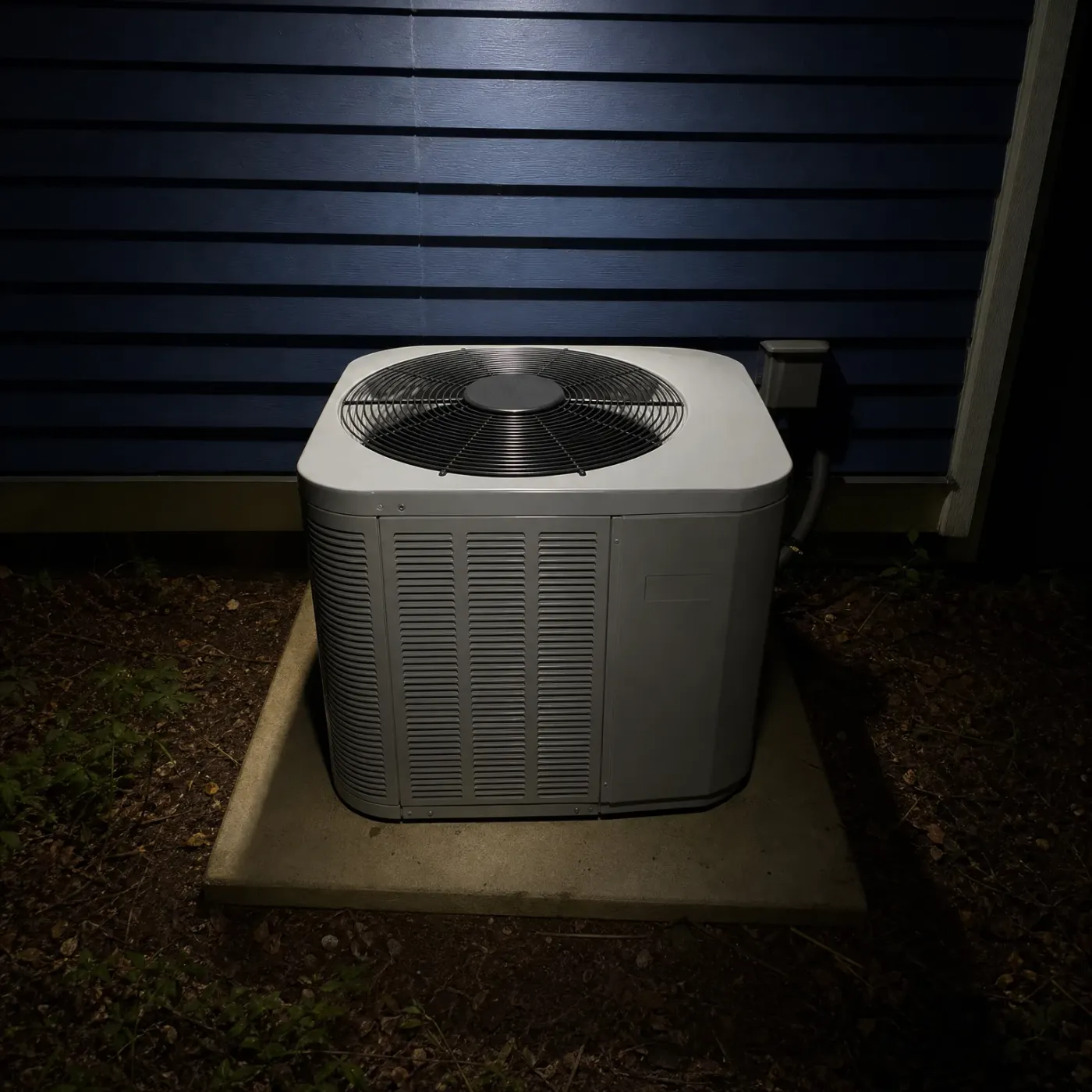
Cold-climate heat pumps are built for exactly this. To earn the ENERGY STAR Cold Climate label, a heat pump has to keep at least 70 percent of its 47°F capacity at 5°F, tested by someone other than the manufacturer. Field tests of prototype cold-climate models found backup heat carried only a small share of the load between 0°F and 35°F, and the units rarely ran on backup alone unless it was at or below 0°F. That's close to your climate: only about 2 nights a year here reach 0°F. A cold-climate heat pump would spend almost all of its time above the point where these units start to struggle.
A standard heat pump, the kind built to the federal minimum, is a different proposition in your county. If you're comparing heat pumps to a furnace here, you're really deciding between a standard model and a cold-climate one, because the gap between them shows up on most of your winter nights.