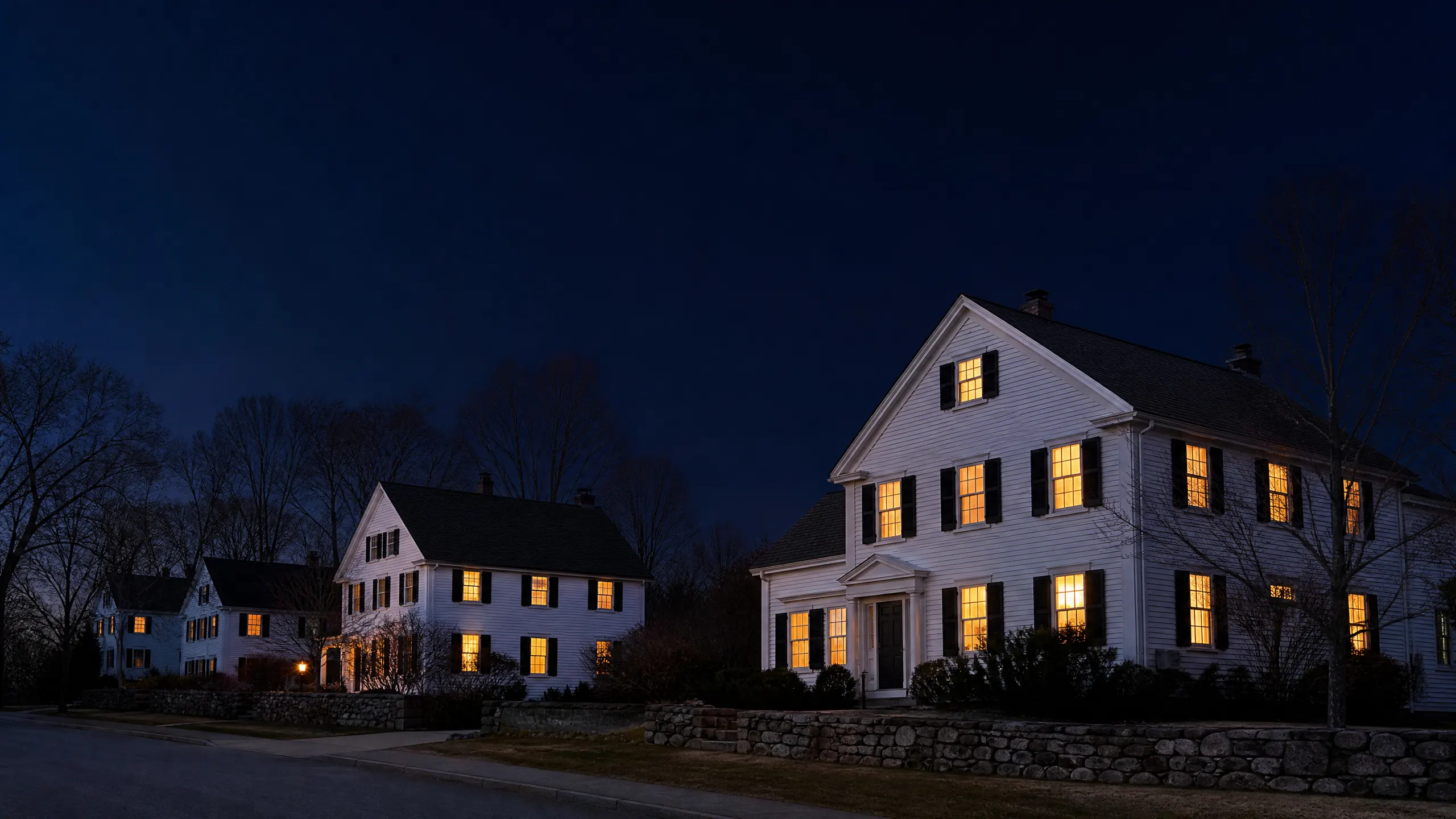

Two white multi-story colonial houses with lit windows and black shutters photographed at night, fronted by a stone wall.

Furnace Installation in Washington, PA

Tell us about the job

Takes about a minute. No obligation.

Step 1 of 3: Equipment

Washington County saw 344 severe weather events between 2015 and 2024. Most of that was wind, with 263 events, plus 59 hail events and 10 winter storms bringing heavy snow and ice. A new furnace has to be installed with that in mind, not just the cold. If a storm takes the power out, gas heat still needs electricity to run the blower and ignition, so an outage means no heat even with the gas on. Statewide, 15% of households went at least a day without power in 2024. That's worth planning around before the install, not after the first outage finds you without heat.

8 months
October through May, your furnace is on duty
23°F
the average winter night it heats against
67%
of homes here heat with gas, so most furnaces here burn gas
80% AFUE
the federal minimum any new unit must meet
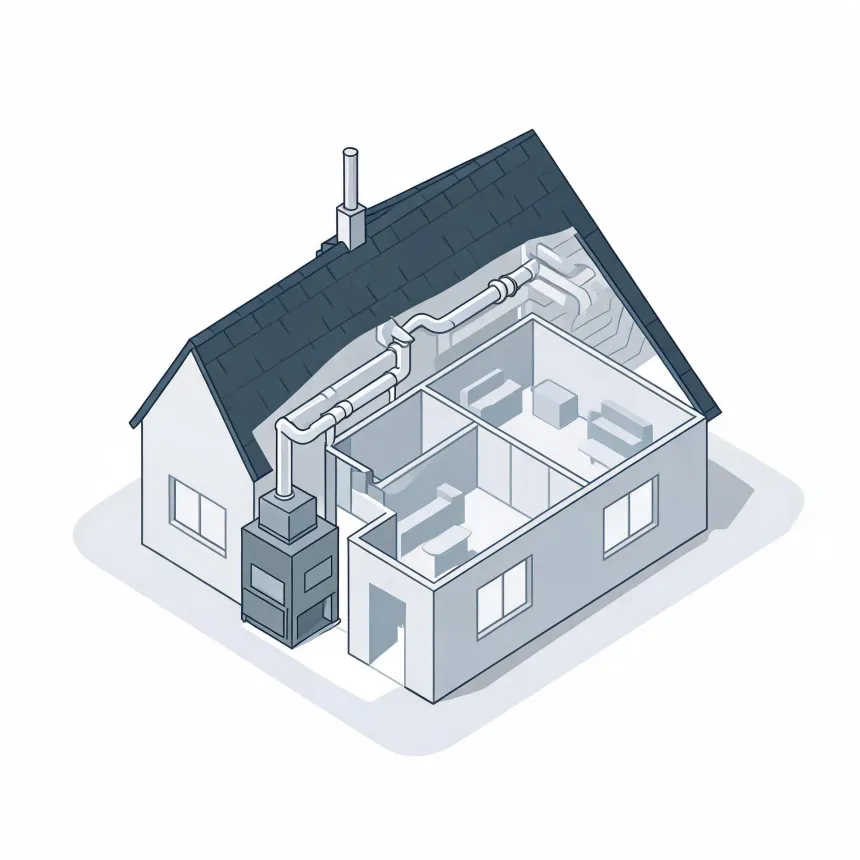
Isometric line illustration of a cutaway single-story house with a dark shingled roof, showing interior rooms and ductwork connected to a gray furnace unit with a flue pipe.
Your furnace works hardest from November through March.

NOAA nClimDiv, 1991–2020 normals

Furnaces here run eight months a year, October through May.

Get the new one in before October and you pick the install date, not a cold snap.

Most furnaces here run on gas, so that's what a new one should run on too

66.5% of homes heat with gas
Heat runs October through May
Winter nights average 23°F
Half These Homes Were Built in 1966 or EarlierHalf the homes in Washington County were built in 1966 or earlier, and a new furnace has to fit ductwork and venting that old.

Washington County falls in climate zone 5A, a cool zone under the 2021 energy code where heating carries most of the load. That rating limits what counts as a legal install here. Any gas furnace built from November 2015 on has to turn at least 80 percent of the gas it burns into heat, and that floor holds until December 2028, when new units have to hit 95 percent. A furnace meeting today's 80 percent minimum can still go in right up until that date. Buying above the minimum now, a 95 percent or higher unit, may qualify for a federal tax credit, so it's worth asking what rating a model carries before you settle on one.

Plan This Install Around the Outage, Not Just the Cold

A furnace install is a chance to decide where the gas valve, blower wiring and shutoffs sit before a storm makes that decision for you. Ask about a battery backup or generator hookup for the blower and ignition, since gas heat still needs power to run. That's a question for the install, not for after the lights go out.

Find a contractor
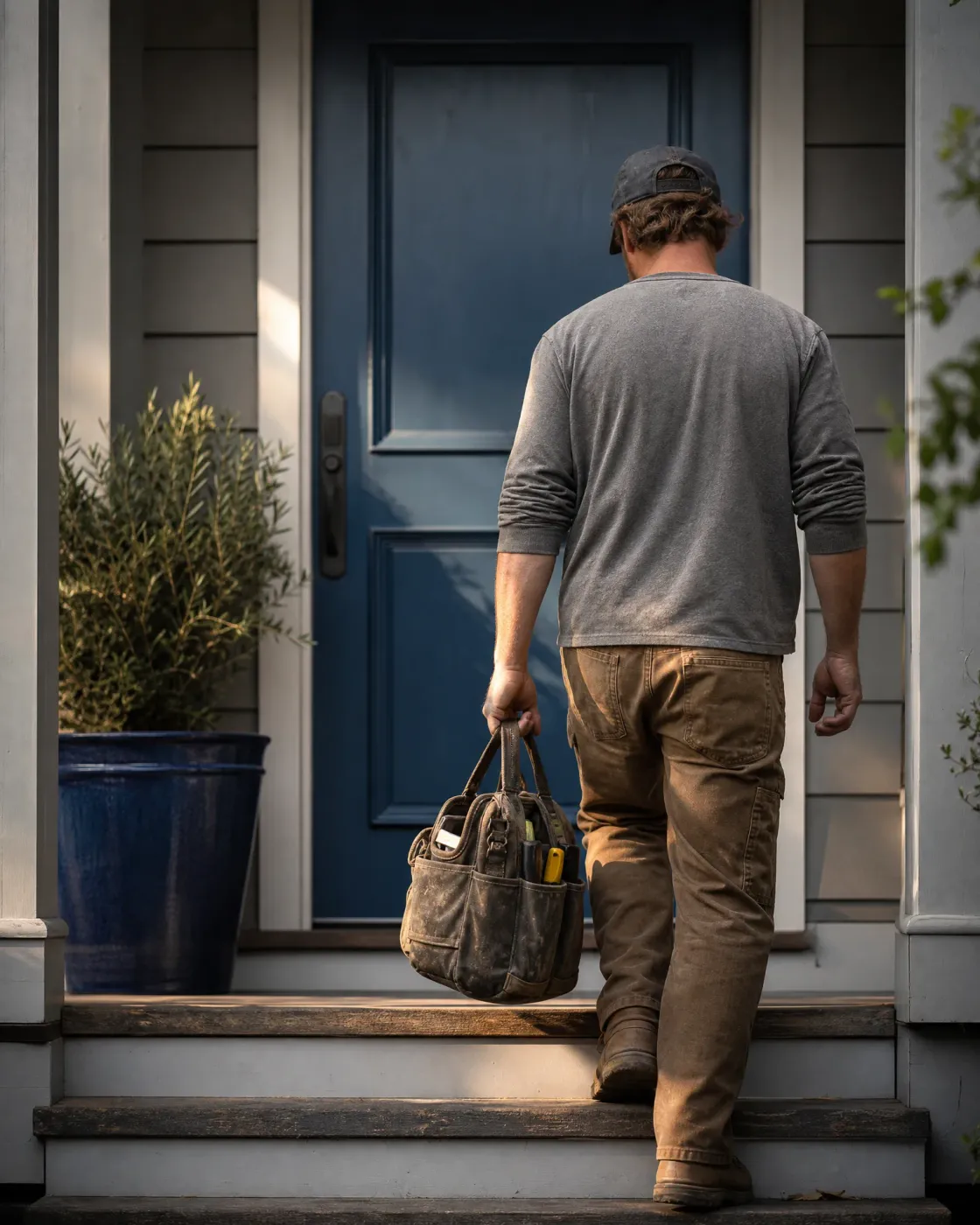
A man in a cap, gray long-sleeve shirt and tan work pants carries a worn canvas tool bag up wooden porch steps toward a blue front door, with a potted shrub to the left.
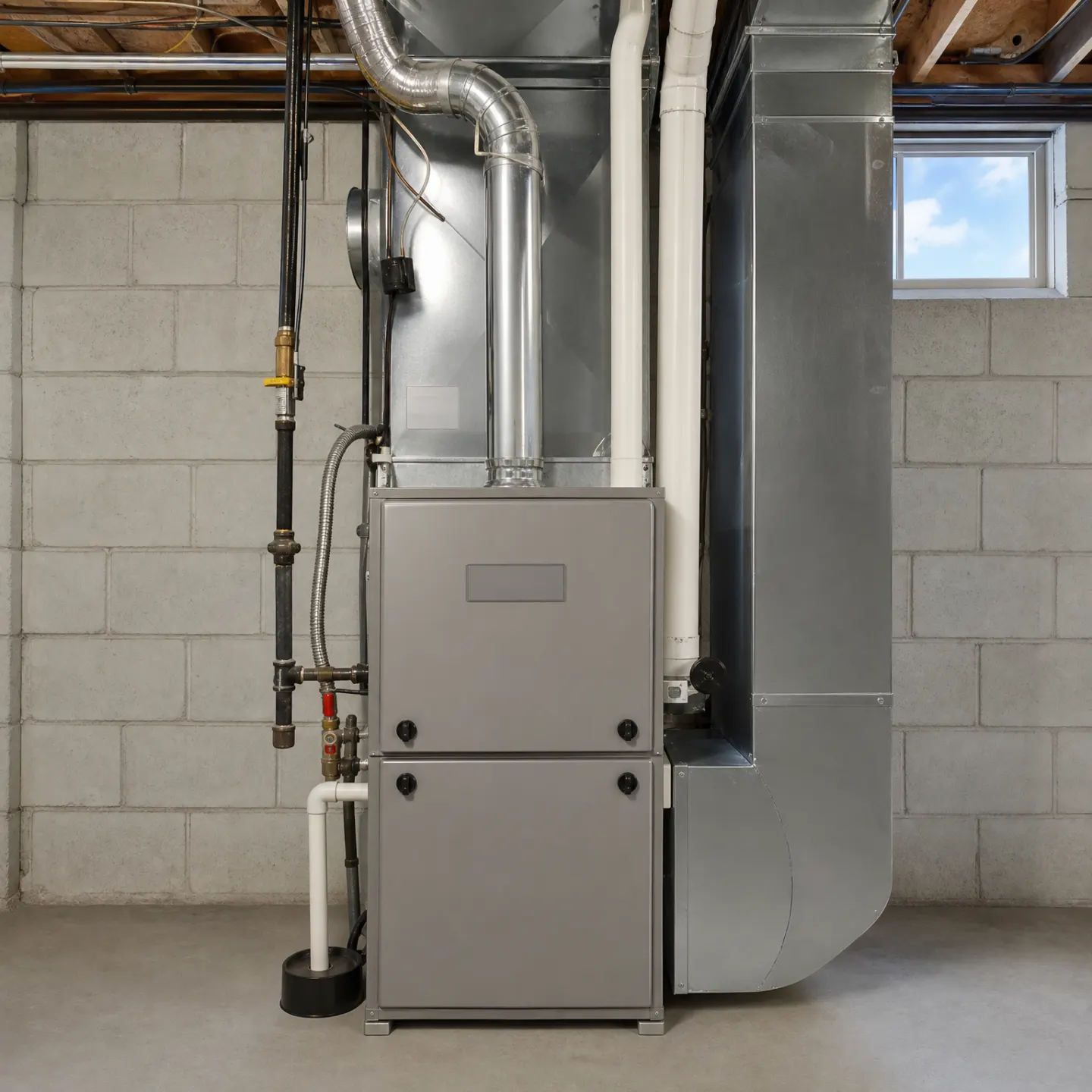
A gray high-efficiency gas furnace installed in an unfinished basement, surrounded by gas lines, a condensate drain, and sheet-metal ductwork.

The New Furnace Has to Fit What's Already There

If your ductwork and venting came with the house, the installer has to size the new furnace to fit them, not the other way around. A furnace rated right for the square footage can still be wrong for the house if the vent pipe or duct runs are from 1966 or earlier and nothing's been resized since. Ask the installer to check duct size and venting before they quote a unit, not after it's sitting in the basement.

The Old Furnace Doesn't Just Get Hauled Off

Pulling the old furnace means disconnecting the gas line, the vent pipe and the electrical before anything gets carried out. The installer has to cap the gas line properly and check that the venting for any other gas appliance still drafts right once the old furnace is gone, since some vent systems are shared. None of this is quick work done around a new unit sitting in the driveway. It has to happen in order, old one out and sealed off before the new one goes in.
The Old Unit Can Still Flag Problems For the New One

Before the old furnace comes out, a good installer looks at how it failed and what's around it. Scorch marks near the burner, a cracked heat exchanger or soot on the cabinet point to venting or airflow problems that the new furnace will inherit if nobody fixes them. The old thermostat wiring and return air setup get checked too, since reusing them without a look can carry an old problem straight into a brand new system.

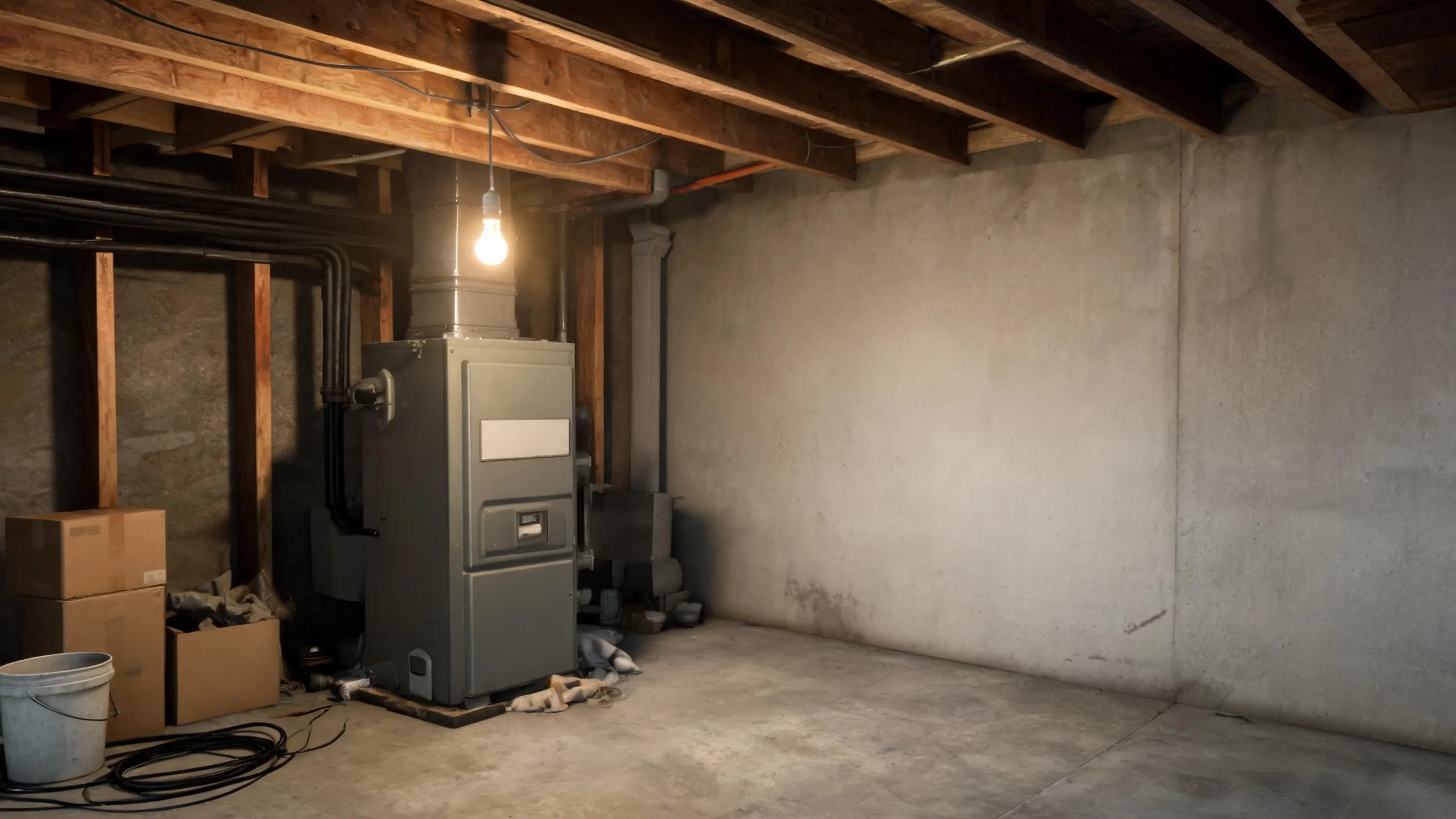
An unfinished basement interior showing a gray furnace unit beneath a bare incandescent bulb, surrounded by exposed joists, concrete walls, cardboard boxes, and utility pipes.

A high-efficiency gas furnace would save about $120 a year to run in Washington County compared with a gas furnace.

  • A high-efficiency gas furnace$610 a year
  • A gas furnace$730 a year

Estimates for a typical Washington County home, from EIA household energy data, Pennsylvania fuel prices and NOAA climate normals. Your home will differ.

Installation day starts with a load calculation, not a box coming off a truck. The installer measures the house room by room to size the new furnace correctly, since a unit too big cycles on and off and one too small runs constantly without catching up. Once the new furnace is set in place, it gets connected to the gas line, the vent pipe, the ductwork and the electrical, then the installer checks the gas pressure at the manifold and tests the ignition before closing up the cabinet. A combustion analyzer gets used to check that the furnace is burning cleanly and venting properly, not just that it lights. The thermostat gets tested through a full cycle, heat on, fan running, heat off, before the installer calls the job done. None of this works as a rush job. Each step depends on the one before it holding up.