A row of white Colonial-style houses with glowing windows photographed at dusk along a road bordered by a stone wall.

Furnace Repair in Reading, PA

Tell us about the job

Takes about a minute. No obligation.

Step 1 of 3: Equipment

Berks County gets hit a lot

Berks County logged 567 severe weather events between 2015 and 2024, including 478 damaging wind events and 58 hail events. Six tornadoes touched down in that same stretch. Weather here does not just pass through, it does damage.

A furnace depends on the power staying on

A gas furnace still needs electricity to run its blower and ignition. In 2024, 15% of Pennsylvania households lost power for 24 hours or more. When the power cuts out in a Berks County winter, the furnace stops with it.

8 months
October through May, your furnace is on duty
23°F
the average winter night it heats against
20 winter storms
in ten years, the nights a failure hurts most
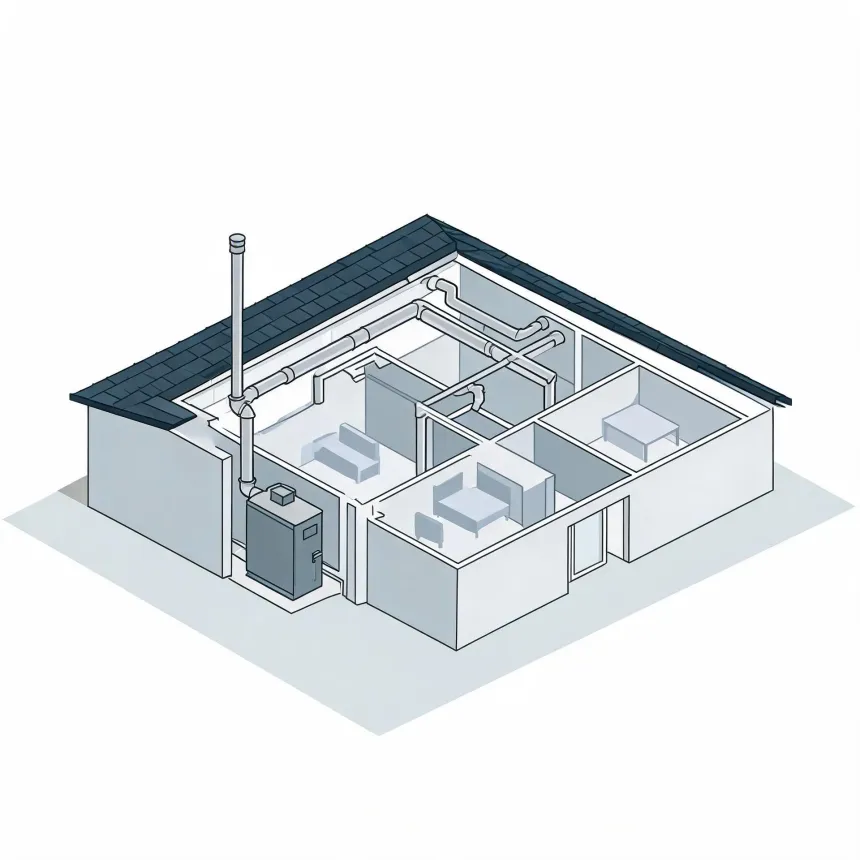
Isometric line illustration of a cutaway single-story house showing interior rooms with furniture, ceiling ductwork, and an exterior furnace unit with a tall flue pipe.
Your furnace works hardest from November through March.

NOAA nClimDiv, 1991–2020 normals

A furnace fails most often at the igniter or the flame sensor, not the burners themselves.

A coating of dust on the flame sensor can shut the whole furnace down even though nothing is actually broken.

Half the homes here were built in 1969 or earlier, old enough to be on a furnace's second or third one

Half the homes here were built by 1969
Climate zone 4A
Heat runs October through May
The First Cold Snap Finds the Weak PartHeat goes on in October here, and that first real workload is what a furnace already struggling can't get through.

If your furnace came with the house and the house dates to that era, ask the contractor straight out how much life it has left before you pay for a major repair. A furnace nearing the end of its run can still be worth fixing if the part that failed is minor. It's a different call if the repair is a big one, like a cracked heat exchanger or a failed blower motor. In that case the age of the unit matters as much as the price of the fix. Get the honest number on remaining life before you commit to the bigger repair.

If the Last Storm Hit Your Furnace, Get It Checked Now

Wind and hail here don't just hit the roof. The outdoor parts of a heating system take that damage too, and a furnace that still fires up can be running on a part that's already failing. If your system took a hit this year, get it looked at before winter asks more of it.

Find a contractor
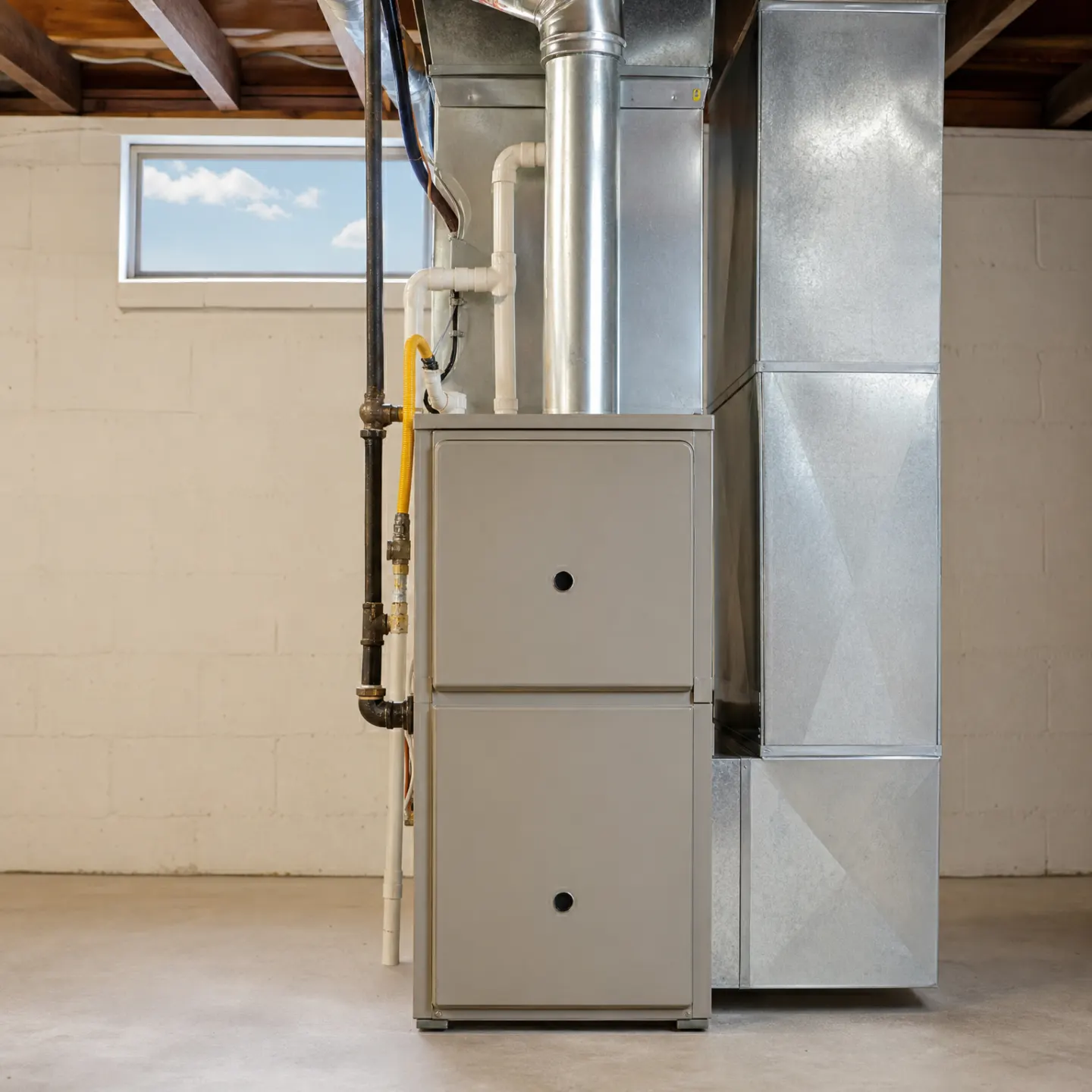
A gas furnace with attached ductwork, gas piping, and condensate lines installed in a concrete-block basement.

Your Furnace Usually Warns You Before It Quits

A furnace that's starting to fail doesn't usually just stop. It tells you first. It might short cycle, kicking on and off every few minutes instead of running a full heat cycle. It might blow air that's cool or lukewarm instead of hot, which often points to a clogged filter choking airflow or a cracked heat exchanger tripping a safety switch. A burner flame that's flickering yellow instead of burning steady blue means it's not combusting clean, and that's not something to wait on. Rattling, booming or a metallic screech from the blower usually means a part is loose or a bearing is wearing out. A furnace that smells like something's burning when it first kicks on each season is normal for a few minutes. Past that, or any smell of gas, it isn't. If the thermostat calls for heat and the furnace won't answer at all, the problem is often as simple as a dirty flame sensor or as serious as a dead control board. None of these mean the same fix, but all of them mean the furnace is already telling you something's wrong.

A Cracked Heat Exchanger Spreads the Damage

A heat exchanger that's cracked lets combustion gas mix into the air the blower pushes through the house. Run the furnace in that state and the metal keeps flexing with every heat cycle, so the crack grows. What starts as a repair can turn into a full replacement if it's left running instead of shut down.

A Dirty Flame Sensor Gets Worse, Not Better

A flame sensor coated in a thin layer of oxidation will still shut the furnace down as a safety measure, but every cycle it struggles through adds more buildup. Left alone, a sensor that used to cut out occasionally starts cutting out every cycle, and the fix that was a quick cleaning becomes a sensor that needs replacing.

An unfinished concrete basement containing a gas furnace with sheet-metal ductwork, utility shelving, and exposed overhead joists.

A new furnace would cut about $140 a year off heating for a typical Berks County home.

  • A new high-efficiency furnace$590 a year
  • An older furnace$730 a year

Estimates for a typical Berks County home, compared with an older unit built to the previous federal minimum, from EIA household energy data, Pennsylvania fuel prices and NOAA climate normals. Your home will differ.

Repair makes sense when one part has failed and the heat exchanger is sound.

Replacement makes sense when the heat exchanger is cracked or the furnace keeps needing parts.

A repair is worth it when the part that failed is cheap to replace and doesn't say anything about the rest of the furnace. A flame sensor, an igniter, a blown fuse, a bad thermostat wire, none of those tell you anything about the heat exchanger or the blower motor. Replacement starts to make sense when the failed part is tied to the whole system, or when the same furnace keeps coming back with a new problem every season. A cracked heat exchanger is usually that line, since the fix means replacing the core of the furnace anyway. So is a blower motor on an older unit, once the cost of the motor starts to rival the rest of the machine's value. The honest question isn't just what broke, it's whether fixing it buys you years or just buys you time until the next part goes.