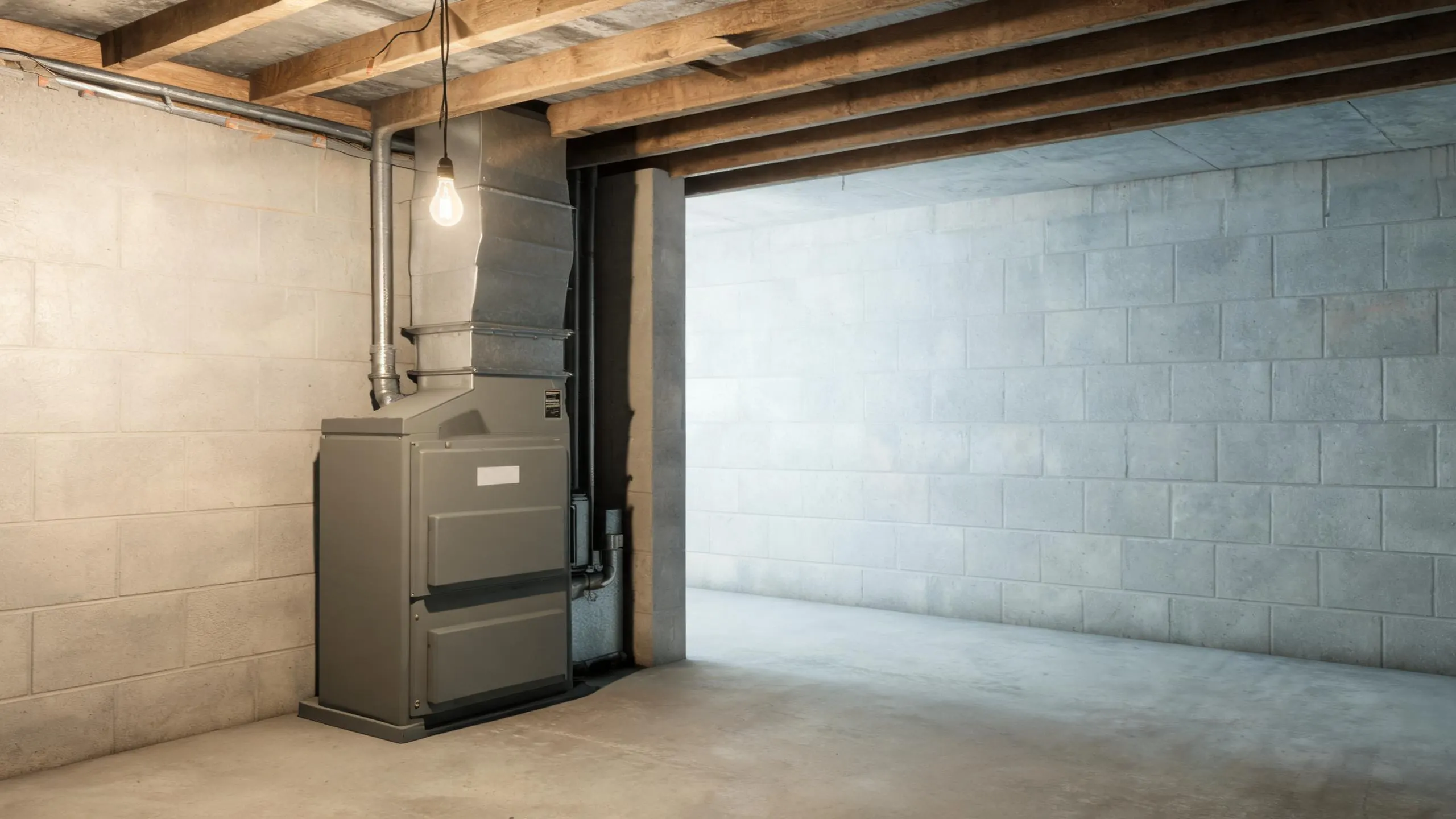




An unfinished basement featuring a grey forced-air furnace with metal ductwork, concrete block walls, exposed wooden joists, and a single hanging bare bulb.

Furnace Repair in Lancaster, PA

Tell us about the job

Takes about a minute. No obligation.

Step 1 of 3: Equipment

Furnaces in Lancaster County run October through April, about seven months of use each year. That's a normal season, not a hard one. Overnight temperatures average 24°F in December, January and February, so a furnace on the fritz needs attention soon. It's not pushing the system past what it's built for. Most failures this time of year come down to the same handful of causes. A bad igniter, a dirty flame sensor, a clogged filter choking airflow, a thermostat that's lost its calibration. Whatever's wrong with yours, it's worth finding the actual cause before anyone talks about replacing it.

7 months
October through April, your furnace is on duty
24°F
the average winter night it heats against
16 winter storms
in ten years, the nights a failure hurts most
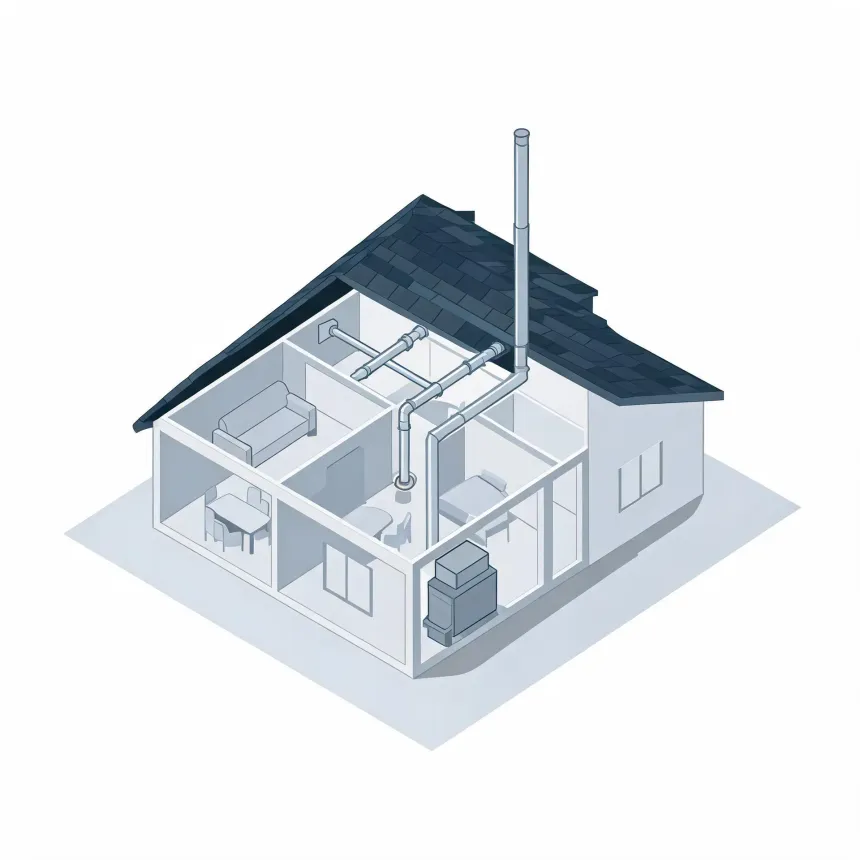
Isometric cutaway illustration of a single-story house showing interior rooms with furniture, ductwork and piping running to a tall vertical flue through the dark shingled roof, and a furnace-like appliance unit on the floor.
Your furnace works hardest from November through March.

NOAA nClimDiv, 1991–2020 normals

Furnaces in Lancaster County start their season in October.

A furnace that struggled last April has had all of September sitting idle to let a weak part fail quietly before the cold hits.

Power outages here are about wind, not furnaces

268 severe weather events from 2015 to 2024
15% of homes statewide lost power a day or more in 2024
215 damaging wind events from 2015 to 2024
An ordinary mix of furnaces, old and newHalf the homes in Lancaster County were built in 1978 or earlier, half after

Electricity here runs $52.07 per million Btu, among the higher rates nationally. A furnace that's short-cycling or running longer than it should burns through that rate every hour it's misbehaving, not just on the days it finally quits. A dirty flame sensor that makes the burner shut off and restart over and over costs more than one that's cleaned and left alone. A clogged filter that forces the blower to work harder does the same. None of that shows up as a dramatic failure. It shows up on the bill, month after month, until the actual cause gets fixed.

A furnace running badly costs you every month it stays that way

Get the actual cause diagnosed now and it stops costing you. Leave it alone and it keeps drawing on a rate that's already high, every hour it short-cycles or runs longer than it should.

Find a contractor
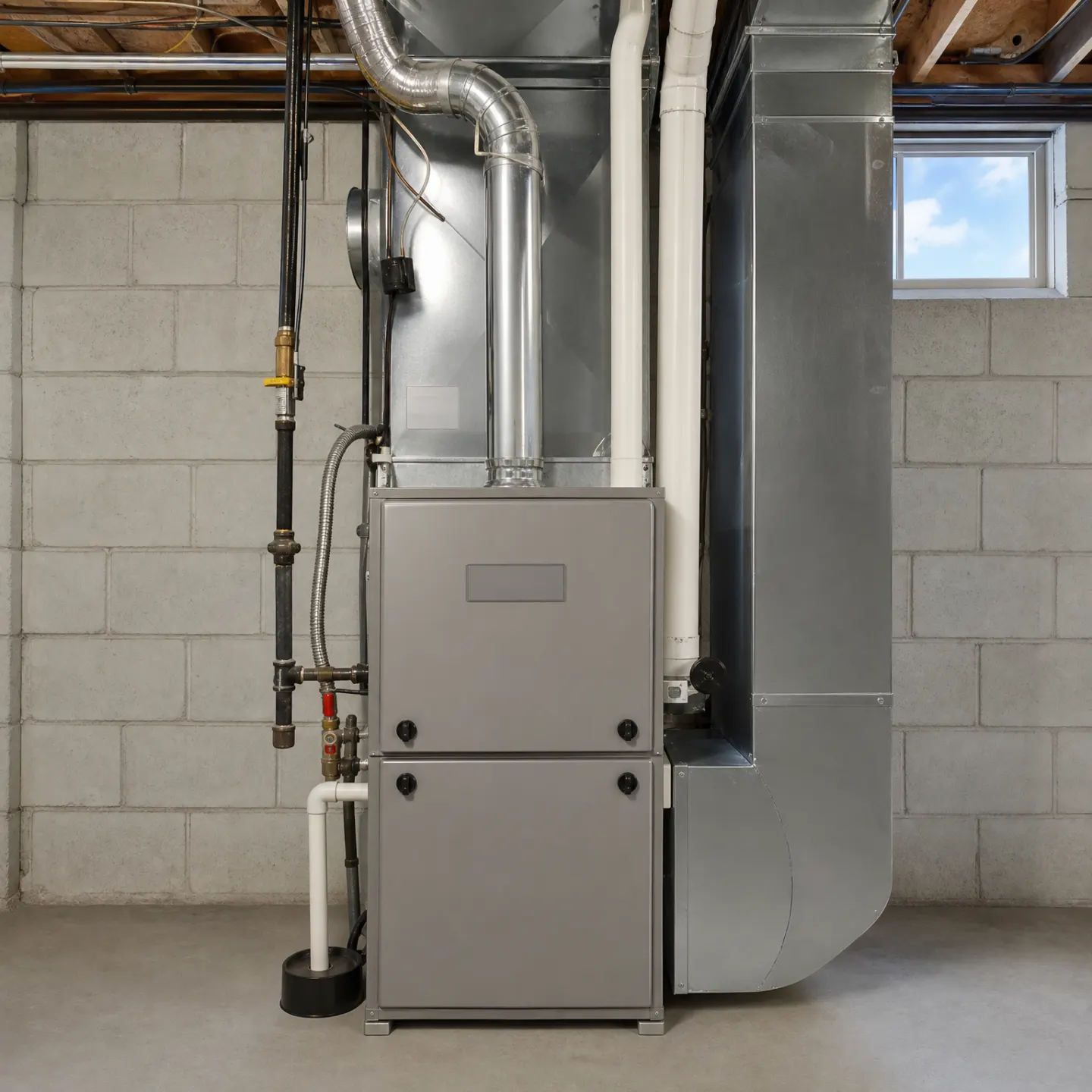
A gray high-efficiency gas furnace installed in an unfinished basement, surrounded by gas lines, a condensate drain, and sheet-metal ductwork.

Running it while it's broken breaks more of it

A furnace with a bad igniter or a cracked heat exchanger doesn't fail outright the first time it acts up. It limps along. Every cycle it runs in that state puts the same strain on the parts around it, the blower motor, the inducer, the circuit board, and those parts wear against a failure that hasn't happened yet. A flame sensor coated in a little soot still lets the burner light, just less reliably, so the system keeps trying, shutting off and restarting instead of running one clean cycle. That start-up is the hardest part of the whole cycle on the ignition components. A furnace left to keep doing that is wearing out the parts around the original problem, not just the one part that started it.

Most failures start with ignition

A furnace lights the same way every cycle, and that's usually where trouble shows up first. The igniter weakens over time and stops glowing hot enough to catch the gas. The flame sensor builds up a film of soot and stops reading the flame that's right in front of it. Both parts are small, both sit right at the burner, and both are the first things worth checking before anything bigger gets blamed.
Airflow problems wear out everything else

A furnace needs air moving through it to run safely, and a filter clogged with dust chokes that off. The blower motor works harder to push air through a restriction, the heat exchanger runs hotter than it should, and the limit switch starts tripping to protect it. None of those parts caused the problem. They're just the ones that take the damage when airflow isn't there.

There are a few things worth checking before anyone comes out. Look at the thermostat first. Make sure it's set to heat, not cool, and the set temperature is actually above room temperature. Check the filter next, and if it's gray or clogged, swap it. A blocked filter can choke off airflow enough to shut the whole system down. Go to the furnace itself and see if the power switch, the one that looks like a light switch on or near the unit, got bumped off. If the furnace uses a standing pilot, check whether the pilot light is still lit. Last, check the breaker panel. A tripped breaker will stop the furnace cold even though everything inside it is fine.

A diagnostic visit starts before any panel comes off. A tech asks what the furnace was doing right before it quit, whether it was short-cycling, blowing cold, or making noise, because that narrows things down before a single tool comes out. Then the panels come off and the sequence gets watched. Does the inducer motor start. Does the igniter glow. Does the burner catch and hold, or light and drop out. Each step either passes or it doesn't, and wherever it stops is where the problem lives. A multimeter checks what can't be judged by eye, the igniter's resistance, the flame sensor's signal, the limit switch, since a part can look fine and still be failing. The last step is running the furnace through a full cycle once whatever's wrong gets fixed, because a repair that holds for one cycle and quits on the next isn't done yet.