





A row of illuminated white colonial houses with black shutters and a stone wall along a road at dusk.

Furnace Installation in Lancaster, PA

Tell us about the job

Takes about a minute. No obligation.

Step 1 of 3: Equipment

Most homes in Lancaster County heat with electricity, and electricity here isn't cheap. Pennsylvania homes paid $52.07 per million Btu in 2024. That number lands on your bill every month the furnace runs, all winter. A furnace that wastes heat is wasting it at that price, not some national average. How the unit is sized and installed decides how much of what you pay for turns into heat in the house.

7 months
October through April, your furnace is on duty
24°F
the average winter night it heats against
80% AFUE
the federal minimum any new unit must meet
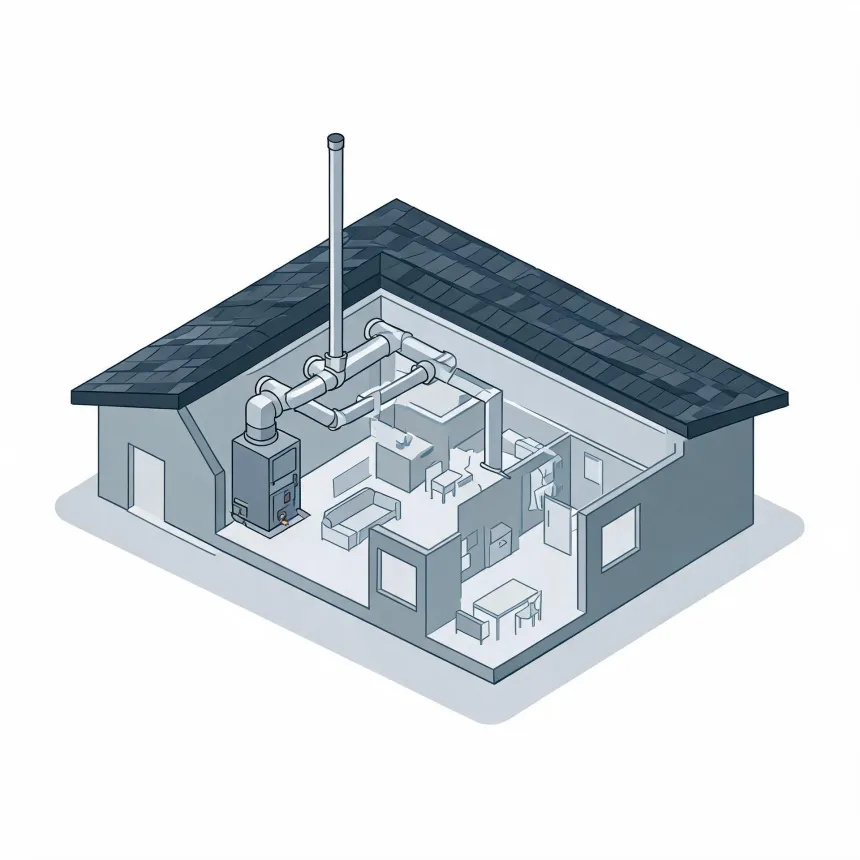
Isometric cutaway illustration of a single-story house showing interior rooms with furniture, a furnace unit with connected ductwork and a tall vertical flue pipe extending above the dark shingled roof.
Your furnace works hardest from November through March.

NOAA nClimDiv, 1991–2020 normals

Lancaster County logged 268 severe weather events between 2015 and 2024, including 215 with damaging wind.

An outdoor unit left exposed takes that wind and hail straight on, and a furnace that depends on the grid goes down with it.

Most homes here already heat with electricity, so you're likely replacing what you have

35.5% of homes heat with electricity
Climate zone 4A
Heat runs October through April
Get it done before OctoberHeat here runs from October through April, about seven months a year.

Lancaster County falls under zone 4A, a mixed climate that asks real work of both your furnace and your air conditioner. Any furnace installed here has to clear a federal floor set for the whole country, not just this region. Gas furnaces built from November 2015 on have to turn at least 80 percent of the gas they burn into heat. That rule changes for units built from December 2028 on, which have to hit 95 percent. A more efficient furnace usually costs more to buy, but a federal tax credit can offset part of that for qualifying equipment. Either way, what goes into your house has to meet that 80 percent floor at minimum.

Pick the install that keeps that rate working for you

At $52.07 per million Btu, how your furnace is sized and installed decides how much of that goes to waste. Getting the installation right the first time is what makes an efficient furnace worth the price of one.

Find a contractor
A man in a cap and brown jacket, seen from behind, climbs porch steps toward a blue front door while carrying a canvas tool bag, with a potted shrub in a blue planter beside him.
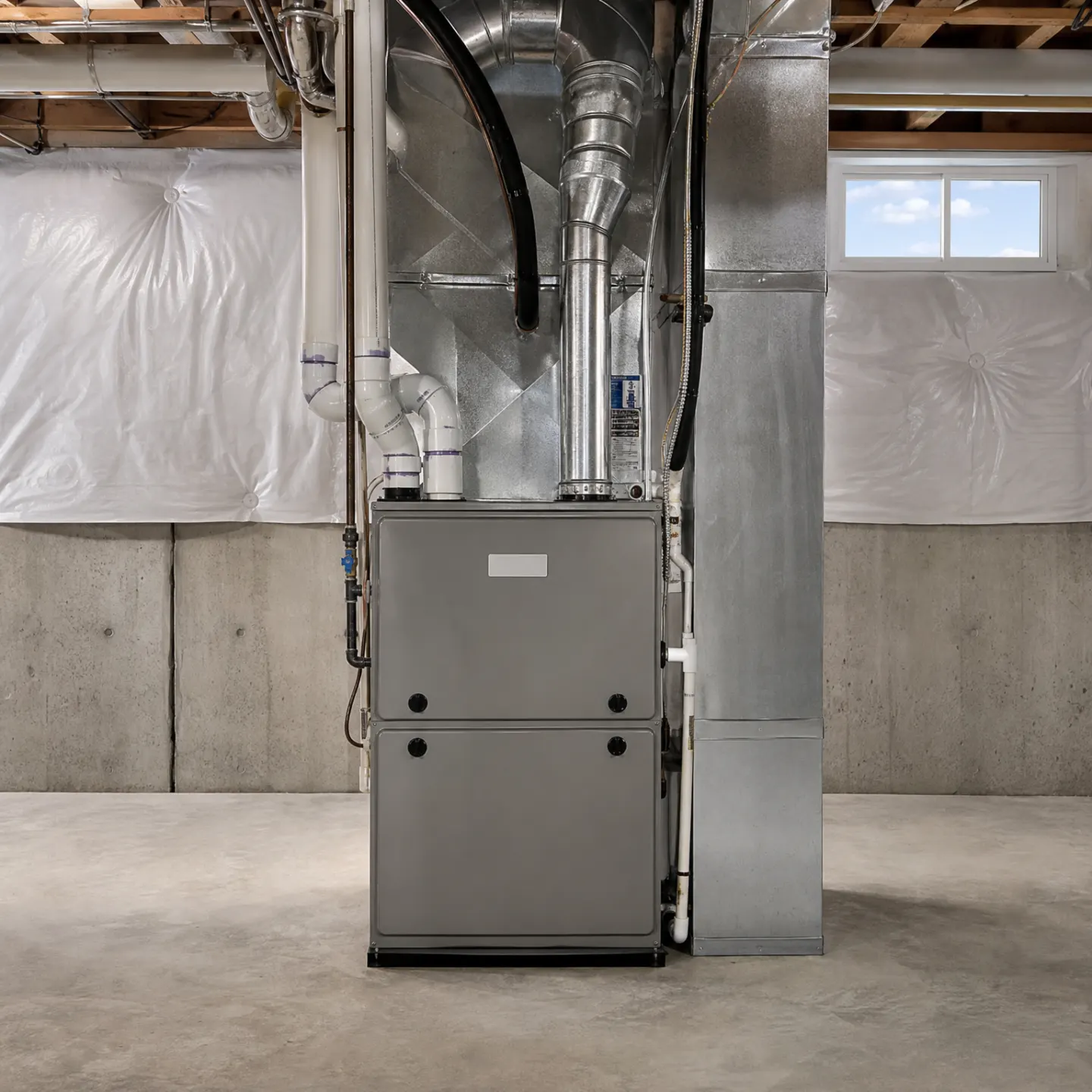
A gray residential gas furnace installed in an unfinished basement, connected to sheet-metal ductwork and PVC pipes.

Sizing is a calculation, not a guess

Size isn't picked off a chart that matches furnace to square footage. A contractor works out a heat loss calculation for the house: how much heat escapes through the walls, the windows, the ceiling, the floor above the basement, on the coldest day the place sees. That number tells you the output the furnace actually needs. Oversize it and the furnace short cycles, blasting heat and shutting off before it ever runs long enough to warm the place evenly or pull moisture out of the air. Those short bursts also put more wear on the ignition system and the blower than a full, steady run would. Undersize it and the furnace runs constantly in the cold stretches, struggling to keep up and still leaving rooms short. Either mistake shows up in how the house feels and in how hard the equipment has to work to get there. A correctly sized furnace runs in longer, steadier cycles, which is also what lets it hit its rated efficiency instead of falling short of it.

The rating is measured a specific way

That percentage comes from a standard test, burning gas at a steady rate and measuring how much heat ends up in the house versus how much goes out the flue. It assumes clean burners, a properly set gas valve, and ductwork that isn't leaking air out before it reaches a room. The number on the label is what the furnace is capable of, not what it's guaranteed to deliver.
What you get depends on the install

A furnace rated to turn most of its fuel into heat can still fall short of that if the ducts leak, the airflow across the heat exchanger is wrong, or the gas pressure isn't set correctly at startup. None of that shows up on the label. It shows up in how long the system runs to hold a temperature, and in whether the rated efficiency is the efficiency you're actually getting.

Lancaster County's weather record matters for where the installer puts the outdoor equipment and how the house handles an outage, not just for the furnace itself. If you're pairing this furnace with an AC unit, give the installer room to place the condenser somewhere it isn't catching runoff, falling ice, or debris off the roofline. A furnace that runs on electric ignition and a blower motor needs power to start and keep running, so an outage takes your heat down along with your lights. Worth asking the contractor what backup options exist for a home that loses power for a day, since 15% of Pennsylvania households did in 2024. None of this changes how the furnace is sized or installed, but it's worth deciding before the unit goes in, not after a storm.

Installation day starts with the old furnace coming out, along with the flue pipe, the gas line connections, and whatever ductwork transitions don't fit the new unit. The installer sets the new furnace, levels it, and connects the gas line, the venting, and the return and supply plenums. Every duct joint gets sealed, since a leaky seam right at the furnace loses heat before it ever reaches a room. The gas valve gets set to the correct pressure, not left at whatever it arrived at, because that pressure determines how clean and complete the burn is. Once it's running, the installer checks the temperature rise across the heat exchanger against the manufacturer's range. That number says whether the blower is moving the right amount of air for the heat the furnace is putting out. A furnace that fires up but never gets checked this way can run for years at the wrong airflow without anyone knowing.