


Two white multi-story colonial houses with lit windows and black shutters photographed at night, fronted by a stone wall.

Furnace Installation in York, PA

Tell us about the job

Takes about a minute. No obligation.

Step 1 of 3: Equipment

Gas heats a little over half the homes in York County, and that's the furnace you're likely replacing. A gas furnace needs a gas line already run to it, a vent for exhaust, and a way to drain condensate if it's a high-efficiency model. If your old furnace ran on gas, the new one can usually go in the same spot, using the same gas line and vent. That keeps the install straightforward. Switching fuels is a bigger job. Going from oil to gas means running a new gas line, capping the old tank, and possibly rerouting the vent.

8 months
October through May, your furnace is on duty
24°F
the average winter night it heats against
51%
of homes here heat with gas, so most furnaces here burn gas
80% AFUE
the federal minimum any new unit must meet
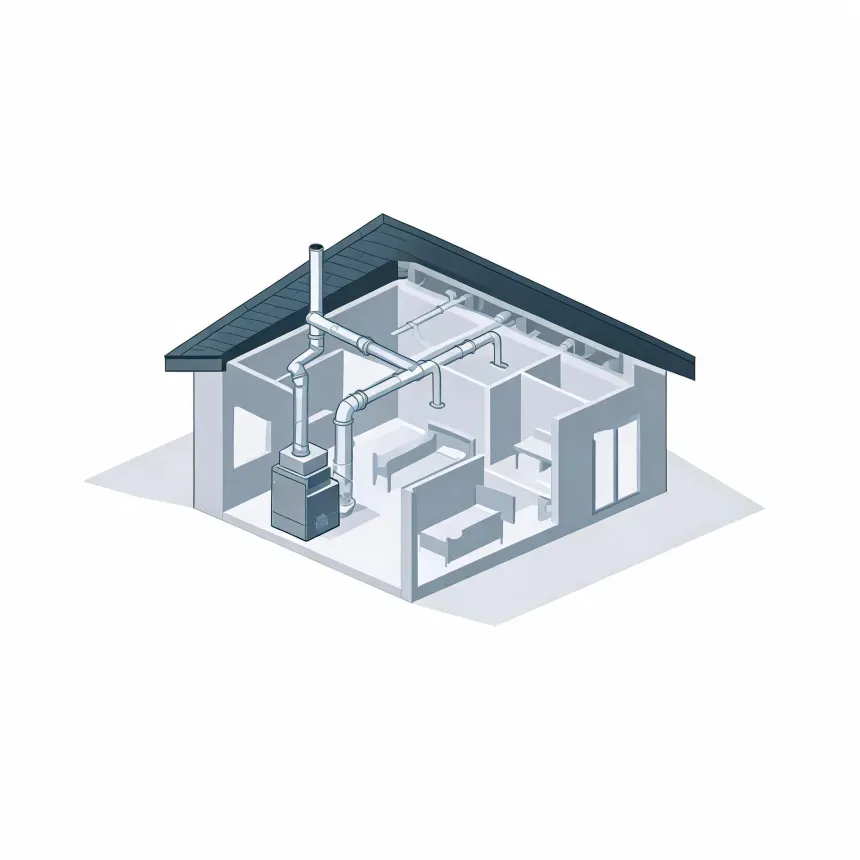
Isometric cutaway illustration of a small single-story house showing interior rooms, a furnace unit with a flue, and connected ductwork running below the dark gabled roof.
Your furnace works hardest from November through March.

NOAA nClimDiv, 1991–2020 normals

Heat runs October through May in York County.

September is the month to get a new furnace in, before the cold puts you in a hurry.

A standard furnace sized right fits these homes, old or new

Half the homes here were built by 1976
Heat runs October through May
Winter nights average 24°F

York County sits in climate zone 4A, which asks real work of both heating and cooling systems over the year. Any gas furnace installed here has to hit at least 80 percent AFUE, the federal minimum that applies right now. That minimum is set to rise well above it in a few years, but nothing installed today needs to meet the higher number. A federal tax credit is available for furnaces that beat the minimum, worth checking into if you're deciding between a standard model and a higher-efficiency one.

Go with the standard fit

A standard size and efficiency fit fine here. There's no local reason to go bigger or pricier.

Find a contractor
A man in a cap, gray long-sleeve shirt and brown work pants walks up porch steps toward a dark blue front door, carrying a canvas tool bag with tools in its side pockets, beside a potted shrub.
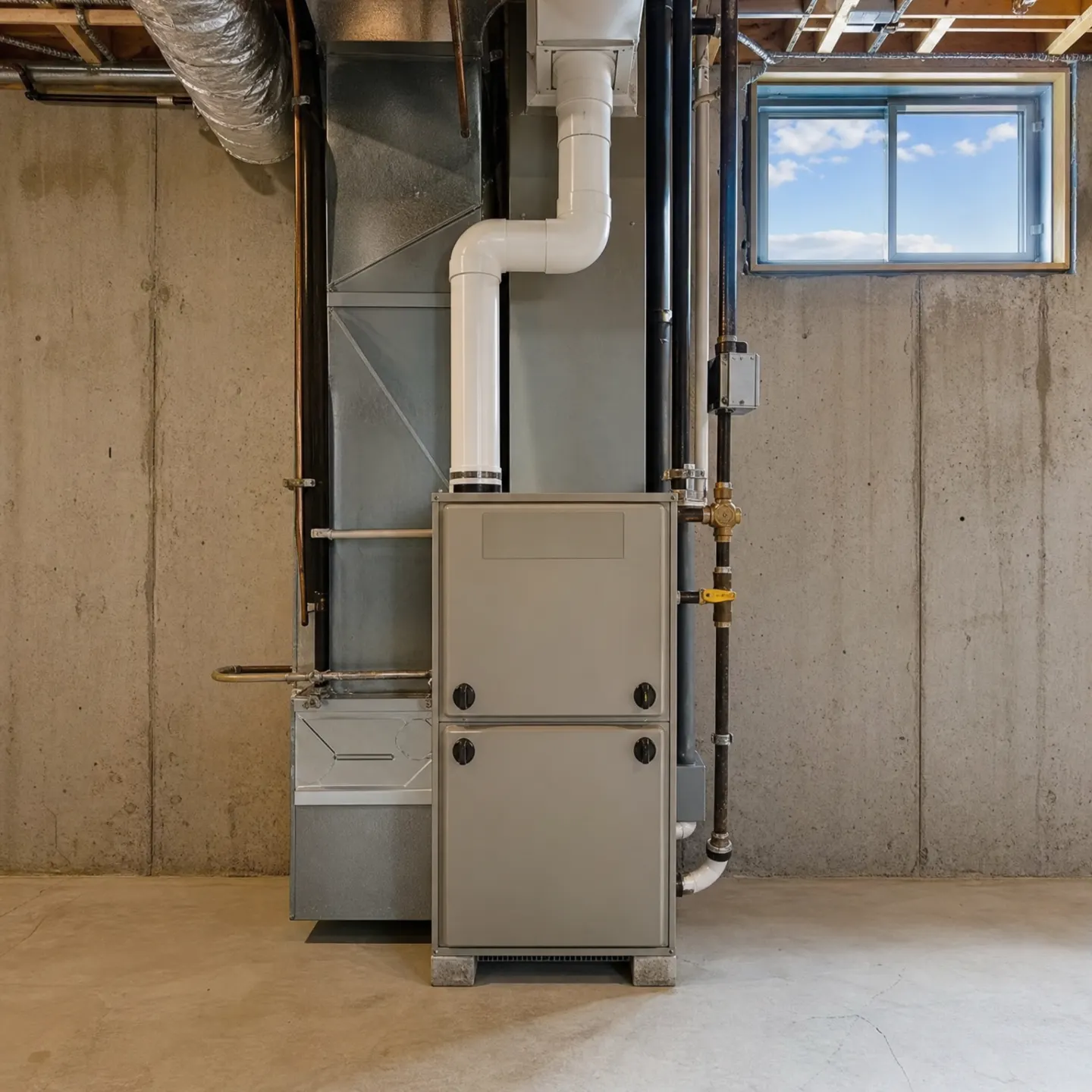
A gray gas furnace with attached ductwork and piping installed in an unfinished concrete basement.

Sized to the house, not the old unit

A bigger furnace doesn't heat a house faster or better. It satisfies the thermostat and shuts off before the heat has spread evenly through the rooms, then kicks on again a few minutes later. That short cycling puts the most wear on the igniter and the blower motor, since both take the hardest hit at startup. A furnace that's too small runs the opposite way, in long stretches that never quite catch up to the thermostat setting. The right size is worked out with a load calculation, a room by room look at window area, insulation and ceiling height, not a guess based on square footage or whatever the old unit happened to be. Get the size right and the furnace runs longer, gentler cycles and wears evenly over its life.

Ask what AFUE rating comes with the quote

Contractors can quote the same furnace size and mean different things by it. AFUE tells you how much of the fuel turns into heat for the house versus going out the vent. Get the number in writing, not just 'high efficiency' or 'standard.' It changes what venting the job needs and whether a condensate drain has to be added.

Ask to see the load calculation, not just a square footage number

A contractor who sizes a furnace off square footage alone is guessing. A room by room load calculation accounts for windows, insulation and ceiling height, and it's the only way to know the furnace matches the house instead of matching the unit it's replacing. If nobody mentions doing one, ask for it before you agree to a size.

An unfinished basement featuring concrete block walls, exposed floor joists, a bare concrete floor, and a forced-air furnace with a large metal exhaust duct in the corner.

A high-efficiency gas furnace would save about $120 a year to run in York County compared with a gas furnace.

  • A high-efficiency gas furnace$570 a year
  • A gas furnace$690 a year

Estimates for a typical York County home, from EIA household energy data, Pennsylvania fuel prices and NOAA climate normals. Your home will differ.

Installation day starts with the old furnace coming out, along with the vent connector and any ductwork that doesn't match up with the new unit. The gas line gets connected and pressure tested before anything runs, since a leak missed now is a problem for as long as the furnace sits there. Electrical and the thermostat wire get hooked up next, and if it's a high-efficiency model, a condensate line goes in to carry off the water it produces. Once it's buttoned up, the furnace gets fired and run through several cycles, checking the flame, the temperature rise through the plenum, and the airflow at the registers. A combustion analyzer gets used to check the exhaust itself, which is the only real way to know the furnace is burning gas cleanly and not spilling anything back into the house. The last step is going room to room to check that heat is actually reaching them, not just trusting the furnace to do it on its own.