


A row of two-story wood-sided houses with porches and gabled roofs behind a white picket fence, with a mowed lawn in front and large tree branches overhanging from the left.

Furnace Repair in York, PA

Tell us about the job

Takes about a minute. No obligation.

Step 1 of 3: Equipment

Furnace here runs from October through May, with overnight lows averaging 24°F in December and January. That is a long stretch to depend on a furnace, but it is not a hard one. Nothing about York winters pushes a furnace harder than it was built to work. When one starts short cycling, won't light, or blows cold air, the cause is usually something a tech sees all the time. A failed igniter. A dirty flame sensor. A clogged filter choking the airflow. Worth having someone look at it rather than guess, since the fix is usually straightforward once the real cause is found.

8 months
October through May, your furnace is on duty
24°F
the average winter night it heats against
51%
of homes here heat with gas, so most furnaces here burn gas
15 winter storms
in ten years, the nights a failure hurts most
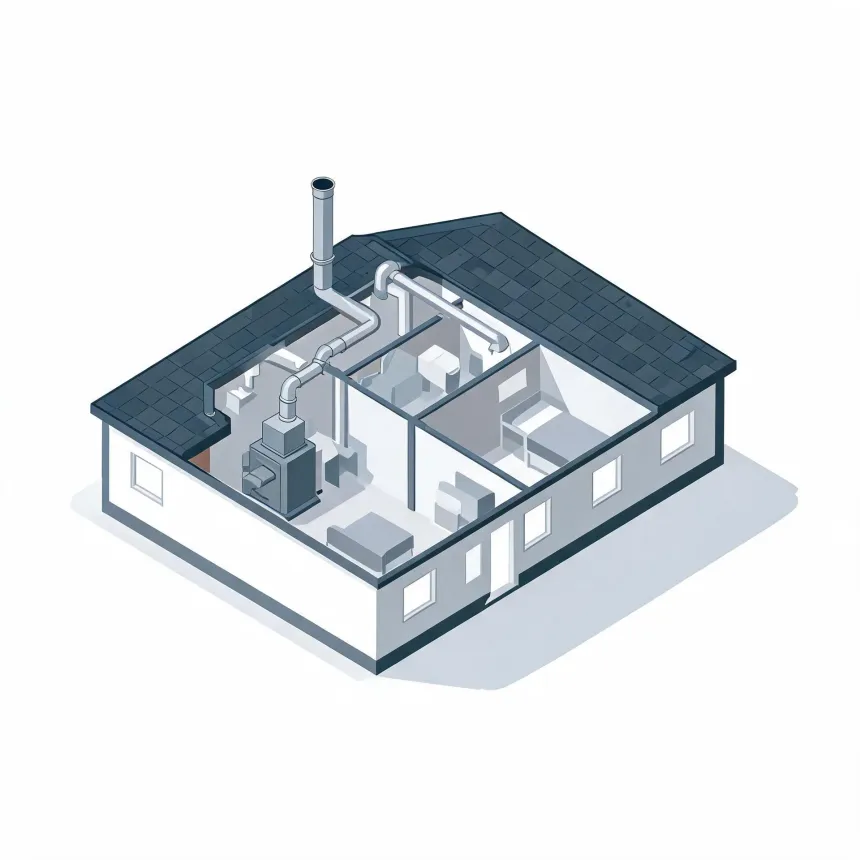
Isometric cutaway illustration of a single-story house with a dark shingled roof, showing interior rooms with furniture and a furnace connected to ductwork and a flue pipe extending above the roof.
Your furnace works hardest from November through March.

NOAA nClimDiv, 1991–2020 normals

September is the quiet month before York County furnaces start up for the year.

Get a furnace checked in September and a weak igniter or a cracked flame sensor gets found before October cold puts it to the test.

Half the homes here are old enough to need a furnace checked, not replaced

Half the homes here were built by 1976
Heat runs October through May
Winter nights average 24°F

Most furnace failures trace back to one of a handful of parts, and the igniter is the one that goes most often. It's a thin strip that heats up to light the burners every single cycle, and like any part that heats and cools over and over, it eventually cracks. A flame sensor fails a different way. It doesn't break so much as coat over with a film from normal combustion, and once it can't sense the flame it shuts the furnace down as it's supposed to. Blower motors wear out from the bearings running for years, and you'll usually hear that coming before it quits outright. Capacitors that help start the blower weaken slowly too, so the motor strains harder each time it kicks on. None of these are rare or strange. They're the ordinary parts that wear out in any furnace, and a tech checks them in roughly that order because that's the order they tend to fail in.

A furnace problem in York is usually just a furnace problem

York County has had its share of wind, hail and winter storms. None of that is what wears out a furnace. A furnace fails because a part inside it wears out or fouls up, not because of what the weather did outside last week. So if yours won't light or is blowing cold, the cause is almost always something ordinary a tech can find and fix.

Find a contractor
A man in a dark long-sleeved shirt and tan work pants, seen from behind, carries a canvas tool bag up porch steps toward a blue paneled front door of a house with light lap siding and a potted flowering plant.
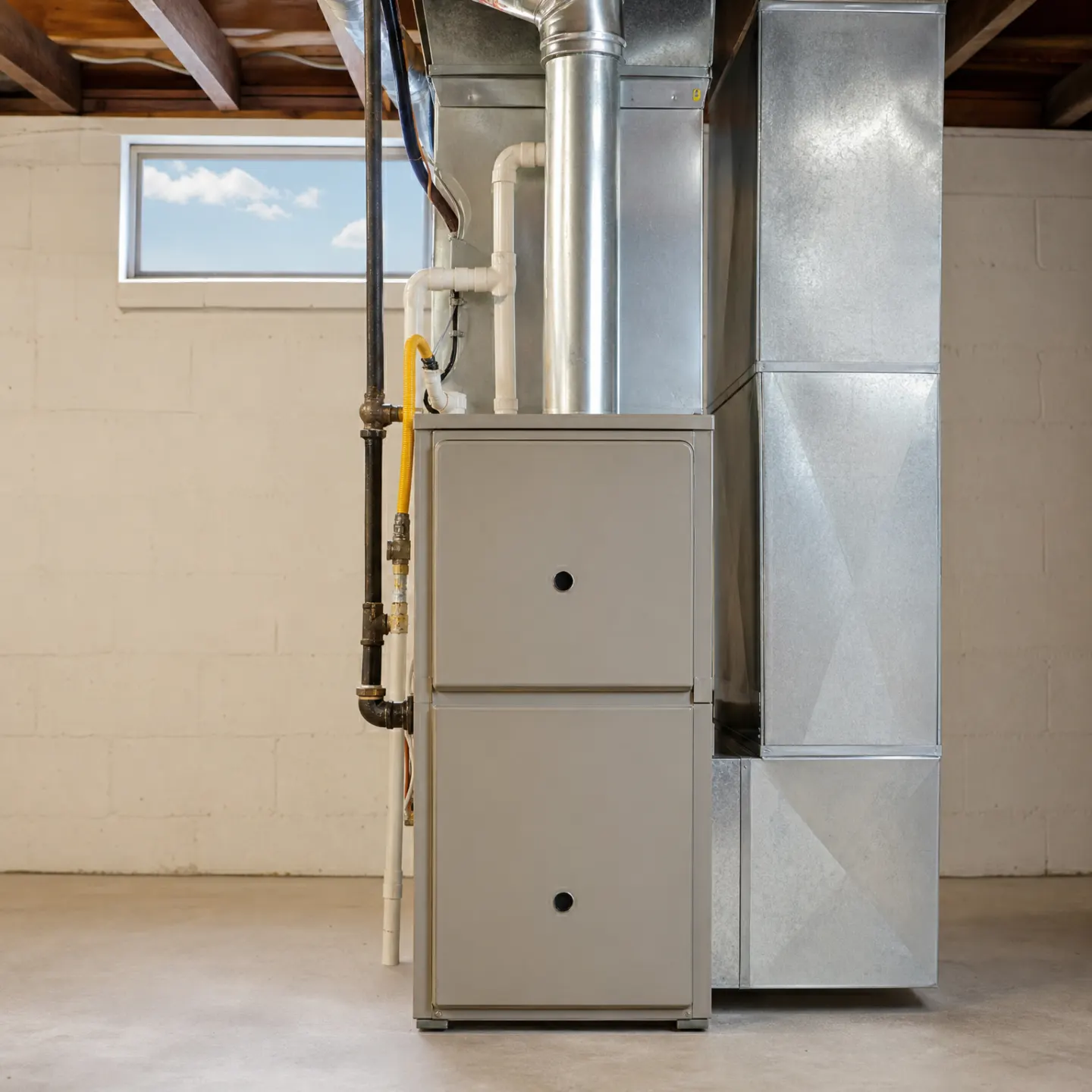
A gas furnace with attached ductwork, gas piping, and condensate lines installed in a concrete-block basement.

A small problem left running rarely stays small

A furnace that won't light cleanly or is short cycling is already telling you something is wrong. Keep running it and that one bad part usually drags another part down with it. A cracked flame sensor that lets the burner shut off too soon makes the furnace fire over and over, and every extra ignition cycle wears the igniter a little more. A dirty flame sensor that finally fails completely will shut the furnace down safely, but by then it has usually been misreading the flame for a while, cycling the burner on and off far more than it should. A blower motor that is starting to go will run hotter and strain harder each time it starts, and heat is what kills a motor winding. Airflow problems compound the same way. A clogged filter restricts the air moving across the heat exchanger, so the exchanger runs hotter than it was built to. A heat exchanger that overheats again and again is the one part in a furnace you do not want to gamble on. None of this happens on day one. It happens because the furnace kept running with the first problem instead of getting looked at when it first acted up.

What you can check yourself

Shut the furnace off and pull the filter. Hold it up to a light. If you can't see light through it, that's airflow the furnace isn't getting, and that alone can cause a lot of what looks like a bigger problem. Check that the thermostat is set to heat and the setting is actually above room temperature, since a bumped switch or a dead thermostat battery looks exactly like a furnace failure but isn't one. Look at the furnace door panel too. Most furnaces have a safety switch that keeps the blower from running if the panel isn't seated right, and a panel that's slightly loose will shut the whole thing down.

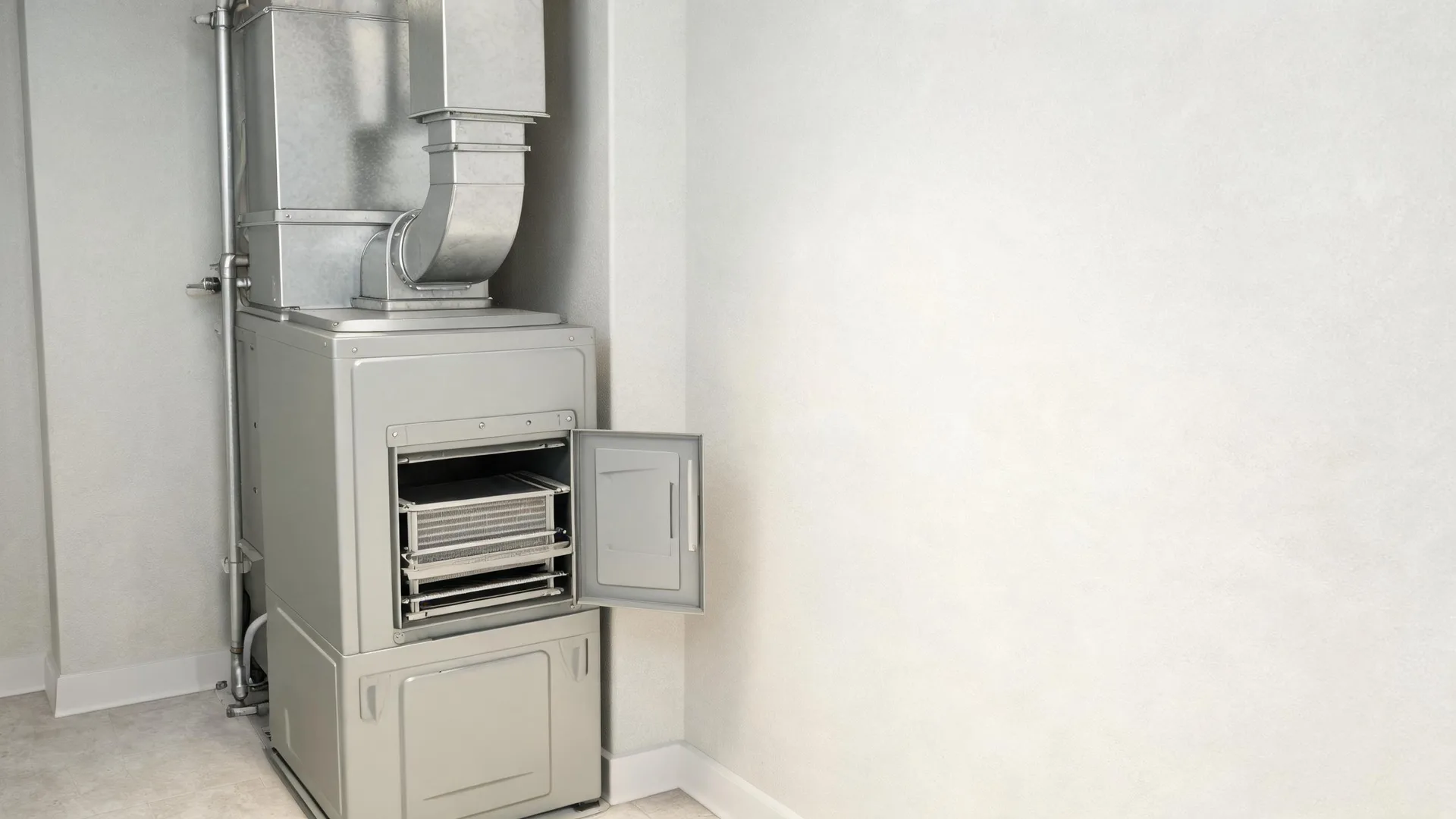
What to leave alone

Don't pull the burner compartment open or go near the flame sensor or igniter yourself. Those parts are simple for a tech to clean or swap but easy to damage if you don't know what you're handling. A furnace that smells like gas isn't a troubleshooting job at all. Don't flip switches, don't go looking for the source. Get out, shut off the gas supply if you know where the valve is, and call someone. That's the one furnace symptom that isn't a wait and see.

A gray forced-air furnace with metal ductwork stands in an unfinished basement with exposed wooden joists, concrete walls, and a single hanging light bulb.

A new furnace would cut about $140 a year off heating for a typical York County home.

  • A new high-efficiency furnace$570 a year
  • An older furnace$710 a year

Estimates for a typical York County home, compared with an older unit built to the previous federal minimum, from EIA household energy data, Pennsylvania fuel prices and NOAA climate normals. Your home will differ.

Repair makes sense when one part has failed and the heat exchanger is sound.

Replacement makes sense when the heat exchanger is cracked or the furnace keeps needing parts.

At some point a tech will tell you a furnace is fixable but not worth fixing, and that's not a dodge. A cracked heat exchanger is usually that moment. It can be replaced, but the part is expensive and the labor to get at it is worse, so you're paying most of a new furnace's price to keep the old one's cabinet. Age matters less than what's actually failing. A blower motor or an igniter is just a part, and swapping it brings the whole furnace back to normal. But once the heat exchanger or the control board is going, you're not fixing a furnace anymore, you're extending one, and the next part tends to fail not long after. A tech who's actually looked at it will tell you which situation you're in. That answer is worth more than a guess based on how old the unit is.