



A row of two-story wood-sided houses with porches and gabled roofs behind a white picket fence, with a mowed lawn in front and large tree branches overhanging from the left.

Mini Split Installation in York, PA

Tell us about the job

Takes about a minute. No obligation.

Step 1 of 3: Equipment

York County saw 205 damaging wind events between 2015 and 2024, along with 27 hail events and 5 tornadoes. That outdoor unit sits outside through all of it, taking wind-blown debris and hail on the housing and coil fins. Statewide, 15% of households went at least a day without power in 2024. A mini-split won't run without power, and neither will a furnace that needs electricity for its blower and controls. Anyone installing one here is choosing where it sits and what backs it up, not just what size to buy.

8 months
October through May, your system heats
3 months
June through August, it cools
24°F
the average winter night it heats against
83°F
the average summer afternoon it cools against
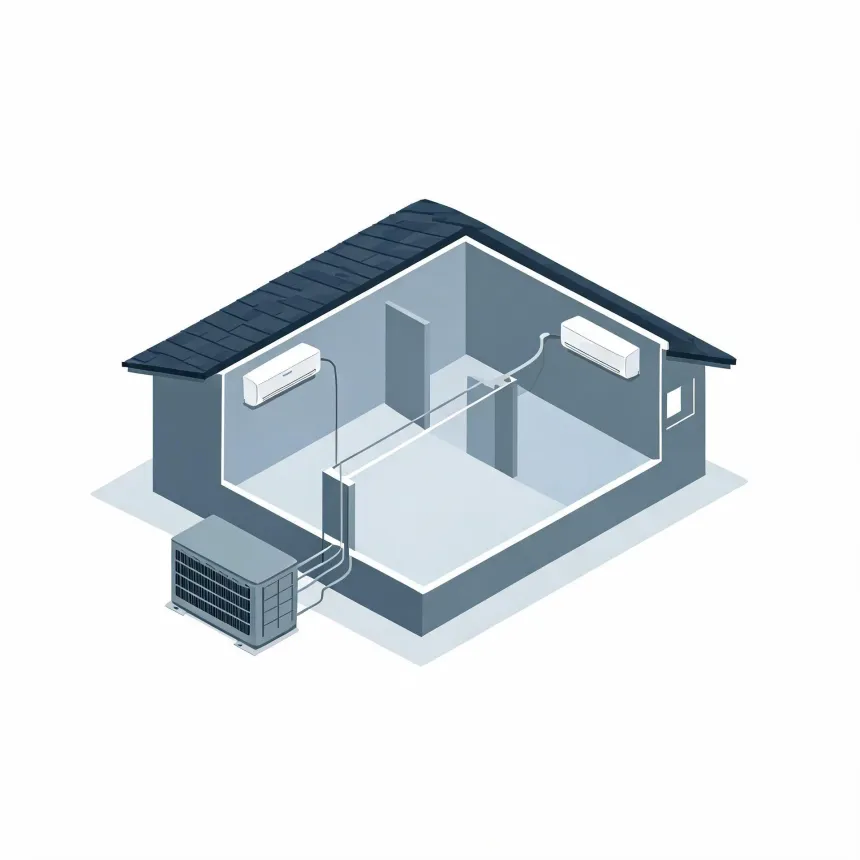
Isometric illustration of a cutaway house showing two wall-mounted mini-split indoor units connected by line sets to a single outdoor condenser beside the exterior wall.
Your system heats October through May and cools June through August.

NOAA nClimDiv, 1991–2020 normals

Gas heats just over half the homes in York County.

A mini-split going into one of these houses is usually added alongside the furnace, not replacing it.

Three months of cooling a year is worth planning for, not rushing into

Cooling runs June through August
Summer afternoons average 83°F
205 damaging wind events from 2015 to 2024

York County falls in climate zone 4A, a mixed zone that asks real work of both heating and cooling systems. Any mini-split installed here now has to meet the federal split-system heat pump minimums: at least 14.3 Btu of cooling delivered for every watt-hour of electricity used, and at least 7.5 Btu of heat for every watt-hour in winter. That standard applies to units built from January 2023 on, and it sets a floor, not a ceiling. It narrows what a contractor can legally install, but it doesn't tell you which model handles this county's wind and hail, or what happens to it when the power drops.

Plan for the outage before you plan for the heat

Where the outdoor unit goes and what keeps it running matters as much as the unit itself. A spot with some cover from wind-blown debris is worth more here than it is in most places. If the power drops, a mini-split stops, and so does a furnace that relies on electricity for its blower. Worth settling before install day, not after.

Find a contractor
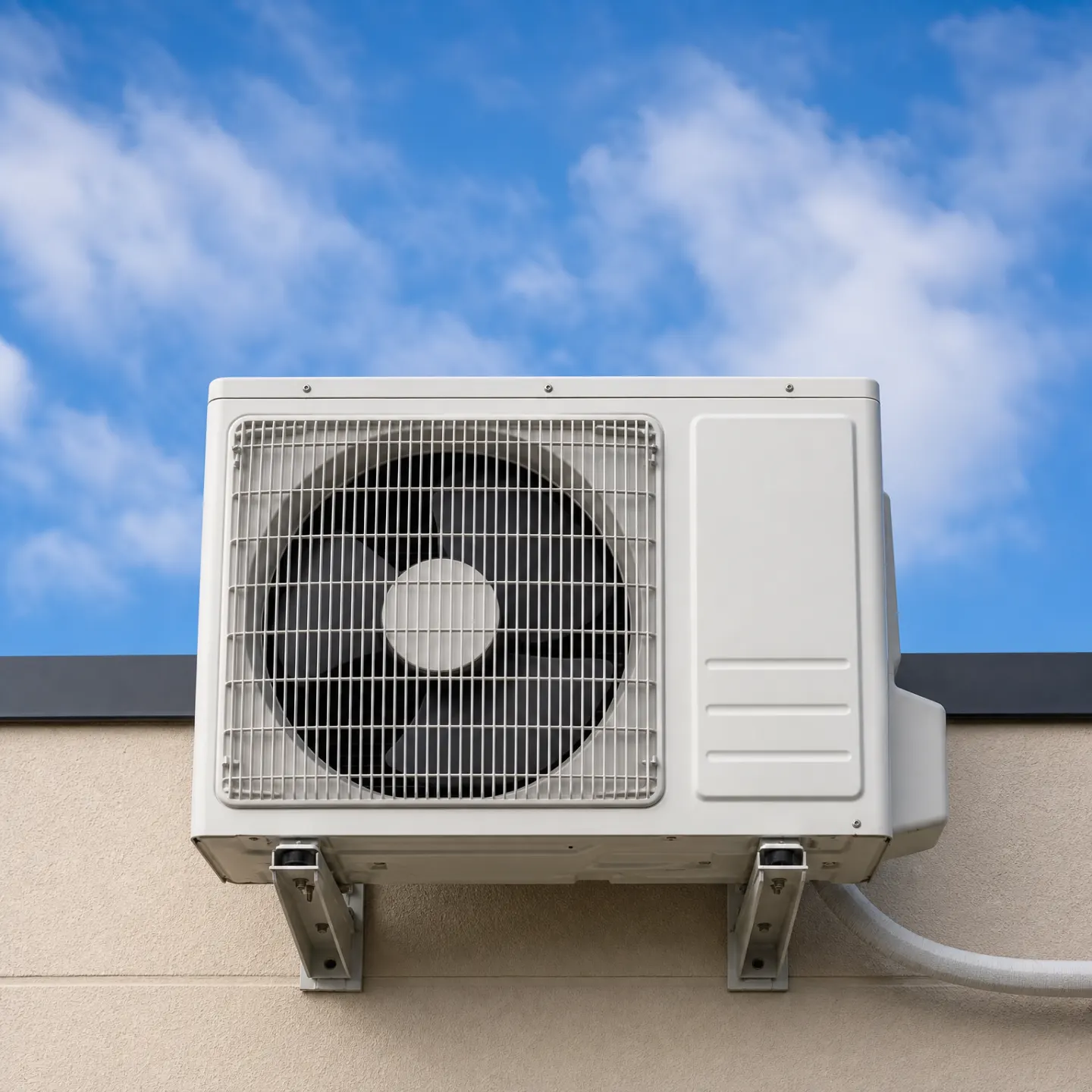
A white mini-split air conditioner outdoor condenser unit mounted on metal brackets against a beige stucco exterior wall, with a blue sky and scattered clouds in the background.

The old equipment has to come out right, not just come out

Whatever is heating or cooling the space now doesn't just vanish when a mini-split goes in. If it's a window unit or a wall unit, it comes out, and the opening behind it needs to be sealed properly or it becomes a draft and a water path. If there's an older ducted system staying in place alongside the new mini-split, that system still needs its own care on its own schedule. The two don't share a filter or a maintenance plan just because they're heating the same house. If the old equipment is being fully retired, the refrigerant inside it has to be recovered before anything gets disconnected. That's not optional and it's not something to let happen by accident. A contractor pulls it out with a recovery machine and handles it the way the refrigerant type requires. Copper line sets and electrical whips from the old setup sometimes get reused and sometimes don't, depending on their condition and where the new lines need to run. None of that gets decided until someone's looked at what's actually there.

Ask what each zone is actually rated to do

A mini-split system is sized zone by zone, not as one number for the whole house. Ask what each indoor head is rated to deliver in heating and in cooling, not just the combined total for the outdoor unit. A head that's undersized for its room will run constantly and still lose ground on the coldest or hottest days. One that's oversized cycles on and off too fast to pull moisture out of the air.

Ask how the system behaves when it loses power

Every mini-split needs electricity to run, and none of them restart exactly the same way. Ask what happens to the settings and the schedule when power comes back after an outage, and whether the outdoor unit needs a manual reset or comes back on its own. If the installer is also pairing it with any kind of backup power, ask whether that backup is sized to start the compressor, not just keep the indoor head's display lit.

Sizing a mini-split starts with a load calculation, not a tape measure around the room. A contractor works out how much heat the space gains in summer and loses in winter, using the square footage, the window area, the insulation, and how the room is used. Guessing by room size alone gets it wrong in both directions. Go too small and the head runs flat out on the worst days and still can't hold the temperature you set. Go too big and it cools or heats the air fast, shuts off, and leaves the moisture behind, so the room feels clammy even though the thermostat says it's satisfied. Short cycling like that also puts more wear on the compressor over time than running a correctly sized unit steadily would. The right size is the one that runs long enough to actually dry the air and hold steady, not the one with the biggest number on the spec sheet.

Installation day starts with the outdoor unit and the line set, not the indoor head on the wall. The installer mounts the outdoor unit on a pad or bracket, runs refrigerant lines and a condensate drain through a small hole drilled in the wall, and connects the electrical whip. That line set gets evacuated with a vacuum pump before any refrigerant moves, because trapped air and moisture in the lines will wreck the compressor over time. Once the lines hold a vacuum, the system gets charged, and the indoor head goes up on its mounting plate and gets leveled so the condensate actually drains instead of pooling. Last comes the startup check: airflow at each head, the temperature split between the air going in and the air coming out, and a look at how the system responds when it's told to heat and told to cool. None of that can be rushed through in an afternoon if it's being done right.