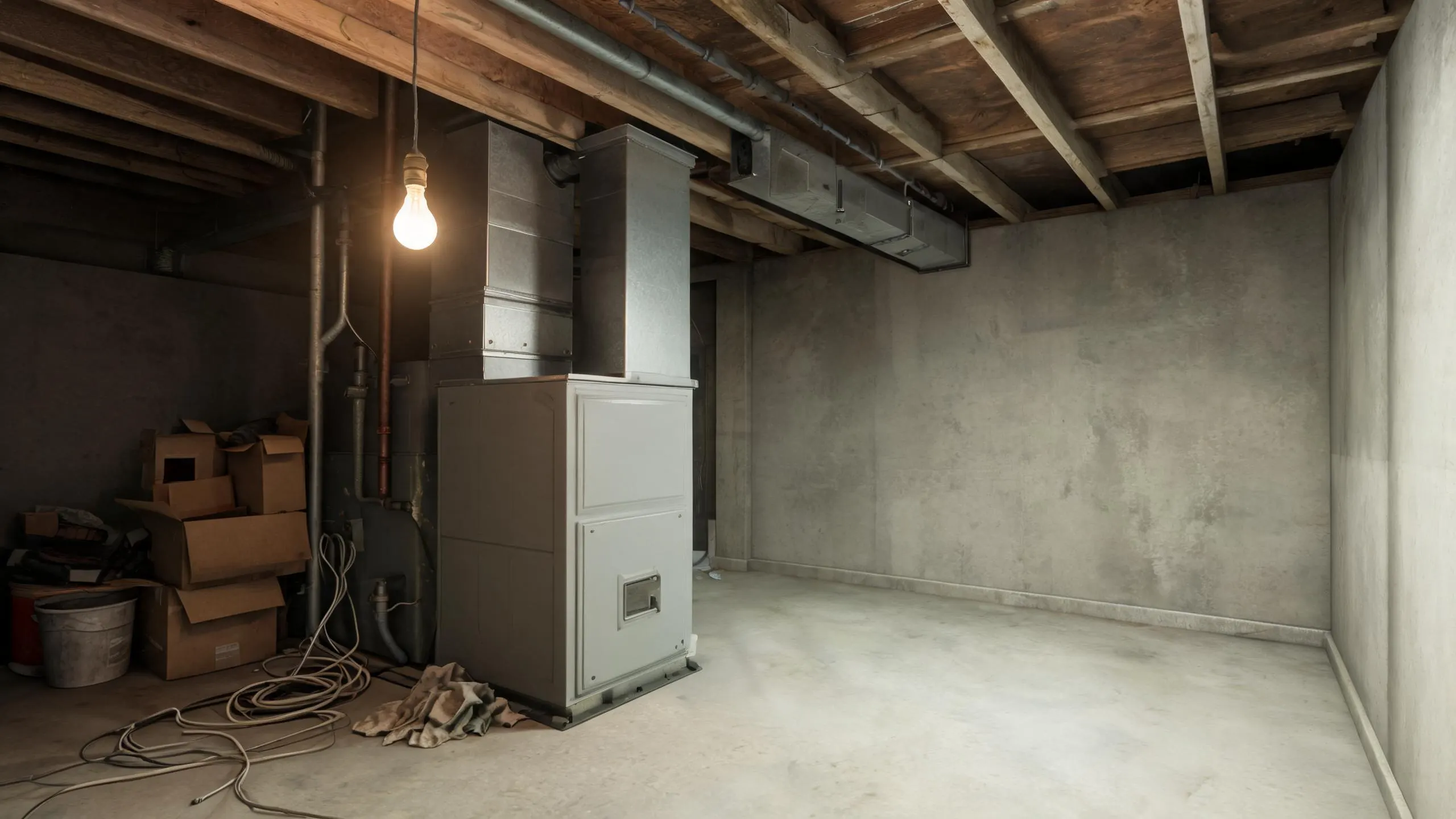

An unfinished concrete basement containing a metal HVAC air handler, exposed wooden ceiling joists with sheet-metal ducts, a hanging bare bulb, copper pipes, and stacked cardboard boxes.

Furnace Repair in Phoenixville, PA

Tell us about the job

Takes about a minute. No obligation.

Step 1 of 3: Equipment

Chester County recorded 543 severe weather events between 2015 and 2024. Damaging wind was behind most of that, 478 times, and that kind of wind throws branches and debris at anything sitting outside. Add 25 hail events and 3 tornadoes in the same stretch, and outdoor equipment around here has taken some hits. Winter storms counted too, 32 of them, the kind of heavy snow and ice that piles up around a unit. None of that means your furnace is damaged. It means if something nearby took a hit, the furnace is worth a look even if it still fires up fine.

7 months
October through April, your furnace is on duty
25°F
the average winter night it heats against
32 winter storms
in ten years, the nights a failure hurts most
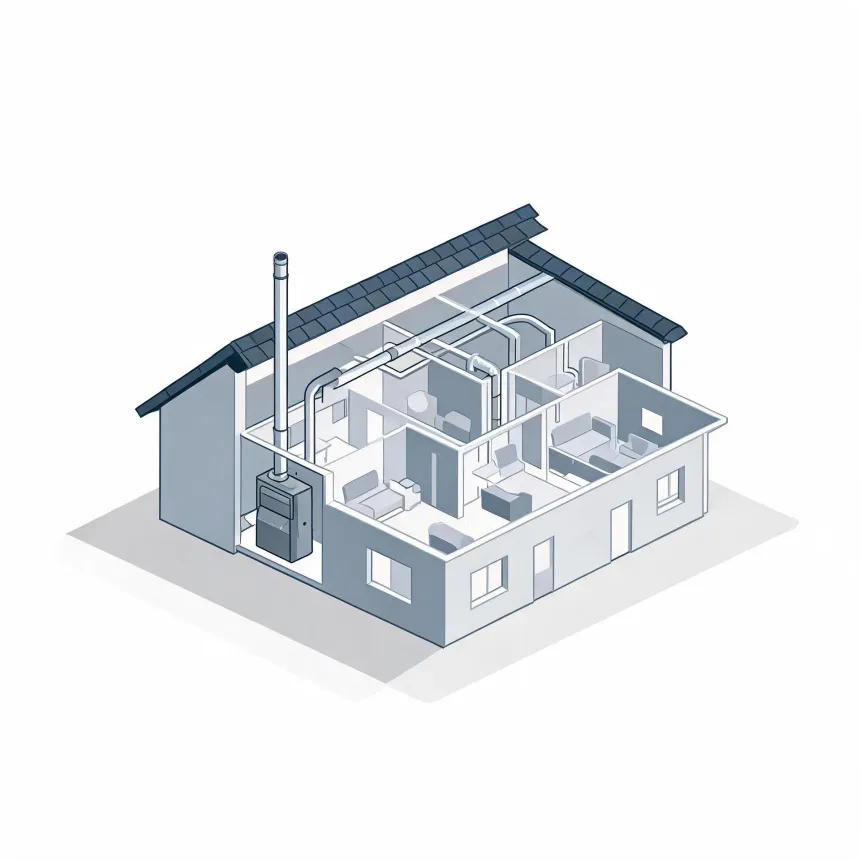
Isometric cutaway illustration of a single-story house in gray tones, showing interior rooms with furniture, ceiling ductwork, and an exterior furnace unit with a tall flue pipe.
Your furnace works hardest from November through March.

NOAA nClimDiv, 1991–2020 normals

Furnaces in Phoenixville start working in October and run through April.

A furnace that sat quiet since spring finds its weak part fast once the cold hits.

Half these homes were built in 1983 or later, so a lot of these furnaces aren't old

Half the homes here were built by 1983
Heat runs October through April
Winter nights average 25°F

If your furnace came with a newer house, that still doesn't tell you the age of the furnace itself. Furnaces get replaced well before a house does, so a newer home might have an older unit or a newer one. Check the nameplate inside the access panel for the install date before deciding anything. If the furnace turns out to be young, a repair like a control board or an igniter is worth doing. There's no reason to replace a unit that has most of its life ahead of it.

If the power went out this year, get the furnace checked before winter needs it

A furnace doesn't have to sit outside to take damage from what happens outside. Power cuts during a storm, and a furnace that depends on electronics to ignite won't fire until it's back. If the outage ran long, or a branch came down near the vent or intake, get the furnace checked before you assume it's fine.

Find a contractor
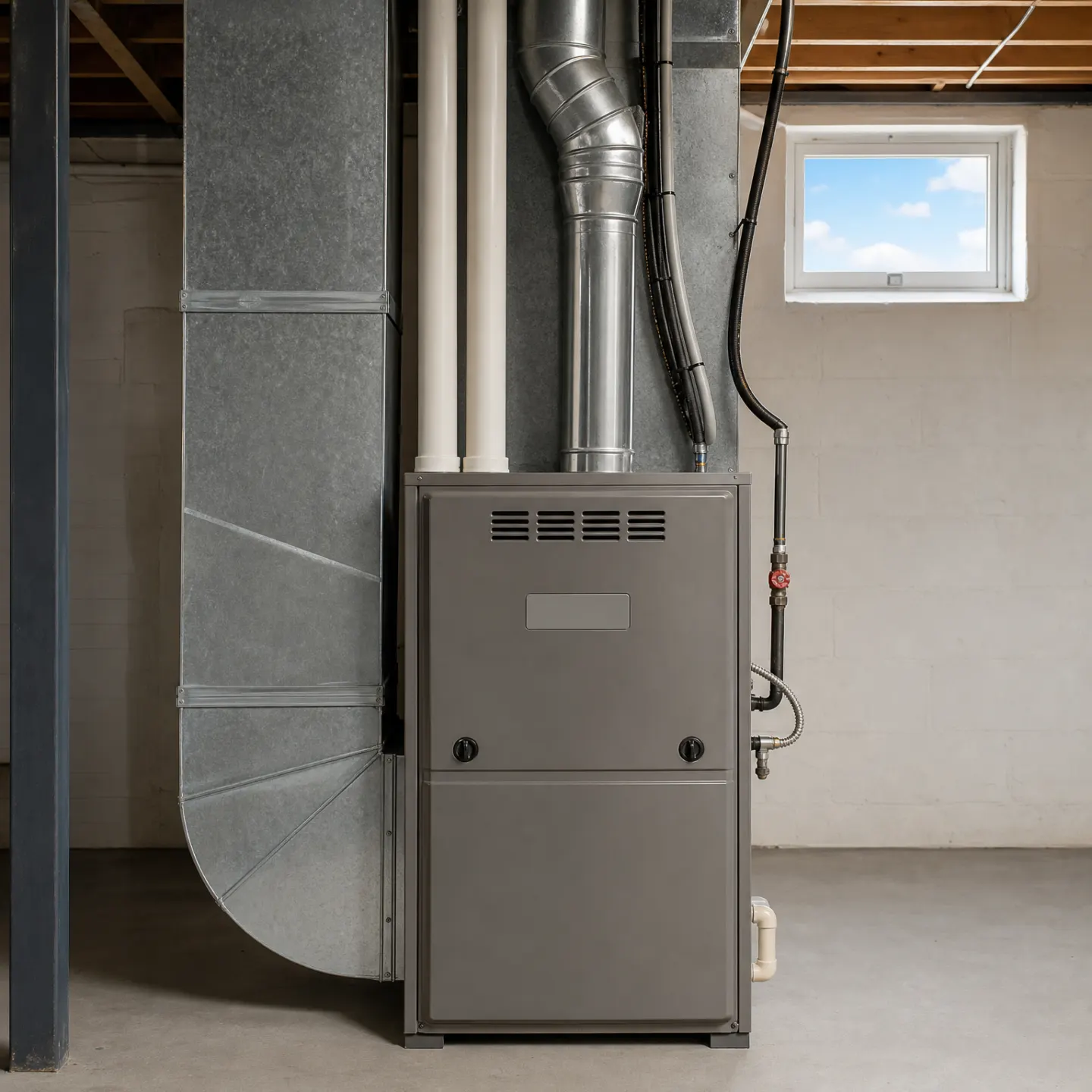
A gray residential gas furnace installed in an unfinished basement, surrounded by ductwork, a metal flue pipe, and a gas supply line.

Running it through a problem rarely ends well

A furnace that's struggling doesn't fail all at once. A cracked heat exchanger gets worse with every cycle of heating and cooling metal. A blower motor with a bad bearing runs hotter and louder until it seizes. A pressure switch that's barely making contact will keep working until the day it doesn't, usually on the coldest night of the year. Running a furnace through a problem instead of calling it in doesn't save the part, it uses up what's left of it. Some failures are safety issues too, not just repair issues: a cracked heat exchanger can let exhaust into the air a furnace is supposed to be warming. If the flame looks wrong, the furnace is short cycling, or you smell something off, that's not the time to wait and see.

What you can check yourself

Look at the thermostat first. Make sure it's set to heat and the temperature is actually above room temperature, and change the batteries if it uses them. Check the air filter and swap it if it's gray or clogged, a blocked filter can starve the furnace of airflow and shut it down. Go to the breaker panel and look for a tripped breaker on the furnace circuit. If the furnace has a standing pilot, check whether it's lit. Make sure the furnace switch, the one that looks like a light switch near the unit, hasn't been bumped off.

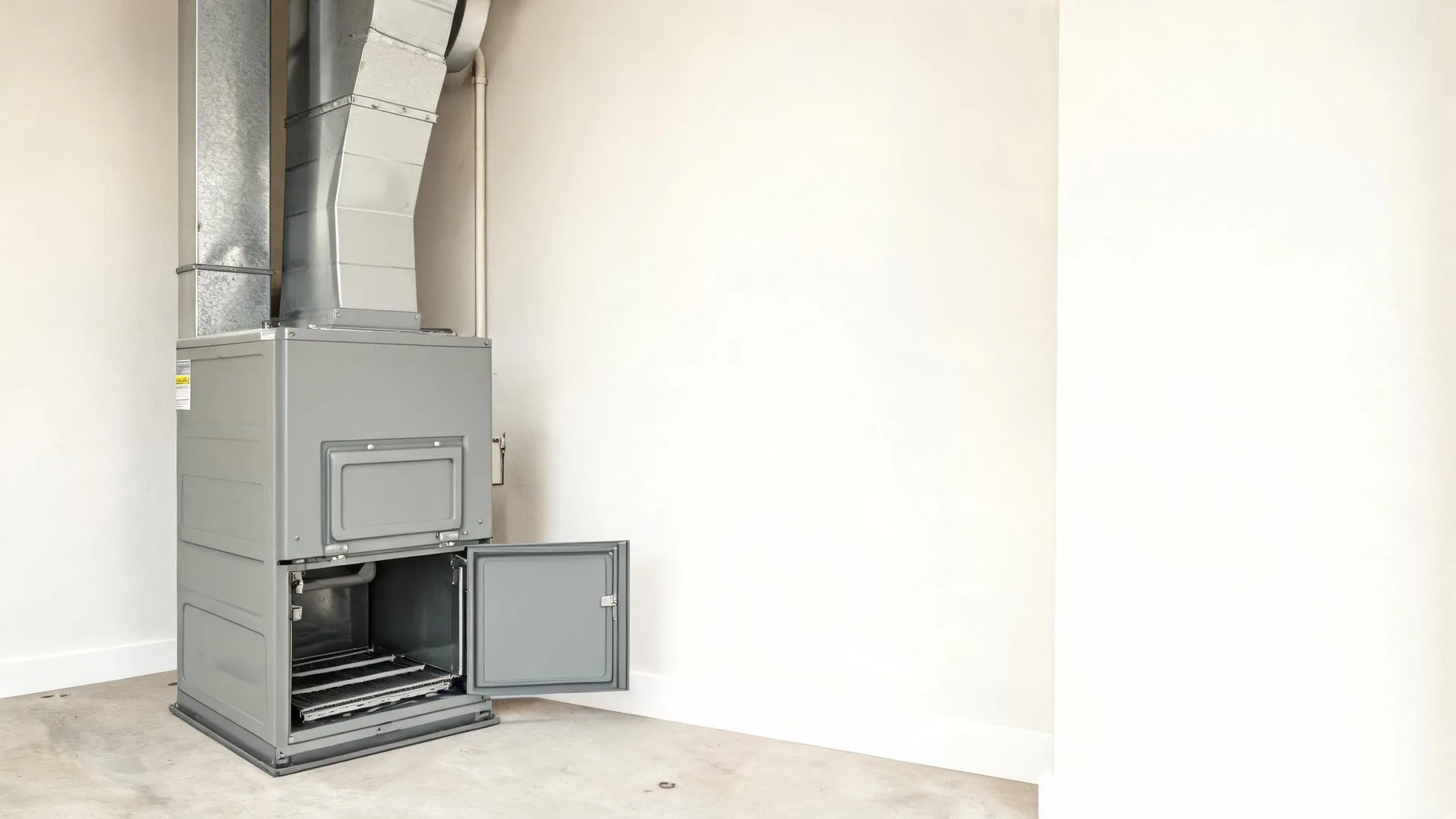
What to leave alone

Don't open the burner compartment or go near the gas valve. Don't keep resetting a furnace that shuts itself off repeatedly, that shutdown is usually a safety switch doing its job. Don't ignore a gas smell, leave the house and call the gas company from outside. If you've checked the thermostat, the filter, and the breaker and it still won't run, the next step is a technician, not a wrench.

A gas furnace with sheet-metal ductwork and PVC pipes installed in an unfinished basement.

A new furnace would cut about $130 a year off heating for a typical Chester County home.

  • A new high-efficiency furnace$560 a year
  • An older furnace$690 a year

Estimates for a typical Chester County home, compared with an older unit built to the previous federal minimum, from EIA household energy data, Pennsylvania fuel prices and NOAA climate normals. Your home will differ.

Repair makes sense when one part has failed and the heat exchanger is sound.

Replacement makes sense when the heat exchanger is cracked or the furnace keeps needing parts.

A diagnostic visit starts before any panel comes off. The technician asks what the furnace was doing right before it quit, whether it was blowing cold, short cycling, or not responding at all. That history points to a system, so the next step is usually pulling the panel and checking the control board for an error code. Most furnaces built in the last couple decades store that code even after you've power cycled them, and it narrows the search fast. From there it's a sequence: check for power at the board, check the pressure switch and the limit switch, check the flame sensor if the furnace is igniting but not staying lit. Each test rules something out until one part fails to do what it should, and that's the part that gets replaced.