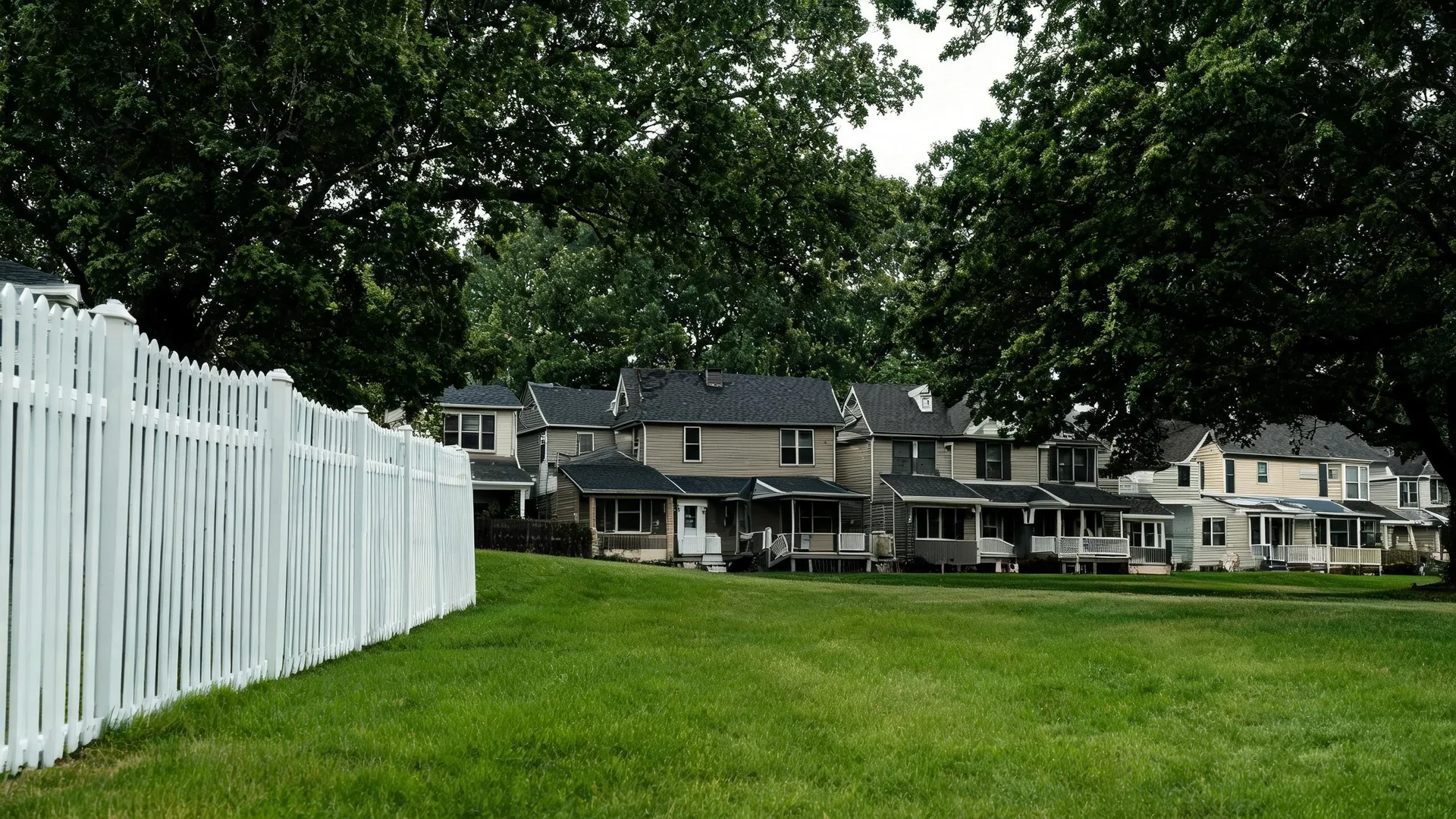




A white picket fence runs along the left edge of a mowed grass lawn, with a row of two-story houses with porches and large leafy trees behind them.

Furnace Repair in Williamsport, PA

Tell us about the job

Takes about a minute. No obligation.

Step 1 of 3: Equipment

A furnace here runs about eight months out of the year, October through May. That's most of the calendar spent cycling on and off, heating a house through real cold. Lycoming County saw 27 winter storms between 2015 and 2024, heavy snow and ice that keep a system running flat out for days at a stretch. That kind of use adds up on the parts inside, the igniter, the blower motor, the heat exchanger. A furnace carrying that load is going to show a problem sooner than one that only runs a few months a year. Whatever's going wrong with yours, there's a reason behind it, and it's worth finding out what that reason actually is before deciding what to do next.

8 months
October through May, your furnace is on duty
19°F
the average winter night it heats against
27 winter storms
in ten years, the nights a failure hurts most
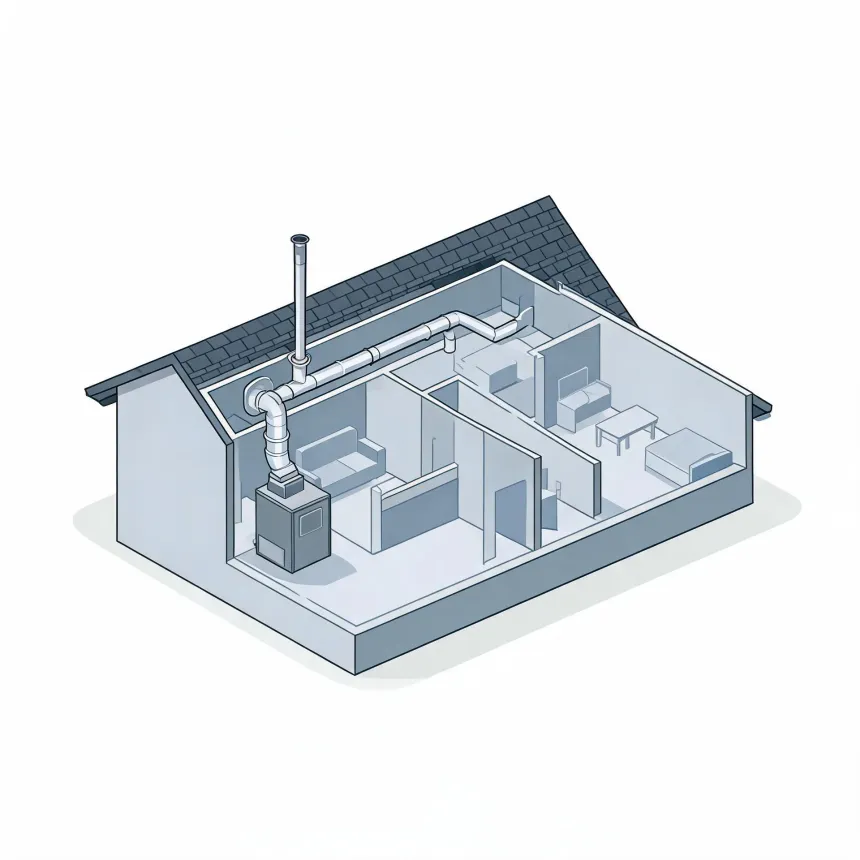
Isometric cutaway illustration of a single-story house showing interior rooms with furniture and a furnace connected to ductwork and a vertical flue pipe extending through the roof.
Your furnace works hardest from November through March.

NOAA nClimDiv, 1991–2020 normals

A cracked heat exchanger can leak exhaust into the air the blower pushes through the house.

Shutting the furnace off until a tech looks at it is the safe call, not a judgment call to leave running.

Half the furnaces here are older too

Half the homes here were built by 1963
Climate zone 5A
Heat runs October through May

September is worth paying attention to. That's the month before the heat goes on for good here, and it's when a lot of people run the furnace for the first time in months just to check it, or don't, and find out the hard way in October. A part that was already worn tends to fail right when the system gets asked to run hard again, not while it was sitting idle. If yours is acting up now, at the start of the season, that timing isn't a coincidence. Getting it looked at before December, when the overnight lows here are already down around 19 degrees, means the fix happens on a day you chose instead of one the cold chose for you.

Know what's left in it before you pay to fix it

Half the houses here were built in 1963 or earlier. A furnace in one of those has usually been replaced at least once already, maybe more than once, and whatever's in there now has its own age separate from the house. Before a tech repairs what's broken, ask how much life the rest of the unit has. A repair makes sense on a furnace with years ahead of it. It makes less sense on one near the end, and the only way to know which one you have is to ask.

Find a contractor
A man in a cap, gray T-shirt and tan work pants climbs porch steps toward a blue front door, carrying a canvas tool bag in his right hand, with a potted shrub in a blue planter beside the door.
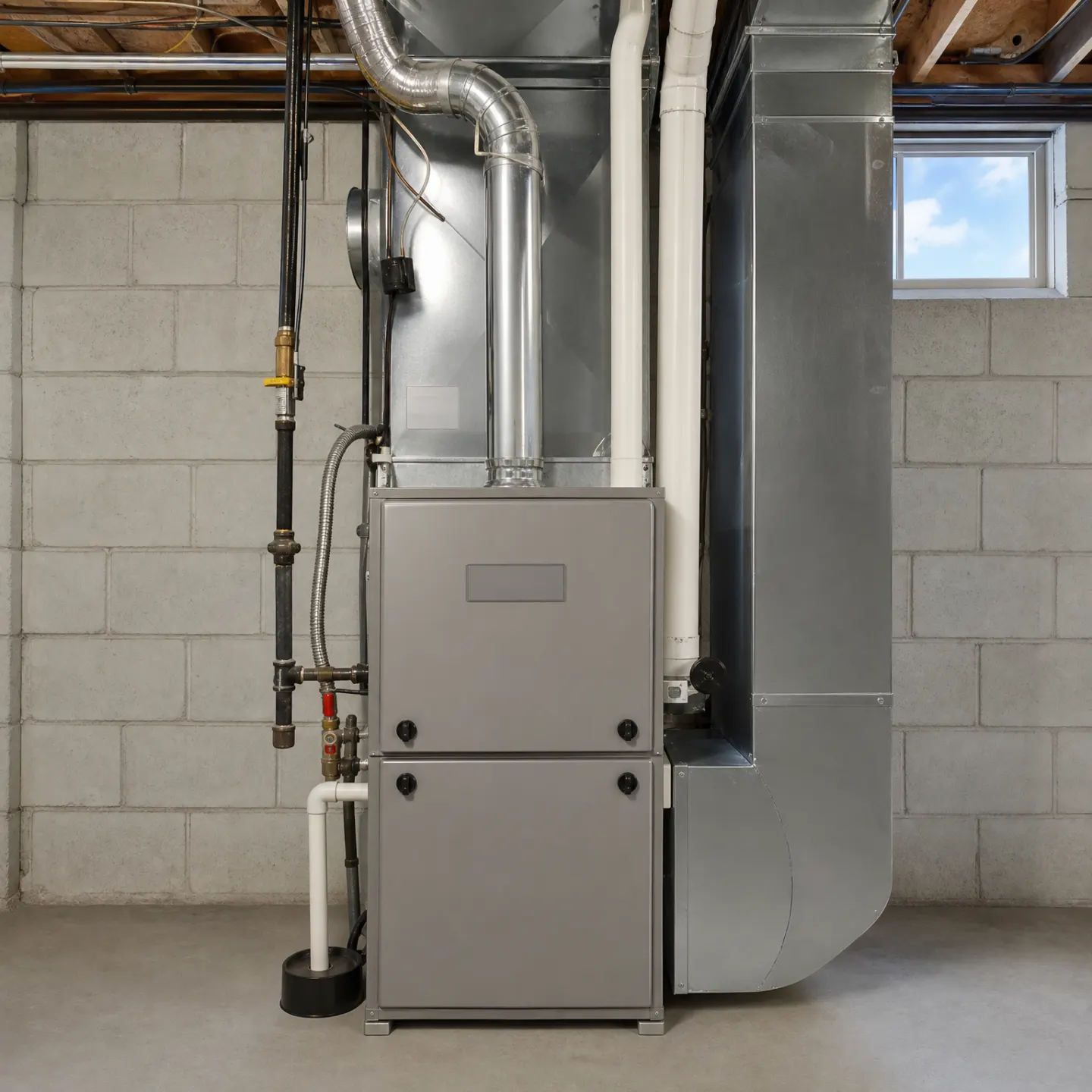
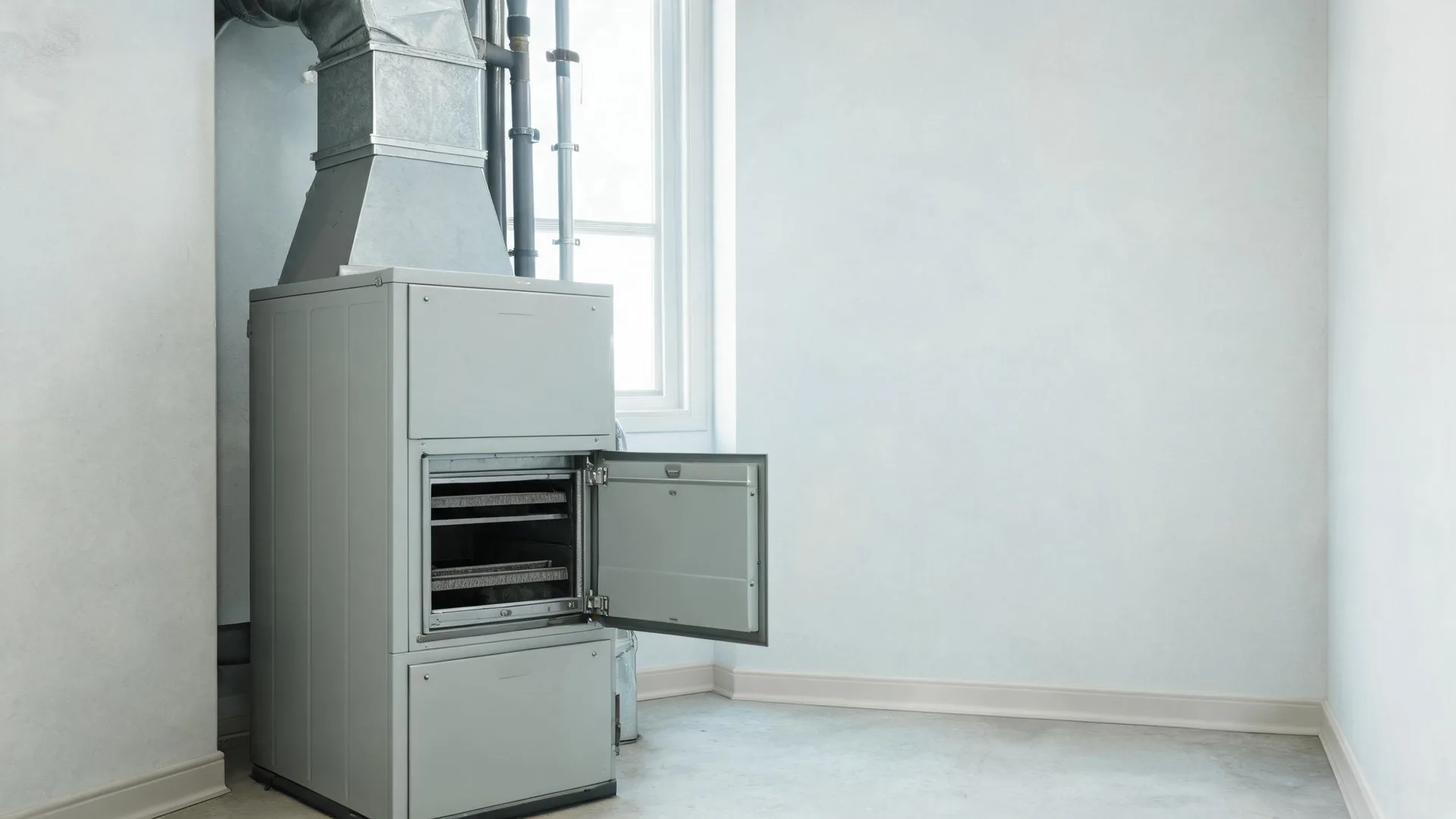
A gray high-efficiency gas furnace installed in an unfinished basement, surrounded by gas lines, a condensate drain, and sheet-metal ductwork.

Eight months of runtime finds the weak part first

A tech who checks the furnace now, while it's running every day, sees the actual load it's under. That's a better test than one done in the middle of May, when the thing has sat quiet for weeks. Ask what's actually failing and why before agreeing to a fix. A repair that addresses the real cause holds up through the rest of the season. One that doesn't just gets you a second call before May.

What shows up first

A furnace usually tells you something is wrong before it quits outright. The flame looks yellow or flickers instead of burning steady blue. The burners fire, then shut off again within a few seconds, a sign the flame sensor isn't reading the fire or the igniter isn't holding up its end. Air comes out of the vents cooler than it should, or only some rooms get warm while others don't. You hear a boom at startup instead of a quiet catch, which usually means gas is building up before it lights instead of lighting right away. None of these mean the furnace is done. They mean a specific part is wearing out and asking to be looked at.
What it sounds like when something's off

Furnaces make the same sounds every cycle when they're running right, and a change in that sound usually points to a specific part. A squeal at startup or shutdown often comes from the blower motor bearings. A rattle that wasn't there before can mean a loose panel or a part working its way free inside the cabinet. Clicking that repeats without the burners ever catching points to the igniter or the gas valve not getting the signal it needs. A hum with no airflow behind it usually means the blower motor is trying to start and can't. Catching the sound early, before it turns into a shutdown, is usually what keeps a repair small.

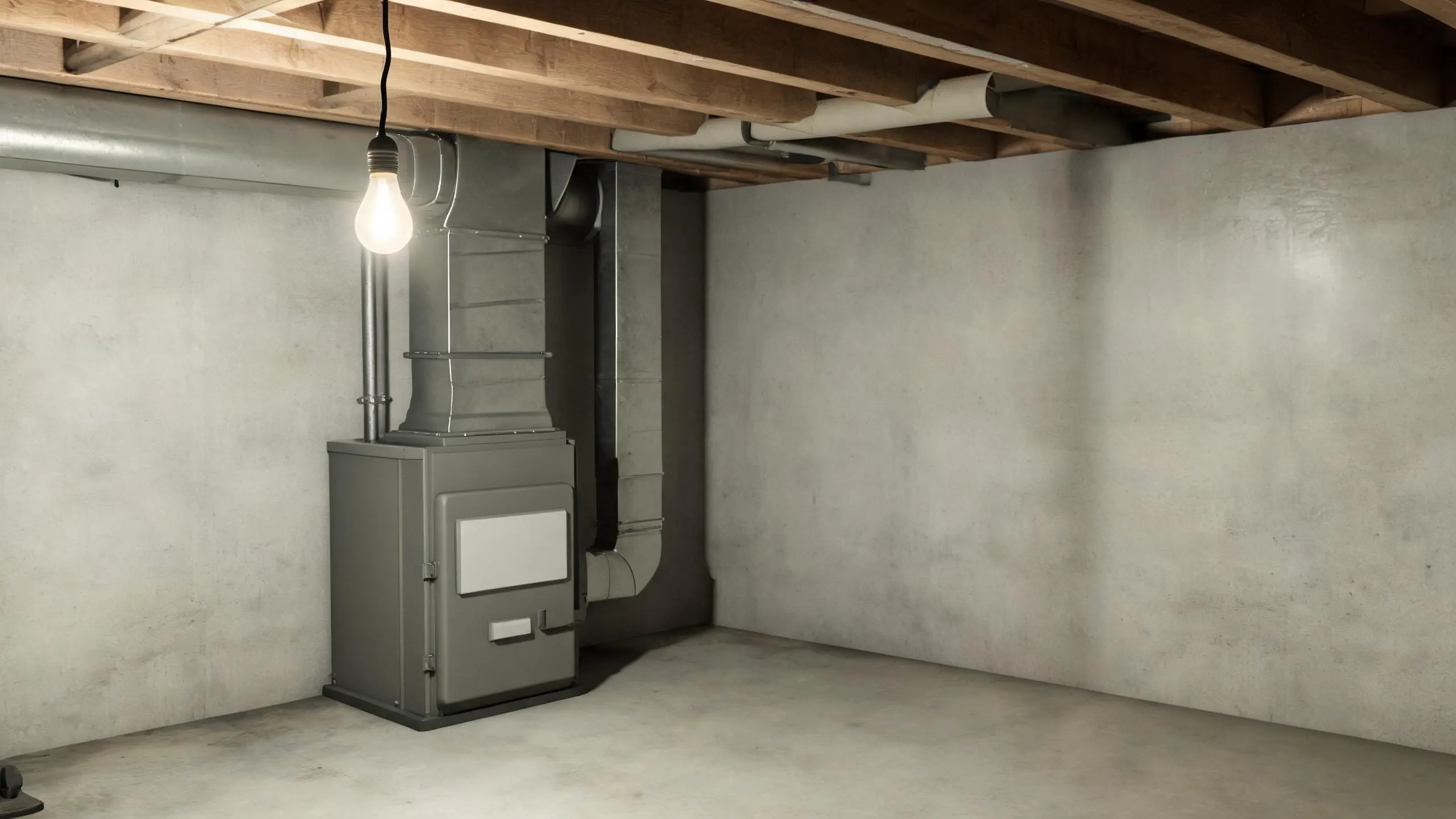
A bare concrete basement containing a gray gas furnace with metal ductwork and a vertical flue pipe, lit by a single hanging bulb.

A new furnace would cut about $170 a year off heating for a typical Lycoming County home.

  • A new high-efficiency furnace$710 a year
  • An older furnace$880 a year

Estimates for a typical Lycoming County home, compared with an older unit built to the previous federal minimum, from EIA household energy data, Pennsylvania fuel prices and NOAA climate normals. Your home will differ.

Repair makes sense when one part has failed and the heat exchanger is sound.

Replacement makes sense when the heat exchanger is cracked or the furnace keeps needing parts.

A diagnostic visit starts before the panel comes off. A tech asks what the furnace was doing, when it started, and whether it's happened before, because that points to which parts are worth checking first. Then the cover comes off and the tech watches it run through a full cycle, ignition, flame, blower coming on, rather than just looking at it sitting cold. Voltage gets checked at the parts that commonly fail, the igniter, the flame sensor, the gas valve, since a reading tells you which one is actually failing instead of guessing. The heat exchanger gets inspected too, because a crack there is a safety issue and not just a repair item. By the end the tech should be able to name the part that's failing and why, not just that the furnace isn't working.