





An unfinished basement featuring exposed ceiling joists, a metal HVAC unit with round ductwork, a hanging light bulb, and scattered boxes and debris along the left wall.

Furnace Repair in Sayre, PA

Tell us about the job

Takes about a minute. No obligation.

Step 1 of 3: Equipment

Nine months of the year, a furnace here is running. September through May, it rarely gets a real break, and that's a long season to ask a machine to hold up without a problem. The igniter, the blower motor, the heat exchanger, all of them see more hours than they would almost anywhere else in the country. More hours mean more cycles, and more cycles mean parts wear down sooner than you'd expect. When something starts acting up, it's usually not bad luck. It's the furnace showing what nine months a year does to it.

9 months
September through May, your furnace is on duty
19°F
the average winter night it heats against
17 winter storms
in ten years, the nights a failure hurts most
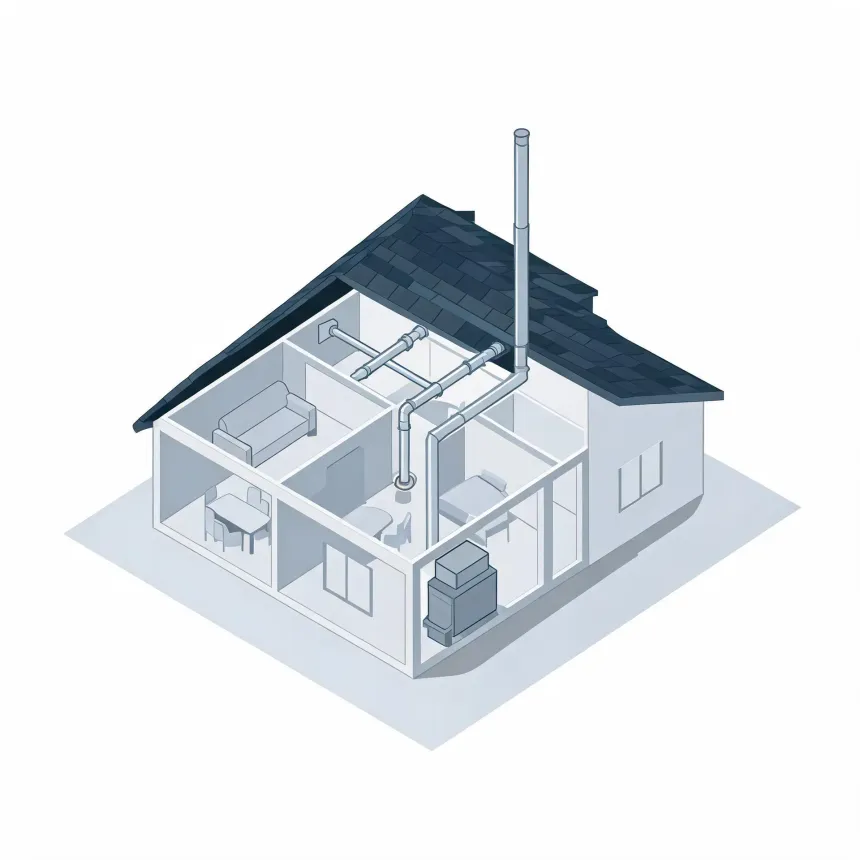
Isometric cutaway illustration of a single-story house showing interior rooms with furniture, ductwork and piping running to a tall vertical flue through the dark shingled roof, and a furnace-like appliance unit on the floor.
Your furnace works hardest from November through March.

NOAA nClimDiv, 1991–2020 normals

Half the homes in Bradford County were built in 1969 or earlier.

A furnace that old has likely already been replaced once, or it's due.

Gas Here Runs $13.12 per Million Btu, and This Furnace Burns It All Winter

Heat runs September through May
Winter nights average 19°F
Climate zone 5A
September Is When This Furnace Gets TestedHeat goes on in September here, and a weak part usually shows itself in the first cold week, not mid-winter.

A furnace that's cycling too much or struggling to hold its temperature is burning gas the whole time it does it. At $13.12 per million Btu, a furnace that's working harder than it should is a cost you'll see on the bill before anyone tells you what's wrong. Waiting a few weeks to get it looked at means a few more weeks of paying for that inefficiency. If a repair can get it running the way it should, the sooner that happens, the sooner the bill reflects it. If the problem is bigger than a repair, that's worth knowing before another cold month runs up the cost of a decision you haven't made yet.

Know What You're Repairing Before You Pay For It

If your furnace came with the house, ask the contractor straight out how much life it has left before you pay for a major repair. A furnace that's already been replaced once, or is old enough that it should have been, is worth sizing up against the cost of fixing it. That's a fair question to put to whoever comes out to look at it.

Find a contractor
A man in a beanie, dark jacket and tan work pants climbs porch steps toward a blue front door, carrying a canvas tool bag, with a potted shrub in a blue planter beside him.
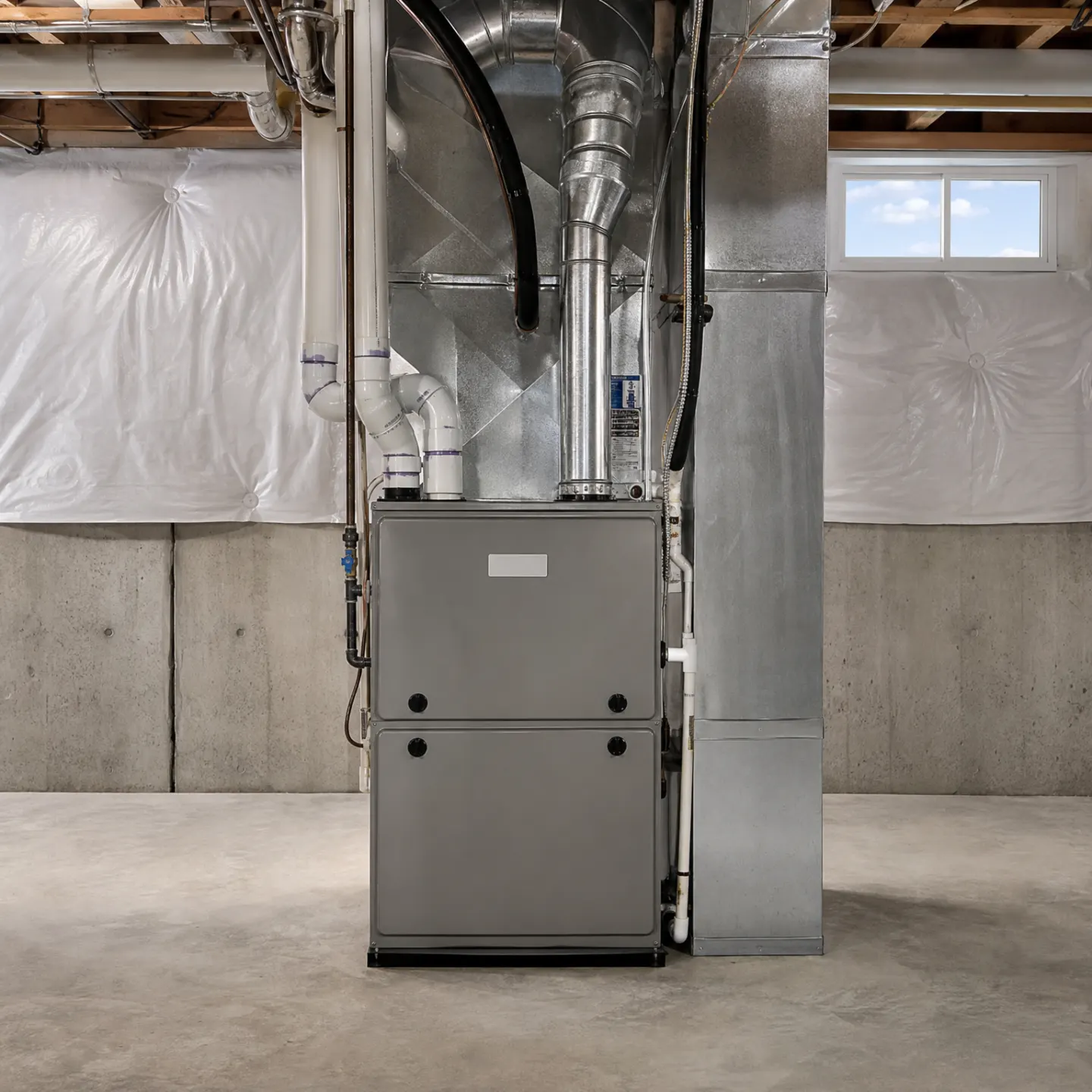
A gray residential gas furnace installed in an unfinished basement, connected to sheet-metal ductwork and PVC pipes.

Nine Months a Year Adds Up to More Than a Guess

Nine months of heat means nine months of wear, and that's already been said. What it means for the repair in front of you is this: get the actual cause written down, not just the symptom. A furnace that short cycles or won't hold a temperature has a reason, and the reason is usually one part, not the whole unit. Ask the contractor what failed and why, not just what it costs to fix it. If that part is worn from the hours this furnace puts in every winter, the part next to it has seen the same hours.

What a Bad Igniter or Flame Sensor Looks Like

A furnace that clicks and tries to start but won't catch, or starts and shuts off within a few seconds, is usually telling you the igniter or flame sensor has gone bad. The igniter has to glow hot enough to light the gas, and a cracked or weak one can't get there every time. The flame sensor checks that a flame is actually burning, and once it's coated or worn, the furnace shuts itself down rather than run without that check. Both are common failures, and neither means the furnace itself is done.

Noises and Smells Worth Acting On Fast

A bang when the furnace starts usually means gas is building up in the burner before it lights, then catching all at once. A screech points to the blower motor or its bearings. A burning smell the first time it runs after a break is normal dust burning off, but a burning smell that doesn't go away, or any smell of gas, means shut it down and get someone out. These aren't symptoms to watch and wait on. They're the furnace telling you a part is already failing.

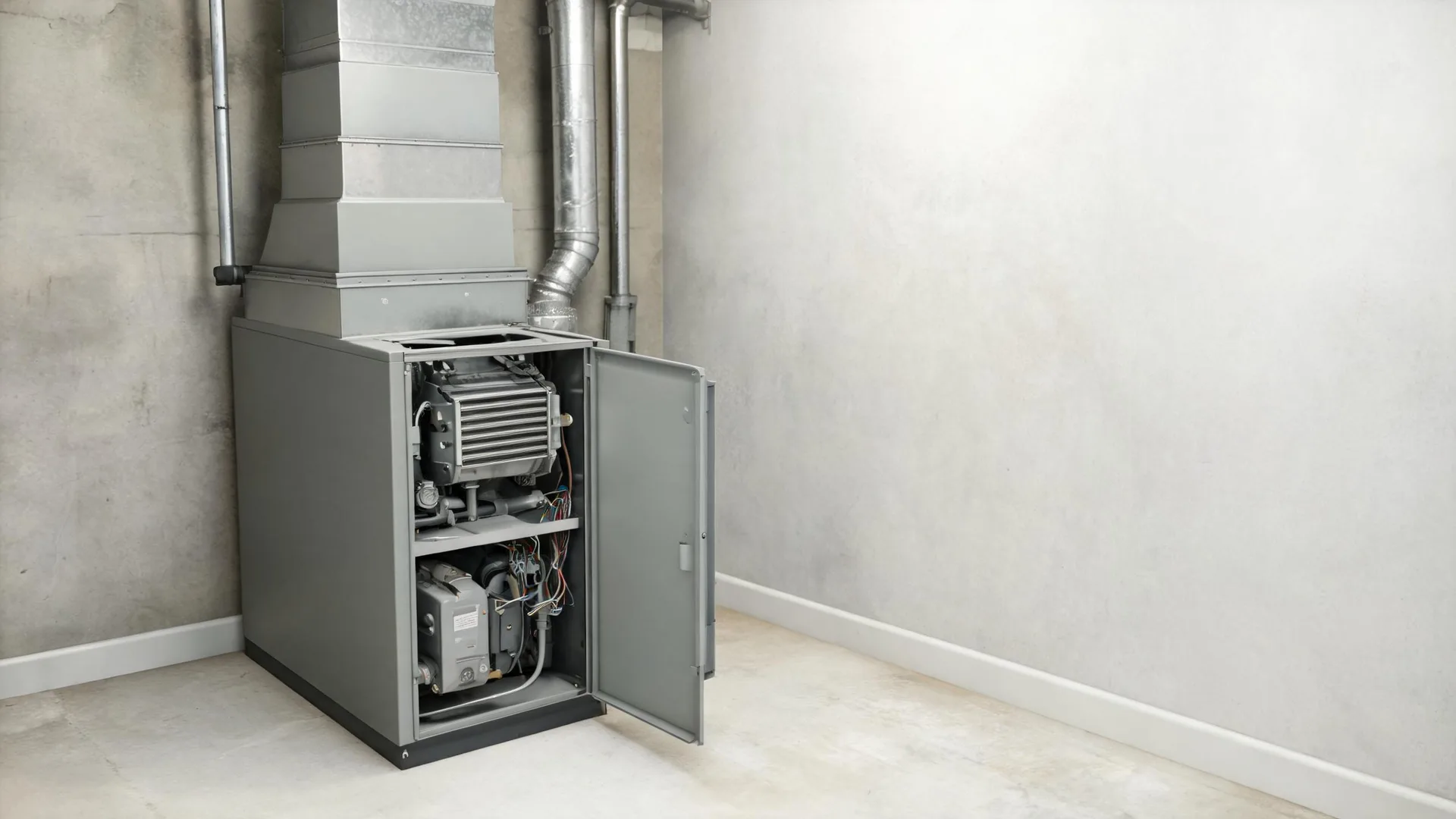
An unfinished basement featuring concrete block walls, exposed floor joists, and a metal forced-air furnace with ductwork near a central pillar.

A new furnace would cut about $180 a year off heating for a typical Bradford County home.

  • A new high-efficiency furnace$750 a year
  • An older furnace$930 a year

Estimates for a typical Bradford County home, compared with an older unit built to the previous federal minimum, from EIA household energy data, Pennsylvania fuel prices and NOAA climate normals. Your home will differ.

Repair makes sense when one part has failed and the heat exchanger is sound.

Replacement makes sense when the heat exchanger is cracked or the furnace keeps needing parts.

A diagnostic visit starts before any panel comes off. A contractor will ask what the furnace is doing, when it does it, and what changed right before it started. Then they'll run it through a cycle and watch. They'll check the flame, which tells them a lot by its color and shape alone. A steady blue flame means it's burning clean. Yellow or flickering points to a combustion problem, and that gets checked further before anything else happens, since that affects whether the furnace is safe to leave running. From there they'll test the parts that fail most, the igniter, the flame sensor, the flame itself, often with a meter rather than a guess. They'll pull the filter and look at the blower wheel, since restricted airflow shows up as symptoms all over the system that have nothing to do with their real cause. By the end, the goal isn't just a part to replace. It's knowing why that part failed, so you're not back here again in a month.