





White colonial-style houses with lit windows photographed at dusk along a tree-lined street.

Mini Split Installation in Sayre, PA

Tell us about the job

Takes about a minute. No obligation.

Step 1 of 3: Equipment

Bradford County runs mostly on utility gas and fuel oil, with gas heating 37.8% of homes and oil another 21.3%. A mini split doesn't compete with either one. It gives you cooling where a gas or oil furnace never could, and it heats on its own in the shoulder months without lighting the furnace at all. Homes here that add one usually keep the furnace for the coldest stretch of winter and let the mini split carry the rest. If your place is on LP gas, same idea applies, you're adding a second way to heat and cool, not replacing what's already there.

9 months
September through May, your system heats
2 months
July through August, it cools
19°F
the average winter night it heats against
78°F
the average summer afternoon it cools against
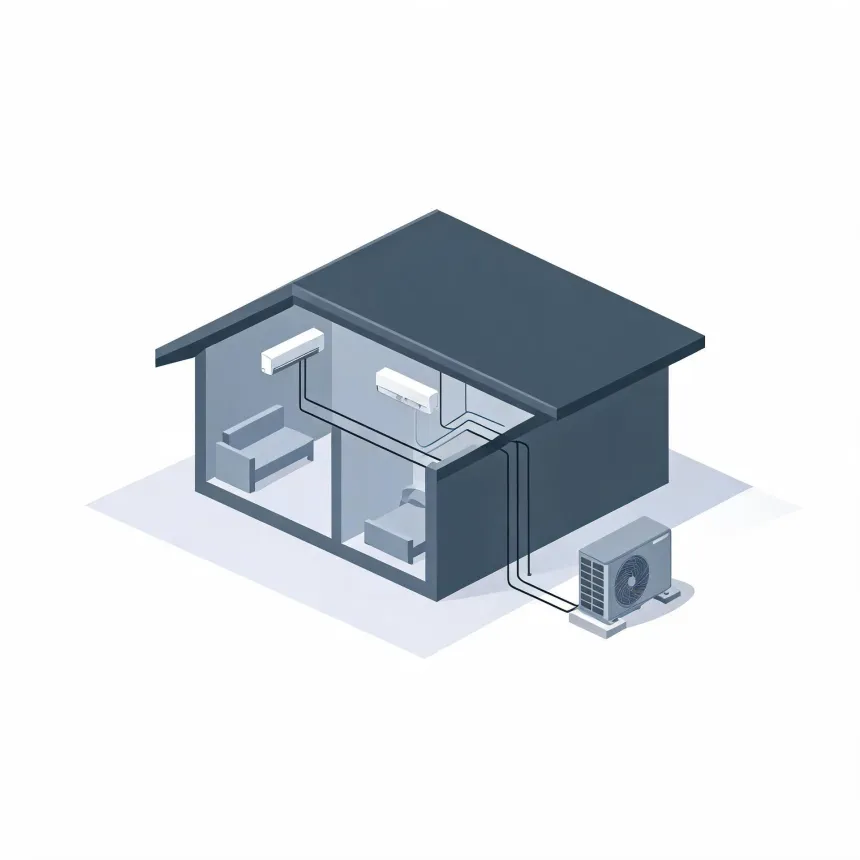
Isometric illustration of a cutaway house showing two wall-mounted mini-split indoor units connected by line sets to an outdoor condenser on a pad outside.
Your system heats September through May and cools July through August.

NOAA nClimDiv, 1991–2020 normals

Cooling in Bradford County runs July through August.

June is the month to get a mini split installed, before the first hot day puts it to work.

Half the homes here were built in 1969 or earlier. A mini split has to work with that house, not a new one.

Half the homes here were built by 1969
Cooling runs July through August
Summer afternoons average 78°F
Two months of workCooling here runs July and August, with afternoons averaging 78°F.

A mini split for a Sayre home doesn't need to be oversized or loaded up with features to handle what happens here. Bradford County saw 165 severe weather events between 2015 and 2024, most of it wind and winter storms rather than hail or tornadoes. None of that changes what size unit your rooms call for or what efficiency rating makes sense. Those come from your square footage, your layout, and how your house holds heat, same as anywhere else. A properly sized system handles a windy day or a heavy snow the same way it handles a calm one. If you're weighing a bigger unit or a higher-end model, let the room measurements decide that, not the weather.

Any mini split installed here has to meet zone 5A's efficiency minimums

Bradford County falls in climate zone 5A, and any split-system heat pump installed here, ductless units included, has to hit 14.3 SEER2 for cooling and 7.5 HSPF2 for heating. That's the floor a contractor is working from before anything gets sized for your rooms. A federal tax credit is available on qualifying equipment, worth looking into while you're comparing systems.

Find a contractor
A man in a cap, dark long-sleeve shirt and tan work pants climbs porch steps toward a blue front door, carrying a waxed canvas tool bag with tools visible inside.
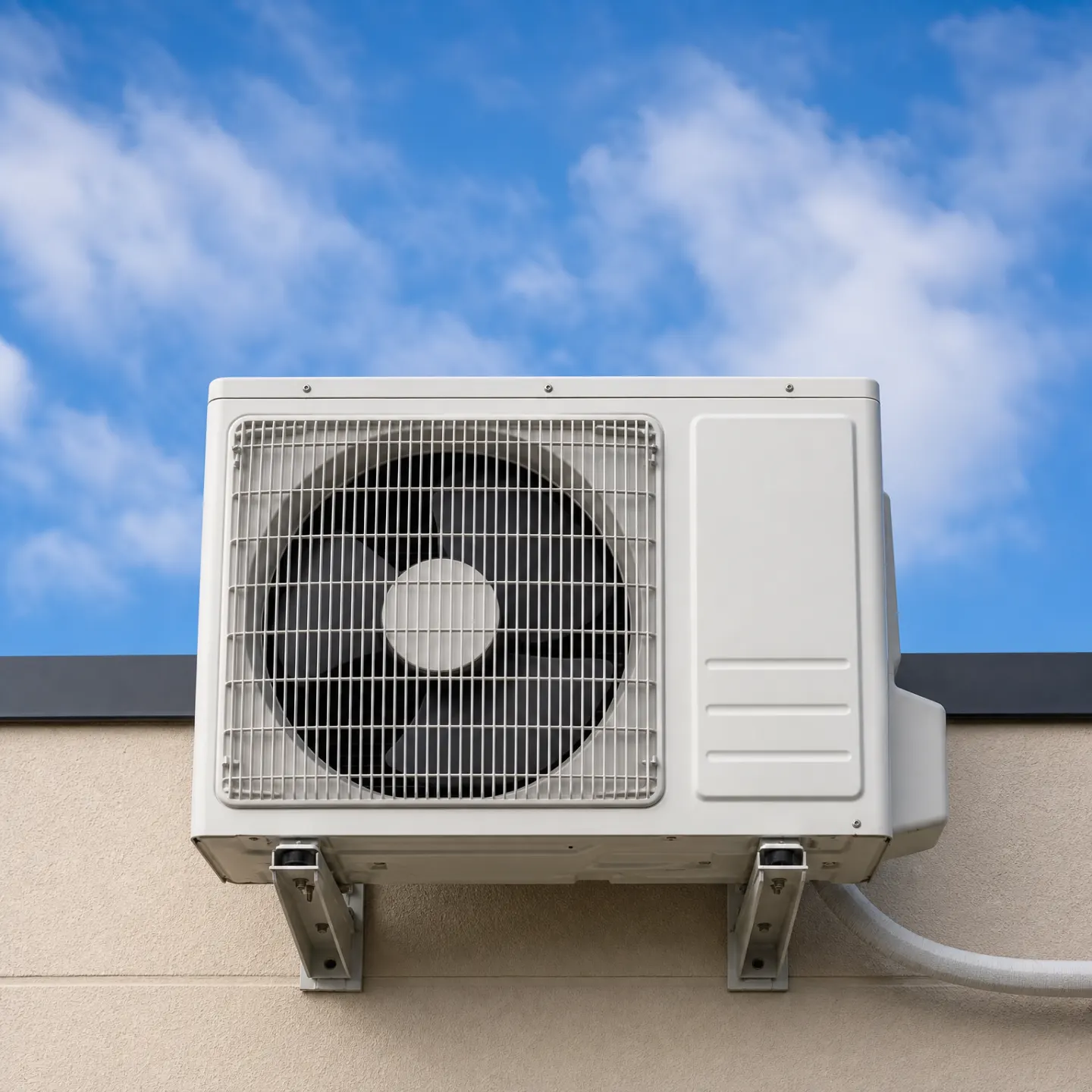
A white mini-split air conditioner outdoor condenser unit mounted on metal brackets against a beige stucco exterior wall, with a blue sky and scattered clouds in the background.

Sized to the room, not the house

Sizing a mini split comes down to how much heat a room gains in summer and loses in winter, not how many square feet it has. A contractor works out the heat gain and loss for each room, counting windows, exterior walls, what's above and below it, then matches the indoor head to that number and adds up the outdoor unit from there. Square footage alone leaves out too much to get this right. Oversizing is the more common mistake. A unit that's too big cools the room fast, shuts off, then kicks back on a few minutes later. That short cycling never lets the system run long enough to pull moisture out of the air, so the room ends up cold and damp instead of just comfortable. An undersized unit has the opposite problem. It runs constantly and still can't hold the temperature on the hottest or coldest days. Getting the size right the first time matters more than any feature on the unit, since no amount of adjusting after install fixes a system that was never matched to the room.

The number of zones sets the price

A single indoor head tied to one outdoor unit costs less than a multi-zone setup feeding several rooms. Every extra indoor head, every extra line set run through a wall, adds to the job. A contractor pricing your install is pricing the number of rooms you want covered, not just the brand of equipment.
Where the lines have to run matters

The outdoor unit and each indoor head connect through a line set carrying refrigerant, plus a condensate drain and electrical whip. A straight run through an exterior wall near where the outdoor unit sits is the easy case. A head placed far from where the outdoor unit can go, or on a floor where the line has to run up through a chase or along an exterior wall, takes more labor and more material. That distance is part of what gets priced before anything else.

If you're adding a mini split without pulling out the furnace, there's no old system to deal with, it keeps doing the coldest months like it always has. Where this comes up is when someone's replacing an aging boiler or furnace at the same time, not just supplementing it. That old equipment has to be disconnected properly, gas line capped off, electrical pulled, and depending on what it is, drained of refrigerant or oil before it leaves the house. A contractor doing the mini split install can usually handle the removal and haul-away as part of the same job, but it's worth asking upfront rather than assuming it's included. If the old system had a chimney liner or venting dedicated to it, that gets addressed too, since a furnace or boiler often isn't the only thing using that flue.

Installation starts with where the lines go, since that was decided when the system was priced, and the crew follows that plan rather than figuring it out on site. The indoor head gets mounted first, usually high on a wall, with a small hole drilled through to the outside for the line set. That line set, the refrigerant lines, the condensate drain, the electrical whip, gets run to wherever the outdoor unit sits, then the outdoor unit itself gets set on a pad or mounted bracket. Once everything's connected, the lines get pressure tested and pulled down to a vacuum before any refrigerant moves through them, since any air or moisture left in the lines will cause problems later. Only after that test holds does the system get charged and switched on. A contractor will run the system through both heating and cooling before calling the job done, checking that each head is actually blowing the temperature it's set to.