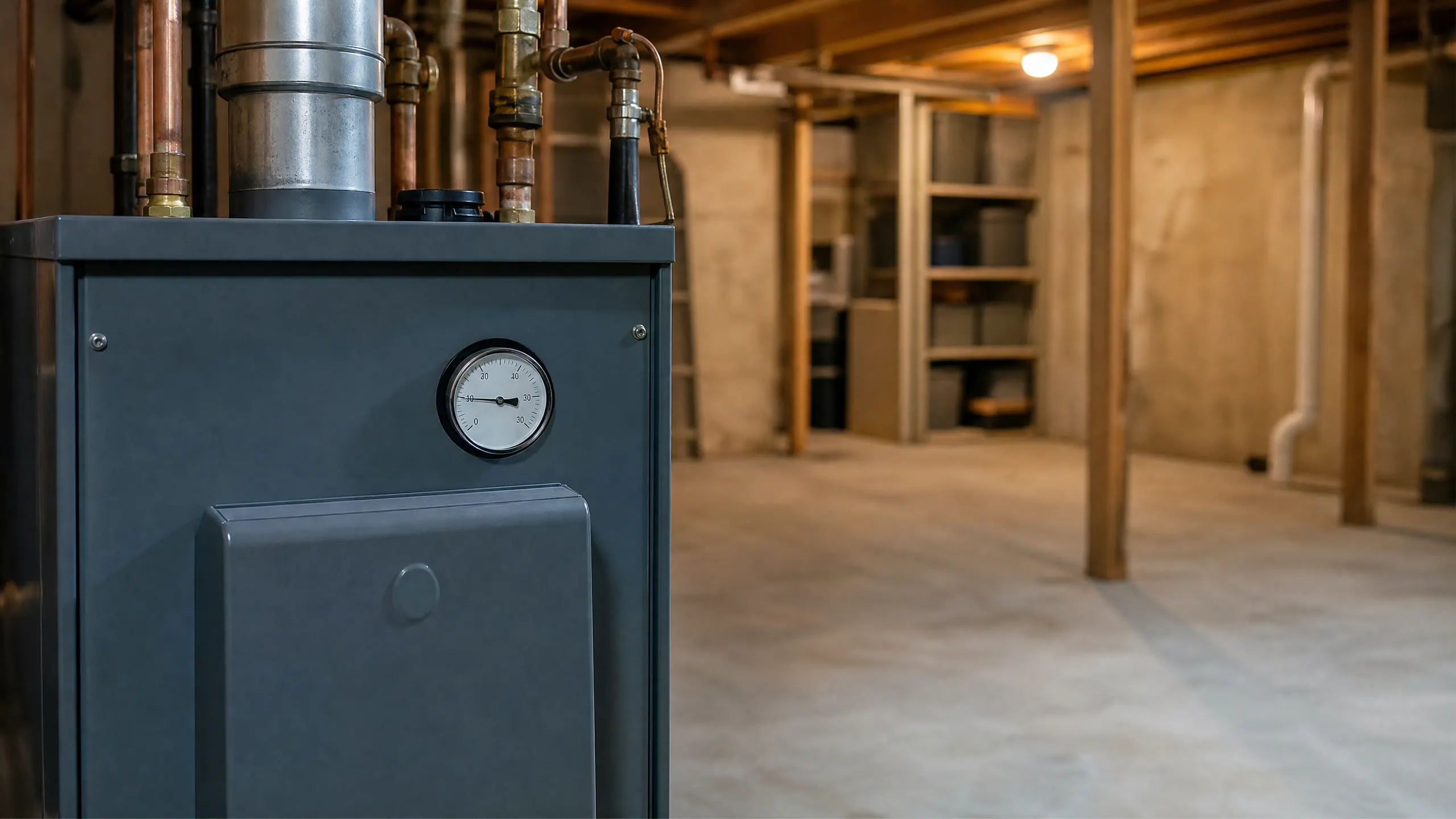





A gray boiler unit with copper pipes and a pressure gauge installed in an unfinished basement.

Boiler Repair in Sayre, PA

Tell us about the job

Takes about a minute. No obligation.

Step 1 of 3: Equipment

Nine months of heat a year is a long season for a boiler to run without a break. September through May, it's either firing or standing ready to, and that's most of the calendar. A system built for occasional use doesn't get that kind of schedule here. The extra hours add up on the parts that handle heat and pressure cycle after cycle, and that's often what's really behind a breakdown. Worth having a contractor check whether this is a one-time fix or a sign the boiler is wearing out early.

Half the homes in Bradford County were built in 1969 or earlier.

A boiler in one of those homes has likely been replaced at least once already, maybe more.

Gas here runs $13.12 per million Btu, and a struggling boiler burns through it September to May

Heat runs September through May
Winter nights average 19°F
Climate zone 5A
The First Cold Snap Finds the Weak SpotHeat starts in September here, and that's when a strained boiler usually quits.

A boiler that's short cycling or struggling to hold pressure burns more gas to put out the same heat. At $13.12 per million Btu, that difference shows up fast on a system that runs daily all winter. Waiting through another cold stretch to see if it sorts itself out usually means paying more for the same problem. Have a contractor look at it now, while it's one repair, rather than after a part fails outright.

Ask How Many Winters Are Left Before You Pay For This One

Ask the contractor doing the repair how old this boiler actually is and how many years they'd expect to get out of it. If it's getting on in years, a repair now might just be a bridge to a replacement you'll be paying for anyway. That answer is worth having before you pay for the fix in front of you.

Find a contractor
A man in a dark shirt and tan pants carries a canvas tool bag as he walks up concrete steps toward a blue front door on a porch with a potted shrub.

Check the pressure gauge first

A cold boiler should read near the middle of the gauge, usually around where the needle sits in a green band. If it's dropped low, the system may need water added. If it's climbing high or the relief valve is dripping, that's not a homeowner fix. Low pressure can mimic a dead boiler. A quick look at the gauge tells you which problem you actually have.
Listen before you call

A boiler that bangs, kettles or gurgles when it fires is usually dealing with trapped air or sediment built up around the heat exchanger. A boiler that clicks and won't light is often an ignition problem. Telling the contractor what you heard, and when, saves a visit spent just listening for it to happen again.

Most boiler failures trace back to a handful of parts. The igniter or pilot assembly wears out from repeated heat cycles and eventually fails to light the burner at all. The circulator pump, which pushes hot water through the system, can seize up or start leaking at the seal after years of running. Low water pressure often points to a slow leak somewhere in the system, sometimes at a valve, sometimes in a line you can't see. Mineral buildup inside the heat exchanger makes the boiler work harder to transfer heat, and that extra strain shortens its life. A thermostat or control board that's gone bad can also make a perfectly good boiler act like it's dying when it isn't. Sorting out which of these is actually happening is most of the job before any repair makes sense.

A repair call tells you more than just what broke. It's a chance to find out how the rest of the boiler is holding up after years of running nine months out of twelve. Ask the contractor to check the heat exchanger and circulator pump while they're in there, not just the part that failed. If those are still in good shape, the repair is worth making. If they're worn too, you're looking at the first of several calls rather than the last one.