A row of illuminated white colonial houses with black shutters and a stone wall along a road at dusk.

Furnace Repair in Chambersburg, PA

Tell us about the job

Takes about a minute. No obligation.

Step 1 of 3: Equipment

September is when to catch it

Furnaces in Franklin County sit idle most of the year and start up again in October. A weak igniter or a failing inducer motor often won't show itself until that first cold start, and by then you're already living without heat.
The first cold snap finds the weak part

A furnace that gets eight months of hard use, October through May, puts real strain on whatever was already marginal. If a part was close to failing last spring, the first hard run of the season is what finishes it off.

8 months
October through May, your furnace is on duty
24°F
the average winter night it heats against
16 winter storms
in ten years, the nights a failure hurts most
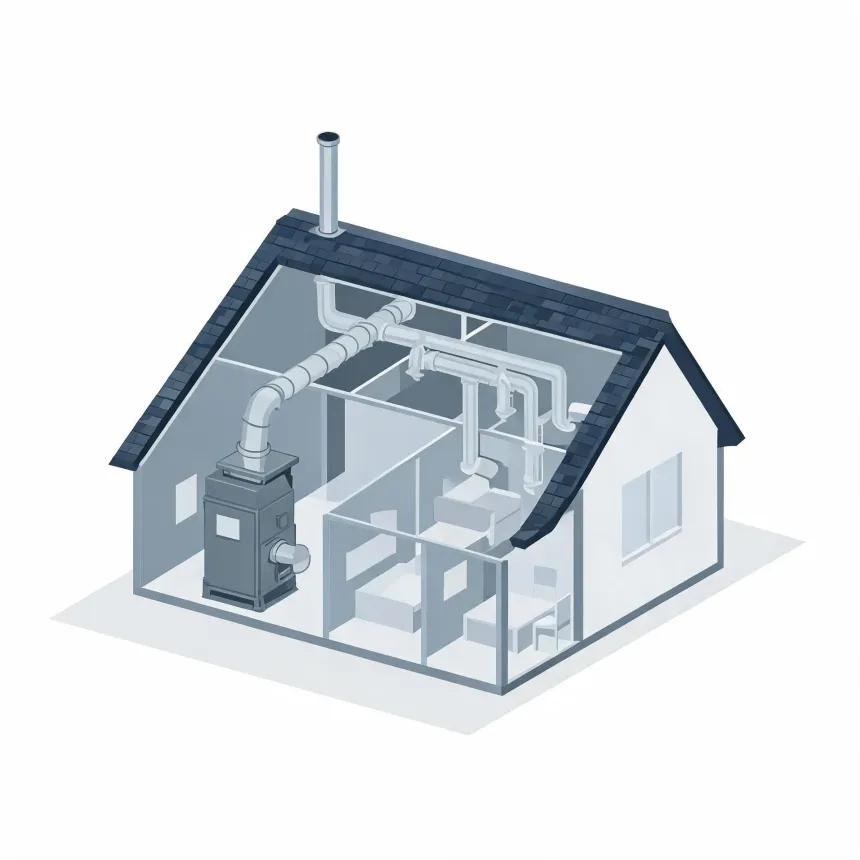
Isometric cutaway illustration of a small house showing a gray furnace unit with a flue pipe through the roof and branching ductwork running to rooms with simple furniture.
Your furnace works hardest from November through March.

NOAA nClimDiv, 1991–2020 normals

Franklin County furnaces run about eight months a year, October through May.

A furnace with a problem is still just a furnace with one part that failed. Find that part and fix it.

Electricity in Pennsylvania ran $52.07 per million Btu in 2024, and that's what a struggling furnace is charging you. A clogged flame sensor making the burner cycle on and off, a blower running longer than it should to make up for a bad limit switch, these don't stop the furnace from heating your house. They just make it work harder to do it. Every month you leave it alone, that part costs you more than it would to fix.

A furnace that's struggling doesn't stop, it just costs more

Whatever's making your furnace work harder, a bad limit switch, a dirty flame sensor, isn't fixing itself while you wait. At $52.07 per million Btu, that's a bill that grows every month the part stays broken. Get the furnace looked at and find out what it is.

Find a contractor
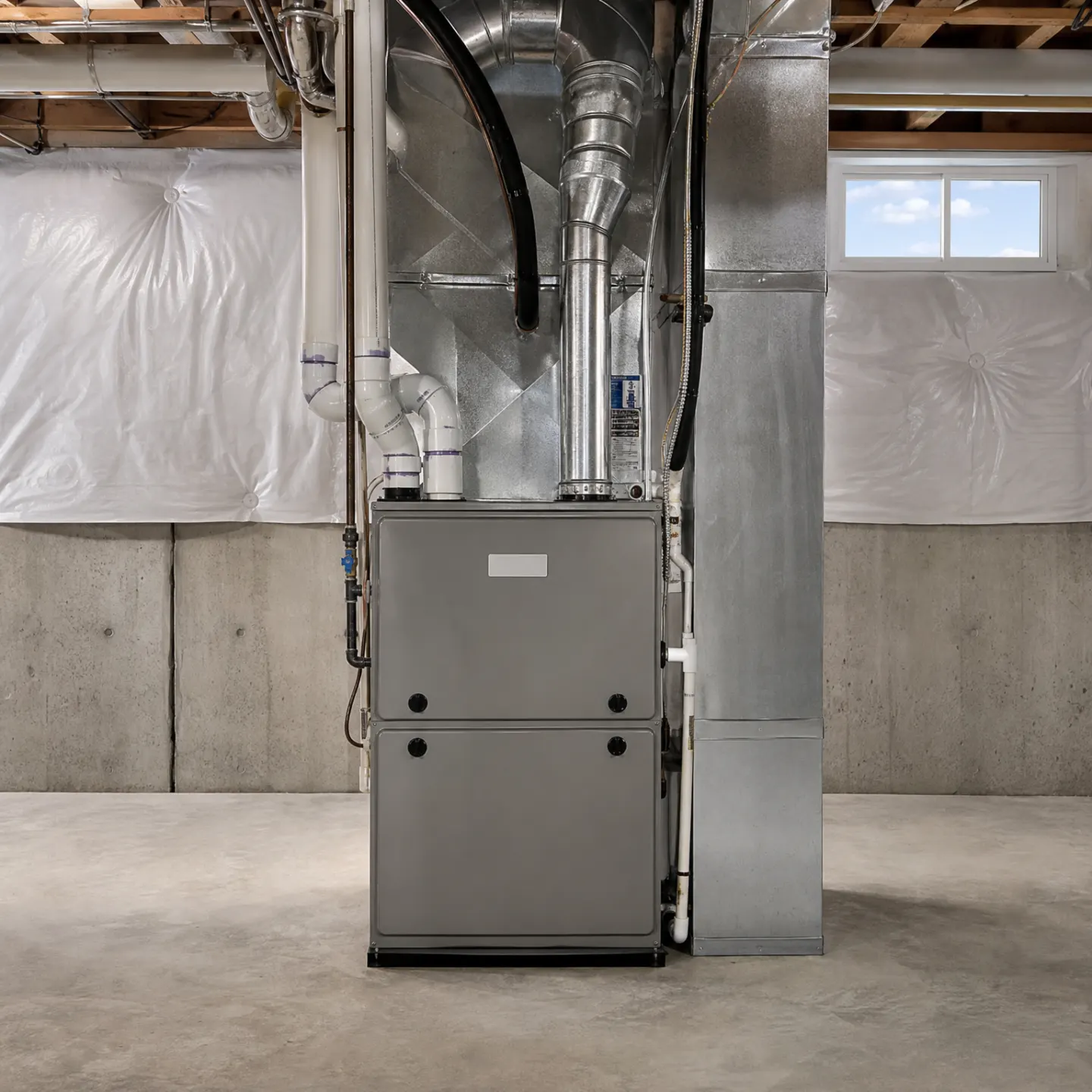
A gray residential gas furnace installed in an unfinished basement, connected to sheet-metal ductwork and PVC pipes.

What to check before you call anyone

Check the thermostat first. Make sure it's set to heat and the set point is actually above room temperature, and swap the batteries if it uses them. Go to the furnace and look at the door panel, most won't run at all if it isn't seated and latched right. Find the switch that looks like a light switch on the side of the unit or nearby, it's an accidental power cutoff and it's easy to bump. Check your breaker panel too. If you have a gas furnace, look for a light in the viewing window, a steady light usually means the igniter is working, no light or a flickering one tells you something's wrong there. Replace the air filter if it's dirty, a clogged filter can starve the system of airflow and trip it off on purpose to protect itself. If your thermostat screen is blank or the furnace won't respond to any of this, that points past what you can fix by hand.

A cracked heat exchanger gets worse with every cycle

Metal that's already cracked flexes again each time the burner fires. The crack opens a little more, the seal gets a little worse, and a problem that started small becomes a problem that can push combustion gas into the air you breathe. This is one you stop running, not one you run while you wait.

A failing blower motor can take the furnace down with it

When a motor runs hot or strains on a bad bearing, it's pulling more than it should just to keep turning. Keep making it do that and it can seize or short out, and now you're not fixing a motor, you're replacing one. Caught early, it's a part swap. Caught late, it can take the control board with it too.

Most furnace problems announce themselves before the furnace quits outright. A burner that used to light with one soft whump now clicks several times first, or lights with a bang. The blower runs louder than it used to, or it runs when nothing's calling for heat, or it won't shut off even after the house is warm. Air coming out of the vents that feels cooler than it should means the furnace is moving air without fully heating it. A smell of something burning in the first few minutes of a cycle is normal once a season, every cycle is not. Short cycling, where the furnace fires, runs briefly, and quits, usually means it's shutting itself off on purpose because something downstream isn't right. None of these mean the furnace is done. They mean a part is failing slowly instead of all at once, and that's the easier time to catch it.

A diagnostic visit starts before any panel comes off. A tech asks what you've noticed, when it happens, whether it's every cycle or just sometimes, because that narrows down what to check first. Then the furnace runs while they watch it work, the igniter or pilot, the flame itself, how the blower sounds, whether the burners light clean and stay lit. They'll pull the panel and check the flame sensor, the limit switch, the pressure switch, test for the actual voltage and resistance readings rather than guess from a sound or a smell. Most of this is confirming or ruling out, one part at a time, until what's failing is the only thing left standing. By the end you should know which part it is, why it failed, and what happens if it's left alone.