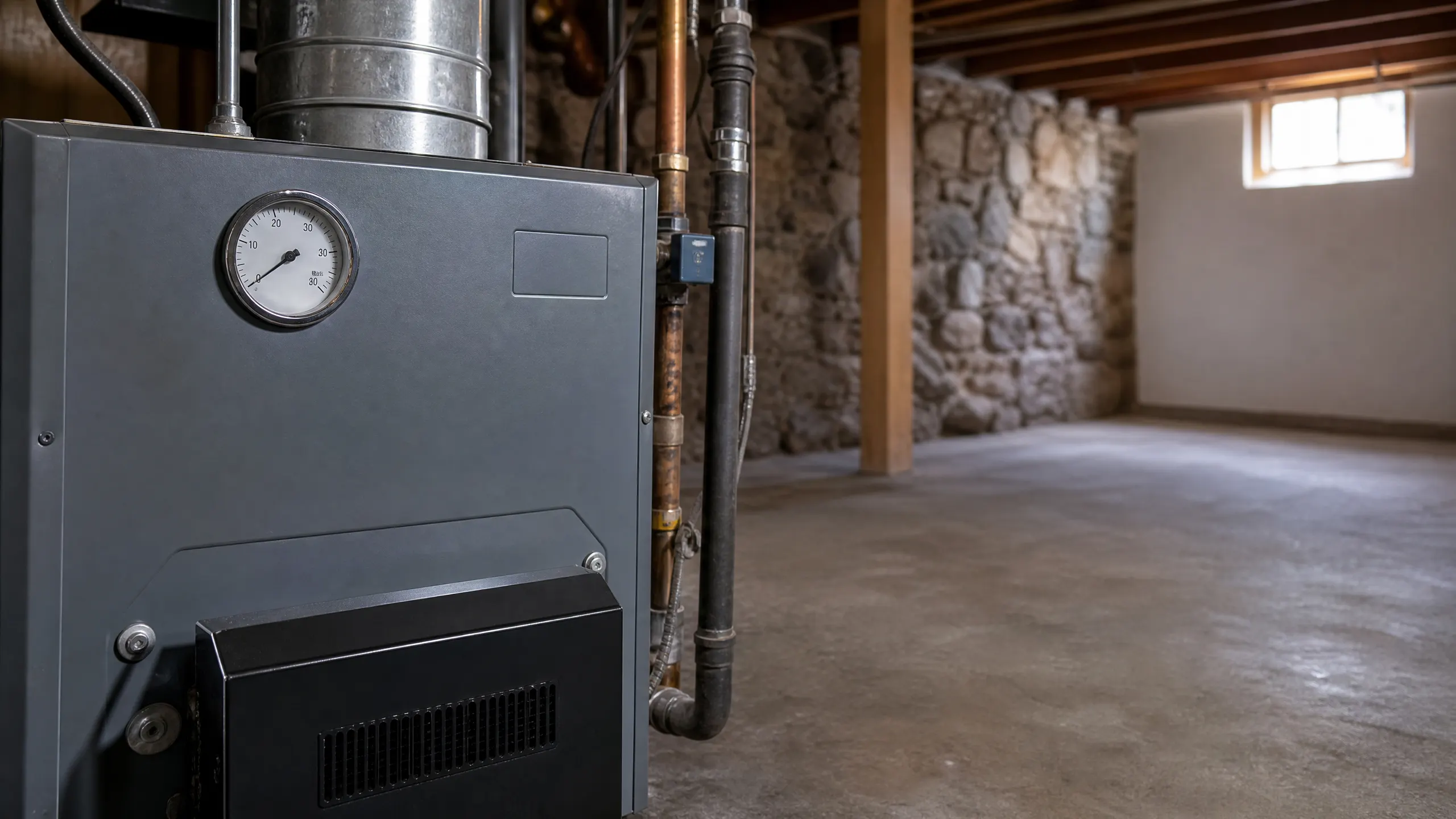



A gray metal boiler with a pressure gauge and piping installed in an unfinished stone-walled basement.

Boiler Installation in Chambersburg, PA

Tell us about the job

Takes about a minute. No obligation.

Step 1 of 3: Equipment

Electricity ran $52.07 per million Btu in Pennsylvania in 2024. A boiler that runs on electricity turns every degree of heat into a line on that bill. Most homes around Chambersburg already heat this way, so the rate itself isn't something you can shop around. What you can control is how much of that electricity actually becomes heat in your house instead of getting lost along the way. A boiler that converts power efficiently will cost less to run than one that wastes it, month after month, for as long as it's installed.

Electricity heats more homes in Franklin County than gas, oil and propane combined.

An electric boiler is the straightforward replacement for most houses here.

Eight months of heat means eight months to pay for running it well

Heat runs October through May
Winter nights average 24°F
16 winter storms from 2015 to 2024

Franklin County falls under zone 4A in the 2021 energy code, a mixed climate that asks real work of both the heating and cooling sides of a house. That's part of why a new boiler here has to clear a real bar, not just any minimum. If the replacement runs on gas rather than electricity, federal rule sets the floor: any gas-fired hot water boiler built on or after January 15, 2021 has to turn at least 84 percent of the fuel it burns into heat over the season. That number limits what a contractor can legally install. It's worth asking where a given model lands above that floor, since the gap between 84 percent and better shows up on the bill for as long as the boiler runs. A new boiler, gas or electric, also qualifies for a federal tax credit, worth checking against the model you're considering.

The right install is what makes the efficiency real

Get the boiler sized and installed right the first time, and the efficiency is locked in for as long as it runs. That's the piece worth getting right before anything goes into the house.

Find a contractor

Bigger isn't better here

A boiler sized too large will short cycle, firing up and shutting off before the house ever calls for that much heat. Each start wears the igniter and the heat exchanger a little more, and the water never gets the steady run time it needs to heat evenly. A boiler sized too small just runs long and still can't keep up on the coldest days, so it never gets ahead of the load.
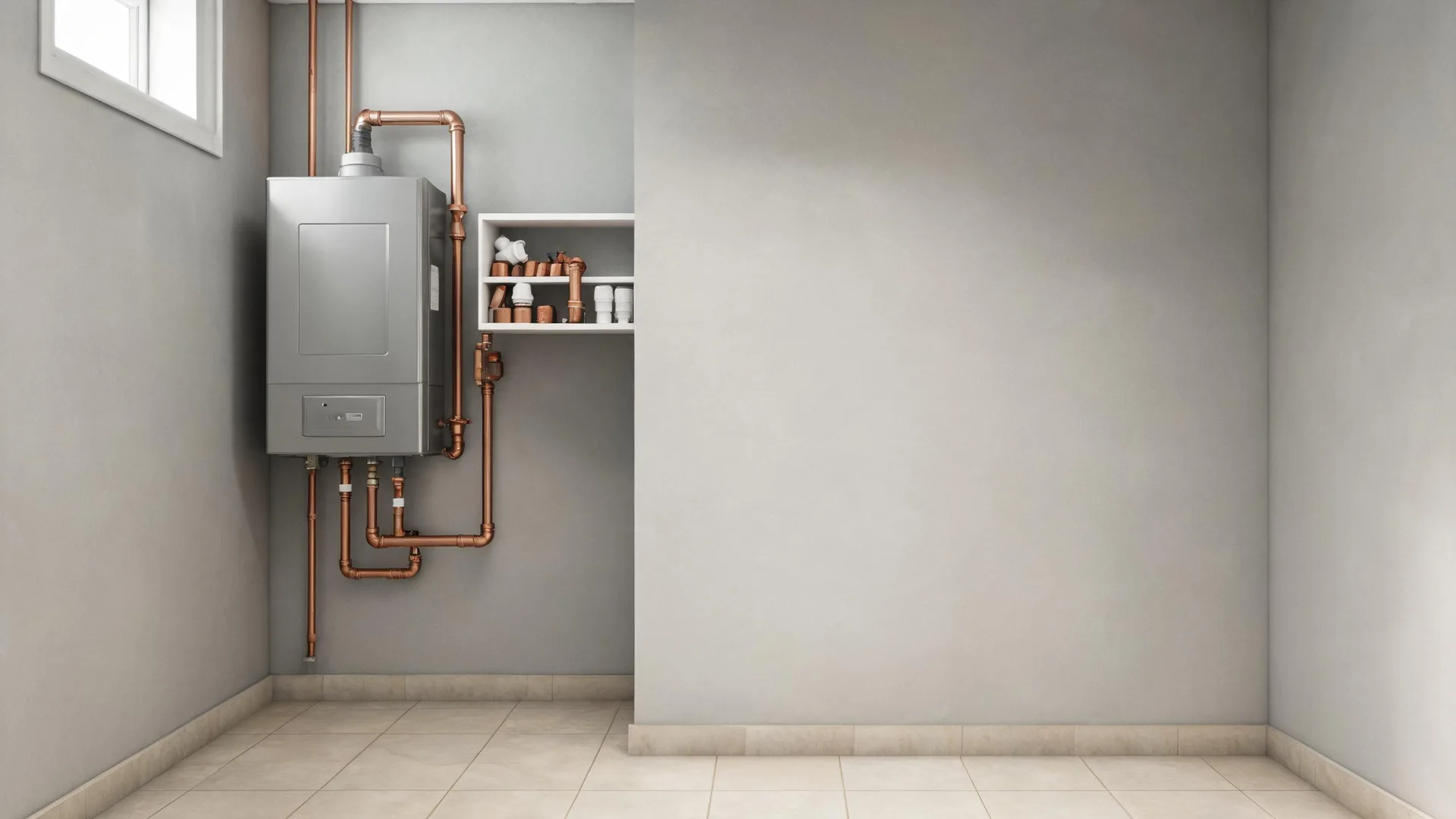
The size comes from the house, not the old boiler

A contractor works out the right size with a heat loss calculation, room by room, looking at wall and window area, insulation, and ceiling height rather than just matching whatever was there before. The old boiler might have been wrong from the day it went in, or sized for a house that's since been added onto or sealed up tighter. Getting this number right before installation is what decides whether the new boiler runs the way it's supposed to for the rest of its life.

Ask what the AFUE number actually is, not just whether the boiler clears the minimum. Ask how the contractor is sizing it, and whether that's a real heat loss calculation or a guess based on the old unit. Ask what the circulator pump is rated for, since a pump pushing harder than the system needs wastes power every hour it runs. Ask about the expansion tank too, whether it's being replaced or reused, because a tank sized for the old boiler may not hold up under the new one. And ask what happens to the near-boiler piping. A boiler can be efficient on paper and still lose heat through poor piping decisions nobody mentioned before the work started.

Installation starts before anyone touches the old boiler. The near-boiler piping gets planned out, the venting path gets checked, and the contractor confirms where the new unit can actually sit so the pipe runs make sense. Draining and disconnecting the old boiler comes next, along with capping or reworking whatever gas, water and electrical connections won't carry over. Setting the new boiler means leveling it, connecting the supply and return lines, wiring the controls, and tying in the venting so combustion gases have a clean path out. Once it's set, the system gets filled and purged to clear air out of the lines, because trapped air stops water from circulating the way it should. Only after that does the contractor fire it up, check the pressure, run the controls through their paces, and watch how it responds before calling the job done.