An unfinished basement interior showing a gray furnace unit beneath a bare incandescent bulb, surrounded by exposed joists, concrete walls, cardboard boxes, and utility pipes.

Furnace Installation in Chambersburg, PA

Tell us about the job

Takes about a minute. No obligation.

Step 1 of 3: Equipment

Electricity here runs $52.07 per million Btu

That is what Pennsylvania homes paid for electric power in 2024, measured across the state. Most furnaces in Chambersburg run on electricity, so that rate applies straight to the one going into your house.

The furnace you pick decides what that rate costs you

The same electricity bought from the same utility turns into very different bills depending on how well the furnace converts it to heat. Installing one here means choosing a unit that makes the most of every kilowatt, not just one that fits the space.

8 months
October through May, your furnace is on duty
24°F
the average winter night it heats against
80% AFUE
the federal minimum any new unit must meet
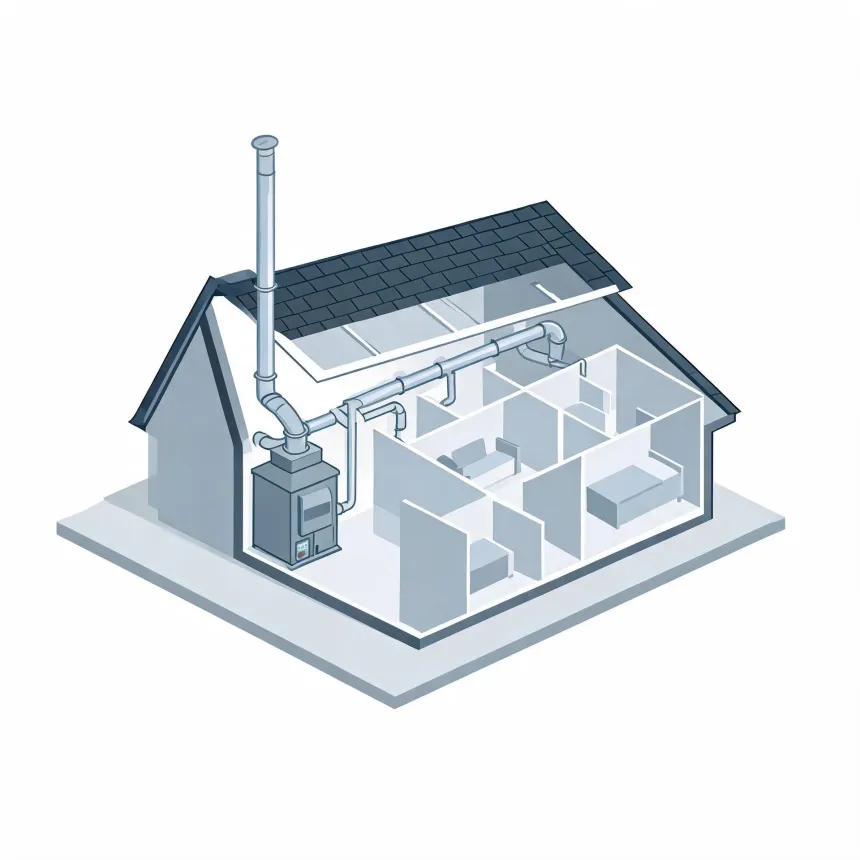
Isometric cutaway illustration of a house showing interior rooms with furniture, a furnace unit with a tall flue pipe outside, and ductwork running through the attic.
Your furnace works hardest from November through March.

NOAA nClimDiv, 1991–2020 normals

A furnace with a bigger heating capacity than the house needs will cycle on and off instead of running steady.

Sizing the unit to the actual heat loss of the house, not just the old furnace it replaces, is what the installer should be working from.

Most furnaces going into Franklin County homes are electric, because most of the homes already are

51.9% of homes heat with electricity
Climate zone 4A
Heat runs October through May
Get it done before OctoberFurnaces in Franklin County run eight months, October through May.

Franklin County sits in zone 4A of the 2021 energy code, a mixed climate that asks real work of both the furnace and the AC. Any gas furnace sold new here has to turn at least 80 percent of what it burns into heat. That's a federal floor, not something specific to this county. It's also changing. A furnace built on or after December 18, 2028 has to hit 95 percent, up from the 80 percent required now. Most houses here heat with electricity rather than gas, so that standard applies if you're weighing a switch, less so to what's actually going in. Whatever fuel it runs on, the unit still has to be sized to what the house loses in cold weather, not just matched to the one it's replacing.

Pick the furnace for what it costs to run, not just to buy

At $52.07 per million Btu, every kilowatt this furnace uses shows up on the bill for as long as it's in the house. The install is the one point where you get to decide that number. Once it's in, you're living with how it converts electricity to heat for the next several winters.

Find a contractor
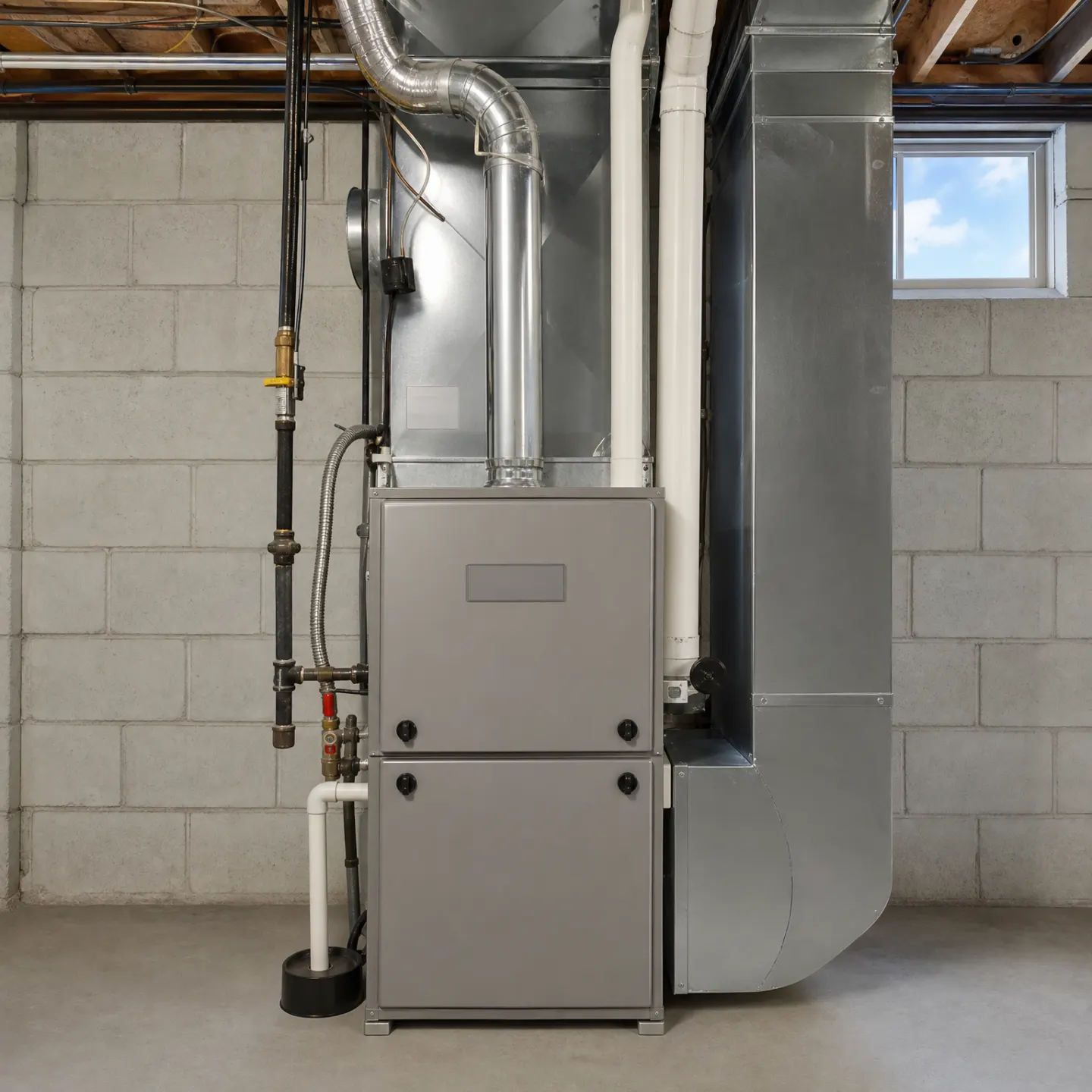
A gray high-efficiency gas furnace installed in an unfinished basement, surrounded by gas lines, a condensate drain, and sheet-metal ductwork.

The size comes from the house, not the old furnace

Sizing a furnace comes down to a heat loss calculation, not a guess based on square footage or whatever was in the house before. A contractor works through the walls, the windows, the insulation, the ceiling height, how much of the place is glass facing north, and comes up with a number for how fast the house loses heat on the coldest days. That number tells you the capacity the new furnace actually needs. Go bigger than that and the furnace heats the house fast, shuts off, and starts again a short while later. Short cycles like that wear on the ignition system and the blower motor, and the house ends up with warm bursts and cool stretches instead of steady heat. Go smaller and the furnace runs long stretches without catching up, especially on the coldest nights, and parts made to cycle on and off end up running far more hours than they're built for. A furnace sized right runs longer, steadier cycles that hold the house at temperature without the on off hammering, which is easier on the heat exchanger and the igniter both. The calculation has to be done for this house, not pulled from a chart or carried over from the last furnace, because the last one may never have been sized right either.

The old furnace doesn't move with you

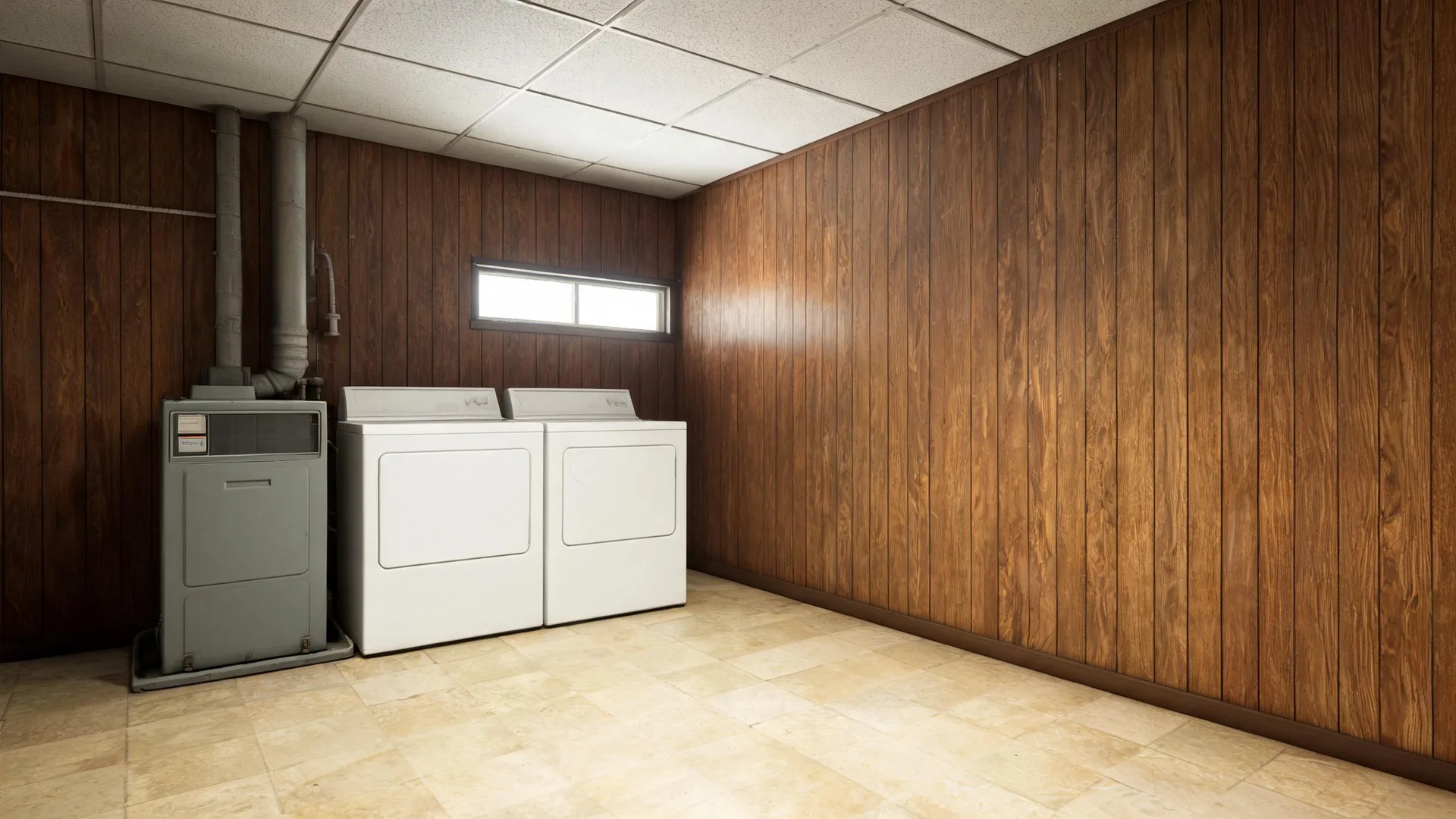
A furnace that's being replaced usually stays put until the new one is ready to run. The installer disconnects the ductwork, the gas line or electrical circuit, and the flue if there is one, then takes the old unit out once the new furnace is set and connected. Trying to pull the old one first means days without heat waiting on a replacement.

What happens to it after it's out

Furnace cabinets are mostly sheet metal, and the blower motor and any copper in the unit have scrap value, so most old units get hauled off for recycling rather than sent whole to a landfill. If the old furnace ran on gas, the installer caps or removes the old gas line connection and the flue venting as part of pulling it, since a line left open or a flue left in place without a furnace behind it is a hazard, not a convenience.

Every furnace sold new carries an AFUE rating, and that number says what share of the fuel it burns actually turns into heat in the house. The rest goes out the flue. A furnace rated higher wastes less on the way to warming the air, and that holds true every hour it runs, not just on the coldest day of the year. For an electric furnace there's no flue loss the same way, since resistance heat turns nearly all of what it draws into heat, so the rating that matters most there is how the system is matched and controlled, not a combustion efficiency number. Whatever the fuel, the rating on the label describes the unit under test conditions. How it performs in the house still comes down to whether it was sized and installed to match what the house actually loses in cold weather.

Installation day starts with the house still heated by the old furnace, usually, since most installers don't pull the unit until the new one is on site and ready to go in. The crew sets the new furnace, connects the ductwork, runs the wiring or gas line, and attaches the flue if the unit needs one. Once it's connected, they fire it up and run it through a cycle, checking that the blower moves air the way it should and that the system shuts off and restarts the way it's supposed to. A combustion furnace gets checked for proper venting and for the right gas pressure at the valve, since both affect how safely and how fully it burns fuel. An electric furnace gets its amp draw checked against what the breaker and wiring can carry. Before the crew leaves, the thermostat gets set up and the whole system gets a run-through so the furnace is holding the house at temperature, not just turning on.