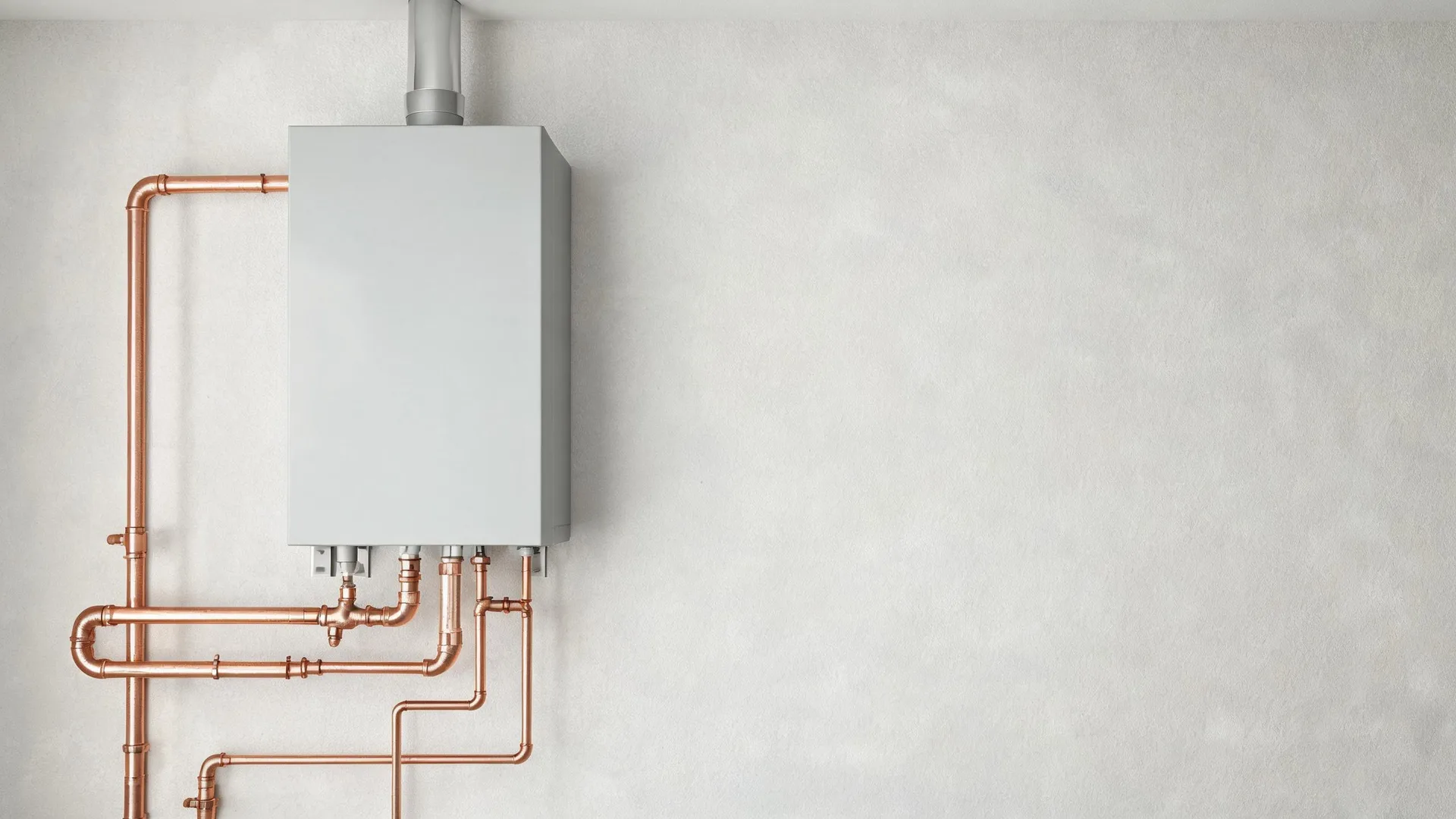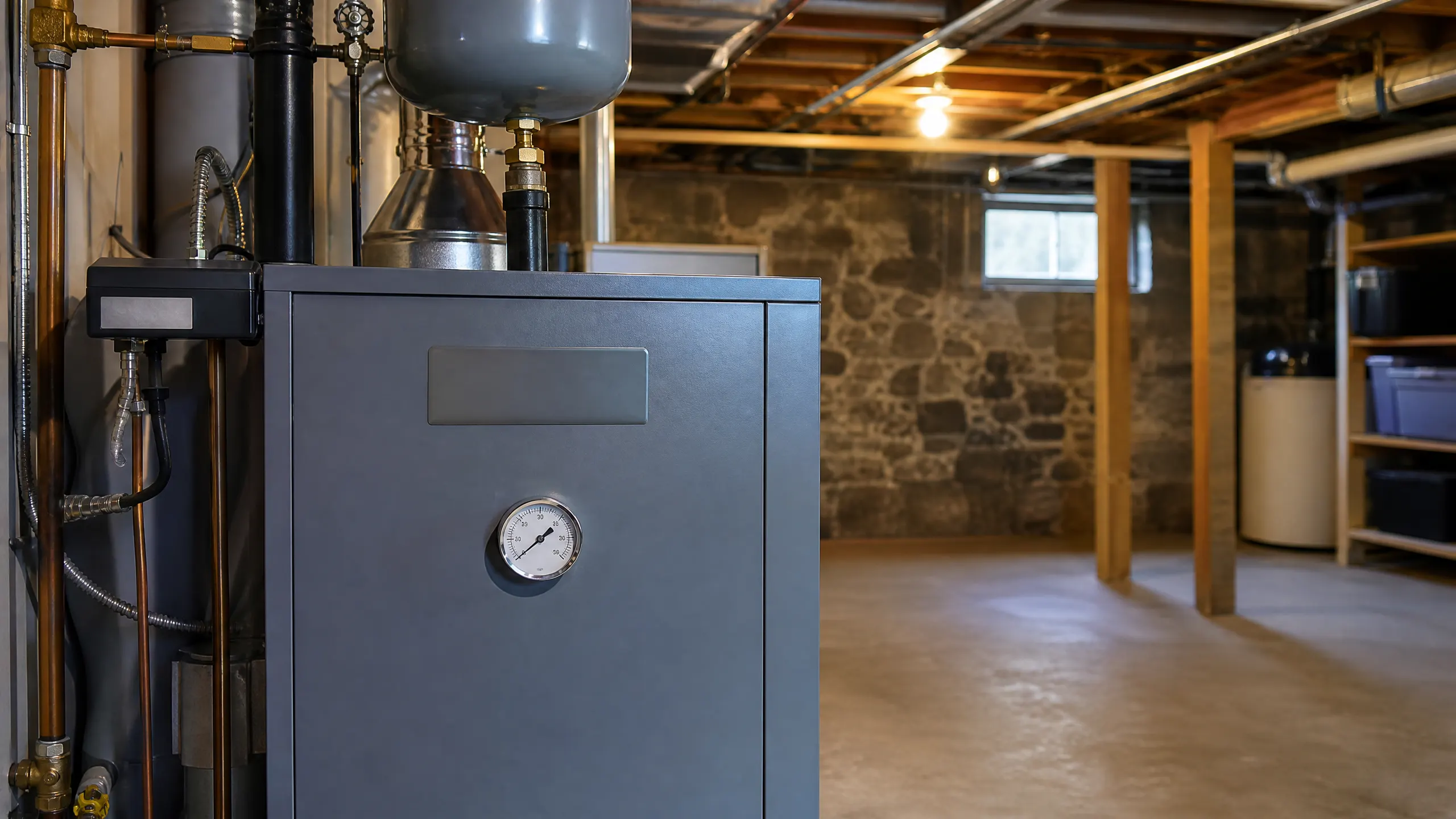
A gray boiler with a pressure gauge and copper pipes stands in an unfinished basement with stone walls and exposed ceiling joists.

Boiler Repair in Philadelphia, PA

Tell us about the job

Takes about a minute. No obligation.

Step 1 of 3: Equipment

Check the pressure gauge and the pilot first

Most boilers show normal pressure somewhere in a marked range on the gauge. If the needle has dropped low, the system has lost water and needs a refill at the feed valve. If you have a standing pilot, look to see if it's lit. A pilot that keeps going out points to a thermocouple problem, not something to keep relighting over and over.


What you find tells the contractor where to start

Low pressure, a tripped switch, a dead pilot, each one points a tech somewhere different before they even get to the house. Telling them what you saw, not just that the boiler won't fire, means less time spent on diagnosis and more on the actual fix. If none of this applies and the boiler is just cold with no obvious cause, that's worth saying too.

Boilers in Philadelphia County start working again in October, after sitting idle since spring.

A weak part often holds up fine until that first cold week puts real load on it.

Half the boilers here are in homes built by 1949

Half the homes here were built by 1949
Heat runs October through April
Winter nights average 27°F

Philadelphia County gets its share of rough weather, including damaging wind and a handful of winter storms most years, plus the occasional hail or tornado. None of that singles out boilers here for extra wear. A storm can knock out the power that runs your circulator pump and igniter, and about 15% of Pennsylvania households lost power for a day or more at some point last year. If your boiler went cold during an outage and didn't restart on its own afterward, that's a reset or a tripped switch, not a sign the unit is failing. Outside of that, a boiler in this county is working with the same water, the same gas line, and the same wear as one anywhere else.

Find out what you're repairing before you pay for it

A boiler that came with a house built decades ago has had a long run already. Before paying for a major repair, ask the contractor how much life is left in the unit. That answer should drive the decision, not just what's broken today.

Find a contractor

Kettling or banging in the heat exchanger

A boiler that bangs, gurgles or sounds like a kettle coming to boil usually has scale built up on the heat exchanger. Water overheats against that buildup and turns to steam pockets, which is what you're hearing. It won't fix itself, and it stresses the exchanger every time it happens.

Water pooling at the base of the unit

Any water on the floor under the boiler is worth tracking down before you do anything else. It might be a loose fitting or a failing pressure relief valve, both straightforward repairs. It might also be a crack in the heat exchanger itself, and that means the boiler is done.

Most boiler failures come down to a handful of parts, and age takes them in a fairly predictable order. The thermocouple or igniter goes first, since it's cycling on and off every time the burner fires. Circulator pumps are next. The bearings wear and the pump either seizes or gets noisy, and once that happens, heat isn't moving through the system even if the burner is working fine. Pressure relief valves and feed valves fail slower, usually by seeping rather than quitting outright, and you catch that as a damp spot before you catch it any other way. The heat exchanger is the one part nobody wants to hear about, because by the time it's cracked or scaled through, the fix is a new boiler, not a repair.

A repair is worth doing when the part that failed is cheap to replace and the rest of the boiler owes you nothing in particular. A new circulator pump or a new thermocouple on a boiler that's otherwise sound is just maintenance, the kind every boiler needs sooner or later. The harder case is when the failed part is a symptom, not the problem. A circulator that keeps seizing, a pressure relief valve that keeps seeping no matter how many times it's replaced, a pilot that won't hold even with a new thermocouple, those point to something else wearing out underneath. At that point you're not fixing the boiler, you're buying a few more months from it. The contractor working on it has seen how this unit is holding up beyond the one part in front of them, and that's worth asking about before you commit to the repair.