



What happens below 35 degrees
Winter here is long and it gets cold. Heat runs eight months a year, October through May, and the overnight low averages 19°F across December, January and February. That number matters because of how a heat pump works. A standard heat pump's heating output drops once it's below 40°F outside, and below about 35°F it often needs backup heat to keep up. Here, the average winter night is already past both marks.
This isn't a rare cold snap. Of the roughly 245 nights the heat runs, about 145 drop to freezing or below, more than half the season. A heat pump is working below its rated capacity on most winter nights, not just the worst ones. The nights that hit 0°F or below, about six a year, are a small slice of that, so a heat pump isn't fighting deep cold most of the time, but it is fighting the 32-and-under range for more than half the heating season.
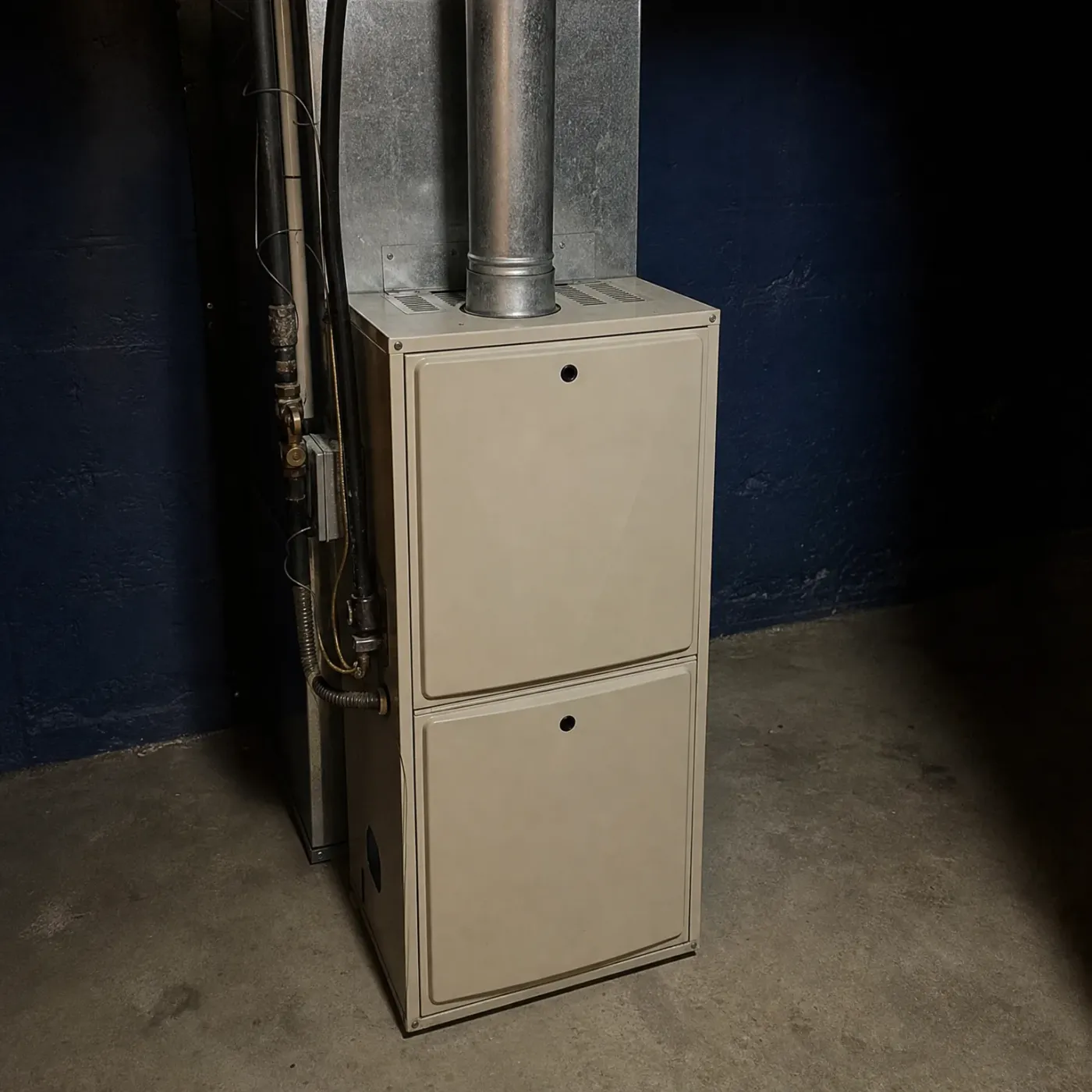
A gas furnace doesn't have this problem. It burns gas to make heat, so outside air temperature doesn't change what it can put out. On the coldest night of the year it heats the same as it does in October. That's the case for strong, steady heat in hard cold made on the cards above, and the overnight numbers here are why it holds.