

What winter here actually asks of a heat pump
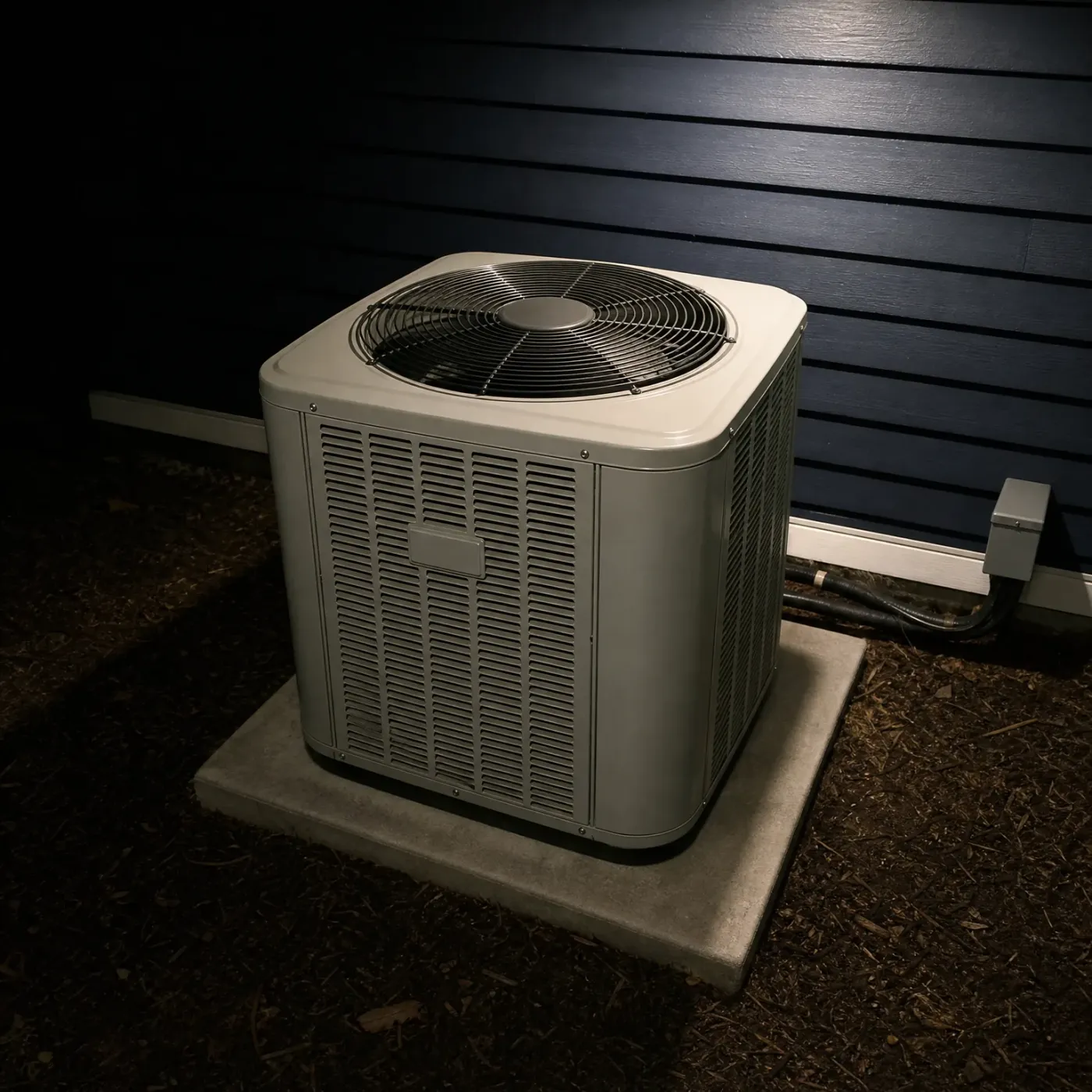
Your furnace or heat pump runs about seven months a year here, October through April, so this choice is mostly a winter question. The average overnight low across December, January and February is 27°F, and that's below both marks that matter for a heat pump. Below 40°F a standard one puts out less heat than its rating says. Below about 35°F it often needs backup heat to make up the difference. At 27°F, a typical winter night here is already past both marks.
It doesn't get dangerously cold often, though. The overnight low drops to freezing or below on about 80 nights a year, under half the nights in heating season, and only a small part of those nights reach 0°F. An ENERGY STAR Cold Climate heat pump is tested to hold at least 70 percent of its heating capacity at 5°F, colder than almost anything this county sees. Field testing of these cold-climate models found backup heat covered only a small share of the load between 0°F and 35°F, and the unit running on backup alone was rare even above 0°F. A standard heat pump will lean on backup heat most winter nights here. A cold-climate one mostly won't.